
European Airports Including Amsterdam, Athens, And 12 More Face 52 Cancellations And 1,863 Delays, Impacting Major Airlines
European Airports Including Amsterdam, Athens, And 12 More Face 52 Cancellations And 1,863 Delays, Impacting Major Airlines

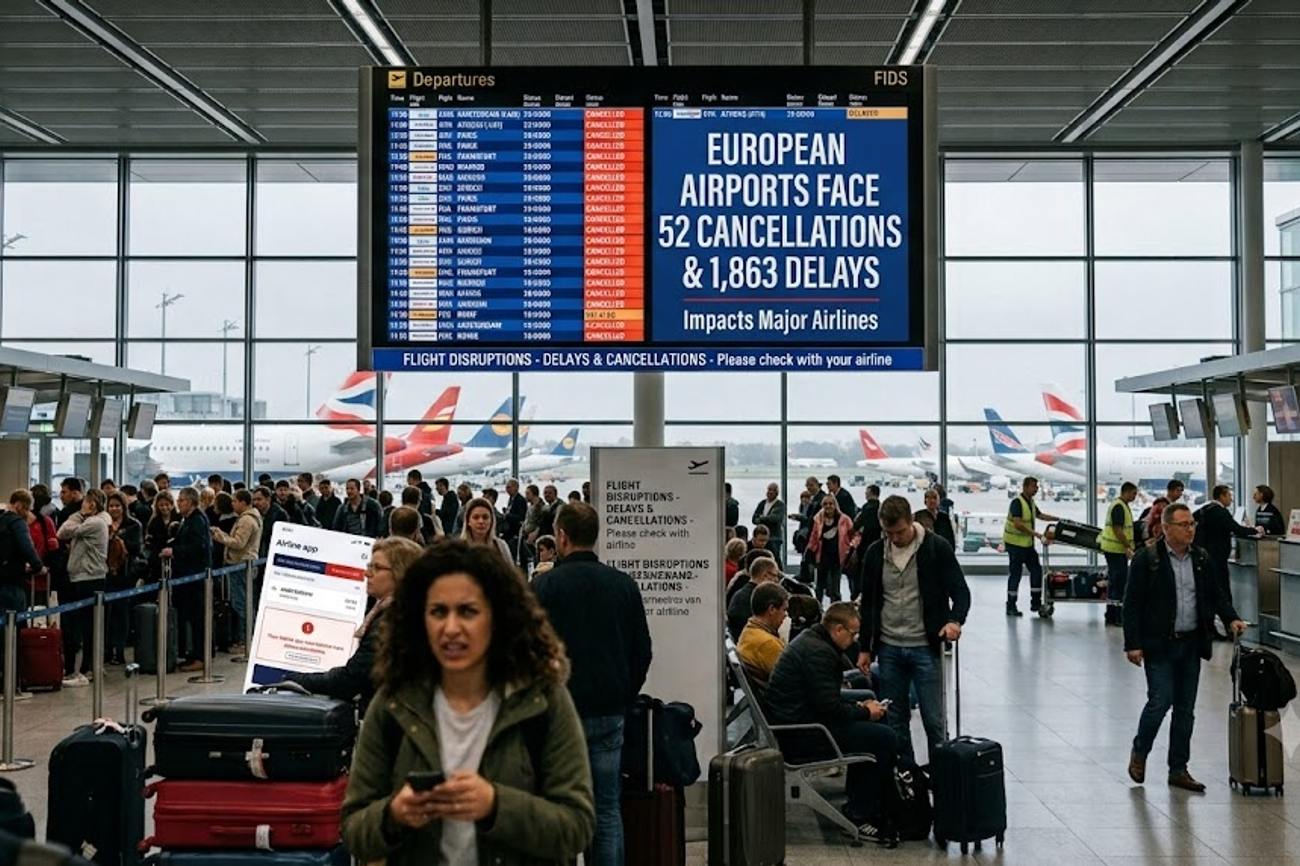
Image generated by AI
title: Navigating the Chaos of Europe's Mega-Hubs date: 2026-09-13 tags: [European Aviation 2026, Schiphol Airport, Frankfurt Airport, Heathrow Travel, EU Flight Rights]
A single airline, Transavia France, bore the brunt of the most severe disruptions during a recent European aviation crisis, recording six cancellations in a single window. This ripple effect across the continent serves as a stark reminder that the efficiency of European travel is often a fragile illusion, where a technical glitch in one hub can freeze movement from Lisbon to Stockholm.
The Fragility of the European Transit Web
The current state of European aviation is characterized by an extreme sensitivity to "knock-on" effects. On September 12, 2026, the continent witnessed a systemic shudder that resulted in 1,863 delays and 52 cancellations across 14 primary gateways. This wasn't a localized storm or a single strike, but a demonstration of how tightly coupled airline networks have become. When a plane is delayed in Frankfurt, it doesn't just affect the passengers on board; it disrupts the crew schedules for the next flight to Athens and the gate availability for an incoming arrival from London.
The scale of the disruption was immense, spanning France, Italy, Spain, Portugal, the United Kingdom, Greece, Germany, Sweden, the Netherlands, Denmark, and Switzerland. The data reveals a hierarchy of chaos, with Frankfurt leading the delay count at 237, followed closely by Amsterdam Schiphol with 228 and Athens with 208. For the modern nomad or legal professional moving between jurisdictions, these numbers represent more than just statistics; they represent missed depositions, lost connection windows, and the sudden necessity of navigating European passenger rights law.
What Makes These Hubs Different
Every major European airport handles crisis differently, reflecting their specific operational philosophies and geographic pressures.
Frankfurt serves as the primary engine for Lufthansa, which recorded 90 of the airport's 237 delays. With a 20% delay rate for arrivals, Frankfurt often becomes a bottleneck for all of Central Europe. If you are transiting here, you are at the mercy of the Lufthansa ecosystem.
Amsterdam Schiphol operates as a high-efficiency machine that, when it breaks, breaks precisely. While its cancellation rate remained low at 1% for both arrivals and departures, its delay rates were significant—16% for departures and 15% for arrivals. KLM was the primary driver here, accounting for 108 delays and 14 cancellations. For those navigating the Netherlands, the official tourism board often highlights the ease of transit, but the reality of Schiphol is a constant battle against capacity limits.
Athens presents a different challenge. With a 24% delay rate for arrivals—the highest among the major hubs—it highlights the seasonal volatility of Mediterranean travel. Aegean Airlines dominated the disruption list here with 82 delays, proving that even regional powerhouses are susceptible to the broader European gridlock.
In the UK, London Heathrow recorded 162 delays and four cancellations, with British Airways bearing the weight of 94 of those delays. Meanwhile, Manchester saw a 20% arrival delay rate, largely driven by easyJet, which suffered 34 delays and all four of the airport's cancellations.
Visitor Insider Tips
When the European skies turn volatile, the difference between a nightmare and a manageable inconvenience lies in your strategy.
Timing the Chaos If you see delay rates climbing above 15% at your hub, do not head to the airport on your usual schedule. Check the real-time status via the airline app or FlightAware every hour. If your flight is delayed, use that time to secure a hotel or lounge access before the rest of the passengers realize the scale of the disruption.
The "Fast-Track" Rebooking Hack Avoid the massive queues at the airport service desks. The moment you receive a cancellation notification, use the airline's mobile app or Twitter/X support. Digital queues move faster than physical ones. If you are at Heathrow or Charles de Gaulle, try calling the airline's international support line (e.g., the US or Canadian branch) as they often have shorter wait times than the local European desks.
Etiquette and Advocacy In hubs like Zurich or Copenhagen, maintain a calm, professional demeanor with ground staff; they are often dealing with systemic failures beyond their control. However, be firm about your rights. Under EU Regulation 261, you are entitled to care and compensation depending on the reason for the delay. Keep every single receipt—from a €12 sandwich at Schiphol to a taxi ride in Madrid—as these are eligible for reimbursement.
Strategic Basing When traveling during peak disruption windows, avoid "tight" connections (under 3 hours) at Frankfurt or Paris Orly. Instead, build in a "buffer night" in the hub city. This allows you to explore the local culture—perhaps visiting a UNESCO World Heritage site in the city center—rather than spending twelve hours on a plastic chair in a terminal.
Cultural and Environmental Context
The recurring nature of these disruptions points to a deeper tension between Europe's ambition for high-volume tourism and the physical limits of its infrastructure. Many of these airports, particularly Schiphol and Heathrow, are operating at or above their intended capacity. The environmental pressure to reduce carbon footprints has led to tighter flight corridors and more stringent air-traffic restrictions, which, while beneficial for the planet, leave zero margin for error when a technical fault occurs.
Furthermore, the reliance on "hub-and-spoke" models means that the cultural exchange facilitated by these airports is precarious. When 1,863 flights are delayed, it isn't just a logistical failure; it's a disruption of the social and economic fabric of the region. The shift toward low-cost carriers like Ryanair—which saw 130 delays across eight different cities—has democratized travel but has also placed an immense strain on smaller regional airports like Catania-Fontanarossa and Malaga, which are often ill-equipped to handle the overflow of stranded passengers.
FAQ: Visiting Europe 2026
What is the best time to visit to avoid these disruptions? Avoid the peak summer window and the shoulder seasons of September and October. Mid-winter (excluding the holidays) generally sees lower passenger volumes and fewer capacity-related delays, though weather becomes the primary risk factor.
Do I need a visa for transit through these hubs? This depends on your nationality and the specific country. For most non-EU citizens, a Schengen visa is required if you leave the transit area. Always check the official consulate website of your first point of entry.
How do I get from the airport to the city center during a delay? In cities like Amsterdam or Frankfurt, trains are the most reliable. Use the local transport authority apps to check for delays. Avoid taxis during mass cancellation events, as queues can stretch for hours.
Is it safe for solo travelers during these chaotic periods? Yes, but stay vigilant in crowded terminals. Use official airport transport and keep your digital documents backed up in a cloud service so you can access them if your phone is lost or stolen during the stress of rebooking.
When the screens turn red and the queues grow long, remember that the journey is often found in the unexpected detour.
Related Travel Guides
Disclaimer
This article is for informational and educational purposes only. It does not constitute legal, financial, or professional advice. While we strive to provide accurate and up-to-date information, travel policies, regulations, and conditions change rapidly. Always verify information with official sources before making travel decisions. Nomad Lawyer makes no representations about the accuracy, reliability, completeness, or suitability of the information provided. Readers should consult qualified professionals for advice specific to their circumstances. The views expressed in this article are those of the author and do not necessarily reflect the views of Nomad Lawyer.
Preeti Gunjan
Contributor & Community Manager
A passionate traveller and community builder. Preeti helps grow the Nomad Lawyer community, fostering engagement and bringing the reader experience to life.
Learn more about our team →