
Las Vegas Travel Faces Fare Surge as Rising Airfares Reshape Visitor Plans and Tourism Costs
Las Vegas Travel Faces Fare Surge as Rising Airfares Reshape Visitor Plans and Tourism Costs

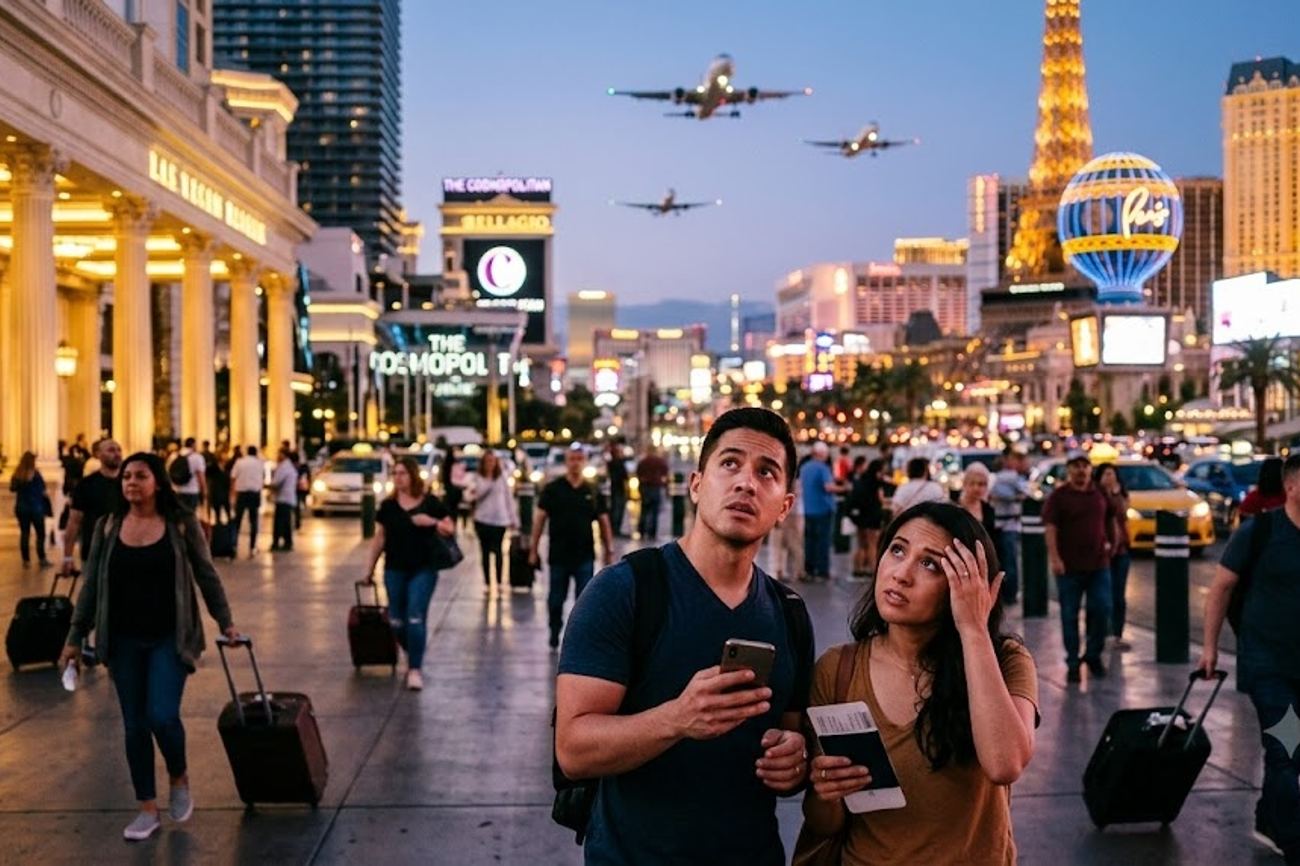
Image generated by AI
Domestic airfares to Las Vegas have surged by more than 20% since March 2026, significantly outstripping the national domestic airfare increase of approximately 12% during the same period. This divergence indicates that the "gateway to entertainment" is experiencing a localized pricing crisis that threatens its historical identity as an accessible, spontaneous getaway.
The Vegas Premium: Airfare Inflation in Numbers
The data provided by the Las Vegas Convention and Visitors Authority (LVCVA) reveals a stark disparity between the Nevada market and the broader United States aviation sector. While the national average for domestic flights rose by 12%, the trajectory for flights landing at Harry Reid International Airport was nearly double that rate, exceeding 20%.
This price hike is not evenly distributed across all carriers, yet it heavily impacts the low-cost segment that traditionally fuels the city's tourism engine. Southwest Airlines, which maintains a dominant market share of approximately 37% of passenger traffic at Harry Reid International Airport, has recorded higher average fares. This is a critical data point because Southwest has historically functioned as the primary price-setter for the region; when the market leader raises fares, the "value-focused" ecosystem of the city shifts.
The drivers behind this surge are a combination of macroeconomic pressures and carrier-specific revenue strategies. Rising jet fuel costs—a primary operating expense for all airlines—have been passed directly to the consumer. However, the fact that Las Vegas is seeing a 20% increase while the rest of the country sees 12% suggests that demand-based pricing and capacity constraints at Harry Reid International Airport are amplifying the fuel surcharge. According to IATA, fuel volatility remains a primary driver of global ticket pricing, but the Las Vegas data suggests a specific regional demand premium is now in effect.
Comparative Market Analysis: Las Vegas vs. National Trends
To understand the scale of this shift, one must look at the resilience of different traveler segments. The LVCVA data indicates a bifurcated recovery. Business and convention travelers—those whose expenses are subsidized by corporate budgets—remain largely unaffected by the fare surge. In contrast, the leisure segment, which relies on personal discretionary income, is showing increased sensitivity to these costs.
Historically, Las Vegas has operated on a high-volume, low-margin transport model. The city attracts millions of short-stay visitors who prioritize low flight costs to offset high spending on gaming, dining, and entertainment. When airfare increases by 20%, it disrupts the "spontaneous weekend" psychology that has driven the city's growth for decades.
The following table illustrates the pricing divergence since March 2026:
| Metric | National Domestic Average | Las Vegas (Harry Reid Intl) | Variance |
|---|---|---|---|
| Airfare Increase (%) | ~12% | >20% | +8% |
| Primary Carrier Share | Diversified | Southwest (~37%) | Concentrated |
| Price Sensitivity | Moderate | High (Leisure Segment) | High |
| Primary Demand Driver | General Travel | Short-stay/Event-based | High Frequency |
This data suggests that Las Vegas is no longer just tracking with national inflation; it is experiencing a "destination premium" that could potentially alienate budget-conscious demographics.
What This Means for Travelers
For the individual traveler, the era of the "last-minute cheap flight to Vegas" is effectively over. The data indicates that the cost of reaching the city is now a significant barrier before a visitor even considers resort fees or dining costs. To navigate this new pricing environment, travelers must shift from spontaneous booking to strategic planning.
If you are planning a trip to Las Vegas in the coming quarters, the following data-backed strategies are recommended:
- Avoid the "Weekend Trap": Because Las Vegas depends on frequent, short-stay arrivals, weekend capacity is the first to hit price ceilings. Shifting travel to midweek dates can bypass the demand-based surges seen in the LVCVA reports.
- Extend the Booking Window: With fares rising faster than the national average, the risk of price spikes is higher. Booking 8-12 weeks in advance is now a necessity rather than a suggestion to lock in rates before the 20% surge climbs further.
- Bundle for Leverage: Given that airfares are rising faster than other costs, booking flight-and-hotel packages may provide a hedge against individual ticket inflation, as operators often secure block seating at lower rates.
- Monitor Carrier Diversity: While Southwest holds 37% of the market, comparing their fares against other low-cost carriers (LCCs) is essential, as different airlines are adapting their revenue strategies at different speeds.
Forward Projection: The Risk of Demand Erosion
Based on current trajectories, Las Vegas is at a crossroads. The city's tourism model is uniquely dependent on high-frequency, short-duration visits. Unlike a destination like Hawaii or Europe, where a traveler might spend two weeks and absorb a high flight cost over many days, the Vegas visitor often stays for 48 to 72 hours. In this model, the airfare represents a much larger percentage of the total trip cost.
If airfares continue to outpace the national average by 8% or more, we can expect a shift in visitor demographics. We will likely see a decline in "impulse" visitors from mid-tier markets and an increase in high-net-worth individuals and corporate travelers. This shift could lead to a paradoxical situation where hotel occupancy remains high due to conventions, but the "street-level" economy—small shops and budget-friendly attractions—sees a decline in foot traffic.
Furthermore, as noted by Statista, travel patterns are increasingly influenced by "value-perception." If the perceived value of a Las Vegas trip is eroded by the cost of the flight, travelers may pivot to alternative entertainment hubs that offer more stable transit costs. The LVCVA's continued monitoring of Harry Reid International Airport will be the primary indicator of whether the city can maintain its volume-based growth or if it must transition into a more exclusive, luxury-centric destination.
FAQ: Las Vegas Airfare Trends 2026
Will flight prices to Las Vegas continue to rise? Current data shows Las Vegas fares are increasing at nearly double the national rate (>20% vs 12%). Unless jet fuel costs stabilize or airlines increase capacity at Harry Reid International Airport, prices are likely to remain elevated.
Is it still a good time to book a budget trip to Vegas? Yes, but spontaneity is now costly. To maintain a budget, travelers must avoid major event weekends and book significantly further in advance than they did in previous years to avoid the 20% surge.
Which airlines are driving these price changes? Southwest Airlines is a major factor due to its 37% market share at Harry Reid International Airport. While other low-cost carriers are also raising prices, the market leader's strategy heavily influences overall regional costs.
Are hotel prices rising as fast as airfares? The LVCVA focuses on the airfare surge, but the data suggests airfares are the primary volatility point. Travelers should focus on locking in flights first, as they currently represent the fastest-growing cost of the trip.
The high-stakes gamble is no longer just on the casino floor—it is now in the booking engine.
#LasVegasTourism2026 #HarryReidAirportData #SouthwestAirlinesMarketShare #DomesticAirfareInflation #LVCVAStatistics #NevadaTravelCosts
Related Travel Guides
- Bangladesh and Philippines Explore Direct Air Links to Boost Tourism and Bilateral Trade
- Middle East Airports Face 836 Delays and 28 Cancellations as Travel is Disrupted at Dubai, Jeddah and Others
- Flights Cancelled Throughout Asia As Singapore, Delhi, and 20 Other Airports Face 106 Cancellations And 1,578 Delays, Impacting Travel
Disclaimer
This article is for informational and educational purposes only. It does not constitute legal, financial, or professional advice. While we strive to provide accurate and up-to-date information, travel policies, regulations, and conditions change rapidly. Always verify information with official sources before making travel decisions. Nomad Lawyer makes no representations about the accuracy, reliability, completeness, or suitability of the information provided. Readers should consult qualified professionals for advice specific to their circumstances. The views expressed in this article are those of the author and do not necessarily reflect the views of Nomad Lawyer.
Kunal K Choudhary
Co-Founder & Contributor
A passionate traveller and tech enthusiast. Kunal contributes to the vision and growth of Nomad Lawyer, bringing fresh perspectives and driving the community forward.
Learn more about our team →