Portugal and Finland Reshape European Winter Travel: Porto Route Expansions, Lapland Flight Surge, and Insider Guide

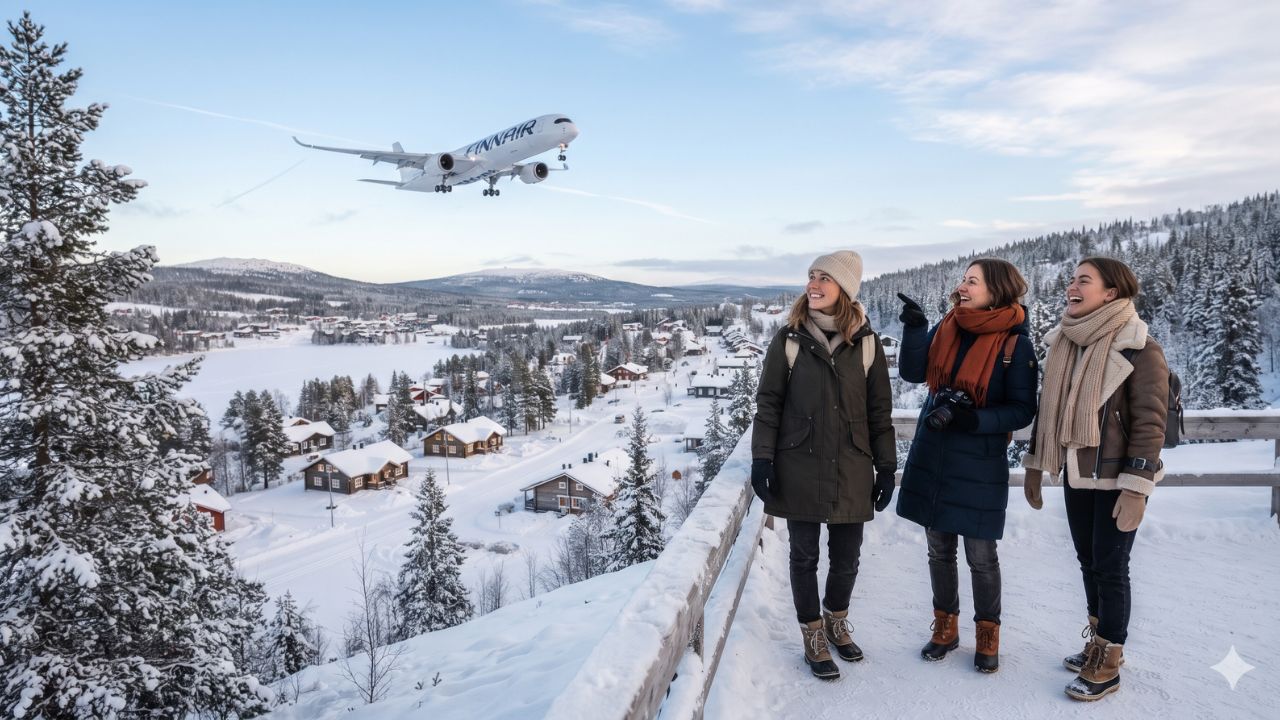
According to official Eurostat figures, nearly a third of all tourist accommodation nights across the European Union remain crammed into just two blistering summer months—July and August—climbing to a staggering 54.5% in sun-soaked Mediterranean regions like Croatia. For the winter 2026–2027 season, however, Europe's continental travel geography is experiencing an overdue realignment. Rather than shuttering facilities when autumn leaves drop, northern Portugal and Finnish Lapland are spearheading an aggressive winter aviation expansion, deploying extended transatlantic flights to Porto and 163 direct international connections across the snowbound Arctic wilderness of Finland.
Porto's 24-Route Winter Expansion: Transitioning Beyond Seasonal Summer Tourism
At the southwestern edge of the continent, Porto's Francisco Sá Carneiro Airport provides the clearest blueprint for how regional hubs are breaking free from seasonal boom-and-bust cycles. Building upon a record-setting 16.9 million passengers processed in 2025 and a recently completed €50 million runway modernization in March 2026—which introduced full resurfacing, LED airfield lighting, and an advanced instrument landing system for low-visibility operations—the airport confirmed 24 route additions for the winter 2026–2027 timetable.
This program divides into two distinct operational categories: ten brand-new route inaugurations and fourteen extended summer routes continuing throughout the winter months. Among the new connections, low-cost carriers are establishing fresh links to central and southern Europe: Ryanair is introducing flights to Catania, Gdańsk, Hamburg, and Poznań; Volotea is linking Porto with Clermont-Ferrand and Granada; Wizz Air is adding Catania and Milan Malpensa; Transavia is launching Brussels services; and flag carrier TAP Air Portugal is debuting direct flights to Sal in Cape Verde.
Equally transformative are the fourteen extended services keeping long-haul aircraft flying into northern Portugal deep into January and February. Delta Air Lines is maintaining its direct New York service, while TAP Air Portugal continues its nonstop link to Boston. European capitals remain directly tethered through extended easyJet and Eurowings flights to Berlin, accompanied by continuous winter services to Glasgow, Warsaw, Liverpool, Nuremberg, Rabat, Praia, and Asturias. This multi-carrier commitment ensures that the cellars, granite architecture, and culinary traditions promoted by Visit Portugal remain accessible year-round without summer's stifling heat and crowded funicular queues.
Finland's Arctic Gateway: 163 International Connections Unlock Lapland
While Porto extends mild Atlantic autumns, Finland is engineering an Arctic connectivity surge designed around deep snow, sub-zero wilderness, and the aurora borealis. State airport operator Finavia announced that its national network will feature 31 new route additions compared to the previous winter, providing 163 scheduled international connections linking Finnish tarmac to 103 overseas airports.
The epicenter of this sub-Arctic expansion is Lapland, where regional airports are forecast to experience a 4% to 8% increase in aircraft movements and a 5% to 10% rise in passenger volume. To manage the influx, Finavia recruited 120 seasonal airport staff across northern terminals—a 20% staffing increase over the previous year. Rovaniemi, the administrative capital of Finnish Lapland, is scheduled to operate 37 winter routes, offering direct nonstops to 36 international airports during peak holiday windows, including new services from London Gatwick, Newcastle, Munich, and Prague. Nearby Kittilä is adding scheduled connections from Amsterdam, Brussels, Liverpool, and London Luton, while Ivalo, Kuusamo, and Kemi-Tornio expand regional access.
A fundamental evolution in Arctic tourism is the shift from rigid charter packages to scheduled commercial flights. Brussels Airlines, for example, is introducing scheduled passenger services from Brussels to Kittilä and Kemi-Tornio, alongside seasonal operations to Evenes in northern Norway. By transitioning from pre-packaged charter allocations to publicly bookable scheduled seats, airlines empower independent travelers to design custom multi-day itineraries, book private timber cabins, and explore authentic Sámi reindeer farms without being funneled into rigid tour groups.
European Winter Route Expansion: Porto and Finnish Lapland Flight Benchmarks
To help travelers evaluate routing choices, airport readiness, and seasonal capacity across both gateways, the table below synthesizes the confirmed additions and infrastructure milestones:
| Destination Hub / Airport | Total Winter Route Additions | Key New or Extended Route Pairings | Infrastructure & Staffing Milestones | Independent Traveler Strategic Value |
|---|---|---|---|---|
| Porto Airport (OPO), Portugal | 24 Services (10 New, 14 Extended Summer) | New York (Delta), Boston (TAP), Berlin (easyJet/Eurowings), Milan, Catania | €50M runway upgrade completed March 2026; 16.9M passengers in 2025 | Direct transatlantic and EU access without summer crowds or heat |
| Rovaniemi Airport (RVN), Lapland | 37 Winter Routes (36 Direct Int'l in Peak) | London Gatwick, Newcastle, Munich, Prague, Paris, Milan | Part of Finavia 120 seasonal staff expansion (+20% YoY) | Direct access to Santa Claus Village and Arctic Circle trails |
| Kittilä Airport (KTT), Lapland | Multiple New Scheduled Gateways | Amsterdam, Brussels, Liverpool, London Luton, Geneva | Enhanced baggage handling and de-icing operations | Direct entry to Levi ski slopes and Ylläs national park trails |
| Kemi-Tornio & Ivalo, Finland | Targeted Winter & Arctic Corridors | Brussels (Brussels Airlines scheduled), Frankfurt, Zurich | Shorter seasonal operating windows; advance booking vital | Enables point-to-point Arctic road trips avoiding Helsinki transfers |
Visitor Insider Tips for Winter Travel in Porto and Lapland
Experiencing these winter regions through a local lens demands tailored operational awareness:
- Savor Porto's Rainy-Day Cellar Culture: Winter in Porto brings misty Atlantic rains and daytime temperatures around 14°C (57°F). Take advantage of the tranquil season to explore historic port wine lodges in Vila Nova de Gaia—such as Taylor's, Graham's, and Niepoort—where uncrowded tasting rooms allow intimate conversations with cellar masters. Warm up in neighborhood tascas with a piping hot francesinha (a decadent layered steak and cured ham sandwich drenched in spiced beer-tomato sauce) paired with northern Vinho Verde.
- Master Sub-Zero Layering for Lapland: Temperatures in northern Finland regularly drop between -10°C and -25°C in December and January. Strictly avoid cotton garments, which retain sweat and freeze against the skin. Adhere to the Nordic three-layer rule: a thermal merino wool base layer, a heavy wool or fleece mid-layer, and a wind-resistant down parka. Rent insulated snow boots rated to -30°C upon arrival rather than packing bulky hiking boots that lack thermal rubber soles.
- Capitalize on Scheduled Flights to Book Independent Stays: With carriers like Brussels Airlines offering scheduled seats into Kittilä, avoid expensive inclusive resort packages. Rent a studded-tire all-wheel-drive car directly from the airport and book a traditional log cabin (mökki) complete with a wood-fired private sauna in Akäslompolo or Levi. This setup provides total flexibility to chase the northern lights away from streetlights.
- Explore Beyond Core Urban Centers: In Portugal, use Porto's São Bento train station to take inexpensive suburban rail day trips to Guimarães (the birthplace of Portuguese nationhood) and Braga without fighting summer tourist throngs. In Finland, venture beyond Rovaniemi's commercial attractions into Urho Kekkonen National Park, where snowshoe trails cut through pristine taiga forests under the pale glow of the polar night (kaamos).
Cultural and Environmental Context: Sustainable Tourism Across Fragile Biomes
The strategic push toward winter travel directly tackles one of Europe's most persistent ecological dilemmas: hyper-seasonal overtourism. By extending operations throughout the winter, Porto distributes economic benefits evenly across local hospitality workers, preventing the off-season layoffs that destabilize residential communities. Simultaneously, visiting the historic Ribeira waterfront during winter eases the structural strain on fragile 18th-century granite buildings worn down by summer foot traffic.
In Finland, winter tourism operates within the environmentally delicate Arctic Circle, home to the indigenous Sámi people of Sápmi. The surge in international flights necessitates strict adherence to cultural and ecological ethics. Responsible travelers should support certified tourism businesses promoted by Visit Finland that collaborate directly with Sámi communities, ensuring that reindeer sledding excursions and storytelling respect indigenous intellectual property and land rights.
Furthermore, Arctic aviation growth must coexist with extreme climate vulnerability. Finavia airports lead global aviation in cold-weather carbon neutrality initiatives, utilizing renewable biofuels for heavy snowplows and deploying centralized glycol-recycling systems to capture aircraft de-icing fluids before they enter local groundwater. By choosing sustainable tour providers and packing out all backcountry waste, travelers ensure that Europe's winter wilderness remains pristine for future generations.
FAQ: Navigating Europe's Winter Flight Networks 2026–2027
What are the primary new direct winter flights into Porto? Porto's 2026–2027 winter network features new direct services to Catania, Gdańsk, Hamburg, Poznań, Clermont-Ferrand, Granada, Milan Malpensa, Sal, and Brussels, alongside extended transatlantic flights to New York and Boston.
How many international connections serve Finnish Lapland this winter? Finavia's airport network operates 163 international scheduled connections to 103 overseas airports during the 2026–2027 winter season, with Rovaniemi alone serving up to 36 direct international gateways at peak times.
Can travelers book independent flights to Lapland without a tour package? Yes. Airlines like Brussels Airlines now offer scheduled commercial tickets into Kittilä and Kemi-Tornio, allowing travelers to arrange private lodging, car rentals, and activities independently of rigid charter packages.
What climate conditions should travelers prepare for in Porto versus Lapland? Porto experiences mild, damp winter weather with temperatures averaging 10°C to 15°C (50°F to 59°F). In contrast, Lapland features deep snow and polar sub-zero conditions ranging from -5°C to -25°C, requiring specialized thermal layers.
As regional air routes bridge the gap between sun-drenched coastal history and snow-bound Arctic stillness, winter travel across Europe emerges as an inspiring journey into authentic seasonal living.
Related Travel Guides
The 10 Best Winter Wine Lodges and Northern Lights Cabins in Europe, According To Reddit
This article is for informational purposes. Flight routes, passenger regulations, visa rules, and transit advisories are subject to change by airlines and aviation authorities. Readers are advised to verify schedules and travel documentation with relevant carriers and border agencies before departure.
Related Stories

Sri Lanka Inbound Tourism Surges as Jetstar Connects Melbourne to Colombo: Travel Dynamics and Local Guide

Vietnam Global Aviation Surge: UK, Germany, and Russia Drive Record Inbound Tourism and Flight Connectivity