Europe Tourism GDP Surge 2026: France, Spain & Italy Lead Record Growth & Digital Travel Shift


The European Union’s travel and tourism sector is driving broader economic expansion in 2026, with the industry contributing approximately 10% to total EU Gross Domestic Product (GDP). Anchored by strong performances in France, Spain, and Italy, the European travel ecosystem is expanding through high-value luxury arrivals, AI-driven digital transformation, regional dispersion beyond congested capital cities, and record job creation across hospitality and transport networks.
According to recent OECD tourism metrics, Spain recorded a milestone 96.8 million international arrivals entering 2026, with direct tourism accounting for 6% of Spain's GDP and 13.4% of national employment. Meanwhile, France's tourism sector directly generated 3.8% of GDP while supporting 1.5 million jobs, and Italy's tourism industry contributed 5.4% of direct gross value added (GVA) while supporting 2.1 million jobs (8.5% of national employment).
================================================================================
           EUROPEAN TOURISM GDP & ECONOMIC METRICS FACT SHEET
================================================================================
  European Union Overall GDP Contribution : ~10% of Total EU GDP
  Spain Direct Tourism GDP Share          : 6.0% of National GDP (OECD Data)
  Spain 2025 International Visitors       : 96.8 Million Record Arrivals
  Spain Tourism Employment Share          : 13.4% of Total National Jobs
  France Direct Tourism GDP Share         : 3.8% of National GDP (OECD Data)
  France Direct Tourism Employment        : 1.5 Million Direct Jobs
  Italy Direct Tourism GVA Share          : 5.4% of Gross Value Added
  Italy Tourism Employment Share          : 2.1 Million Jobs (8.5% of Total)
================================================================================
Country Breakdown: Economic Pillars of European Tourism
Europe’s tourism recovery and expansion rely on distinct regional strategies tailored to domestic heritage, coastal resorts, and luxury experiences.
| Country | Direct Economic Share | Employment Impact | Primary Visitor Markets | Key Growth Focus |
|---|---|---|---|---|
| Spain | 6.0% of GDP | 13.4% of total jobs | UK, Germany, France, Americas | Inland culture, year-round island travel |
| France | 3.8% of GDP | 1.5 Million direct jobs | USA, UK, Benelux, Asia-Pacific | Heritage, luxury travel, wine regions |
| Italy | 5.4% of GVA | 2.1 Million jobs (8.5%) | Germany, USA, UK, France | Gastronomy, historic villages, regional arts |
| Portugal | Rising national GVA | Regional employment boost | UK, USA, France, Spain | Digital nomads, Atlantic coast, eco-lodging |
| Greece | Core national GDP driver | Significant island employment | Europe, USA, Middle East | Extended shoulder season, island hopping |
France: Spreading Visitor Revenue Beyond Paris
France maintains its position as a primary international destination by pairing Paris’s global appeal with regional travel initiatives. To relieve pressure on urban landmarks while distributing foreign exchange earnings to rural communities, French tourism authorities are promoting specialized travel corridors across the provinces.
FRANCE REGIONAL TRAVEL CORRIDORS
| Column 1 |
|---|
| [ Paris Hub ] ----> (High-Speed TGV Rail Network) |
| +---> Provence (Gastronomy, Lavender Fields, Rural Retreats) |
| +---> Normandy (Coastal Heritage, Historic Sites, D-Day Beaches) |
| +---> Loire Valley (Castles, Châteaux Tours, Cycling Routes) |
| +---> French Alps (Outdoor Recreation, Ski Resorts, Hiking) |
| +---> Bordeaux / Champagne (Wine Tourism & Luxury Estates) |
Strategic Focus Areas for France
- Luxury & Heritage Tourism: Attracting high-spending international travelers through curated museum passes, luxury hotel expansions, and Michelin-starred culinary tours.
- High-Speed Rail Mobility: Leveraging SNCF’s TGV rail network to connect arriving international flight passengers directly from Paris Charles de Gaulle (CDG) to provincial destinations without domestic flights.
Spain: Record 96.8 Million Arrivals & Island Diversification
Spain’s record 96.8 million international visitors in 2025 established powerful momentum entering 2026. While traditional Mediterranean sun-and-beach destinations in the Balearic and Canary Islands remain global magnets, Spanish tourism policy focuses on upgrading service quality, increasing average per-traveler expenditure, and expanding inland cultural tourism.
================================================================================
                     SPAIN TOURISM DIVERSIFICATION MATRIX
================================================================================
  Destination Category   Primary Hubs               Key Focus Area
  --------------------   ------------------------   ----------------------------
  Metropolitan Hubs      Madrid, Barcelona          Architecture, Museums, MICE
  Sun & Resort Islands   Canary & Balearic Islands  Luxury Resorts, Year-round
  Inland & Nature        Andalusia, Basque Country  Wine Routes, Mountain Trails
  Rural Paradores        Historic Castles & Monasteries Heritage Lodging & Dining
================================================================================
Inland and Cultural Expansion
Urban centers such as Madrid and Barcelona continue to draw international museumgoers and business travelers. Simultaneously, inland destinations in Andalusia, the Basque Country, and Castilla y León are expanding rural Parador hotel networks, connecting historical monuments with farm-to-table culinary travel.
Italy: Authentic Gastronomy & Regional Village Travel
Italy’s tourism sector, contributing 5.4% of direct gross value added and 2.1 million jobs, is accelerating initiatives to direct travelers beyond crowded centers such as Venice, Florence, and Rome.
ITALY SECONDARY DESTINATION CORRIDORS
| Column 1 |
|---|
| Overcrowded Hubs Emerging Regional Destinations |
| ------------------ --------------------------------------- |
| Venice / Florence ------> Puglia (Trulli Villages & Coastline) |
| Rome / Milan ------> Calabria & Basilicata (Matera Heritage) |
| Amalfi Coast ------> Umbria (Green Heart & Hilltop Towns) |
Emerging Italian Travel Corridors
- Puglia & Southern Coast: Drawing travelers to traditional coastal towns, olive groves, and historic masserie (farmhouse estates).
- Umbria & Basilicata: Promoting eco-tourism and historic hilltop preservation in towns such as Matera, allowing travelers to experience regional art and local cuisine away from high-density tourist centers.
Wider European Expansion: Portugal, Greece, Croatia & Alpine Nations
The broader European travel economy gains strength from secondary destinations implementing targeted growth strategies:
- Portugal: Capitalizing on digital nomad visas, coastal surfing hubs in Ericeira and Nazare, and sustainable river cruises along the Douro Valley.
- Greece: Extending the traditional Mediterranean summer season into spring and late autumn while investing in island port infrastructure.
- Croatia: Developing year-round heritage travel along the Dalmatian Coast and inland national parks like Plitvice Lakes.
- Switzerland & Austria: Leading sustainable alpine mobility through integrated rail passes, electric mountain transit, and luxury wellness tourism.
Digital Travel Infrastructure & EU Border Policies
The rapid adoption of artificial intelligence, contactless mobile ticketing, and digital border management is streamlining international travel across Europe in 2026.
| Digital Innovation | Technical Implementation | Traveler Benefit |
|---|---|---|
| Smart Border Controls (EES) | Biometric facial & fingerprint kiosks | Faster entry processing at Schengen air & land borders |
| ETIAS Pre-Travel Clearance | Digital authorization for non-EU travelers | Streamlined security checks prior to airport departure |
| AI Travel Assistants | Personalised itinerary & crowd management apps | Real-time congestion alerts at major museum sites |
| Contactless Transit Passes | Integrated mobile NFC tickets (e.g., Navigo, Tap-In) | Seamless transfers between airport trains, metros & buses |
Practical Traveler Logistics & European Transit Guide
Navigating Europe’s expanded travel network in 2026 requires attention to digital entry requirements, rail reservations, and peak booking windows.
EUROPE TRAVEL LOGISTICS CHECKLIST 2026
| [x] Register on official ETIAS portal prior to booking flights to EU |
|---|
| [x] Download Eurail / national rail apps for instant seat reservations |
| [x] Book timed-entry museum tickets in advance (Louvre, Uffizi, Prado) |
| [x] Utilize contactless mobile payment apps across local transit |
| [x] Reserve regional lodging 3–6 months early for peak summer periods |
Rail and Air Connections
- High-Speed Cross-Border Trains: Eurostar, TGV Lyria, and Frecciarossa offer rapid connections between Paris, Brussels, London, Zurich, Milan, and Barcelona, providing an efficient alternative to short-haul domestic flights.
- Schengen Transit Layover Times: When connecting between non-Schengen international flights and domestic European routes at major hubs (Paris CDG, Frankfurt FRA, Amsterdam AMS, Madrid MAD), allow a minimum layover of 2.5 hours to pass through passport control and security re-screening.
Related Travel Guides
This article is for informational purposes. Flight routes, passenger regulations, visa rules, and transit advisories are subject to change by airlines and aviation authorities. Readers are advised to verify schedules and travel documentation with relevant carriers and border agencies before departure.
Related Stories

Beyond Green Expands Sustainable Luxury Portfolio to 22 Countries with New Costa Rica and Spain Hotels 2026
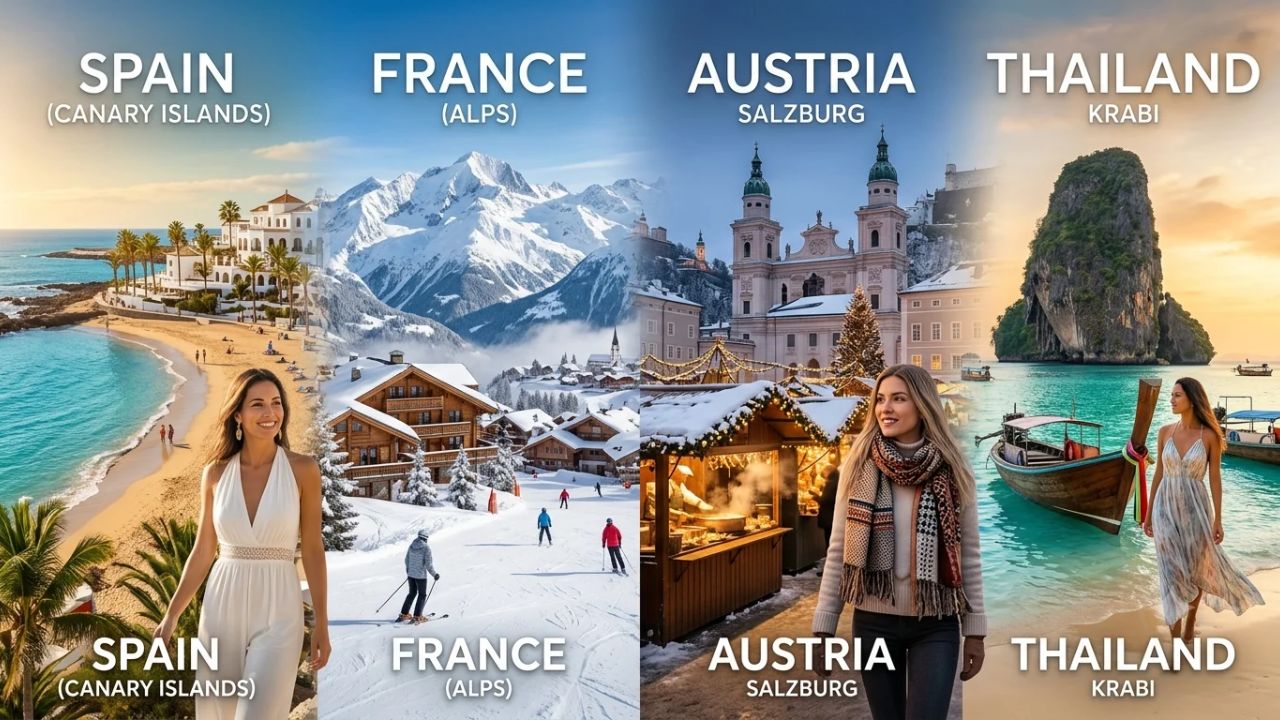
Spain, France, Austria, and Thailand Top Global Winter Tourist Rankings as Seasonal Migration Surges