
Boutique Canals: Luxury Hotel Barge Cruises Reshaping European Slow Travel
As low water levels impact large rivers, intimate hotel barge cruises across France, Belgium, and the UK offer a flexible and sustainable slow travel alternative.

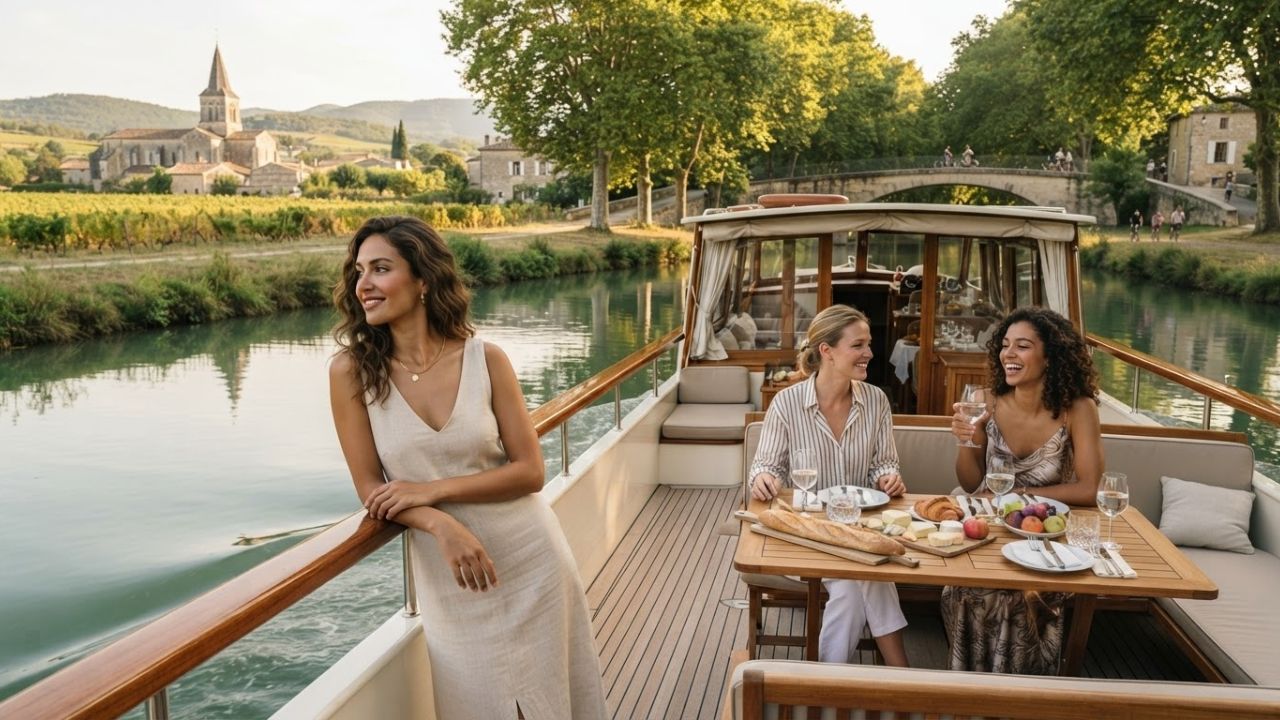
Image generated by AI
As record-low rainfall and heatwaves place pressure on Europe's free-flowing rivers, luxury hotel barge cruises with a maximum capacity of 20 passengers are emerging as a highly flexible, climate-resilient alternative for slow travel.
Intimate canal-based journeys are gaining traction across European waterways as travelers seek alternatives to large-scale river cruising. These smaller vessels navigate shallow channels that are inaccessible to standard cruise ships, allowing operators to maintain their schedules even during dry summer periods. By moving slowly, traveling shorter distances, and docking overnight, boutique barge operations provide travelers with an immersive, slow-paced exploration of regional history and culture.
Hydrological shifts and rising temperatures are forcing the travel industry to adapt. According to the European Commission's Joint Research Centre report published on August 12, drought has affected large parts of Europe since spring, with warmer and drier conditions expected to continue. The European Drought Observatory noted that by late July, critical drought levels remained stable across western, central, and parts of eastern Europe, the Balkans, and Italy, while conditions worsened in the UK and Ireland.
For the visitor, the real impact of these water shortages is the vulnerability of free-flowing rivers like the Rhine and Danube, which frequently experience navigation halts. In contrast, European canals are managed using reservoirs and water-control systems, offering much greater operational stability during dry spells.
Reddit: "The pace of a barge is incredibly relaxing. You are moving at walking speed, which lets you really absorb the villages instead of just passing them by." — r/travel
Operational Resilience of Boutique Hotel Barges
A key operational benefit of boutique hotel barges is their physical size and shallow draft. While massive river ships require deep channels to sail safely, smaller canal barges operate with minimal clearance. This physical advantage has allowed operators like European Waterways to maintain their full summer hotel barge programme in the face of widespread low-water conditions.
Across the continent, the impact on smaller vessels has been minimal. Only four vessels in the entire fleet required itinerary adjustments, while operations in Scotland, Ireland, England, and Italy remained completely unaffected. In France, popular cruising regions like the Canal du Midi, Champagne, Alsace, and Brittany have operated as scheduled, showing the strength of managed waterways.
Even in areas where water levels forced changes, the flexibility of the barge model minimized disruptions. In Burgundy, operators proactively relocated a small number of vessels to nearby channels, generally within 50 kilometres of their original routes. Because the alternative routes are close to the original paths, key shore excursions, historic châteaux visits, and local dining experiences were preserved.
Reddit: "If you're worried about the drought, stick to the canals. Unlike the Rhine, canal levels are controlled and rarely suffer from the same grounding issues." — r/solotravel
Comparative Hydrological Data and Waterway Performance
The summer dry spell has affected European regions differently, with the British Isles facing severe water management challenges. The UK government declared a formal drought across seven areas of England on July 29, following record-low rainfall and high temperatures. July rainfall in England reached only 7% of its long-term average, leaving about 78% of the country's rivers below normal levels, with one-sixth classified as exceptionally low.
To understand the difference in conditions between managed canals and free-flowing rivers, consider the following data:
| Waterway / Region | Operational Status (Summer 2026) | Hydrological Context | Passenger Capacity |
|---|---|---|---|
| Burgundy Canals (France) | 100% Operational (with minor route shifts) | Managed water via reservoirs; minor shifts within 50 km | 6 to 24 guests |
| Canal du Midi (France) | 100% Operational | UNESCO site; fully managed water levels | 6 to 12 guests |
| English Canals (UK) | 100% Operational | Flowing through drought zones; stable canal locks | Up to 12 guests |
| Scottish Canals (Scotland) | 100% Operational | Caledonian & Crinan canals; highly stable | Up to 12 guests |
| Shannon-Erne Waterway (Ireland) | 100% Operational | 63-kilometre connector; stable lake levels | Self-drive & crewed options |
| Grand Canal (Venice, Italy) | 100% Operational | Tidal saltwater lagoon; unaffected by river drought | Day sightseeing & overnight |
Supporting Local Economies and Regional Heritage
The shift toward boutique canal travel provides direct support to local economies that are often bypassed by mass tourism. By carrying fewer than 20 passengers, hotel barges do not overwhelm small villages. Instead, they foster sustainable travel practices by sourcing food, wine, and services directly from independent regional providers.
During a typical journey, passengers visit family-owned vineyards, purchase cheese from local farms, and dine at independent village restaurants. This direct economic injection helps sustain historic communities along the waterways. Environmental stewardship is also a key focus, with operators coordinating with regional bodies such as the French Waterways Authority (Voies Navigables de France - VNF) to ensure minimal ecological impact on fragile canal ecosystems.
Sustainable travel practices are built into the design of these journeys. The low-speed propulsion systems generate minimal bank erosion, and the small passenger counts reduce the strain on local infrastructure. Regional heritage is preserved through guided walks led by local historians, connecting travelers with the authentic stories of the regions they pass through.
A Guide to Europe’s Premier Hotel Barge Destinations
Burgundy, France: The Culinary Heartland
Burgundy remains a leading destination for authentic hotel barge travel, supported by Burgundy Tourism data showing nearly 1,200 kilometres of navigable waterways. The region's network includes the Burgundy Canal, Canal du Centre, Nivernais Canal, and the Yonne River. Cruises typically last from two to seven days, with vessels carrying between six and 24 guests. The experience focus is on grand châteaux visits, prestigious vineyards, and local gastronomy, with options for private charters that suit families or small groups.
Canal du Midi, France: UNESCO Heritage Cruising
The Canal du Midi is a UNESCO World Heritage Site that winds through the sunny Occitanie region of southern France. Local tourism authorities promote these hotel barges as floating boutique accommodations that combine cruising with cultural discovery. Standard features on these luxury vessels include private bathrooms, deck dining, and outdoor relaxation areas. The local tourism office highlights barge operations around Capestang and the Saint-Chinian area, with departures running from April to October, and some vessels staying open year-round.
Alsace, Marne, and Belgium: Historic Cross-Border Routes
Travelers seeking variety can book routes with operators like CroisiEurope, whose itineraries cover Alsace, the Marne, the Doubs Valley, the Saint-Martin Canal in Paris, and the Oise Valley, alongside cross-border routes in Belgium between Halle and Ghent. The Marne route connects Paris directly with the Champagne region, while the Saint-Martin Canal offers an unusual urban cruise through historic Parisian locks. Belgium routes provide a slow-paced view of historic Flemish towns and quiet countryside.
Scotland: The Great Glen Way Hike-and-Barge
For active travelers, VisitScotland supports boating holidays on the Caledonian, Crinan, Forth & Clyde, and Union Canals. A popular hybrid itinerary is the Great Glen Way hike-and-barge experience, which covers 75 miles from Fort William to Inverness. Over six nights, guests complete daily walking stages of five to 11 miles along the trail, returning to the comfort of their barge each evening for dinner and accommodation.
Ireland: Independent Cruising on Inland Lakes
Tourism Ireland highlights around 4,000 inland lakes connected by rivers and canals, with key cruising grounds including the 63-kilometre Shannon-Erne Waterway, the Grand and Royal Canals, Lough Key, and the Barrow Navigation. The Barrow Navigation offers 65 kilometres of navigable water between Athy and St Mullins. While crewed luxury barges exist, self-drive options like Riversdale Barge Holidays in County Leitrim are highly popular, giving travelers independence as they navigate the Shannon and Lough Erne region.
Italy: Venetian Lagoon and Po River Cruising
In Italy, the hotel barge sector is smaller, with Venice serving as the primary gateway. The famous Grand Canal stretches 3.8 kilometres through the historic center, serving as a vital transport route past historic palaces. While day sightseeing boats are common, overnight hotel-barge cruises are limited, and travelers should verify vessel types and itineraries before booking to ensure they are securing a true overnight cruise rather than a standard day boat.
Local Visitor Insider Tips for Canal Cruising
To make the most of a luxury canal cruise while supporting local heritage, keep these destination specialist tips in mind:
- Book the Shoulder Months: Aim for April to May or September to October. During these months, canal banks are quiet, temperatures are pleasant, and water management systems are highly stable.
- Respect Village Etiquette: When docking at small locks, respect the privacy of lock-keepers and local residents. Always ask for permission before photographing regional farmers at open-air markets.
- Savor Regional Specialties: Support local culinary traditions by trying regional dishes, such as Burgundy escargots, Epoisses cheese, or fresh Scottish salmon sourced directly from local fishmongers.
- Bring Walk-Ready Footwear: Canal towpaths are perfect for walking and cycling, but they can be uneven. Pack comfortable, sturdy walking shoes, and bring a reusable water bottle to reduce plastic waste.
- Verify Vessel Details: Ensure you confirm whether your barge is crewed and all-inclusive or self-drive. Always check the operator's cancellation and route-adjustment terms before making a deposit.
The Long-Term Outlook for Boutique Waterway Tourism
The long-term outlook for European waterway tourism relies on adapting to changing weather patterns. The stability of canals during the summer dry spell demonstrates the value of managed water infrastructure and smaller vessels. As climate variability increases, the flexibility to adjust routes within 50 kilometres will remain a key operational advantage.
By prioritizing low-impact tourism, reducing emissions, and working closely with local conservation departments, the boutique cruise sector offers a viable path forward. These slow-paced journeys protect historic waterways while providing travelers with deep, respectful connections to the cultures and communities of Europe.
Frequently Asked Questions
What is the difference between a river cruise and a hotel barge?
River cruises use large ships carrying 100 to 200 passengers on major rivers. Hotel barges are smaller, carrying six to 24 guests, and travel slowly along quiet, shallow canals.
Can hotel barges operate during a drought?
Yes. Canals use reservoirs and locks to control water levels. If adjustments are needed, barges can easily move to nearby routes within 50 kilometres.
Do I need experience to book a barge holiday in Ireland?
Crewed hotel barges include a professional captain and crew. If you choose a self-drive barge, the operator will provide training before you depart.
When is the best time of year for a European canal cruise?
The cruising season runs from April to October. The shoulder months of May and September offer comfortable weather, autumn foliage, and fewer crowds.
Savor the quiet canals, support local communities, and experience the art of slow travel.
Related Travel Guides
Disclaimer
This article is for informational and educational purposes only. It does not constitute legal, financial, or professional advice. While we strive to provide accurate and up-to-date information, travel policies, regulations, and conditions change rapidly. Always verify information with official sources before making travel decisions. Nomad Lawyer makes no representations about the accuracy, reliability, completeness, or suitability of the information provided. Readers should consult qualified professionals for advice specific to their circumstances. The views expressed in this article are those of the author and do not necessarily reflect the views of Nomad Lawyer.
Kunal K Choudhary
Co-Founder & Contributor
A passionate traveller and tech enthusiast. Kunal contributes to the vision and growth of Nomad Lawyer, bringing fresh perspectives and driving the community forward.
Learn more about our team →