
UK Travel Chaos: Fierce EU Schengen Biometric Crackdown Triggers Massive Airport Disruptions Across Greece, Spain, and France
As Greece and 28 other EU nations enforce strict new biometric border controls, UK travelers are violently plunged into severe travel chaos, facing hours-long queues and massive airport disruptions.

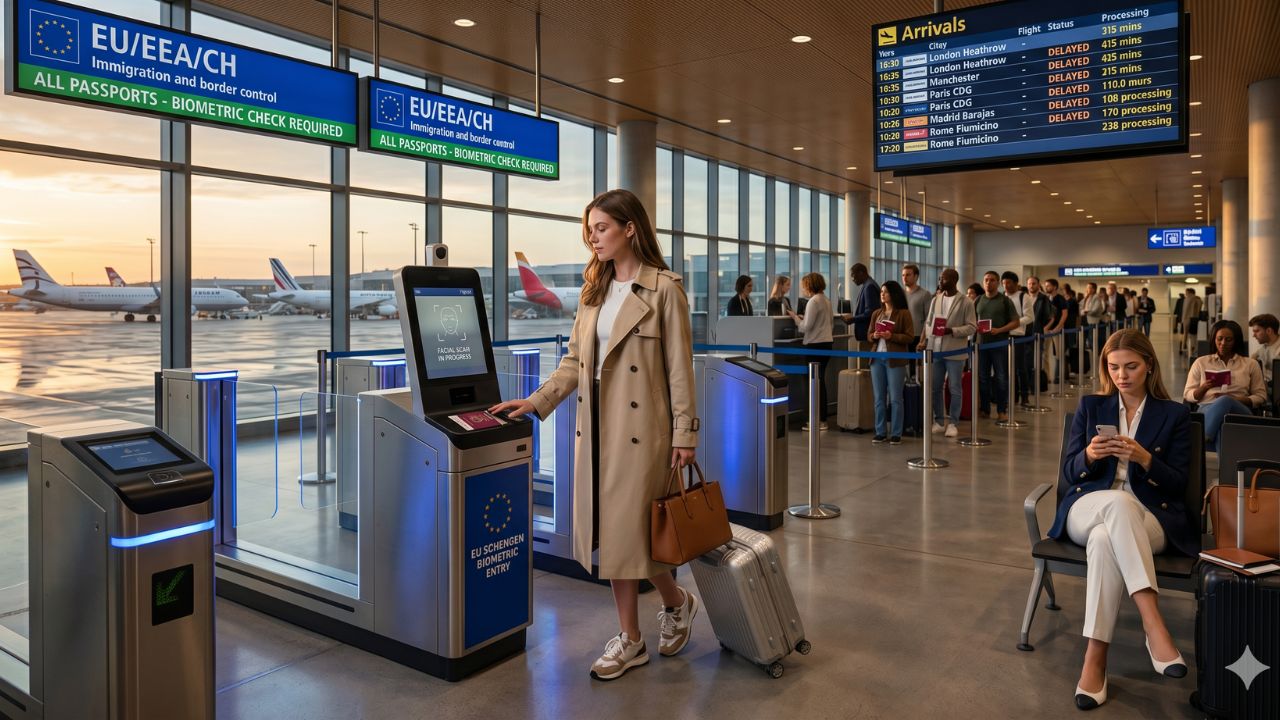
Image generated by AI
A Massive Border Security Meltdown Paralyzes European Hubs
While massive sectors of the global passenger network frequently battle highly unpredictable labor shortages, severe weather phenomena, and horrific commercial fleet constraints, unprecedented government regulatory shifts remain the absolute most terrifying catalyst for cascading airport disruptions. Delivering highly urgent, breaking airline news, verified European aviation trackers confirm that a catastrophic operational bottleneck has actively generated severe travel chaos across the massive EU Schengen aviation network. Today, June 3, 2026, severe terminal distress forcefully emerged as Greece officially joined Iceland, Italy, Germany, France, Spain, Slovenia, Lithuania, and over twenty other nations in launching a fierce, highly restrictive biometric border crackdown, completely crushing the fast-track entry dreams of millions of British tourists.
While desperate travelers usually attempt to navigate sudden, terrifying flight cancellations caused by technical failures, these exclusive aviation updates reveal a highly systemic, incredibly disruptive capacity crisis triggered by the European Union's Entry/Exit System (EES). Verified government data confirms that this massive operational strain is a direct result of strictly enforced fingerprint scanning, digital facial recognition, and aggressive border interrogations. This horrific logistical overload is actively destroying the operational efficiency of Europe's primary tourist gateways, violently stranding British holidaymakers in massive, hours-long security queues, and officially triggering an unprecedented UK travel crisis that threatens to inflict catastrophic financial losses on the Southern European tourism sector.
Expanded Overview: The Scale of the Transcontinental Crisis
The sudden, highly publicized execution of this massive regional operational lockdown serves as an undeniable example of how rapidly a heavily reliant transit network can completely disintegrate under extreme regulatory pressure. The massive disruption has explicitly drawn international attention to the incredibly complex, highly fragile operational ecosystem that links the United Kingdom to the Mediterranean. For a massive continental region heavily reliant on incredibly robust, high-frequency inbound flight schedules, forcing millions of tourists through slow, highly complex biometric processing kiosks completely destroys peak summer travel fluidity.
The terrifying reality of this crisis is found in the sheer volume of high-capacity aircraft abruptly dumping thousands of passengers into overwhelmed arrival halls simultaneously. The EES completely replaces traditional passport stamping with a mandatory, centralized database collection of four-finger biometric prints and digital facial scans for all non-EU visitors. While the system claims to streamline border security and violently eradicate overstays, its real-world implementation during the massive summer travel peak has caused catastrophic bottlenecks. Because British tourists are legally classified as third-country nationals post-Brexit, their traditional fast-track privileges have been forcefully revoked, guaranteeing that massive localized ripple effects will violently spiral into unmanageable waves of terminal congestion.
Section-Wise Breakdown of the Connectivity Crisis
The UK Travel Meltdown
The ruthless enforcement of the EES has hit UK travelers with devastating force. Summer holidaymakers who previously relied on rapid passport checks are now violently forced into full biometric processing. Airports across Greece, Italy, Spain, and France have reported terrifyingly long delays, leaving exhausted families highly frustrated and anxious about missing connecting transport. The backlog at border control is severely compounded by limited kiosk availability and understaffed immigration desks. Earlier in 2026, false hopes were spread that UK travelers might receive fast-track exemptions; EU authorities aggressively crushed those dreams, clarifying that absolutely no nationality-based exemptions exist.
Inflicting Major Tourism Losses
The brutal introduction of the EES and the ensuing hours-long delays are actively triggering direct, catastrophic economic consequences for tourism-dependent nations. Extended processing times violently reduce the time and money tourists spend in city centers, restaurants, and retail outlets. Hotels in Greece and Spain have reported massive waves of late arrivals and shortened stays as exhausted visitors attempt to recover from border trauma. Industry analysts fiercely warn that if this severe travel chaos persists, British travelers will aggressively abandon the Mediterranean in future years, shifting their vast financial power to alternative destinations outside the brutal Schengen dragnet.
Country-Specific Border Gridlock
The implementation of this biometric crackdown is causing severe operational trauma across highly specific regional entry points:
- Greece: Full biometric checks now actively paralyze Athens and Thessaloniki international airports. Fast-track processing for UK travelers has been completely eradicated, creating severe bottlenecks during peak morning arrivals.
- France: Despite massive investments in new kiosks, Paris CDG and Orly are officially reporting horrifying three-hour processing times for arriving flights.
- Spain: Madrid, Barcelona, and Malaga have been forced to desperately construct temporary processing lanes to manage the massive congestion of inbound British flights.
- Italy: Rome, Milan, and Venice airports face severe delays during early morning and evening arrival waves, despite expanding their EES zones.
- Iceland: Highly limited border infrastructure means queues grow exponentially fast, particularly for vulnerable cruise ship arrivals.
- Germany: Frankfurt and Munich airports report aggressively long queues as they struggle to process massive volumes of international transit passengers.
- Slovenia & Lithuania: Cross-border coach traffic into Slovenia and seasonal flights into Vilnius face incredibly heavy, slow biometric scrutiny.
Verified EES Disruption and Implementation Data
To fully comprehend the massive operational scale and severe capacity strain dictating this highly volatile international crisis, the following tables explicitly detail the exact border disruptions and the full scope of the Schengen biometric dragnet:
Severe Airport Disruptions by Country
| Country | Major Impacted Airports | Operational Severity |
|---|---|---|
| Greece | Athens, Thessaloniki | Fast-track eliminated; severe peak bottlenecks. |
| France | Paris CDG, Orly | Reporting horrifying 3-hour processing delays. |
| Spain | Madrid, Barcelona, Malaga | Desperate deployment of temporary lanes. |
| Italy | Rome, Milan, Venice | Severe early morning/evening processing delays. |
| Germany | Frankfurt, Munich | Massive queues despite heavy staffing adjustments. |
The 29 Schengen Nations Enforcing the EES Crackdown
| Western / Northern Europe | Southern Europe | Eastern / Central Europe |
|---|---|---|
| Austria, Belgium, France | Greece, Italy, Spain | Bulgaria, Croatia, Czechia |
| Denmark, Finland, Sweden | Portugal, Malta | Estonia, Latvia, Lithuania |
| Germany, Netherlands | Slovenia | Hungary, Poland, Romania |
| Iceland, Norway | - | Slovakia |
| Switzerland, Liechtenstein | - | Luxembourg |
Passenger Impact: Navigating the Regulatory Meltdown
For the modern commuter attempting to navigate this highly volatile European network, the passenger impact of this massive border crackdown is completely exhausting. Reliable border entry is the absolute backbone of multi-city itineraries frequently booked by high-spending international tourists.
- Anticipate Overwhelming Terminal Congestion: Because thousands of passengers are forced to use unfamiliar biometric kiosks, expect the arrival hall to descend into complete travel chaos. Build massive time buffers into your ground transportation plans.
- Prepare for Intense Interrogation: Beyond fingerprinting, border staff are now aggressively interrogating tourists regarding proof of accommodation, return flights, and sufficient travel insurance. Failing to produce this documentation instantly risks deportation.
- Arrive Terribly Early for Departures: If exiting the Schengen zone, the EES exit checks will also cause severe delays. Airlines aggressively demand that passengers arrive at least three hours prior to departure to survive the biometric exit gauntlet.
Conclusion: A Highly Volatile Transit Crisis
The massive, highly publicized biometric border crackdown currently crushing the Schengen Area represents a severe, terrifying operational crisis for the European travel sector. By actively forcing millions of passengers through strained, technologically complex gateways, this extreme regulatory shift guarantees an incredibly stressful, highly exhausting travel experience. As operational teams frantically battle sudden logistical puzzles and severe processing backlogs, British passengers are heavily urged to aggressively prepare their travel documents, mentally brace for excruciatingly long queues, and fully expect massive, cascading flight disruptions amidst unprecedented European travel chaos.
Key Takeaways
- Massive Border Crackdown: 29 EU Schengen nations have officially launched the Entry/Exit System (EES), enforcing mandatory fingerprinting and facial scans.
- UK Travel Crisis: British tourists, now classified as third-country nationals, have had their fast-track privileges completely destroyed, resulting in severe airport delays.
- Severe Processing Times: Airports in France, Spain, and Greece are reporting massive queues, with Paris CDG experiencing processing times of up to three hours.
- Economic Devastation: The horrific delays are severely threatening the tourism sectors of Southern Europe, as exhausted travelers cut trips short or vow to avoid the Mediterranean entirely.
- Passenger Survival Tactics: Travelers are aggressively urged to meticulously organize their hotel bookings and return tickets to survive border interrogations, and must expect total travel chaos upon arrival at any major European airport.
Disclaimer: The specific biometric processing times, airport congestion levels, and border security enforcement protocols presented in this report are based on verified government data regarding the EU Entry/Exit System in June 2026. Official border routing, terminal queue times, and local immigration policies are highly volatile and subject to continuous, real-time update based on active security directives, fluctuating passenger volumes, and sudden technological failures at biometric kiosks. Prospective passengers are urgently advised to fiercely monitor their specific booking status and verify active entry requirements directly via their national foreign office prior to airport arrival.
Disclaimer
This article is for informational and educational purposes only. It does not constitute legal, financial, or professional advice. While we strive to provide accurate and up-to-date information, travel policies, regulations, and conditions change rapidly. Always verify information with official sources before making travel decisions. Nomad Lawyer makes no representations about the accuracy, reliability, completeness, or suitability of the information provided. Readers should consult qualified professionals for advice specific to their circumstances. The views expressed in this article are those of the author and do not necessarily reflect the views of Nomad Lawyer.
Kunal K Choudhary
Co-Founder & Contributor
A passionate traveller and tech enthusiast. Kunal contributes to the vision and growth of Nomad Lawyer, bringing fresh perspectives and driving the community forward.
Learn more about our team →