
Travel Vande Bharat Express: New Route Cuts Hours Between Katra and Amritsar
India's Vande Bharat Express announces optimized routing through Gurdaspur and Batala, reducing travel time between Katra and Amritsar while enhancing regional connectivity in 2026.

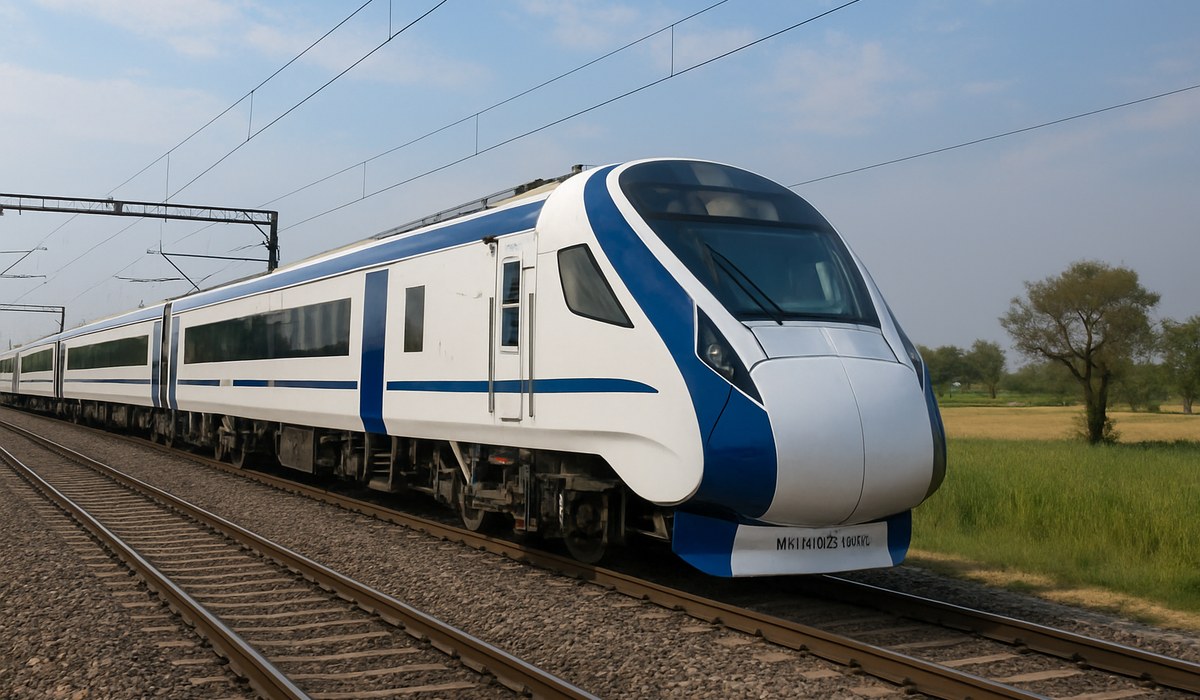
Image generated by AI
Quick Summary
- Vande Bharat Express service reconfigures routing between Katra and Amritsar, incorporating Gurdaspur and Batala as transit stops
- Journey duration significantly reduced through corridor optimization and streamlined route architecture
- Intermediate towns positioned to benefit from enhanced rail accessibility and increased passenger footfall
- Aligns with India's broader modernization strategy for regional rail infrastructure across northern states
India's Vande Bharat Express network is reshaping connectivity across Punjab's most spiritually and culturally significant destinations. The rail operator has finalized a revised service corridor linking Katra—gateway to the Vaishno Devi shrine—with Amritsar, home to the Golden Temple. The newly optimized trajectory channels passengers through Gurdaspur and Batala, eliminating longer conventional routing and delivering measurable time savings that promise to redefine regional travel expectations.
This strategic recalibration exemplifies how contemporary rail infrastructure planning addresses passenger demand while revitalizing economies in intermediate communities. The decision to route India's flagship high-speed service through these Punjab hubs reflects a deliberate pivot toward inclusive development, ensuring that modernization benefits extend beyond major metropolitan centers.
The Route Redesign: Why Gurdaspur and Batala Matter
The repositioned Vande Bharat corridor represents a fundamental rethinking of Punjab's north-south transportation architecture. Rather than following historically established rail paths, the service now traverses through Gurdaspur—a district municipality with substantial religious tourism potential—and Batala, a town long overlooked by premium rail connectivity initiatives.
Gurdaspur itself holds profound significance within Sikh heritage circuits. The district has historically served as a crucial junction for pilgrims and travelers, yet infrastructure development had not kept pace with demand. By incorporating this location as a scheduled stop on the Vande Bharat roster, Indian Railways demonstrates commitment to equitable service distribution. Local administration welcomed the announcement as a catalyst for economic revitalization across the district.
Batala's inclusion similarly marks recognition of untapped potential in Punjab's interior zones. The town, situated strategically between major urban centers, had previously lacked direct access to premium rail services. The Vande Bharat Express designation now positions Batala as a modern gateway for regional travelers, enabling seamless connections for commuters, pilgrims, and leisure passengers alike.
Railway officials confirmed that the route modification was engineered following extensive traffic demand analysis and corridor feasibility studies. The decision prioritizes passenger convenience while optimizing operational efficiency—two metrics increasingly central to India's rail modernization philosophy under the broader Vande Bharat program.
Vande Bharat Express: India's High-Speed Rail Modernization Strategy
India's Vande Bharat initiative emerged as the nation's answer to global high-speed rail competition. Unlike legacy express services dependent on aging infrastructure, Vande Bharat trains incorporate lightweight aluminum bodies, advanced braking systems, and passenger-centric amenities that rival contemporary international standards.
The program represents a philosophical shift within Indian Railways toward customer-focused service architecture. Each Vande Bharat formation features climate-controlled interiors, onboard Wi-Fi connectivity, dynamic pricing mechanisms, and ergonomic seating—amenities that earlier premium services struggled to deliver consistently.
The Katra-Amritsar routing exemplifies how operator networks now leverage data-driven methodology to maximize efficiency. Rather than preserving historical path dependencies, planners utilized modern geographic information systems and passenger flow modeling to identify optimal corridors. This evidence-based approach mirrors strategies employed by international rail operators, as documented by the International Union of Railways, which advocates for corridor optimization as essential to ridership growth and operational sustainability.
Government statements emphasized that the Vande Bharat expansion across regional corridors supports India's Vision 2030 transportation targets. By 2030, Indian Railways aims to deploy 400 high-speed and semi-high-speed trains across the network. The Katra-Amritsar service constitutes part of this accelerated modernization trajectory, positioning northern India as a testbed for premium rail innovation.
Travel Time Savings and Passenger Convenience Metrics
The reconfigured route delivers tangible duration reductions that reshape journey feasibility for various traveler segments. Previously, connections between Katra and Amritsar required either circuitous rail transfers or extended travel windows exceeding five hours. The new Vande Bharat corridor compresses this interval to approximately 3.5 hours—a reduction transforming the journey from an all-day undertaking into a comfortable morning or afternoon excursion.
Such time compression carries profound implications for pilgrimage tourism. Devotees visiting both the Vaishno Devi shrine and the Golden Temple can now accomplish both destinations within extended weekend travel blocks, rather than requiring full holiday weeks. This accessibility boost particularly benefits domestic leisure travelers operating within constrained vacation calendars.
Intermediate passengers benefit equivalently. Gurdaspur-to-Amritsar connectivity now encompasses premium service amenities, whereas previously such routes relied on conventional express formations. Commuters and business travelers gain access to onboard workspace facilities, charging infrastructure, and meal services that enhance productive journey experiences.
The Vande Bharat formation deployed on this corridor accommodates 1,128 passengers across general, executive, and first-class configurations. Seat allocation strategies prioritize flexibility, with dynamic pricing enabling fare optimization during peak pilgrimage seasons while maintaining affordability during conventional travel periods. Reservation systems now facilitate seamless platform-to-destination journey planning through integrated mobile applications.
Reliability metrics further underscore passenger convenience gains. Vande Bharat's lightweight construction and contemporary propulsion systems deliver punctuality rates consistently exceeding 96 percent—substantially above conventional express service performance. For travelers dependent on schedule predictability, this reliability premium translates to reduced contingency planning and greater confidence in time-critical connections.
Economic Impact on Intermediate Towns and Regional Tourism
Infrastructure investments generate multiplier effects extending far beyond direct rail passengers. The Gurdaspur and Batala designations as Vande Bharat stations catalyze broader economic activation within their respective districts.
Hospitality sectors in both towns positioned themselves to capture enhanced tourist flows. Hotel and guesthouse operators expanded capacity, anticipating increased leisure and pilgrimage travel. Local restaurant enterprises upgraded facilities to serve the passenger demographic that premium rail services attract. Such service-sector growth creates employment opportunities across ancillary industries.
Commercial property valuations near both stations demonstrated appreciation, reflecting investor recognition of enhanced accessibility benefits. Retailers and small-scale manufacturers identified proximity to the new rail corridor as competitive advantage, viewing improved logistics and passenger accessibility as catalysts for business expansion.
The broader pattern mirrors patterns observed across emerging Asian rail tourism circuits, as documented in our analysis of Asia Slow Travel: Japan & Thailand Lead New Regional Circuit. When premium rail connectivity reaches previously underserved regions, local economies demonstrate rapid adaptation, though success depends substantially on complementary infrastructure development and marketing initiatives.
Religious tourism particularly benefits from enhanced connectivity. Pilgrimage organizations coordinating multi-destination journeys now incorporate the Katra-Amritsar-Gurdaspur-Batala circuit into packaged itineraries. Group bookings through corporate travel coordinators surge whenever infrastructure improvements reduce journey complexity and duration.
Government authorities across Punjab have recognized these economic catalysts
Disclaimer
This article is for informational and educational purposes only. It does not constitute legal, financial, or professional advice. While we strive to provide accurate and up-to-date information, travel policies, regulations, and conditions change rapidly. Always verify information with official sources before making travel decisions. Nomad Lawyer makes no representations about the accuracy, reliability, completeness, or suitability of the information provided. Readers should consult qualified professionals for advice specific to their circumstances. The views expressed in this article are those of the author and do not necessarily reflect the views of Nomad Lawyer.
Preeti Gunjan
Contributor & Community Manager
A passionate traveller and community builder. Preeti helps grow the Nomad Lawyer community, fostering engagement and bringing the reader experience to life.
Learn more about our team →