
Japan's Hisatsu Orange Railway Restores Full Service After 77-Day Kumamoto Earthquake Shutdown
The Hisatsu Orange Railway has resumed full operations in Kumamoto Prefecture after a 77-day outage caused by the July 2026 earthquake, reopening the critical 23.6 km Yatsushiro-Higo-Tanoura section.

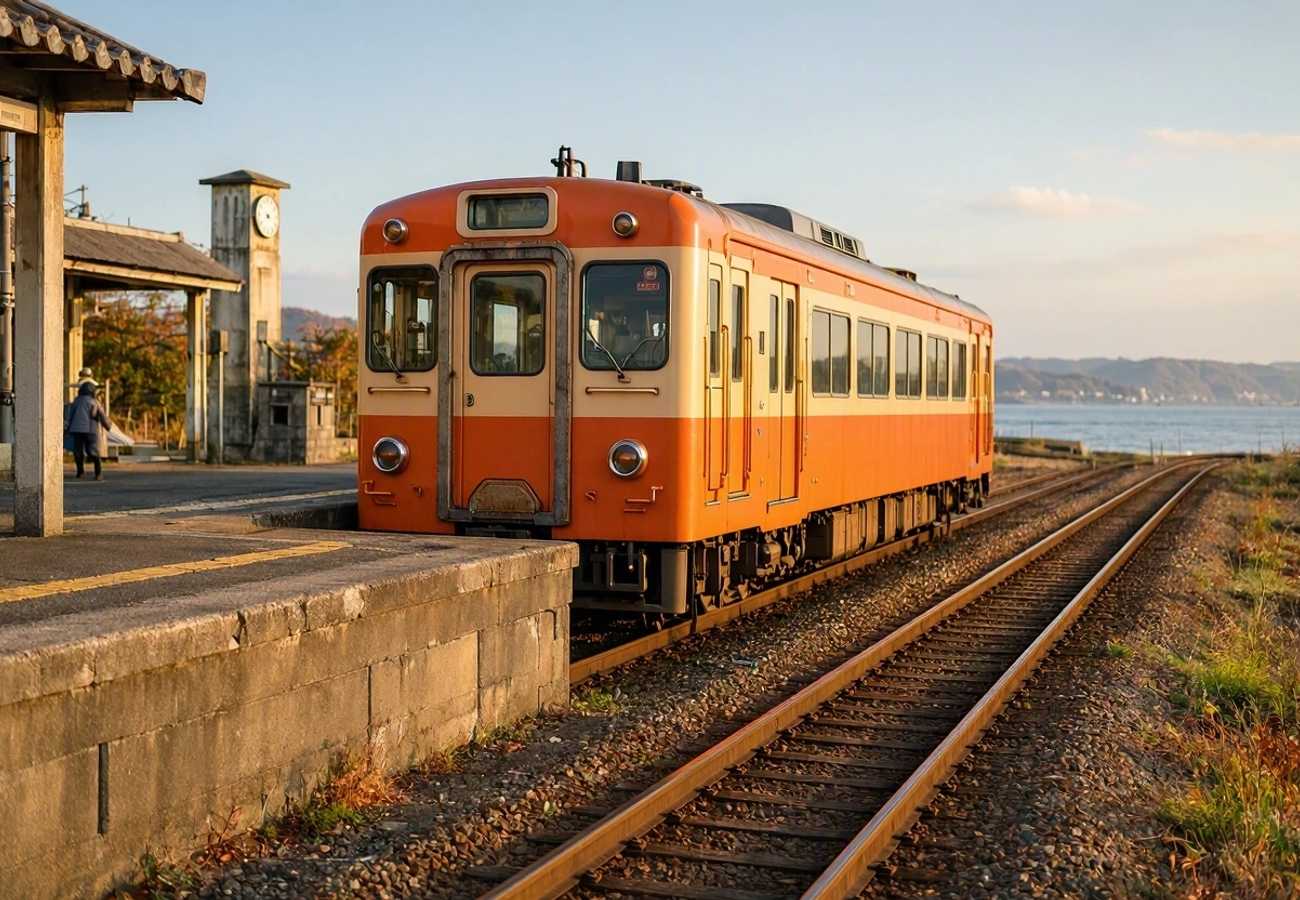
Image generated by AI
Infrastructure recovery in southwestern Japan has reached a critical milestone, with the final suspended rail segment in Kumamoto reopening after exactly 77 days of total disruption. This restoration marks the end of a service gap that began on 28 July 2026, signaling a return to operational normalcy for one of Kyushu's vital third-sector railway networks.
The Recovery in Numbers: Hisatsu Orange Railway
The restoration focuses on a specific 23.6-kilometre stretch of track between Yatsushiro and Higo-Tanoura stations. This particular segment bore the brunt of the 28 July 2026 seismic event due to its proximity to the earthquake's epicentre. The physical damage was not limited to surface debris; the event caused significant deformation of the railway tracks and structural damage to station platforms.
Because railway safety depends on precise track geometry, the 77-day window was required to ensure that alignment met strict safety standards. Any deviation in track geometry can lead to derailment or operational failure, necessitating a comprehensive engineering overhaul rather than a simple cleanup. According to reports from Jiji Press, the official reopening on 13 October 2026 signifies that all railway lines within the affected Kumamoto areas are now fully operational.
Comparative Impact of the July 2026 Disruption
The Hisatsu Orange Railway operates as a third-sector entity—a Japanese business model combining public-sector investment with private organization. Unlike the high-speed Shinkansen lines managed by JR Group, third-sector lines like the Hisatsu Orange Railway are the primary lifelines for rural communities.
The disruption created a binary split in regional mobility: while major urban hubs remained accessible, the coastal corridor between Yatsushiro and Higo-Tanoura became a dead zone for rail transit, forcing residents to rely on limited alternative transport for essential services.
Kumamoto Rail Restoration Breakdown (2026)
| Metric | Pre-Earthquake Status | Disruption Period (July-Oct) | Current Status (Post-Oct 13) |
|---|---|---|---|
| Operational Status | Full Service | Partial Suspension | Full Service Restored |
| Critical Section | Yatsushiro $\leftrightarrow$ Higo-Tanoura | Closed (23.6 km) | Open (23.6 km) |
| Outage Duration | 0 Days | 77 Days | 0 Days |
| Infrastructure State | Standard Alignment | Deformed Tracks/Platforms | Certified Safe |
| Service Access | Direct Rail | Alternative Transport Only | Direct Rail |
What This Means for Travelers
For those planning travel to southwestern Japan, the restoration of this line changes the logistics of exploring the Kyushu region. The Hisatsu Orange Railway provides a scenic coastal alternative to the main arterial routes, connecting smaller communities that are often overlooked by traditional tourist itineraries.
Actionable Advice for Q4 2026 Travelers:
- Verify Timetables: While the physical tracks are open, the operator has not confirmed that pre-earthquake departure schedules have been fully reinstated. Use the official Hisatsu Orange Railway portal or Japan National Tourism Organization (JNTO) to verify current timings.
- Route Planning: Travelers moving between Kumamoto and Kagoshima prefectures can now once again utilize the coastal corridor. This is particularly beneficial for those visiting the coastal towns served by Higo-Tanoura.
- Expect Local Congestion: As regional residents return to rail for medical and shopping trips—some of whom had been displaced for over two months—expect higher-than-normal passenger volumes on local trains during weekday mornings and evenings.
Projection: The Future of Kyushu's Rail Resilience
The 77-day recovery window provides a benchmark for how Japan's third-sector railways handle mid-scale seismic events. While the rail lines are open, the broader infrastructure recovery in Kumamoto continues. The speed of this restoration suggests a high level of readiness in Japan's regional engineering sectors, but it also highlights the vulnerability of coastal rail corridors to track deformation.
Looking forward, we expect a shift toward more resilient track bedding and platform reinforcement in the Kumamoto region to prevent similar 70+ day outages in future events. For the travel industry, this signals that "slow travel" routes in Kyushu are once again viable for itinerary planning, though the financial impact on the third-sector operator from 77 days of lost revenue may lead to temporary adjustments in service frequency.
FAQ: Kumamoto Rail Recovery 2026
Are all trains running on their original schedules? Not necessarily. While the lines are open, the operator has not confirmed a return to the exact pre-July 28 timetables. Travelers should check current schedules before departing.
Is it safe to travel on the Yatsushiro–Higo-Tanoura section? Yes. The line only reopened after the deformed tracks and damaged platforms were repaired and certified for passenger safety on 13 October 2026.
Which operator manages this specific route? The route is managed by Hisatsu Orange Railway Inc., a third-sector operator involving both public and private investment.
Does this reopening mean all earthquake damage in Kumamoto is fixed? No. This announcement specifically applies to the railway services in the affected areas; other forms of regional infrastructure may still be undergoing repairs.
The return of the coastal rail link restores more than just a commute; it restores the regional pulse of southwestern Kyushu.
Related Travel Guides
Disclaimer
This article is for informational and educational purposes only. It does not constitute legal, financial, or professional advice. While we strive to provide accurate and up-to-date information, travel policies, regulations, and conditions change rapidly. Always verify information with official sources before making travel decisions. Nomad Lawyer makes no representations about the accuracy, reliability, completeness, or suitability of the information provided. Readers should consult qualified professionals for advice specific to their circumstances. The views expressed in this article are those of the author and do not necessarily reflect the views of Nomad Lawyer.
Kunal K Choudhary
Co-Founder & Contributor
A passionate traveller and tech enthusiast. Kunal contributes to the vision and growth of Nomad Lawyer, bringing fresh perspectives and driving the community forward.
Learn more about our team →