
EU Entry System Chaos: Four-Hour Airport Queues Devastate Summer Travel Across Europe's Biggest Hubs
The EU's new biometric Entry/Exit System has triggered unprecedented four-hour airport queues across Paris, Barcelona, and Madrid, stranding non-EU travelers during peak summer season.

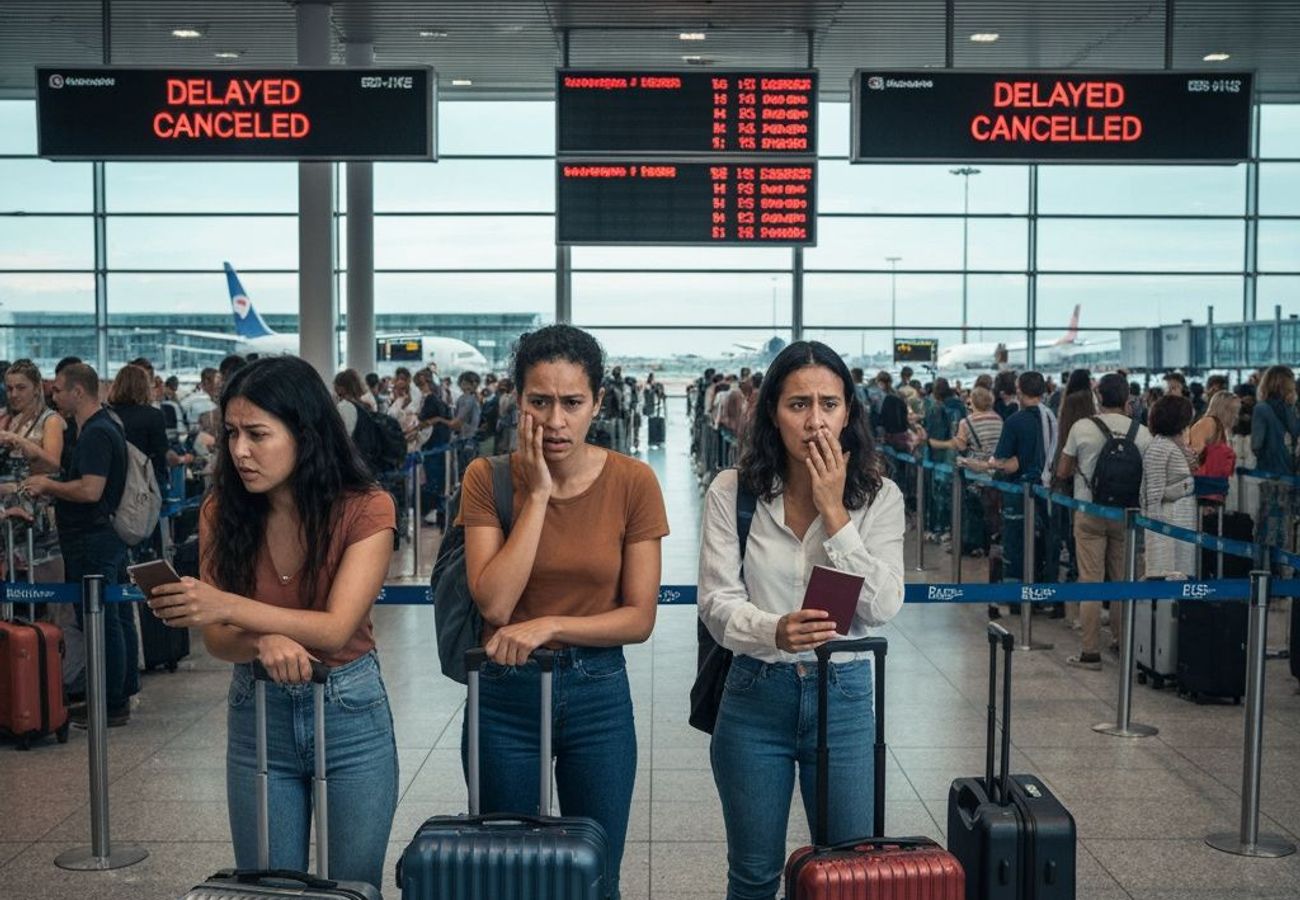
Image generated by AI
The System That Broke European Aviation
The European Union's Entry/Exit System went live with a catastrophic whimper, not a bang. Non-EU travelers arriving at continental airports now face mandatory biometric scanning—fingerprints, facial recognition, the works—and the infrastructure simply cannot handle the load. What's emerged is a logistical nightmare that's cascading across twenty-nine nations, with queues regularly exceeding four hours during peak arrival windows.
I've covered airport disruptions for years, but this is different. This isn't a strike, a storm, or a technical glitch. This is systematic architectural failure meeting peak summer travel demand.
Biometric Mandates Meet Reality
Here's what's actually happening at the gates: every non-EU passenger must submit to electronic biometric profiling upon arrival. Fingerprints get scanned. Facial data gets captured in real-time. The system requires pristine environmental conditions to register human metrics accurately, which means individual processing times have skyrocketed. When three wide-body aircraft land simultaneously—which happens constantly during morning waves—the bottleneck becomes genuinely catastrophic.
The procedural complexity compounds instantly. Standard airline turnaround times are collapsing. Passengers miss connections. Staff are overwhelmed. The entire operational ecosystem is under unprecedented strain.
Reddit: "We waited 3.5 hours at Paris CDG just to get through immigration. Our flight was already boarding when we made it through." — r/travel
Where It's Worst
Paris Charles de Gaulle, Barcelona El Prat, and Madrid-Barajas are experiencing the most severe operational stagnation. Geneva is equally brutal—four-hour waits are now routine during peak hours. Even smaller Mediterranean hubs like Palma de Mallorca are struggling to process charter flight arrivals under the new requirements.
The geography matters. Older terminal infrastructure cannot be rapidly retrofitted to accommodate bulky electronic screening banks. When a single terminal gate experiences a data lag, the entire airport layout faces cascading pedestrian blockages. One system failure triggers airport-wide gridlock.
What's particularly brutal: these are the busiest travel hubs during peak summer season. The timing couldn't be worse.
How Aviation Bodies Are Responding
The International Air Transport Association and Airlines for Europe have issued urgent warnings pointing directly to critical software flaws in the automated border verification gates. Their collective position is unambiguous: the infrastructure wasn't ready for deployment during high-volume periods. According to IATA reporting on operational disruptions, this represents one of the most significant infrastructure implementation failures in recent aviation history.
Airport operators are desperately deploying additional staff to terminal floors, attempting manual passport verification while passengers queue. But here's the harsh reality: IT infrastructure limitations prevent systemic throughput improvements. You can add bodies, but you can't bypass the biometric mandate itself.
The unified corporate pushback demonstrates how severely this has disrupted normal operations. Airline executives are frustrated—not just inconvenienced, but operationally constrained.
Survival Strategies for Travelers
Non-EU passengers must adapt immediately. Security experts strongly recommend arriving at least four hours before departure—and that's just a baseline. This accounts for unpredictable biometric registration delays that could stretch even longer during peak windows.
Keep all physical identification documents readily accessible. Maintain composure during biometric registration—repetitive software reading errors spike when passengers are stressed or rushed. Real-time queue tracking applications like FlightRadar and airport-specific apps now provide dynamic terminal congestion data, allowing passengers to anticipate bottlenecks before arrival.
Families with young children should pack provisions for extended periods in immigration halls. Understanding that digital border agents cannot bypass mandatory biometric capture helps set realistic psychological expectations for the journey.
Government Workarounds: Temporary and Insufficient
Some governments are deploying emergency relief measures. British border officials recently suspended biometric screening during extreme localized conditions to prevent dangerous gridlock. These tactical suspensions offer immediate passenger relief but fundamentally undermine the security mandate.
Here's the core problem: temporary manual overrides dilute the entire purpose of the biometric initiative. You can't selectively enforce a security system. Either it operates uniformly across all jurisdictions, or it fails to achieve its stated objectives.
The broader political reality is darker. Several member states deployed advanced screening infrastructure simultaneously without adequate testing or capacity planning. Updating global database frameworks requires absolute technical synergy across multiple nations—minor software glitches cause massive international blockages.
As summer passenger volumes push transit systems to absolute limits, more drastic regulatory interventions are inevitable. Either the EU optimizes the software urgently, or the system will continue hemorrhaging travelers and revenue.
The biometric future arrived before the infrastructure was ready to handle it.
Related Travel Guides
Disclaimer
This article is for informational and educational purposes only. It does not constitute legal, financial, or professional advice. While we strive to provide accurate and up-to-date information, travel policies, regulations, and conditions change rapidly. Always verify information with official sources before making travel decisions. Nomad Lawyer makes no representations about the accuracy, reliability, completeness, or suitability of the information provided. Readers should consult qualified professionals for advice specific to their circumstances. The views expressed in this article are those of the author and do not necessarily reflect the views of Nomad Lawyer.
Preeti Gunjan
Contributor & Community Manager
A passionate traveller and community builder. Preeti helps grow the Nomad Lawyer community, fostering engagement and bringing the reader experience to life.
Learn more about our team →