
The 17-Hour Transpacific Leap: What American Airlines’ Potential LAX–Singapore Route Means for Pacific Rim Voyagers
As American Airlines evaluates a 14,093-kilometer nonstop corridor from Los Angeles to Singapore using premium Boeing 787-9 jets featuring 51 Flagship Suites, transpacific travelers stand on the brink of an ultra-long-haul showdown.

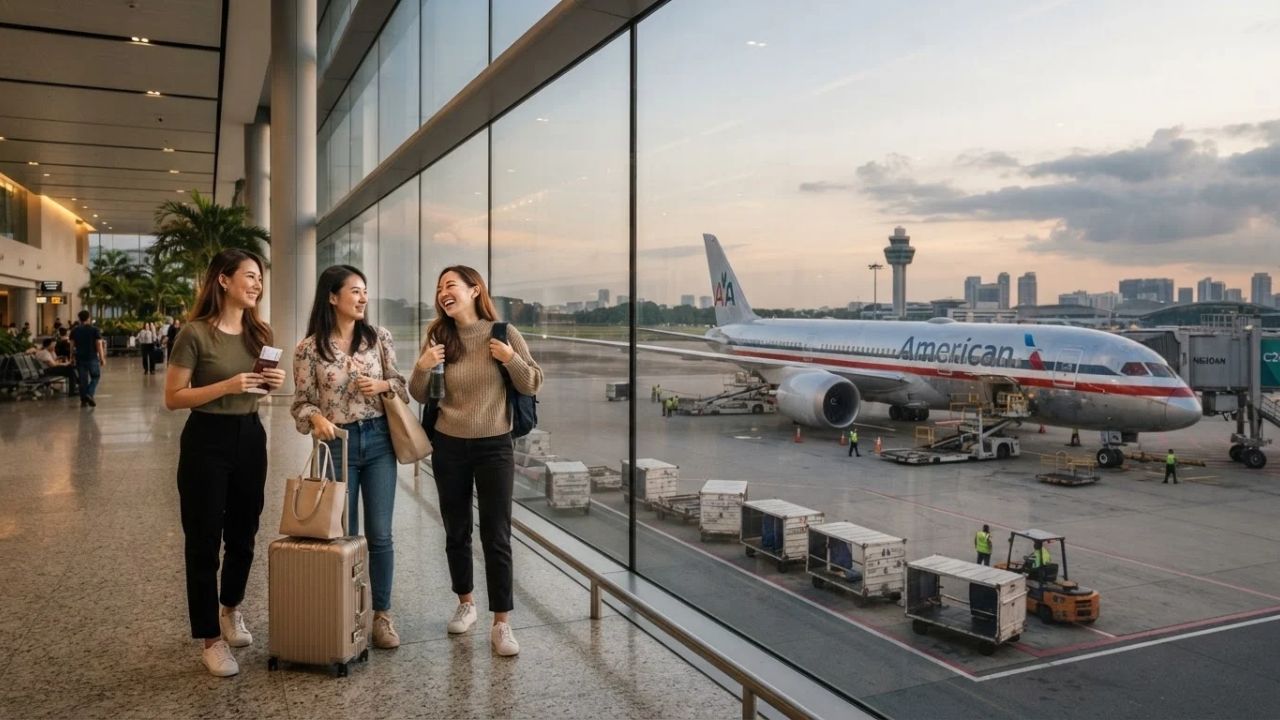
Reassessing a 14,093-kilometer transpacific corridor, American Airlines weighs deploying its premium-configured Boeing 787-9 between Los Angeles and Singapore
Stretching across 8,757 nautical miles (14,093 kilometers) and demanding seventeen uninterrupted hours aloft above the vast Pacific Ocean, the direct aerial corridor linking Southern California with the equator represents one of commercial aviation’s most extreme endurance tests. As American Airlines Chief Commercial Officer Nat Pieper signaled on September 14, 2026, the Texas-based legacy carrier is actively evaluating a nonstop return to this flagship route, deploying its newly configured Boeing 787-9 aircraft to connect Los Angeles International Airport (LAX) directly with Singapore Changi Airport (SIN). The potential service marks an ambitious strategic reversal after years of shrinking its Pacific footprint, setting the stage for an ultra-long-haul showdown against Singapore Airlines in one of the most lucrative corporate and leisure travel corridors on earth.
For international travelers navigating the Pacific Rim, this prospective route is far more than an expanded timetable option. Connecting the sprawling creative capital of Los Angeles directly with the equatorial financial and botanical heart of Southeast Asia unites two of the world's most dynamic cultural centers. Traversing across the International Date Line in a single bound, voyagers can leave the Pacific surf of Southern California behind and wake up beneath the cascading indoor rainforest waterfalls of Singapore, ready to explore ancient Peranakan quarters and UNESCO-recognized culinary traditions.
Rebuilding the Pacific Bridge: The Economics of the Premium 787-9
The prospect of American Airlines restoring a direct Los Angeles–Singapore connection reflects a fundamental rethink of long-haul fleet economics. In previous years, American retreated from several transpacific routes originating at LAX—including direct services to Hong Kong, Beijing, and Shanghai—after encountering intense competition, excess market capacity, and challenging passenger yields. However, the introduction of the carrier's newly configured Boeing 787-9 aircraft, internally designated "78P," fundamentally shifts the revenue equation.
Rather than relying heavily on low-yield economy seating across 14,000 kilometers of ocean, the updated 787-9 layout is heavily weighted toward high-value premium travelers. The cabin features 51 private Flagship Suite seats equipped with sliding privacy doors, customized personal storage compartments, and versatile chaise lounge seating, complemented by 32 dedicated Premium Economy recliners and a redesigned Main Cabin. Across its broader network, American projects that lie-flat premium seating will expand by more than 50 percent by the end of the decade, bolstered by thirty new widebody aircraft entering the fleet between 2025 and 2029.
The competitive stakes could hardly be higher. The route arrives amid renewed rivalry at Los Angeles International Airport, where Delta Air Lines launched daily service to Hong Kong in June 2026, scheduled new daily flights to Manila beginning in March 2027, and increased Airbus A350-900 frequencies to Shanghai. Meanwhile, Singapore Airlines continues to dominate the direct LAX–Singapore corridor with multiple daily nonstop flights operated by its three-class Airbus A350-900 fleet.
With the termination of the codeshare agreement between Singapore Airlines and Alaska Airlines in October 2025, American sees a distinct opening to capture West Coast corporate clients and connecting domestic travelers. Bolstered by Singapore’s robust tourism performance—which recorded 16.9 million international visitor arrivals and generated S$29.8 billion in tourism receipts in 2025, according to the Singapore Department of Statistics—the city-state serves as an indispensable jumping-off point for voyages into Malaysia, Indonesia, Thailand, and the wider Indonesian archipelago.
What Makes Los Angeles and Singapore Complementary Cultural Gateways
To embark on this transpacific journey is to experience two wildly different visions of modern urban civilization linked by the shared waters of the Pacific Basin.
Los Angeles is a boundless horizontal sprawl of creative ambition, shaped by diverse immigrant communities and Pacific coastal leisure. From the historic Mexican street stalls of Olvera Street and the neon-lit late-night Korean barbecue joints of Koreatown to the breezy boardwalks of Venice Beach and the contemporary galleries of the Downtown Arts District, the city is a living monument to multicultural fusion.
By contrast, Singapore is a compact, hyper-efficient city-state that has earned global acclaim as a "City in Nature." Rather than allowing concrete to overwhelm its tropical setting, Singapore weaves lush greenery into every facet of its urban fabric. The Singapore Botanic Gardens, recognized by the UNESCO World Heritage Centre, showcases over 160 years of botanical research, including the celebrated National Orchid Garden with its collection of rare hybrid blooms. Down along Marina Bay, the soaring glass conservatories of the Cloud Forest and Flower Dome sit beside the futuristic Supertree Grove, where vertical plant towers collect rainwater and vent solar heat.
Culturally, Singapore’s soul resides in its distinctive heritage quarters. In Katong and Joo Chiat, pastel-painted two-story shophouses display the ornate ceramic tiles and carved wooden fretwork of early twentieth-century Peranakan culture, a unique synthesis of Chinese, Malay, and European traditions. Nearby, the fragrant lanes of Little India overflow with fresh jasmine garlands and Bollywood music, while the Sultan Mosque anchors the textile shops and boutique cafes of historic Kampong Gelam.
Uniting all communities is Singapore’s world-renowned Hawker Culture, inscribed on UNESCO’s Representative List of the Intangible Cultural Heritage of Humanity. In open-air culinary complexes like Maxwell Food Centre, Chinatown Complex, and Old Airport Road, multi-generational street vendors prepare steaming bowls of Hainanese chicken rice, wok-charred char kway teow, and spicy coconut laksa for just a few dollars, creating an egalitarian food culture celebrated worldwide.
Visitor Insider Tips
Navigating a 17-hour transpacific journey and settling into equatorial Singapore requires seasoned travel strategies:
- Circadian Rhythms on 17-Hour Flights: To avoid crippling jet lag after crossing sixteen time zones, synchronize your sleep schedule to Singapore time (GMT+8) the moment the cabin doors close at LAX. Drink plenty of water or electrolyte tablets throughout the flight, avoiding heavy alcohol and excess caffeine, and aim to sleep during the middle seven hours of the journey.
- Changi Arrival and Transit Wonders: Never rush out of Singapore Changi Airport. Take time to visit Jewel Changi, an architectural marvel directly connected to Terminal 1, which features the 40-meter HSBC Rain Vortex—the world’s tallest indoor waterfall—surrounded by four tiers of lush walking trails. If transferring onward into Southeast Asia, take advantage of complimentary airport cinema lounges and transit garden terraces.
- Mastering the Art of "Chope-ing" at Hawker Centers: When dining at popular hawker centers during lunchtime (12:00 PM to 2:00 PM), observe local dining customs. Locals reserve their seats by placing a small packet of tissue paper or an umbrella on an empty table before joining food stall lines. Look for stalls with long queues of local office workers and blue hygiene inspection plaques displaying an "A" rating.
- Public Transit Efficiency: Avoid expensive airport taxis during peak commuter hours. The modern MRT train network connects directly from Changi Airport station into the city center. You do not need to purchase a physical transit card; simply tap your contactless Visa, Mastercard, or mobile digital wallet at the turnstiles.
- Peranakan Breakfast in Katong: For an authentic local morning ritual, visit a traditional coffee shop in Katong along East Coast Road. Order kaya toast (toasted bread slathered with sweet coconut-egg jam and cold butter slices), accompanied by soft-boiled eggs splashed with dark soy sauce and a cup of rich kopi C (coffee brewed with evaporated milk).
Cultural and Environmental Context
The expansion of ultra-long-haul flight corridors between California and Southeast Asia underscores the vital importance of environmental stewardship and cultural preservation. Through initiatives spearheaded by the Singapore Tourism Board under the Singapore Green Plan 2030, the city-state enforces strict green building codes, mandates sustainable hotel operations, and invests heavily in electric public bus fleets to maintain clean urban air quality.
At the community level, grassroots programs protect historic hawker centers from modern real estate pressures. Subsidized stall rental programs and culinary apprenticeships support young chefs learning ancient heritage recipes, ensuring that multi-ethnic culinary traditions remain accessible to working-class residents and visitors alike.
From an aviation standpoint, deploying advanced composite aircraft like the Boeing 787-9 and Airbus A350-900 represents a technological leap forward. With lightweight carbon-fiber wings, advanced Rolls-Royce and General Electric engines, and aerodynamic design, these aircraft consume 20 to 25 percent less fuel per seat than the four-engine jumbo jets that once flew transpacific routes. This operational efficiency is essential for minimizing the environmental footprint of long-haul exploration, ensuring that global cultural corridors expand responsibly.
FAQ: Traveling Between Los Angeles and Singapore 2026
Is American Airlines currently operating nonstop flights from LAX to Singapore? Not yet. American Airlines is actively evaluating the potential route; currently, all American listings between LAX and Singapore operate as connecting itineraries with partner carriers.
How long does the direct flight take between Los Angeles and Singapore? Nonstop flights between Los Angeles and Singapore Changi take approximately seventeen hours, covering a distance of roughly 14,093 kilometers (8,757 miles).
Which airline currently flies nonstop between Los Angeles and Singapore? Singapore Airlines operates multiple daily nonstop flights between LAX and Singapore using three-class Airbus A350-900 aircraft.
Do US citizens need a visa to visit Singapore? No. US citizens traveling for tourism or business do not need a visa for stays up to ninety days, but must submit an electronic SG Arrival Card online within three days prior to arrival.
When flight paths conquer the vastness of the Pacific, the vibrant street corners and lush garden canopies of the equator arrive within a single restful breath.
Related Travel Guides
- Wings of the Amber Coast: How airBaltic’s Restructuring Backing Secures Seamless Travel to Riga and Beyond
- Wings Over the Mediterranean: What El Al’s Paris–Tel Aviv Go-Around Reveals About Aviation Safety and Coastal Arrival
- Skyways Across the Zagros: What the Mashhad–Kermanshah Precautionary Landing Reveals About Travel in Iran
Disclaimer
This article is for informational and educational purposes only. It does not constitute legal, financial, or professional advice. While we strive to provide accurate and up-to-date information, travel policies, regulations, and conditions change rapidly. Always verify information with official sources before making travel decisions. Nomad Lawyer makes no representations about the accuracy, reliability, completeness, or suitability of the information provided. Readers should consult qualified professionals for advice specific to their circumstances. The views expressed in this article are those of the author and do not necessarily reflect the views of Nomad Lawyer.
Raushan Kumar
Founder & Lead Developer
Full-stack developer with 11+ years of experience and a passionate traveller. Raushan built Nomad Lawyer from the ground up with a vision to create the best travel and law experience on the web.
Learn more about our team →