
Eppley Airfield Omaha Faces Travel Chaos: 19 Flights Delayed or Canceled Across Major US Carriers in 2026
Operational disruptions at Omaha's Eppley Airfield led to 14 delays and 5 cancellations, impacting major airlines including American, Delta, and United across key domestic hubs.

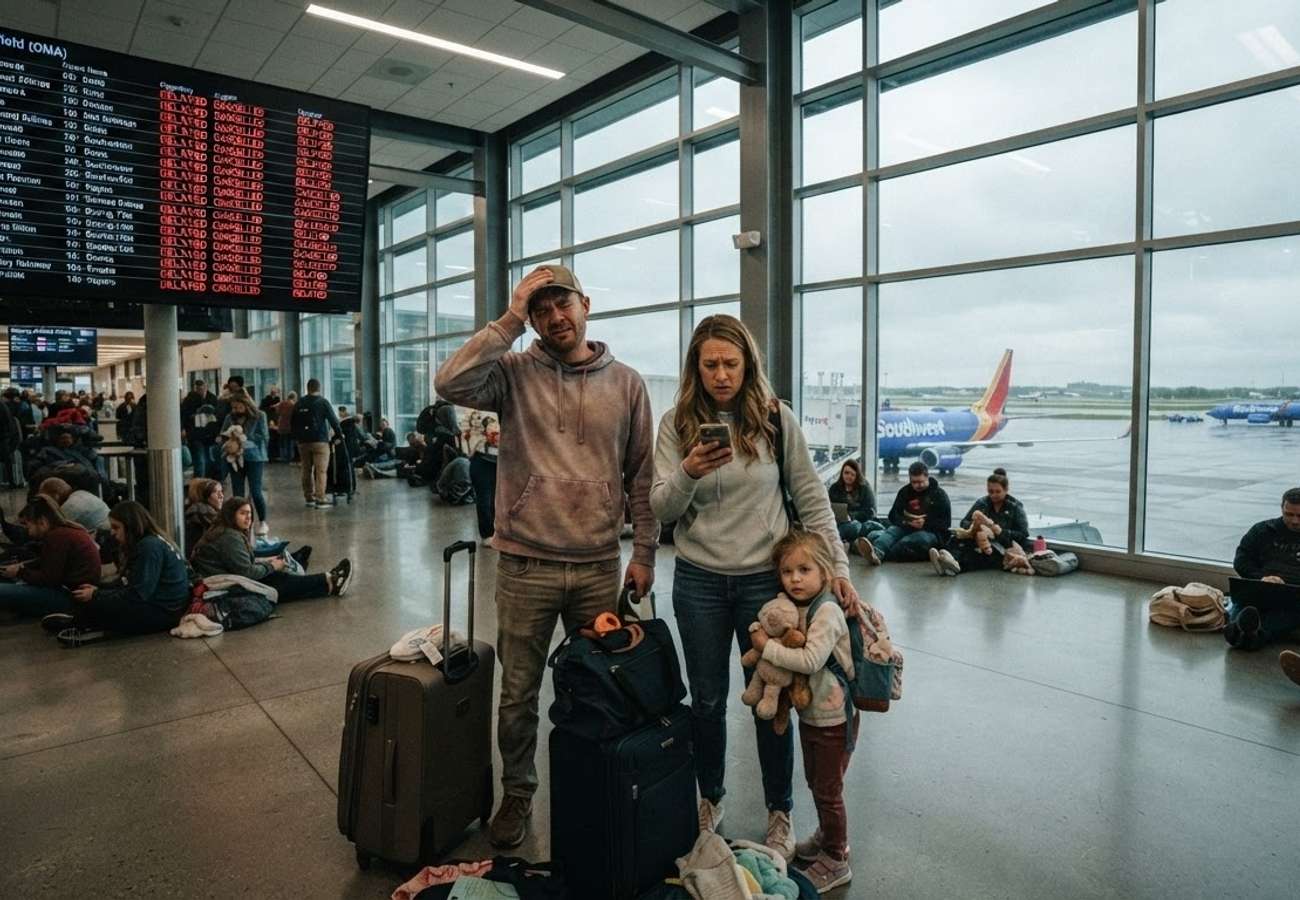
Image generated by AI
Travelers at Eppley Airfield in Omaha, Nebraska, faced significant scheduling hurdles recently as a wave of operational issues triggered 14 flight delays and five total cancellations. While the airport remained functional for the majority of its passengers, the disruption highlighted the fragility of regional aviation hubs during peak travel periods.
The instability affected a broad spectrum of carriers, including American Airlines, Delta Air Lines, Southwest, United, Alaska, and Frontier. These disruptions primarily impacted domestic corridors connecting Nebraska to major U.S. metropolitan hubs.
Analyzing the Operational Breakdown
The disruption at Eppley Airfield serves as a case study in the "domino effect" inherent to modern aviation. Because commercial aircraft operate on tight rotations, a delay in a hub city—such as Denver or Atlanta—inevitably pushes back the departure time in Omaha.
Operational failures are rarely isolated to a single airfield. The 19 affected flights were the result of a combination of:
- Upstream Delays: Aircraft arriving late from previous legs of their journey.
- Crew Logistics: Scheduling adjustments and mandatory rest requirements for flight crews.
- Technical Requirements: Necessary maintenance inspections that take aircraft out of rotation.
- Systemic Pressure: Air traffic management initiatives designed to prevent airspace congestion.
The Federal Aviation Administration (FAA) continues to monitor the National Airspace System to mitigate these ripples, utilizing ground delay programs and flow control measures to maintain safety.
Impact on Key Domestic Hubs
Eppley Airfield is the primary aviation gateway for Nebraska, meaning any disruption here affects critical business and leisure links to the rest of the country. The airlines most affected by these delays operate routes to the following high-traffic destinations:
| Region | Primary Affected Hubs & Cities |
|---|---|
| Midwest | Chicago, Minneapolis |
| West/Mountain | Denver, Las Vegas, Phoenix, Seattle, Salt Lake City |
| South/Central | Dallas-Fort Worth, Atlanta, Houston, Nashville |
| East Coast | Washington, D.C., Philadelphia, Charlotte |
| West Coast | Los Angeles |
The geographical positioning of the airfield—nestled between the Missouri River and Carter Lake—adds a layer of complexity to navigation, requiring precise coordination between the FAA and carrier pilots, especially when weather or traffic volume increases.
Navigating Disruptions: Strategy for Passengers
With seasonal travel volumes increasing, the Omaha Airport Authority and aviation analysts suggest a proactive approach to avoid the stress of terminal chaos.
Passengers are advised to prioritize digital communication over terminal signage. Enabling real-time mobile notifications from airlines provides the fastest route to information regarding rebooking or gate changes. Additionally, arriving at least two hours before departure remains the gold standard for mitigating the impact of unexpected security or check-in bottlenecks.
For those with tight connections, the recommendation is to engage with airline representatives immediately upon learning of a delay, as flexible schedules often secure the best alternative routing.
FAA Traffic Management and Airspace Stability
To prevent localized delays from becoming national crises, the FAA employs several tactical interventions. When demand exceeds the available capacity of an airport like Eppley Airfield, the following measures are typically deployed:
- Airspace Rerouting: Diverting traffic to less congested corridors.
- Departure Restrictions: Temporarily holding aircraft on the ground to prevent "stacking" in the air.
- Capacity Adjustments: Modifying the number of arrivals allowed per hour based on weather and visibility.
These systemic safeguards ensure that while an individual traveler may face a delay, the overall safety and integrity of the National Airspace System remain intact.
While operational hiccups are an inevitable part of the aviation ecosystem, preparation and real-time data are the best tools for any traveler navigating the Omaha gateway.
Related Travel Guides
Disclaimer
This article is for informational and educational purposes only. It does not constitute legal, financial, or professional advice. While we strive to provide accurate and up-to-date information, travel policies, regulations, and conditions change rapidly. Always verify information with official sources before making travel decisions. Nomad Lawyer makes no representations about the accuracy, reliability, completeness, or suitability of the information provided. Readers should consult qualified professionals for advice specific to their circumstances. The views expressed in this article are those of the author and do not necessarily reflect the views of Nomad Lawyer.
Raushan Kumar
Founder & Lead Developer
Full-stack developer with 11+ years of experience and a passionate traveller. Raushan built Nomad Lawyer from the ground up with a vision to create the best travel and law experience on the web.
Learn more about our team →