
Breaking Airline News: Emirates Accelerates Berlin and Stuttgart Expansion Plans to Shield German Travelers from Severe Transit Chaos
Breaking airline news: Amidst a terrifying era of severe European congestion, Emirates aggressively targets Berlin and Stuttgart route expansions during ILA Berlin 2026, violently shielding German travelers from extreme transit bottlenecks.

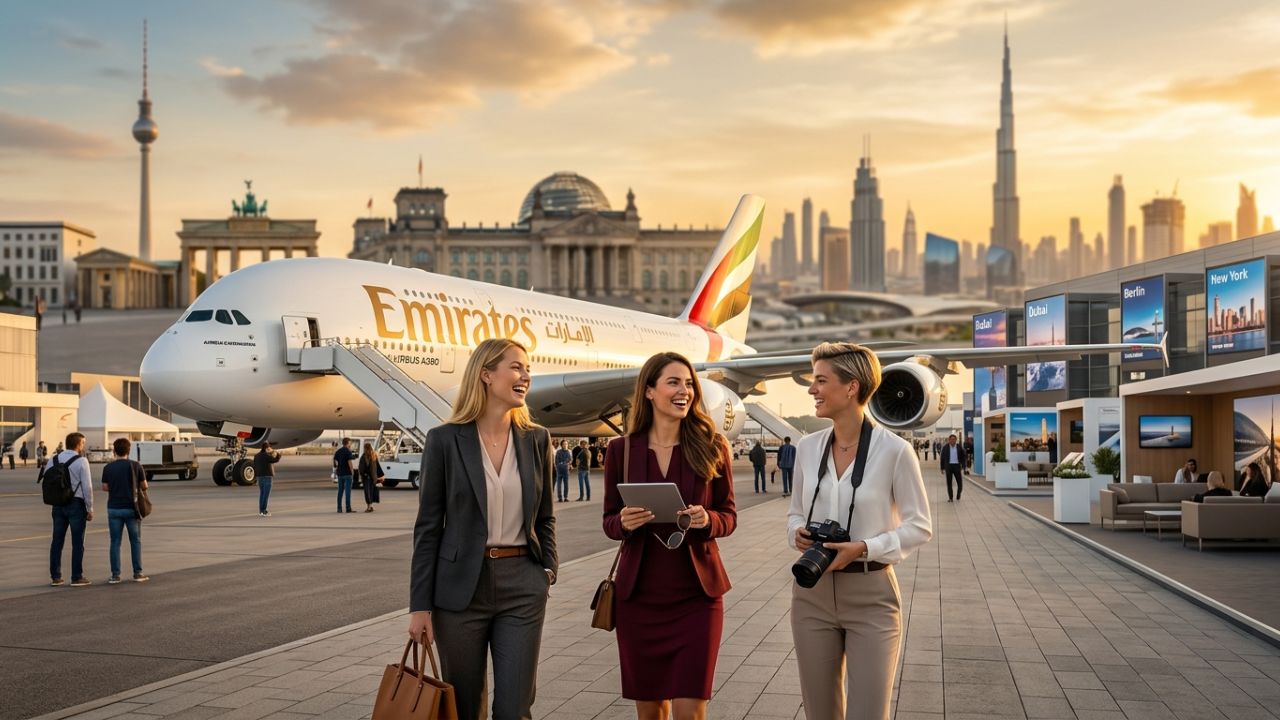
Image representing the intense strategic battle as Emirates leverages high-level aviation diplomacy at ILA Berlin 2026 to negotiate critical route expansions into Berlin and Stuttgart, combating severe transit friction.
Breaking Airline News: Emirates Accelerates Berlin and Stuttgart Expansion Plans to Shield German Travelers from Severe Transit Chaos
As paralyzing terminal bottlenecks, terrifying capacity constraints, and severe operational fragility violently threaten to completely choke Germany’s legacy aviation hubs, a dominant Middle Eastern carrier has executed a brilliant, high-stakes diplomatic maneuver. In a desperate bid to physically and psychologically rescue international travelers and corporate executives from the terrifying threat of extreme travel chaos triggered by severe flight shortages in secondary markets, Emirates has aggressively weaponized the ILA Berlin 2026 exhibition. By showcasing its flagship Airbus A380 and officially welcoming German Chancellor Friedrich Merz aboard the massive aircraft, Emirates is violently pushing to secure critical future flight opportunities to Berlin and Stuttgart. This highly strategic deployment represents the ultimate weapon against the severe airport disruptions currently destroying the regional travel experience. By violently advocating for direct access to these critical German cities, Emirates aims to provide unprecedented, direct connectivity to the UAE. This operational paradigm shift is transforming modern European logistics, proving that actively deploying massive, unburdened runway capacity into underserved regional markets is the absolute ultimate defense against the agonizing misery defining legacy transit unpredictability.
In a harrowing display of modern aviation vulnerability, the sheer logistical nightmare of attempting to navigate essential corridors out of Germany has historically forced passengers from Berlin and Stuttgart into terrifying transit scenarios. For years, securing an intercontinental flight meant risking it all on violently overloaded domestic connections to Frankfurt or Munich—staring at departure boards with intense anxiety as rolling delays caused by regional airspace limits virtually guaranteed a catastrophic disruption to complex itineraries. However, Emirates is aggressively fighting back against this structural paralysis. By introducing high-level aviation diplomacy at ILA Berlin to advocate for direct routes, the carrier is violently attempting to redistribute the aviation load. If secured, travelers in Berlin and Stuttgart will possess the absolute freedom to physically shield themselves from the devastating effects of paralyzed domestic transport networks, ensuring their critical international flights are executed without the terrifying threat of infrastructure-induced cancellations.
Expanded Overview: The Massive Scale of the German Extraction
The terrifying crisis of overwhelming passenger stress currently gripping the German market brutally exposes the severe limitations of forcing international traffic through a handful of severely congested primary mega-airports. Recognizing that aggressively forcing millions of departures through decaying bottlenecks leads directly to severe psychological friction and broken itineraries, Emirates’ focus on future Berlin and Stuttgart flights fundamentally rewrites the Europe-Middle East matrix. The sheer scale of this tactical realignment is immense. This unprecedented diplomatic push not only shields passengers from travel chaos but actively complements the airline's existing global network, creating a massive, decentralized extraction grid that allows German travelers to entirely bypass the severe congestion of heavily bottlenecked departure points.
Section-Wise Breakdown: The Operational Realignment
Shattering the Diplomatic Gridlock: The ILA Berlin Execution
To survive the terrifying surge in global travel demand without triggering immediate terminal meltdowns at legacy hubs, Emirates is heavily fortifying its geopolitical relationships. The appearance of the Airbus A380 at ILA Berlin 2026 was a massive show of force. By welcoming Chancellor Friedrich Merz aboard, Emirates placed aviation diplomacy at the absolute center of discussions regarding market access. Germany remains one of Emirates’ most critical gateways, and this high-profile event violently underscores the necessity of bypassing local airport disruptions by allowing direct, high-capacity international carriers into new cities.
Deploying the Capacity Shield: The Airbus A380 Defense
Looking beyond the diplomatic negotiations, the program executes a massive secondary defense strategy targeting physical capacity. Despite industry discussions shifting to smaller aircraft, the Airbus A380 violently enforces a barrier of comfort and scale. By deploying large-capacity aircraft, the airline protects its passengers from the claustrophobic travel chaos of regional jets. The A380 ensures that busy international corridors can move massive volumes of passengers without requiring dozens of smaller, highly vulnerable flights that constantly suffer from slot delays.
Securing the Regional Core: The Berlin and Stuttgart Target
This massive infrastructural shift is heavily focused on two distinct logistical battlegrounds. Berlin continues to attract massive leisure and conference traffic, while Stuttgart remains a critical industrial and economic fortress. Currently, the lack of direct Emirates connectivity forces these travelers into terrifying European layovers. Securing direct UAE flights for these two cities would violently defend business and leisure travelers, allowing them to extract themselves directly to Dubai and bypass the massive financial bleeding associated with missed domestic European connections.
Operational Defense and Strategic Matrices
To fully comprehend the massive logistical and strategic fallout of this terrifyingly efficient diplomatic execution, corporate travel managers and affected tourists must review the exact strategic targets defining the Emirates expansion push. The following official matrices provide a granular breakdown of the specific, officially verified data driving this massive disruption mitigation effort.
| Key Event Highlights | Strategic Significance |
|---|---|
| Airbus A380 showcase | Demonstrates long-haul capacity leadership |
| Chancellor visit | Strengthens diplomatic engagement |
| ILA Berlin participation | Reinforces Germany market commitment |
| Tourism discussions | Supports future visitor growth |
| Route expansion dialogue | Encourages network development |
| Airbus A380 Advantages | Tourism Impact |
|---|---|
| High passenger capacity | Supports tourism growth |
| Premium cabins | Attracts high-value travelers |
| Long-range operations | Expands destination access |
| Hub connectivity | Improves global mobility |
| Network efficiency | Enhances route sustainability |
| Connectivity Benefits | Economic Outcome |
|---|---|
| Increased flight options | Higher tourism arrivals |
| Faster global access | Improved traveler convenience |
| Expanded business links | Greater investment potential |
| Wider destination reach | Tourism diversification |
| Hub network integration | Enhanced global competitiveness |
Passenger Impact: Surviving the European Jump
For the thousands of global travelers attempting to navigate the rapidly collapsing transit corridors of Germany, the successful negotiation of these direct routes represents a highly anticipated lifeline against severe delays. The brutal reality of enduring a terrifyingly sudden cancellation on a congested domestic connection just to reach an international flight inflicts intense psychological stress—leaving the passenger entirely stranded and missing critical business or family events for days. If Emirates successfully launches Berlin and Stuttgart operations, passengers will drastically reduce their exposure to these terrifying logistical environments, securing a highly reliable, brand-new connection that completely bypasses the domino effect of regional travel chaos.
Survival Guide for Transit Travelers
Travelers desperately preparing to navigate the modernized European network must immediately recognize the strategic value of these developments:
- Violently Reject the Domestic Transfer: If you reside in Berlin or Stuttgart and these routes are approved, you must immediately halt all bookings routing through heavily congested Frankfurt or Munich airports. The domestic transfers actively invite traffic-induced missed connections. Aggressively route your itinerary directly to Dubai to capitalize on a seamless, uncongested extraction.
- Leverage the A380 Capacity: In the event of severe weather or sudden travel chaos across Europe, passengers must violently target massive aircraft like the A380. High-capacity jets are far less likely to be canceled during slot-restricted airspace events compared to highly vulnerable regional narrowbodies.
Industry Analysis: The Economics of Aviation Diplomacy
From a strategic aviation perspective, the travel turmoil currently threatening Germany highlights the terrifying vulnerability of markets that restrict foreign carrier access. Industry analysts confirm that Emirates’ massive decision to deploy the A380 and directly engage the German Chancellor is a highly aggressive, tactical response designed to completely decentralize European traffic. By negotiating capacity precisely where travelers demand it (Berlin and Stuttgart), the airline aims to completely avoid the massive financial bleeding associated with forcing passengers through secondary European hubs, effectively shielding both their profit margins and the passenger experience.
Conclusion: A Strategic Retreat to Ensure Aviation Survival
As the extremely critical global travel season accelerates, the massive diplomatic and infrastructural push executed by Emirates at ILA Berlin 2026 represents a massive warning to authorities attempting to force passengers into unreliable, heavily congested legacy hubs. The aggressive maneuvering proves that capturing market dominance requires terrifyingly swift and highly optimized route negotiations, utilizing an advanced mega-hub like Dubai to connect passengers safely across continents while shielding them from the brutal reality of regional terminal unreliability. For the modern German traveler, the potential unlocking of Berlin and Stuttgart offers an incredibly secure, highly insulated way to execute flight discovery. By acting aggressively to secure these new direct routes, the industry can successfully survive intense travel surges and completely avoid the paralyzing threat of European travel chaos.
Key Takeaways
- Massive Tactical Diplomacy: Emirates aggressively utilized the ILA Berlin 2026 exhibition and a visit from German Chancellor Friedrich Merz to advocate for major route expansions.
- Crushing the Commuter Bottleneck: The airline is violently targeting future flight opportunities in Berlin and Stuttgart to shield travelers from the travel chaos of domestic transfers.
- Strategic Fleet Defense: The Airbus A380 remains the ultimate weapon in this expansion, providing massive high-capacity relief that prevents airport disruptions.
- Massive Economic Upgrade: Expanding direct connectivity between Germany and the UAE actively drives foreign investment, business mobility, and tourism growth.
- Traveler Advisory: Should these routes launch, German tourists and executives must aggressively utilize direct Berlin and Stuttgart flights to completely bypass the extreme congestion, agonizing delays, and severe flight cancellations plaguing heavily restricted hub corridors.
Related Travel Guides
Disclaimer
This article is for informational and educational purposes only. It does not constitute legal, financial, or professional advice. While we strive to provide accurate and up-to-date information, travel policies, regulations, and conditions change rapidly. Always verify information with official sources before making travel decisions. Nomad Lawyer makes no representations about the accuracy, reliability, completeness, or suitability of the information provided. Readers should consult qualified professionals for advice specific to their circumstances. The views expressed in this article are those of the author and do not necessarily reflect the views of Nomad Lawyer.
Kunal K Choudhary
Co-Founder & Contributor
A passionate traveller and tech enthusiast. Kunal contributes to the vision and growth of Nomad Lawyer, bringing fresh perspectives and driving the community forward.
Learn more about our team →