
Emirates Deploys First Converted 777-300ERSF Freighter to Hong Kong to Dominate E-Commerce Boom
Capitalizing on surging global logistics demand, Emirates SkyCargo launches its first passenger-to-freighter converted Boeing 777-300ERSF, targeting the highly lucrative Asia-Europe trade corridor.

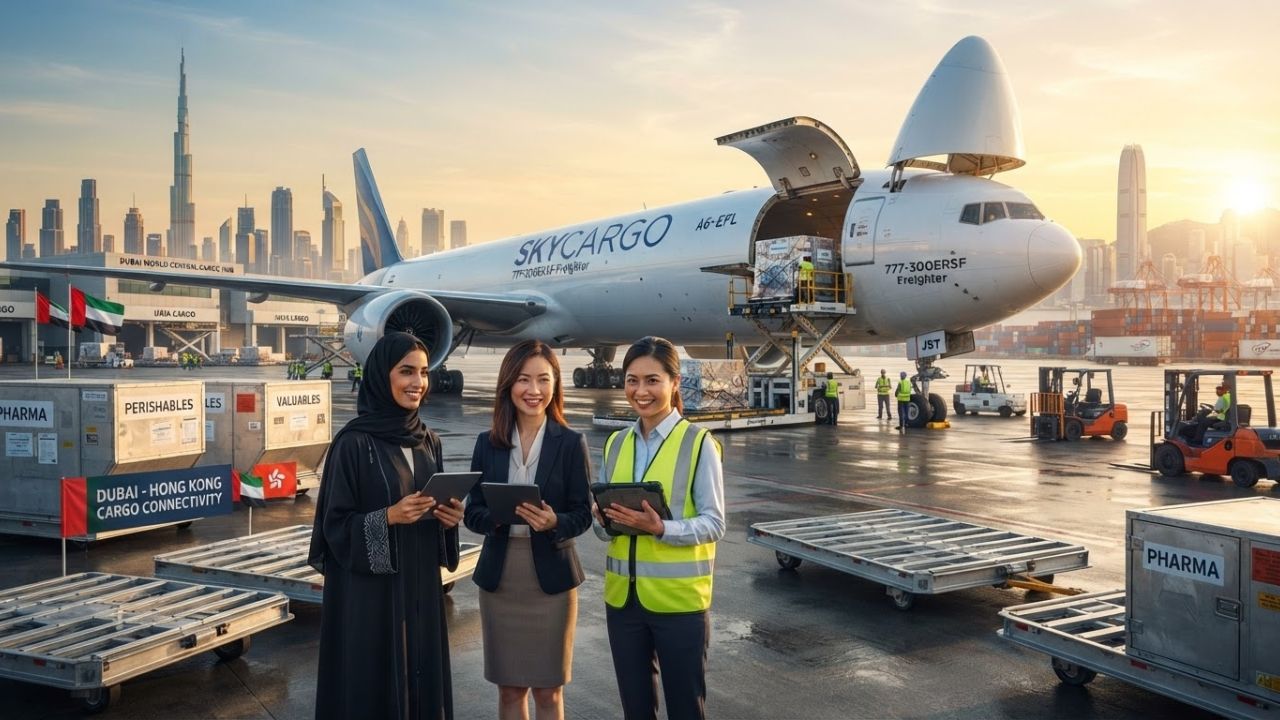
Image generated by AI
[Dubai, July 3] — The global air freight sector is experiencing a massive structural realignment as passenger airlines aggressively pivot into heavy logistics. Emirates has officially executed a major escalation in its cargo operations, deploying its very first Boeing 777-300ERSF into active service under the Emirates SkyCargo division. This specific aircraft is not a factory-new build; it is a meticulously repurposed passenger jet converted into a dedicated, high-volume freighter. The inaugural operational flight has been explicitly routed to Hong Kong, signaling a highly aggressive strategy to dominate the immensely lucrative Asia-Middle East and Asia-Europe trade corridors.
The deployment of the 777-300ERSF is a direct response to surging, unyielding global demand for cross-border e-commerce and express logistics. As global supply chains fracture and diversify, Emirates is utilizing its massive Dubai logistics hub to seamlessly funnel high-density Asian manufacturing output directly into European and American distribution networks.
The Economics of Passenger-to-Freighter Conversion
The decision to heavily invest in the Boeing 777-300ERSF conversion program marks a brilliant tactical maneuver by Emirates. Global demand for air cargo capacity is currently outstripping the aerospace industry's ability to manufacture new widebody freighters. By converting existing 777-300ER passenger airframes, Emirates completely bypasses years-long manufacturing lead times.
This strategy radically reduces capital expenditure while dramatically extending the operational lifecycle of the airline's aging passenger fleet. The resulting 777-300ERSF is structurally optimized for high-density freight, offering significantly higher payload capabilities and vastly improved fuel efficiency compared to legacy, older-generation cargo models.
Why Hong Kong?
The selection of Hong Kong as the inaugural destination for this converted behemoth is intensely strategic. Hong Kong remains the absolute apex of global cargo distribution, acting as the primary funnel for East Asian manufacturing. The city's advanced logistics infrastructure handles massive, high-margin volumes of consumer electronics, temperature-sensitive pharmaceuticals, and rapid-dispatch e-commerce shipments.
By pushing its newest, most capable freighter directly into this specific market, Emirates SkyCargo immediately solidifies its dominance over one of the highest-volume, highest-yield cargo bottlenecks on the planet. The route guarantees massive outbound payloads, which are then rapidly redistributed across the globe via the carrier's Dubai mega-hub.
Key Facts Breakdown
- The Aircraft: Emirates has launched its first converted Boeing 777-300ERSF freighter.
- The Route: The inaugural commercial freight mission is operating between Dubai and Hong Kong.
- The Strategy: Passenger-to-freighter (P2F) conversion bypasses factory delays, accelerating capacity growth while reducing capital expenditure.
- The Hardware: The 777-300ERSF offers superior payload capacity, extended range, and improved fuel burn over legacy cargo aircraft.
- The Market: The deployment directly targets surging demand in cross-border e-commerce, electronics, and pharmaceutical supply chains.
Why This Matters
Our analysis of the global logistics market indicates that the passenger-to-freighter (P2F) conversion trend is permanently reshaping airline economics. During periods of passenger volatility, legacy airlines were historically left bleeding cash while widebody jets sat idle on the tarmac. Emirates is proving that massive passenger airlines can successfully insulate their revenue streams by pivoting hard into logistics. Converting a 777-300ER costs a fraction of purchasing a brand-new Boeing 777F, yet it delivers nearly identical intercontinental performance. This structural agility allows Emirates to rapidly flood the market with cargo capacity precisely when e-commerce demand peaks, aggressively outmaneuvering traditional, pure-play logistics companies like FedEx or UPS in the critical Asia-Europe corridor.
Industry Outlook
Market trends confirm that the P2F conversion market will explode over the next 48 months. As hundreds of aging Boeing 777-300ERs and Airbus A330s age out of premium passenger service across global fleets, aerospace engineering firms will see a massive backlog of conversion contracts. Expect competing major carriers, particularly in North America and East Asia, to frantically emulate Emirates' strategy to capture their own slice of the booming e-commerce supply chain. Consequently, traditional air freight rates may stabilize as this converted widebody capacity floods the market, but the true winners will be airlines like Emirates that control massive, centralized redistribution hubs capable of processing this newly unleashed intercontinental cargo volume with absolute precision.
Related Travel Guides
- Etihad Airways Ignites Massive Route Expansion, Targeting High-Yield Hubs and Global Leisure Hotspots
- Etihad Airways Solidifies UAE-Europe Network as French Operations Hit 20-Year Milestone
- Cathay Cargo Launches Intermodal Fresh Logistics Corridors Across the Greater Bay Area
- Japan Airlines Unifies Long-Haul Fleet With Enclosed A350-Style Suites on Boeing 787-9s
- India Restores Full West Asia Flight Corridors, Triggering Massive Drop in Peak-Season Airfares
Disclaimer
This article is for informational and educational purposes only. It does not constitute legal, financial, or professional advice. While we strive to provide accurate and up-to-date information, travel policies, regulations, and conditions change rapidly. Always verify information with official sources before making travel decisions. Nomad Lawyer makes no representations about the accuracy, reliability, completeness, or suitability of the information provided. Readers should consult qualified professionals for advice specific to their circumstances. The views expressed in this article are those of the author and do not necessarily reflect the views of Nomad Lawyer.
Kunal K Choudhary
Co-Founder & Contributor
A passionate traveller and tech enthusiast. Kunal contributes to the vision and growth of Nomad Lawyer, bringing fresh perspectives and driving the community forward.
Learn more about our team →