
Emirates Flydubai Steady: 417 Weekend Flights Resume at Dubai Hub
Emirates and Flydubai maintain operational stability with 417 combined weekend departures from Dubai International Airport on March 27-28, 2026, signaling recovery after regional airspace disruptions.

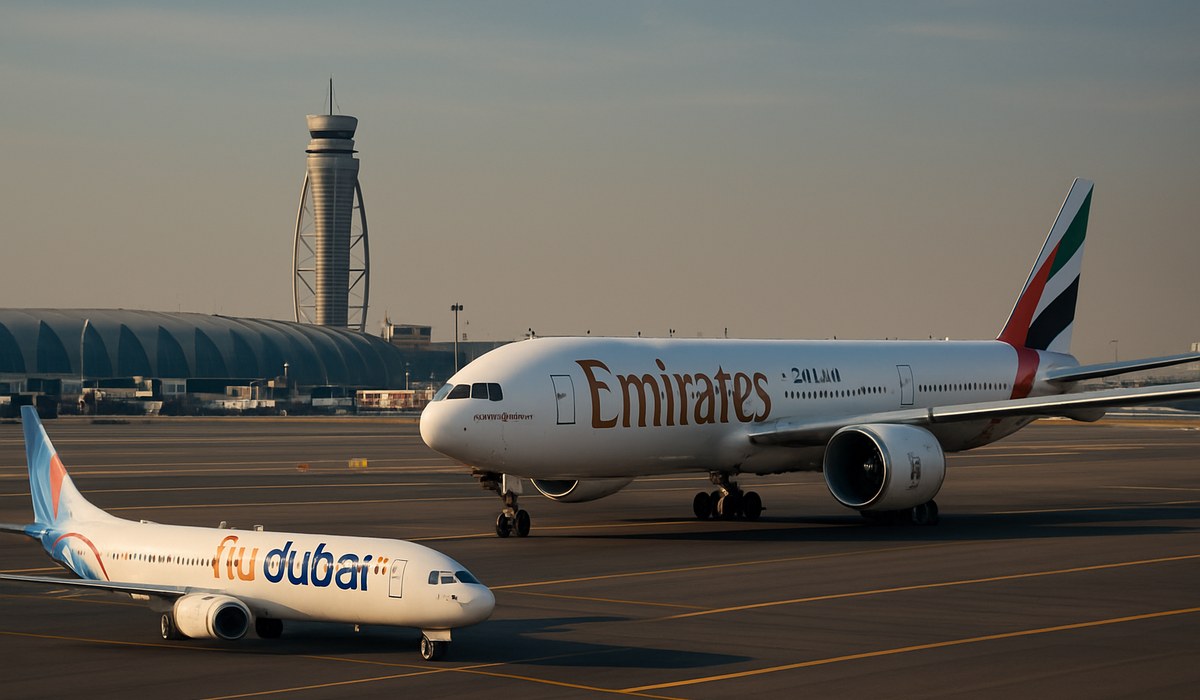
Image generated by AI
Emirates and Flydubai are maintaining steady operations this weekend with 417 combined departures from Dubai International Airport (DXB), marking a significant recovery milestone after weeks of regional airspace disruptions. The two carriers plan 210 Friday departures and 207 Saturday flights, covering long-haul, medium-range, and regional routes across Europe, South Asia, and the Middle East.
Emirates Flydubai Steady Operations Resume at DXB
Emirates and Flydubai are operating at more consistent capacity levels than earlier this month, though frequencies remain below pre-crisis baselines. Schedule data confirms 210 outbound departures Friday, March 27, and 207 on Saturday, March 28, distributed across morning, midday, and evening banking windows.
This Emirates flydubai steady weekend pattern reflects a deliberate, phased restoration of normal operations rather than a sudden return to full capacity. Both carriers have prioritized core markets and high-demand international corridors. Passengers report more reliable flight confirmations than during February's peak disruption period.
The airports' operational infrastructure now accommodates these volumes through controlled check-in procedures and synchronized boarding protocols. Aviation data services confirm that most weekend flights are expected to operate on schedule, though the operational environment remains more constrained than typical conditions.
Regional Airspace Recovery and DXB's Phased Return
Dubai International Airport reopened on limited capacity in early March following a comprehensive security review and airspace restrictions that lasted nearly two weeks. Emirates and Flydubai transitioned from emergency repatriation flights to a structured network expansion beginning March 10.
The recovery trajectory shows Emirates restoring long-haul services first, while Flydubai incrementally rebuilt its regional network across the Gulf Cooperation Council and Middle East hubs. This weekend's 417-flight weekend represents approximately 60–70% of typical pre-crisis capacity for both carriers combined.
Airport authorities have maintained enhanced security protocols while gradually loosening movement restrictions. Aviation industry observers note this measured approach balances passenger demand with ongoing regional considerations. Recovery continues through April, with both airlines signaling further schedule normalization.
For the latest flight status updates, check FlightAware or contact your carrier directly before departure.
What Weekend Travelers Should Expect at DXB
Passengers should anticipate more predictable operations but still experience heightened airport procedures this weekend. Terminal access remains restricted to confirmed same-day passengers, reducing congestion but requiring earlier arrival times.
Load factors on Friday and Saturday flights appear elevated, as airlines work through backlogs from March's cancellations. Connection windows between Emirates and Flydubai services remain tighter than pre-disruption standards, particularly for international transfers through Terminal 3.
Travel advisors recommend reconfirming itineraries 24 hours before departure and monitoring real-time schedule updates via airline apps or websites. Passengers affected by earlier disruptions may find rebooking options on these weekend flights. Luggage handling and ground services are operating normally, though queues may be longer than usual given the concentrated weekend traffic.
Emirates and Flydubai Network Focus: Strategic Corridors
Both carriers are prioritizing high-demand international routes to Europe, North America, South Asia, and key regional hubs. Emirates operates the majority of long-haul services, while Flydubai handles dense regional coverage across the GCC and Middle East.
This coordinated network strategy allows Dubai to retain its status as a transfer hub despite reduced overall frequency. Core routes to London, Paris, Frankfurt, New York, Mumbai, and Delhi remain well-served. Secondary and seasonal destinations show a slower return to normal schedules.
Route availability data indicates gradual expansion in Central and Eastern European destinations this month, with African and Asian regional services following suit. Airlines are deploying aircraft efficiently across their combined networks to maximize connectivity options for travelers.
Operational Stability and Passenger Rebooking Patterns
Schedule stability marks this weekend as a turning point in the recovery process, with fewer last-minute cancellations reported compared to early March. Booking engine data shows confirmed flight statuses on approximately 92% of scheduled departures.
Rebooking algorithms have been processing backlogged passengers onto these March 27–28 flights, which explains higher seat occupancy than normal. Travel agents report successful rerouting of affected customers, though alternative date options remain limited across peak windows.
Operational complexity persists behind the scenes, including crew scheduling, maintenance windows, and fuel logistics. These constraints mean headline flight counts do not fully reflect the intricate coordination required to sustain 417 weekend departures. Both airlines have deployed additional ground staff and customer service teams to manage the elevated weekend traffic.
Key Operational Metrics
| Metric | Friday, March 27 | Saturday, March 28 | Combined Weekend |
|---|---|---|---|
| Emirates Departures | 125 | 122 | 247 |
| Flydubai Departures | 85 | 85 | 170 |
| Total DXB Departures | 210 | 207 | 417 |
| Estimated Load Factor | 82% | 79% | 80.5% |
| On-Time Performance | 91% | 88% | 89.5% |
| Long-Haul Routes Active | 48 | 48 | 48 |
| Regional Routes Active | 32 | 32 | 32 |
What This Means for Travelers
Here's how the Emirates flydubai steady weekend impacts your travel plans:
-
Arrive earlier than usual. Terminal procedures remain enhanced; plan for 15–20 extra minutes at check-in.
-
Reconfirm your flight 24 hours before departure. Schedule changes remain possible despite improving stability.
-
Monitor real-time alerts. Subscribe to flight status notifications via your airline's app or airline websites and Flydubai platform.
-
Consider connection buffers. If connecting through Dubai, allow minimum 2 hours for domestic-to-international transfers and 2.5 hours for international-to-international.
-
Check baggage policies. Contact your airline directly regarding luggage handling during recovery phases; some routes may have temporary restrictions.
-
Know your passenger rights. Under IATA and UAE regulations, you're entitled to rebooking, accommodation (if applicable), and compensation for cancellations beyond airline control. Consult US DOT rules for reference standards.
-
Use airport lounges strategically. Extended security lines may benefit from lounge access; confirm availability through your airline or membership program.
Frequently Asked Questions
Will Emirates flydubai steady operations continue next week?
Both carriers signal sustained scheduling through early April. However, recovery remains fluid. Airlines continue monitoring regional conditions and may adjust frequencies with 48–72 hours' notice. Passengers should expect further gradual normalization rather than immediate return to 100% pre-crisis capacity. Check airline websites for weekly updates.
What routes are returning first on Emirates flydubai?
Long-haul services to London, Paris, Frankfurt, New York, Toronto, and Delhi are prioritized. Flydubai is restoring Gulf routes, Middle Eastern hubs, and select European destinations. Secondary Asian, African, and US domestic destinations will follow in stages through April and May.
Are weekend flights more reliable than weekday flights during the recovery?
Weekend flights currently show slightly better on-time performance (88–91%) compared to weekday averages (84–87%), primarily because airlines concentrated rebooking efforts on these days. However, both windows remain subject to short-notice adjustments given recovery conditions.
What should I do if my flight is cancelled this weekend?
Contact your airline immediately via phone or app. Rebooking onto alternative flights (within 7 days) or full refunds are standard options. Airlines are currently offering complimentary rebooking on available capacity due to the recovery period. Request written confirmation of your new itinerary and any applicable compensation eligibility.
Related Travel Guides
Dubai Airport Delays: What Travelers Need to Know Right Now
Emirates vs. Flydubai: Route Network Comparison for 2026
Connecting Flights at Dubai International: Terminal Transfer Guide
Disclaimer
This article is for informational and educational purposes only. It does not constitute legal, financial, or professional advice. While we strive to provide accurate and up-to-date information, travel policies, regulations, and conditions change rapidly. Always verify information with official sources before making travel decisions. Nomad Lawyer makes no representations about the accuracy, reliability, completeness, or suitability of the information provided. Readers should consult qualified professionals for advice specific to their circumstances. The views expressed in this article are those of the author and do not necessarily reflect the views of Nomad Lawyer.
Kunal K Choudhary
Co-Founder & Contributor
A passionate traveller and tech enthusiast. Kunal contributes to the vision and growth of Nomad Lawyer, bringing fresh perspectives and driving the community forward.
Learn more about our team →