
Wings Over Continents: How Emirates’ Eleven ATM 2026 Partnerships Are Reshaping Global Cultural Corridors
On day two of Arabian Travel Market 2026, Emirates signed 11 landmark agreements spanning Sri Lanka, Ras Al Khaimah, Japan, Maldives, and Italy, redefining the mechanics of global stopovers and cultural journeys.

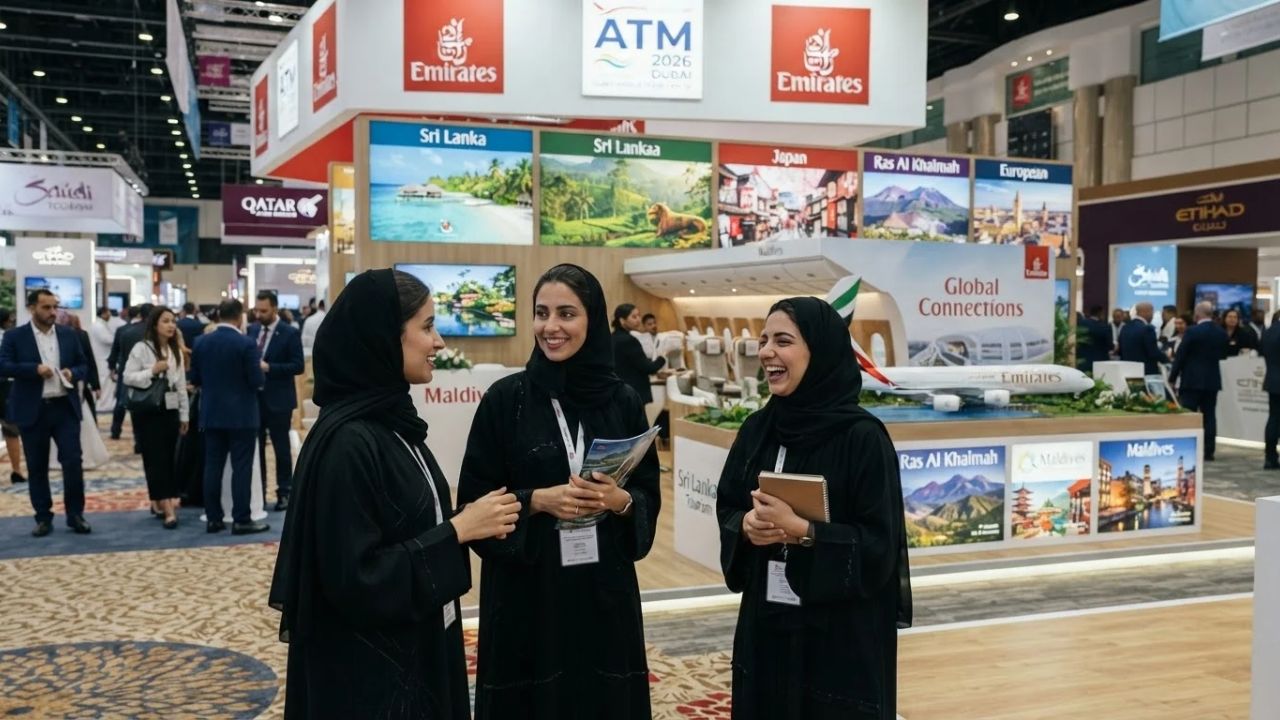
Emirates forges eleven strategic tourism pacts at Arabian Travel Market 2026, connecting Dubai with emerging adventure, island, and heritage circuits
Few international transit hubs have ever attempted to simultaneously bridge remote coral atolls, alpine tea valleys, Italian culinary heartlands, and expatriate maritime workforce pipelines in a single twenty-four-hour commercial flurry. Yet on the second day of the Arabian Travel Market (ATM) in Dubai, Emirates executed precisely that by signing 11 new bilateral agreements designed to convert standard flight layovers into multi-destination cultural explorations. Graced by the official visit of His Excellency Sheikh Nahyan bin Mubarak Al Nahyan, UAE Minister of Tolerance and Coexistence, the carrier showcased its latest cabin innovations and product displays while locking in sweeping multi-continental treaties that fundamentally alter how independent voyagers cross Asia, Europe, and the Middle East.
From reviving historical Indian Ocean maritime routes to opening high-speed rail access into the Apennine valleys of Emilia-Romagna, these accords illustrate how modern global aviation is shifting away from mere seat distribution toward active destination stewardship. Rather than treating transit passengers as passive airport inhabitants confined to duty-free concourses, the airline is using its immense international network of nearly 140 destinations to disperse travelers outward into regional communities, historic conservation zones, and authentic culinary epicenters.
The Dubai Convergence: Eleven Pacts Redefining Middle Eastern Transit and Global Routing
The scope of the agreements signed on ATM’s second day reflects a calculated decentralization of tourism traffic away from over-trodden capitals toward deeper regional immersion. In South Asia, Emirates renewed its foundational alliance with the Sri Lanka Tourism Promotion Bureau, extending a joint promotion effort initiated in 2022. The timing is significant: Sri Lanka registered a powerful tourism recovery last year, receiving more than 2.3 million international visitors, an impressive 15.1 percent expansion compared to approximately two million arrivals recorded during the preceding year. By targeting key source markets with customized itineraries, familiarisation tours, and airline trade incentives, the initiative aims to draw international voyagers beyond standard coastal enclaves toward central tea plantations, wildlife sanctuaries, and sacred architectural citadels recognized by the UNESCO World Heritage Centre.
Closer to home, the airline partnered with the Ras Al Khaimah Tourism Development Authority (RAKTDA) under a Memorandum of Understanding focused on packaging the northernmost emirate’s rugged terracotta peaks, mangrove lagoons, and archaeological settlements. Through the dedicated Emirates Dubai Experience digital gateway, visitors landing at Dubai International Airport can seamlessly pair metropolitan stays with adventure itineraries in Ras Al Khaimah, accessing mountain zip lines across Jebel Jais and restored bedouin pearling villages.
Eastward in the Pacific, a renewed pact with the Japan National Tourism Organization (JNTO) responds to unprecedented international demand for East Asian cultural exploration. Backed by services connecting Dubai with Tokyo Narita, Tokyo Haneda, and Osaka Kansai, Emirates projects operating up to 28 weekly flights between the UAE and Japan by October 2026. The airline has reinforced this capacity with flagship Airbus A380 deployments, specialized Chauffeur-Drive services for premium travelers landing at Narita and Kansai, and a dedicated retail Travel Store in downtown Osaka designed to curate regional Japanese journeys.
In the Indian Ocean, Emirates renewed its long-standing collaboration with the Maldives Marketing and Public Relations Corporation (MMPRC), sustaining a continuous commercial presence established when the airline first integrated the archipelago into its West Asia and Indian Ocean network in 1987. Last year, the Maldives welcomed around 2.25 million visitors, posting a near 10 percent jump in international air arrivals. The updated campaign sharpens promotional outreach across the United States, the United Kingdom, and Russia, seeking to broaden visitor distribution across remote inhabited atolls.
Parallel accords reached across Europe and the Arabian Gulf round out the 11 pacts. In Central, Eastern, and Northern Europe, Emirates expanded commercial ties with DERTOUR Group to accelerate New Distribution Capability (NDC) booking adoption and curate bespoke leisure travel packages. In Northern Italy, targeted agreements with Bologna Welcome and Parma Welcome establish direct marketing channels showcasing Emilia-Romagna’s slow-food gastronomy, historic arcades, and Renaissance motor-valley traditions. Regionally, an expanded reciprocal codeshare agreement with Kuwait Airways upgrades an existing interline pact to deliver single-ticket bookings and seamless through-checked luggage across both airlines. Furthermore, an agreement with Cisalpina Tours International, an entity of the MSC Group, introduces streamlined logistical management for international cruise crews and maritime workers, while an agreement with the Overseas Workers Welfare Administration (OWWA) provides dedicated support programs, social protection, and welfare services for the estimated 271,000 Filipino workers residing in the UAE, whose remittances reached US$750.3 million in the first half of 2026 alone, marking a 4.3 percent rise over the prior year.
What Makes These Interconnected Corridors Different
Traditional airline alliances have historically operated as transactional mechanisms to optimize passenger load factors, funneling traffic into saturated global megacities. What distinguishes this new eleven-pact framework is its emphasis on complementary geographic and cultural pairing. Travelers are no longer invited simply to change aircraft in Dubai; they are offered integrated stopovers that unlock two radically different cultural realms on a single ticket.
Consider the dynamic between metropolitan Dubai and the mountainous northern territory of Ras Al Khaimah. While Dubai captivates travelers through futuristic skyscrapers and opulent urban architecture, Ras Al Khaimah offers a dramatic antidote: the ancient ruins of Julfar, bronze-age beehive tombs at Shimal, and the precipitous rocky ridges of the Ru’us al-Jibal mountain chain. By uniting these territories under unified transit booking engines, voyagers can spend two nights exploring hyper-modern desert architecture before retreating into quiet coastal lagoons where flamingos feed amid protected mangroves.
Similarly, the bilateral bridge connecting the Persian Gulf with Italy’s Emilia-Romagna region shifts attention away from the swarming avenues of Venice and Florence. Instead, the initiative directs discerning food and heritage lovers into Bologna’s medieval university porticoes and Parma’s artisanal cheese dairies and curing cellars. By establishing direct air corridors linked to regional tourist boards, independent travelers bypass crowded gateway hubs to land directly at the doorsteps of local producers, family-run trattorias, and preserved Romanesque plazas.
Across Sri Lanka and the Maldives, the interconnected airline schedule permits seamless dual-nation journeys. A traveler can spend five days hiking tea trails and inspecting centuries-old Buddhist rock monasteries in Sri Lanka’s central highlands, then board an eighty-minute hop across the sea to unwind over the turquoise reefs of North Male Atoll. This fluid pairing transforms what used to be a complicated multi-carrier itinerary into an effortless regional adventure.
Visitor Insider Tips
To take full advantage of these expanded routes and dual-destination options, travelers must adopt a local mindset when planning departures and stopovers:
- Timing the UAE Mountain Excursion: When booking a Ras Al Khaimah extension through the Emirates platform, schedule your mountain ascent to Jebel Jais between 7:00 AM and 10:00 AM. Early morning light illuminates the limestone gorges without the midday haze, and temperatures at 1,934 meters above sea level remain up to ten degrees cooler than the coastal desert floor.
- Etiquette on Northern Atolls and Sri Lankan Sacred Precincts: When island hopping across inhabited Maldivian atolls outside private resort enclaves, dress respectfully by covering shoulders and knees when strolling through village lanes. In Sri Lanka, remove shoes and hats before entering Buddhist temple courtyards, and never turn your back directly toward a Buddha statue when capturing photographs.
- Culinary Waypoints in Emilia-Romagna: While in Bologna, resist dining along the central Piazza Maggiore. Wander into the Quadrilatero alleyways or the student quarter along Via Zamboni, where authentic osterias serve handmade tagliatelle al ragu and warm crescentine breads paired with squacquerone cheese and local Lambrusco.
- Japan Stopover Rail Tactics: For travelers utilizing the expanded flights into Osaka Kansai or Tokyo Narita, skip highway airport buses and board the express trains. From Kansai, the Haruka Express whisks you directly to Kyoto in seventy-five minutes; always buy your train tickets via official station kiosks or digital IC cards like Suica or ICOCA rather than third-party apps to avoid inflated booking surcharges.
- Stopover Logistics at Dubai International: Take advantage of automated smart gates at Terminal 3 if you hold an eligible e-passport. If your transit exceeds eight hours, reserve an airside sleep pod or check your heavy baggage through to your final destination so you can ride the driverless Dubai Metro into Old Deira for an evening spiced tea along the creek.
Cultural and Environmental Context
The rapid expansion of long-haul air connectivity inevitably brings complex environmental and social responsibilities. In island ecosystems like the Maldives and Sri Lanka, visitor volume must be balanced against delicate marine habitats and fragile watershed zones. The surge to 2.25 million Maldivian visitors last year underscores the necessity of strict coral reef preservation, greywater filtration systems, and zero-plastic policies across newly designated eco-resorts and local guest houses.
In Sri Lanka, the revival to over 2.3 million overseas arrivals represents an economic lifeline for rural communities following years of domestic economic strain. However, responsible travelers should prioritize community-based eco-lodges in regions like the Knuckles Mountain Range or the southern buffer zones of Sinharaja Forest Reserve, ensuring that tourism expenditure flows directly to village guides, smallholder tea farmers, and local craftsmen rather than leaking abroad through international hotel conglomerates.
Within the UAE itself, the development of eco-tourism in Ras Al Khaimah stands as a deliberate pivot toward environmental conservation. The emirate has introduced stringent ecological monitoring across its mountain reserves, capping trail capacities on Jebel Jais and partnering with marine biologists to protect fragile dugong and green turtle feeding grounds along the coastline. By directing global flyers toward sustainable adventure pursuits, the region aims to foster an enduring appreciation for Arabian desert and marine ecology.
FAQ: Visiting Emirates Partner Destinations in 2026
How do I combine a Dubai stopover with a visit to Ras Al Khaimah? You can book your journey using the Emirates Dubai Experience portal, which bundles hotel stays, vehicle transfers, and mountain adventure passes. Ras Al Khaimah lies just a seventy-minute drive north of Dubai International Airport along the modern E311 highway.
What visa rules apply for multi-destination stopovers in Sri Lanka and the Maldives? Most travelers can secure an Electronic Travel Authorization (ETA) online prior to arriving in Sri Lanka, while the Maldives grants a complimentary thirty-day tourist visa upon arrival to all nationalities, provided you present confirmed accommodation bookings.
When will the 28 weekly Emirates flights to Japan be fully operational? Emirates will scale up services across Tokyo Narita, Tokyo Haneda, and Osaka Kansai to reach up to 28 scheduled flights per week by October 2026, offering increased A380 capacity on prime trunk routes.
Can I book codeshare flights between Emirates and Kuwait Airways on a single ticket? Yes, the upgraded reciprocal codeshare allows passengers to purchase one unified ticket across both carriers, complete with coordinated check-in and luggage transferred through to their ultimate arrival city.
When global aviation expands with intention, the journey ceases to be an endurance test of airport halls and becomes an open invitation to understand our shared world.
Related Travel Guides
Disclaimer
This article is for informational and educational purposes only. It does not constitute legal, financial, or professional advice. While we strive to provide accurate and up-to-date information, travel policies, regulations, and conditions change rapidly. Always verify information with official sources before making travel decisions. Nomad Lawyer makes no representations about the accuracy, reliability, completeness, or suitability of the information provided. Readers should consult qualified professionals for advice specific to their circumstances. The views expressed in this article are those of the author and do not necessarily reflect the views of Nomad Lawyer.
Raushan Kumar
Founder & Lead Developer
Full-stack developer with 11+ years of experience and a passionate traveller. Raushan built Nomad Lawyer from the ground up with a vision to create the best travel and law experience on the web.
Learn more about our team →