
El Salvador’s Tourism Moment Has Arrived as International Buyers Explore Six Routes Across the Country
El Salvador’s Tourism Moment Has Arrived as International Buyers Explore Six Routes Across the Country

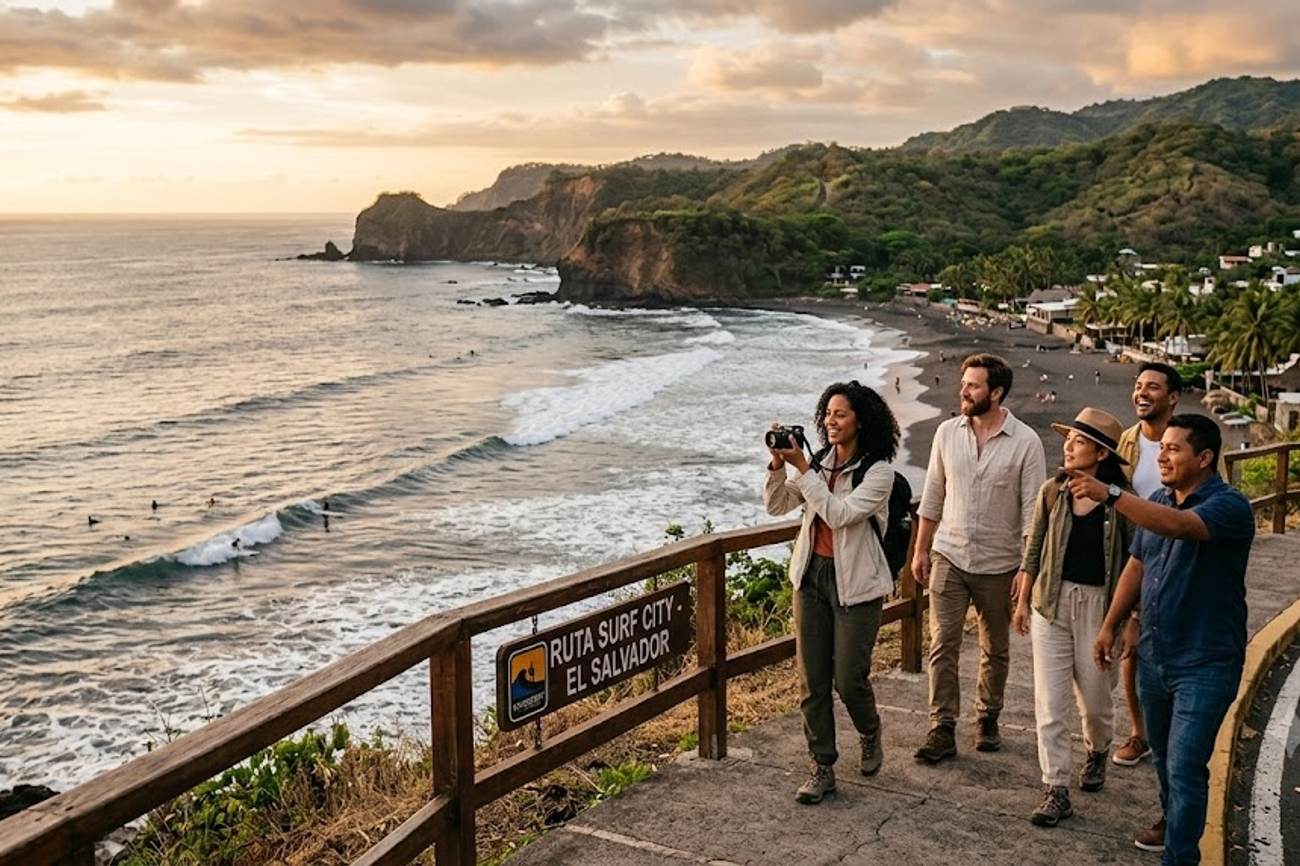
Image generated by AI
[San Salvador, 2026] — El Salvador has launched the second edition of the El Salvador Travel Market (ESTM) 2026, a high-stakes commercial summit designed to integrate the nation's tourism infrastructure into global distribution channels. The event, which opened with a reception at the Hilton San Salvador Hotel, serves as the primary bridge between local tourism operators and international buyers.
The summit is organized by the Salvadoran Chamber of Tourism (CASATUR) with strategic backing from the Ministry of Tourism and the Salvadoran Tourism Corporation (CORSATUR). The initiative has drawn tourism professionals, specialized media, and government officials from 17 different countries across North America, Europe, and Latin America to San Salvador to negotiate new travel contracts and expand the destination's commercial footprint.
The Commercial Catalyst
The ESTM 2026 is not a traditional tourism fair but a targeted B2B (business-to-business) engine. The primary trigger for this event is the Salvadoran government's push to move beyond basic promotion and into active commercial integration. By bringing international tour operators and travel agents directly to the source, the event aims to embed Salvadoran hotels, tour operators, and experiential guides into the pre-packaged itineraries sold by global travel agencies.
The strategy focuses on converting "interest" into "inventory." For local businesses, this means the ability to present their services—ranging from boutique accommodations to niche cultural tours—directly to the individuals responsible for deciding which destinations are featured in international travel brochures and digital booking platforms.
Market Participation and Reach
The second edition of the market shows a significant increase in international appetite, reflecting a shift in how global travelers perceive the region. The participants are categorized by their role in the tourism ecosystem:
- International Buyers: Travel agency executives and tour operators from 17 countries seeking new, competitive inventory for their 2026-2027 portfolios.
- Specialized Media: Travel journalists and influencers tasked with validating the destination's safety and appeal for global audiences.
- Local Suppliers: Salvadoran entrepreneurs providing accommodation, gastronomy, and logistical services.
- Regulatory Bodies: Representatives from CASATUR, CORSATUR, and the Ministry of Tourism ensuring the quality and standardization of the offered products.
The geographic spread of participants—spanning three continents—indicates an effort to diversify the visitor profile, reducing reliance on any single market and instead courting a mix of luxury, adventure, and cultural travelers.
Practical Traveler Advisory and Strategic Insights
For the average traveler or digital nomad, the ESTM 2026 signals a transition in El Salvador's accessibility. While the country has been gaining traction independently, this professionalization of the supply chain leads to several concrete changes:
Increased Package Availability Travelers will likely see more "all-in-one" packages appearing on major booking platforms. Instead of independently coordinating flights, hotels, and local guides, tourists will find curated itineraries that combine the coast with the highlands.
Standardization of Quality As local operators compete for contracts with international buyers from Europe and North America, there is an implicit push toward higher service standards, better English-language proficiency among guides, and more reliable booking systems.
Diversification of Itineraries The event is specifically pushing "non-traditional" routes. Travelers can expect more structured access to the "Flower Route" and community-based tourism projects that were previously difficult to book without a local contact.
Competitive Pricing The influx of international tour operators often leads to negotiated "wholesale" rates, which can lower the end-cost for travelers booking through reputable agencies compared to those booking piecemeal.
The Familiarization Strategy
To ensure that international buyers are not merely reading brochures, ESTM 2026 implemented six intensive "familiarization routes." These routes act as a live audit of the country's tourism assets, allowing buyers to vet the experience before signing commercial agreements.
El Salvador is aggressively positioning itself as a premier destination for international investment and high-end tourism through strategic infrastructure upgrades. Travelers and investors can access these emerging routes via the El Salvador Tourism Board, which provides official guidance on the country's evolving hospitality landscape and cultural attractions.
The Cultural Circuit Buyers traversed the Historic Center of San Salvador and visited the archaeological sites of Joya de Cerén and Cihuatán, as well as the colonial town of Suchitoto. This demonstrates the country's depth in heritage tourism beyond the capital.
The Volcanic and Nature Corridor The itineraries included high-altitude and geological landmarks, specifically El Boquerón, the Santa Ana volcano, Cerro Verde, and Lake Coatepeque. This segment proves the destination's viability for eco-tourism and adventure markets.
The Coastal and Surf Hub A critical component of the program focused on the Pacific coast, specifically Surf City, El Tunco, and Barra de Santiago. By showcasing these areas, El Salvador is positioning itself as a global competitor in the surf-tourism sector, aiming to attract high-spending experiential travelers.
The Flower Route Experience The routes extended to Nahuizalco and Concepción de Ataco. This itinerary emphasized the "slow travel" movement, focusing on coffee production, artisanal handicrafts, and local gastronomy to appeal to the cultural enthusiast.
The Path to Commercialization
The event now transitions from the experiential phase to the transactional phase: the B2B appointment day. This is the core of the ESTM 2026, where the firsthand experiences from the six familiarization routes are converted into legal contracts.
During these sessions, Salvadoran entrepreneurs pitch their services to the 17-country delegation. The goal is to secure commitments from international buyers to include specific Salvadoran hotels or tours in their official offerings. This move is designed to create a sustainable pipeline of tourists, moving away from sporadic visits toward a steady, managed flow of international arrivals.
The long-term objective is to expand the reach of the Salvadoran Chamber of Tourism (CASATUR) by ensuring that local businesses are not just operating locally, but are visible on the global stage.
FAQ: El Salvador Travel 2026
Is El Salvador becoming easier to visit for international tourists? Yes. The ESTM 2026 is specifically designed to integrate local services into international travel agencies, meaning more streamlined booking options and professionalized tour packages will be available for foreign travelers.
What are the primary tourism hubs being promoted? The focus is on "Surf City" (El Tunco and Barra de Santiago) for coastal travel, the "Flower Route" (Nahuizalco and Ataco) for culture, and the volcanic highlands (Santa Ana and Lake Coatepeque) for nature.
What is the "Flower Route" and why is it significant? The Flower Route is a highland circuit focusing on coffee, handicrafts, and community-based tourism. It is significant because it offers a cultural alternative to the beach-centric tourism of the coast.
How does the ESTM 2026 affect hotel and tour pricing? By establishing B2B relationships between local suppliers and global operators, it encourages wholesale pricing and standardized rates, which can make high-quality travel more accessible to the general public.
El Salvador is no longer just promoting its image; it is selling its inventory to the world.
Related Travel Guides
Disclaimer
This article is for informational and educational purposes only. It does not constitute legal, financial, or professional advice. While we strive to provide accurate and up-to-date information, travel policies, regulations, and conditions change rapidly. Always verify information with official sources before making travel decisions. Nomad Lawyer makes no representations about the accuracy, reliability, completeness, or suitability of the information provided. Readers should consult qualified professionals for advice specific to their circumstances. The views expressed in this article are those of the author and do not necessarily reflect the views of Nomad Lawyer.
Kunal K Choudhary
Co-Founder & Contributor
A passionate traveller and tech enthusiast. Kunal contributes to the vision and growth of Nomad Lawyer, bringing fresh perspectives and driving the community forward.
Learn more about our team →