
Guatemala Focuses on Low-Impact Ecotourism and Scarcity at El Mirador in Petén
A detailed guide to the ecotourism and archaeological travel trends at El Mirador in Petén, Guatemala, highlighting Flores, San Andrés, and Carmelita.

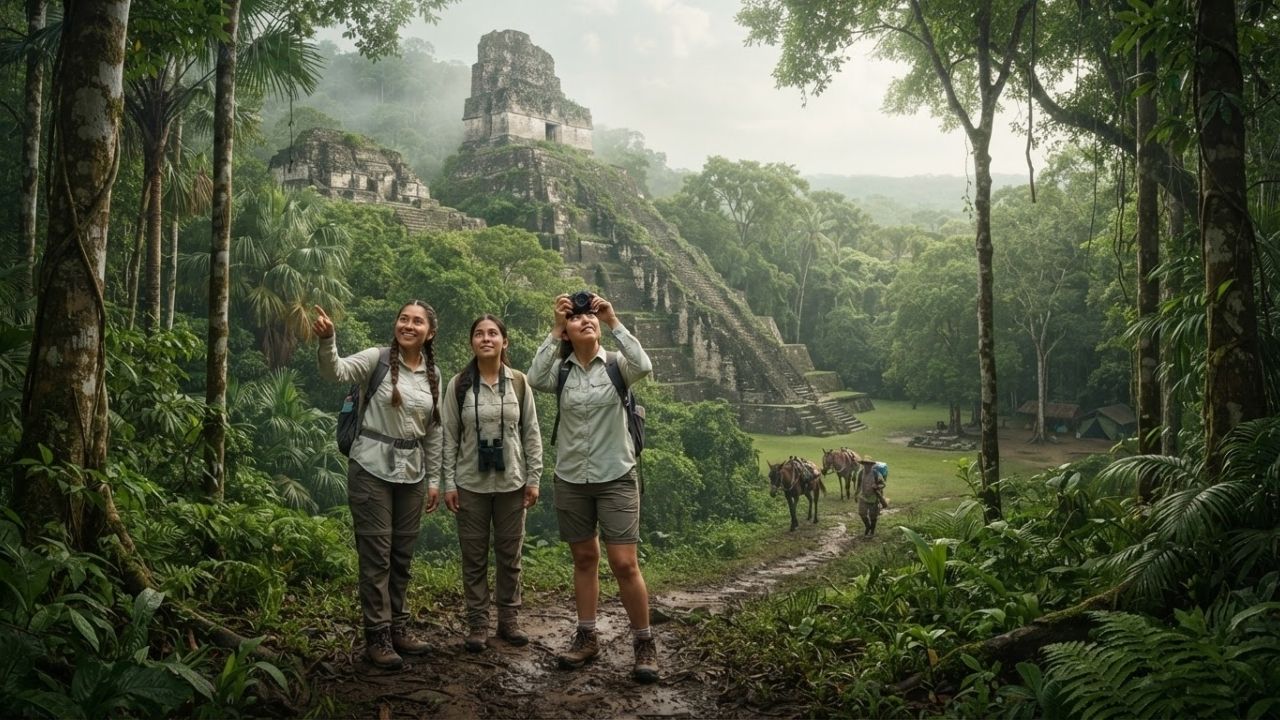
Image generated by AI
The remote Maya archaeological site of El Mirador is entering a new phase of ecotourism planning, as Guatemala markets the destination’s wilderness access as a key commercial asset. Following exploratory discussions involving Spanish business organizations and the official Economic and Commercial Office of the Embassy of Spain, potential projects are being evaluated under strict conservation guidelines in the core zone of the Maya Biosphere Reserve.
Controlled-Capacity Ecotourism in the Petén Jungle
Ecotourism and adventure travel are transforming how visitors engage with historical destinations. Rather than pursuing mass-market tourism, Guatemala is positioning the remoteness of El Mirador as a premium asset, focusing on a controlled-capacity model that values environmental conservation over high passenger volume. The destination is being promoted as a scarce, difficult-to-access wilderness experience where the challenge of the journey forms a core part of the product.
This planning occurs as Guatemala experiences significant growth in its tourism sector. The Instituto Guatemalteco de Turismo (INGUAT) recorded 3,361,843 non-resident visitors in 2025, representing an 11 per cent increase from 2024. International tourism receipts reached an estimated US$1.3902 billion, while domestic travel generated approximately 27 million trips and Q54.2 billion in economic activity.
To manage this growing demand sustainably, authorities are focusing on diversifying destinations in the Petén region. By directing development towards emerging cultural routes and nature-based products, the national strategy aims to distribute economic benefits to local communities while protecting fragile ecosystems from overtourism.
The Expedition Gateway: Flores, San Andrés, and Carmelita
The supply chain for El Mirador is deeply connected to local municipalities in Petén. According to the Consejo Nacional de Áreas Protegidas (CONAP), the primary route to the national park (Parque Nacional Mirador–Río Azul) runs through Flores, San Andrés, and Carmelita. Reaching the site requires one to two days of travel depending on the route and package, establishing a gateway economy that benefits the surrounding communities.
Flores serves as the primary gateway for hospitality and transport services, where travelers arrange logistics, purchase supplies, and coordinate guides. San Andrés is also part of the official access corridor, containing parts of the protected forest area. The actual overland trek begins at the community of Carmelita, where local cooperatives manage the expedition.
This structure allows local residents to capture economic benefits before travelers enter the protected core zone. Accommodation, equipment rental, dining, and transport services in the gateway towns ensure that community members directly participate in the tourism economy, supporting local development and conservation initiatives.
Navigating the Trail: The Reality of the El Mirador Product
The current visitor experience is deliberately designed to keep environmental impacts low. The standard expedition, managed by Carmelita’s community cooperative, is a five-day, four-night jungle trek that requires five to six hours of walking daily. The package includes local accredited guides, cooks, muleteers, and cargo mules to carry gear and provisions.
Rather than staying in conventional hotels, travelers camp at designated stations like El Tintal, which provide basic composting toilets, water for bucket showers, and communal dining facilities. The reliance on local guides and traditional transport methods ensures that the tour structure remains small and low-impact.
The expedition faces significant operational challenges during the rainy season. The Carmelita–El Mirador visitor guidelines identify July to September as the wettest period, when trails become muddy and flooded. During the wider July-to-November rainy season, approximately 35 per cent of the route can involve flood-prone sections. Understanding these seasonal variations is necessary for tour operators and travelers planning the journey.
Regulatory Gateways and the Protected-Area Framework
Because El Mirador is located within the core zone of the Maya Biosphere Reserve, all commercial activities are strictly regulated by CONAP and the Sistema Guatemalteco de Áreas Protegidas (SIGAP). Activities are formally restricted to scientific research, conservation, and low-impact ecotourism.
The SIGAP framework establishes specific authorization gates for tourism services:
- Permits: For temporary visitor services lasting up to one month, with no infrastructure allowed.
- Licences: For operations extending from one month to one year, with no permanent construction permitted.
- Concessions: For long-term services, such as eco-lodges or community accommodations, which require detailed environmental assessments.
Before any project can proceed, the framework requires a formal tourism-potential assessment and a pre-feasibility study addressing environmental impacts and economic viability. Furthermore, potential investors must monitor legislative proposals like Initiative 6589 (proposing the Santuario Natural y Cultural de la Cuenca Kárstica Mirador–Calakmul), which was presented to Congress in November 2025 and remains before the Commission on Environment, Ecology and Natural Resources.
Preserving the Maya Forest Heritage
The strength of El Mirador's tourism model lies in its ability to support local forest conservation. By providing employment for community members as guides, cooks, and muleteers, the tourism model offers an alternative to logging and agricultural clearing in the reserve.
Sustainable travel practices are essential for preserving this fragile environment. Travelers are expected to pack out all waste, avoid disturbing wildlife, and respect the ancient structures. The use of traditional mule transport rather than motorized vehicles helps prevent soil erosion along the trail, maintaining the natural character of the jungle.
Strategic alliances between CONAP, local cooperatives, and international conservation organizations also support the maintenance of basic visitor facilities, trail signage, and security. These partnerships ensure that the archaeological heritage remains protected while offering a safe, educational experience for travelers.
Cultural Etiquette and Local Petén Insider Tips
To ensure a safe and respectful journey, consider these recommendations when planning your expedition:
- Off-Peak Visit Windows: Schedule your trek during the dry season (December through April) to avoid the heavy mud of the July-to-November rainy season, when approximately 35 per cent of the trail is prone to flooding.
- Cultural Etiquettes: Show respect for your community guides and muleteers by following their safety advice. Support the Carmelita cooperative directly by purchasing local crafts and tipping your expedition crew fairly for their hard work.
- Local Dining Specialties: Enjoy traditional Mayan-inspired meals prepared by community cooks during the trek, including black beans, handmade corn tortillas, and dishes seasoned with local forest herbs.
- Under-the-Radar Spots: Spend the first evening of the trek exploring the ruins of El Tintal, a quiet archaeological area that offers sunset views over the jungle canopy.
Outlook for the Petén Tourism Sector
The long-term outlook for tourism in Petén relies on managed diversification. By promoting low-impact destinations like El Mirador alongside established sites like Tikal, INGUAT aims to build a more resilient cultural tourism sector.
The focus on conservation-compatible capital and local cooperative partnerships provides a model for other protected archaeological sites worldwide, showing how historical assets can be monetized responsibly without compromising their ecological integrity.
Frequently Asked Questions About El Mirador
Where is El Mirador located and how is it accessed?
El Mirador is located in the northern Petén region of Guatemala, near the Mexican border. It is accessed via a multi-day trek starting from the community of Carmelita, north of Flores and San Andrés.
How long does the standard trek to El Mirador take?
The standard community-managed expedition takes five days and four nights, requiring five to six hours of walking per day through the rain forest.
What regulations govern tourism at El Mirador?
The site is protected within the core zone of the Maya Biosphere Reserve. All activities must be authorized by CONAP, with services restricted to low-impact ecotourism under strict environmental licensing.
When is the best time of year to hike to El Mirador?
The dry season, from December to April, offers the best trail conditions. The rainy season, particularly from July to September, brings heavy mud and flooding along approximately 35 per cent of the route.
For the modern explorer, the value of El Mirador lies in the journey itself—a rare opportunity to experience antiquity preserved by the deep protection of the Guatemalan jungle.
Related Travel Guides
Peru Beyond Machu Picchu: Community Homestays and Sustainable Tourism 2026
Washington's Saltwater State Park Offers Beach Escapes and Tide Pool Adventures
The 10 Best Hidden Mayan Ruins in Central America, According to Reddit
Disclaimer
This article is for informational and educational purposes only. It does not constitute legal, financial, or professional advice. While we strive to provide accurate and up-to-date information, travel policies, regulations, and conditions change rapidly. Always verify information with official sources before making travel decisions. Nomad Lawyer makes no representations about the accuracy, reliability, completeness, or suitability of the information provided. Readers should consult qualified professionals for advice specific to their circumstances. The views expressed in this article are those of the author and do not necessarily reflect the views of Nomad Lawyer.
Raushan Kumar
Founder & Lead Developer
Full-stack developer with 11+ years of experience and a passionate traveller. Raushan built Nomad Lawyer from the ground up with a vision to create the best travel and law experience on the web.
Learn more about our team →