
Edinburgh Steps Up with Venice and More Places to Counter Nearly 7% Europe Tourism Decline in July with Discounts and Incentives
Edinburgh Steps Up with Venice and More Places to Counter Nearly 7% Europe Tourism Decline in July with Discounts and Incentives

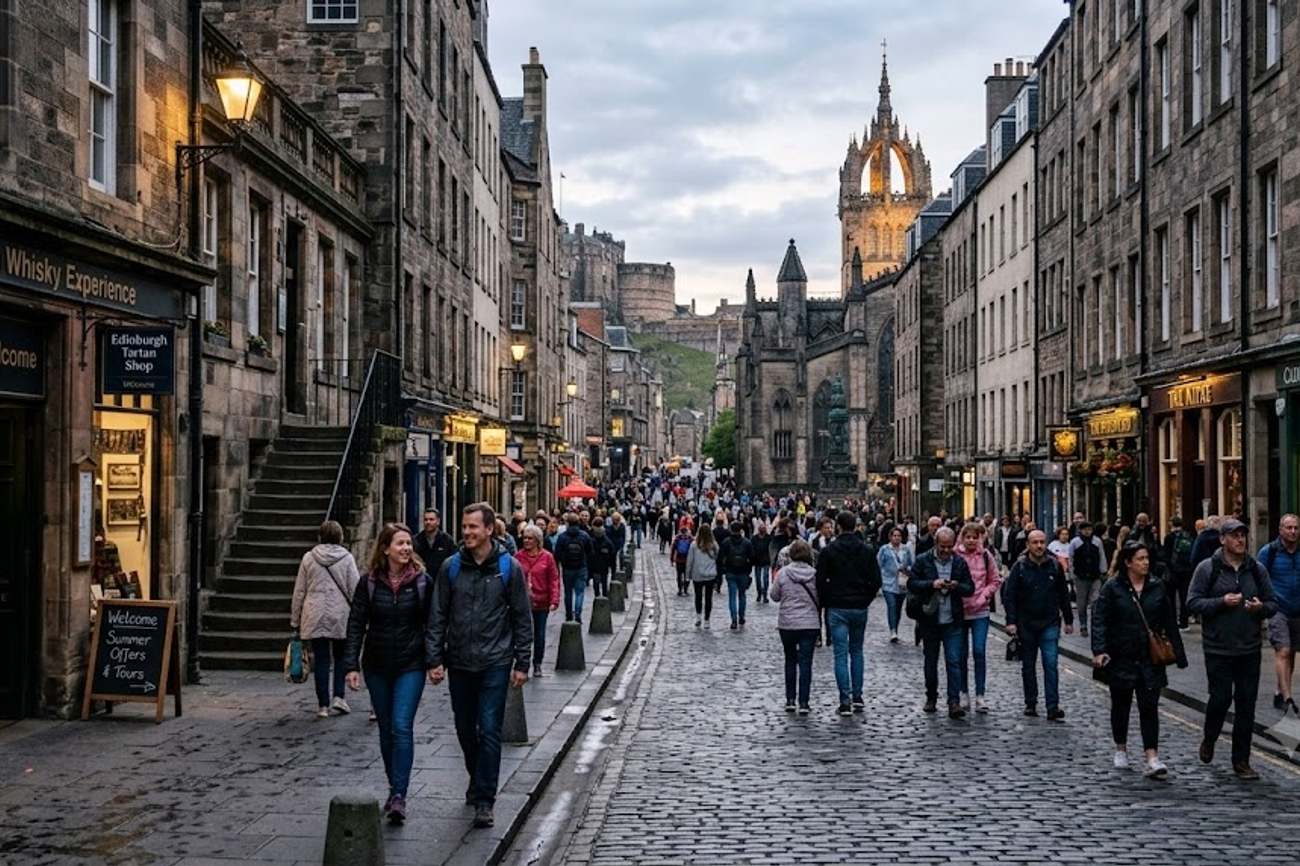
Image generated by AI
[Brussels, September 17, 2026] — International arrivals to Europe surged by 5.6% between January and August 2026, yet a severe geographic imbalance persists as 80% of all travelers continue to congregate in just 10% of available destinations.
Data released by the European Travel Commission (ETC) and Eurostat confirms that while the continent remains the world's primary tourism hub, the concentration of visitors in traditional capitals has triggered a legislative crisis. European authorities are now deploying aggressive intervention strategies to divert traffic away from saturated hubs toward second-tier cities to prevent socioeconomic collapse in major urban centers.
The Overtourism Legislative Trigger
The current volatility stems from a transition from "revenge travel"—the post-pandemic surge into cities like Paris, Rome, Barcelona, and Amsterdam—to a state of structural imbalance. On March 18, 2026, the European Parliament’s Transport and Tourism Committee passed a landmark resolution formally classifying overtourism as an urgent socioeconomic threat. The vote passed with 33 in favor, 4 against, and 4 abstentions.
This resolution was prompted by findings from Rapporteur Daniel Attard, who presented data showing that the current tourism model is environmentally and socially unsustainable. While the sector supports 12.3 million jobs and generates roughly 10.5% of the continent's GDP, the disproportionate pressure on a handful of cities has forced the European Union to shift its metrics of success from sheer arrival volume to sustainable visitor distribution.
Market Polarization and Affected Regions
The growth in European travel is not being shared equitably across the continent. While overall numbers are up, specific markets are seeing drastic declines while others experience unprecedented booms.
Growth Leaders (Overnight Stays):
- Ireland: +14.6%
- Malta: +9.9%
- Slovakia: +5.9%
Declining Markets (Overnight Stays):
- Cyprus: -7.7%
- Romania: -6.7%
According to Eurostat data published September 9, 2026, the EU recorded 1.321 billion overnight stays in tourist accommodations during the first half of the year. This is a 1.7% increase over the 1.299 billion stays recorded during the same period in 2025.
The demographic shift is equally pronounced. Foreign visitors (both intra-EU and non-EU) now account for 48.9% of all overnight stays. Growth among foreign guests is currently 2.5%, which is nearly three times the growth rate of domestic overnight stays (+0.9%). In high-dependency markets like Malta and Cyprus, foreign guests represent over 90% of the total market share, whereas in Poland and Germany, they make up less than 25%.
What This Means for Travelers
For the individual traveler, the era of unregulated access to Europe's primary capitals is ending. The shift toward "second-tier" cities is no longer just a trend but a necessity driven by policy.
Short-Term Rental Crackdowns As of May 20, 2026, new EU-mandated rules regarding short-term rentals are in full effect. Booking platforms are now legally required to share granular registration and occupancy data directly with municipal authorities. Travelers booking apartments via third-party apps should expect more rigorous identity verification and a potential decrease in available "hidden" or unregulated rentals in major cities.
Flight and Route Shifts Aviation data shows Revenue Passenger Kilometres (RPK) rose by 7.0% in Q1 2026, peaking at 8.0% in March. However, airlines are increasingly adjusting capacity to favor direct accessibility to less congested regions. Travelers may find more competitive pricing and increased flight frequency to emerging destinations in Ireland, Slovakia, and Malta, while routes into saturated hubs may face higher "tourism taxes" or stricter entry requirements.
Climate-Driven Destination Changes There is a measurable shift in passenger behavior linked to climate change concerns. Travelers are increasingly bypassing traditional heat-prone capitals in favor of cooler, less crowded northern or secondary locations. This is creating a "value-for-money" migration where travelers seek safety and lower density over iconic landmarks.
The 2026 Regulatory Timeline
The trajectory of European travel for the remainder of the year is defined by strict enforcement of the March resolution. The primary goal is the protection of residential housing markets, which have been decimated by the proliferation of short-term tourist rentals.
The European Union is now moving toward a model of "managed distribution." This involves not only the data-sharing mandates for rental platforms but also the potential for city-specific caps on visitor numbers. Tourism professionals are being advised to pivot their portfolios away from the "Top 10" destinations to avoid the legislative volatility currently hitting the most popular capitals.
The interaction between rising fuel costs and inflationary pressures continues to challenge the industry, yet the 5.0% year-to-date growth reported by the ETC suggests that demand remains inelastic. The conflict now lies between a public that wants to visit Europe and a European infrastructure that can no longer support the current concentration of those visitors.
FAQ: European Travel Trends 2026
Are short-term rentals still available in major EU cities? Yes, but they are now strictly regulated. As of May 20, 2026, platforms must share guest data with local governments. Expect more official registrations and fewer "under-the-radar" apartment rentals.
Which European countries are currently seeing the most growth? Ireland is leading with a 14.6% increase in overnight stays, followed by Malta at 9.9% and Slovakia at 5.9%. These are becoming primary alternatives to saturated capitals.
Why are some popular destinations seeing a decline in visitors? Cities are implementing travel restriction policies to combat overtourism. Additionally, travelers are shifting toward second-tier cities due to climate change concerns and a desire for less congested experiences.
How has the EU officially classified overtourism? The European Parliament’s Transport and Tourism Committee has formally classified overtourism as one of Europe’s most urgent socioeconomic threats, rather than just a local nuisance.
The map of Europe is being redrawn by legislation and climate, forcing the modern nomad to look beyond the capital.
#EU-Tourism-2026 #Eurostat-Travel-Data #Overtourism-Legislation #ETC-Aviation-Metrics #European-Short-Term-Rentals #Sustainable-Travel-EU
Related Travel Guides
Disclaimer
This article is for informational and educational purposes only. It does not constitute legal, financial, or professional advice. While we strive to provide accurate and up-to-date information, travel policies, regulations, and conditions change rapidly. Always verify information with official sources before making travel decisions. Nomad Lawyer makes no representations about the accuracy, reliability, completeness, or suitability of the information provided. Readers should consult qualified professionals for advice specific to their circumstances. The views expressed in this article are those of the author and do not necessarily reflect the views of Nomad Lawyer.
Raushan Kumar
Founder & Lead Developer
Full-stack developer with 11+ years of experience and a passionate traveller. Raushan built Nomad Lawyer from the ground up with a vision to create the best travel and law experience on the web.
Learn more about our team →