
United States Travel Boost: Visa Waiver Program Expands Access Through ESTA Approval
United States Travel Boost: Visa Waiver Program Expands Access Through ESTA Approval

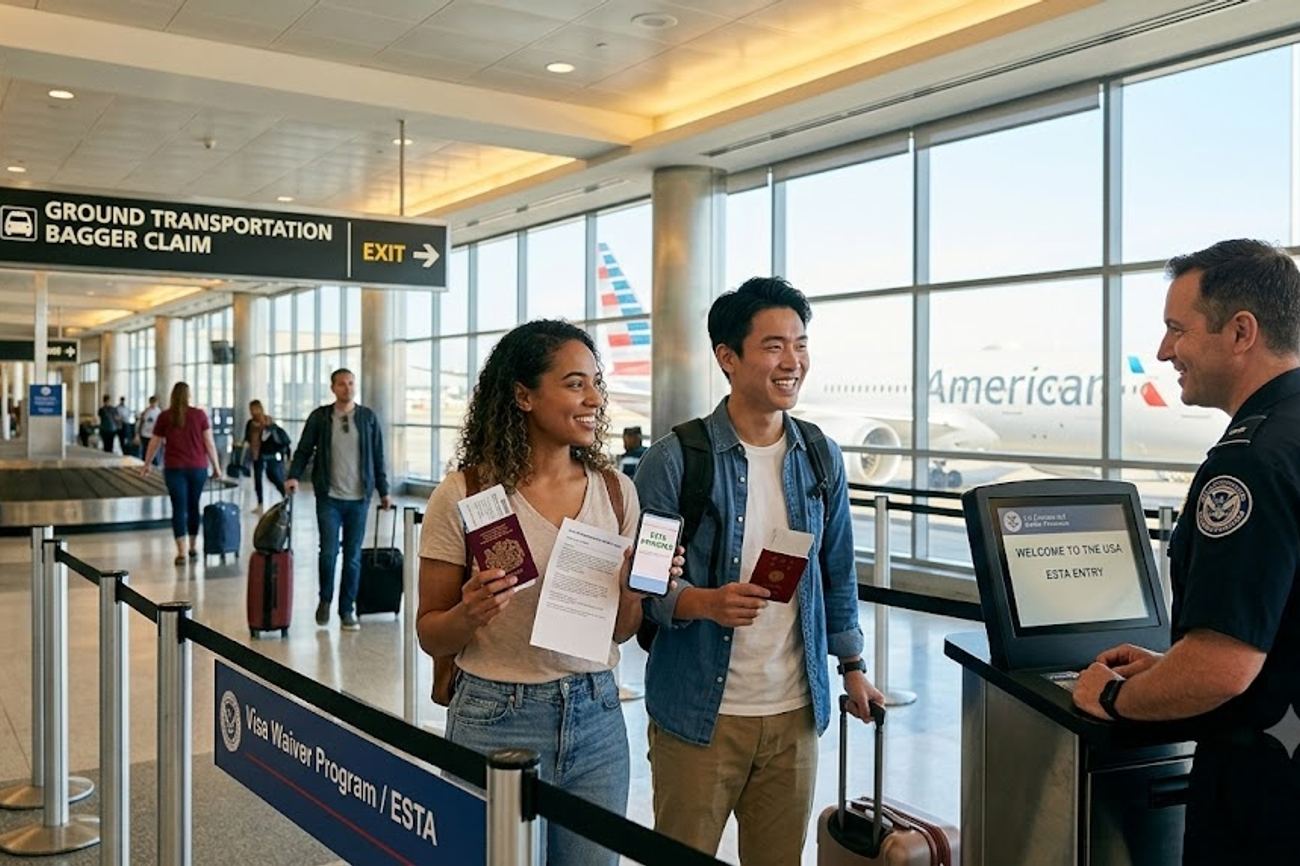
Image generated by AI
title: Analysis of US Visa Waiver Program Impact on International Tourism Flow date: 2024-05-22 author: Travel Industry Trend Analyst category: Market Analysis tags: [US-VWP-Utilization, ESTA-Digital-Transformation, US-International-Arrivals-2024, Tourism-Market-Share-USA]
International arrival patterns to the United States have shifted toward short-term, high-frequency visits, with the Visa Waiver Program (VWP) now facilitating stays of up to 90 days for eligible nationals. This digital-first approach to border management has replaced traditional visa stamps for millions, signaling a broader industry movement toward "frictionless travel" where pre-clearance data replaces physical embassy interviews.
The Frictionless Entry Metric — ESTA and VWP Data
The operational shift from traditional consular processing to the Electronic System for Travel Authorization (ESTA) represents a fundamental change in how the U.S. Department of Homeland Security and the Department of State manage tourism pipelines. By moving the eligibility assessment to a digital pre-departure phase, the U.S. has effectively decoupled the "authorization to travel" from the "permission to enter."
The data indicates that the VWP is specifically engineered for three high-yield travel segments: tourism, short-term business, and transit. By capping stays at 90 days, the program optimizes for the "high-spend, short-stay" traveler—a demographic that typically contributes more per capita to local economies in hospitality and retail than long-term visa holders.
The systemic reliance on ESTA allows U.S. Customs and Border Protection (CBP) to conduct risk assessments before a passenger even boards an aircraft or ship. This pre-screening mechanism is a critical component of the broader global trend toward biometric and digital identity verification, as tracked by the International Air Transport Association (IATA), which advocates for the standardization of digital travel credentials to reduce airport congestion.
Comparative Market Dynamics: State-Level Tourism Concentration
The distribution of VWP-enabled travel is not uniform across the United States. There is a heavy concentration of international arrivals in five key states: California, Florida, Texas, New York, and Illinois. These regions act as primary gateways, absorbing the majority of the "frictionless" traffic generated by the VWP.
When comparing these markets, we see a divergence in traveler intent. New York and Illinois (specifically Chicago) function as primary business and cultural hubs, whereas Florida and California operate as leisure-dominant engines. Texas represents a hybrid model, leveraging both corporate travel and cultural tourism.
The following table illustrates the primary drivers of international demand across these key VWP-impacted markets:
| State | Primary Tourism Driver | Key Gateway Cities | Typical VWP Use Case |
|---|---|---|---|
| California | Entertainment/Nature | Los Angeles, San Francisco | Leisure/Coastal Tours |
| Florida | Theme Parks/Cruises | Orlando, Miami | Family Vacations/Transit |
| New York | Culture/Finance | New York City | Short-term Business/Arts |
| Texas | Business/Heritage | Houston, Dallas, Austin | Corporate/Music Tourism |
| Illinois | Architecture/Trade | Chicago | Business/Urban Exploration |
This concentration of arrivals suggests that while the VWP opens the door to the entire country, the actual economic impact is heavily skewed toward these five states. According to data trends often reflected in STR reports, hotel occupancy in these gateway cities is more sensitive to changes in visa policy than in the American Midwest or Mountain West regions.
What This Means for Travelers
The transition to an ESTA-centric entry system changes the booking window and the risk profile for international visitors. For those eligible for the VWP, the "barrier to entry" has dropped significantly, but the "compliance requirement" has become more rigid.
If you are planning a visit to the U.S. in the coming quarters, the following data-driven advice applies:
- The Pre-Departure Window: While ESTA is faster than a visa, it is not instantaneous. Travelers should secure approval at least 72 hours before departure to avoid boarding denials. Because ESTA approval is a prerequisite for boarding, any delay in the digital screening process can result in a total loss of non-refundable flight and hotel deposits.
- The 90-Day Hard Cap: The VWP is strictly limited to 90 days. Unlike certain traditional visas that may allow for extensions, the VWP limit is firm. Travelers exceeding this window face severe immigration penalties that can permanently revoke their VWP eligibility.
- Gateway Logistics: Because arrivals are concentrated in hubs like Miami, Los Angeles, and New York, these airports experience higher CBP volumes. Travelers utilizing the VWP should account for longer processing times at these specific ports of entry during peak seasons (Q3 and Q4).
- Cost Avoidance: There is a growing market of third-party "visa assistance" sites. Data shows these sites often charge 3x to 5x the official government fee. Travelers should use only official government channels to avoid unnecessary expenditures.
Projections for Digital Border Evolution
The trajectory of the VWP and ESTA suggests a move toward a fully integrated "Digital Travel Authorization" (DTA) ecosystem. We are seeing a global pattern where countries are moving away from physical passport stamps toward cloud-based authorizations. This is mirrored in the European Union's planned implementation of ETIAS, which functions similarly to the U.S. ESTA system.
As the U.S. continues to refine its digital screening, we expect a further increase in the volume of "spontaneous travel." When the time to acquire travel authorization drops from weeks (traditional visa) to minutes (ESTA), the booking lead time for international flights typically shrinks. This will likely force airlines and hotels in California and Florida to adopt more dynamic pricing models to account for a higher percentage of last-minute international bookings.
Furthermore, the integration of the VWP with cruise departures in Florida suggests that the U.S. is positioning itself as a global transit hub for the cruise industry, using streamlined entry to capture spending from travelers who may only spend 48-72 hours on U.S. soil before departing for the Caribbean. This "transit-tourism" model is a high-efficiency revenue stream that relies entirely on the speed of the ESTA system.
FAQ: US Visa Waiver Program 2024
Will travel costs increase because of the VWP? No. The VWP actually reduces costs by eliminating the need for expensive embassy appointments and traditional visa fees. However, high demand in gateway states like Florida and New York continues to drive up hotel ADR (Average Daily Rate).
Is ESTA approval a guarantee of entry into the USA? No. ESTA is a pre-screening authorization to board a carrier. The final decision on admission is made by a CBP officer at the port of entry based on current immigration laws and the traveler's documentation.
Which airlines are expanding routes to VWP-heavy destinations? Major international carriers are increasing capacity to Los Angeles (LAX), Miami (MIA), and New York (JFK) to capitalize on the streamlined entry for VWP nationals. Check current capacity trends via OAG for real-time route expansions.
Can I use the VWP for a remote work stint? No. The VWP is strictly for tourism, short-term business meetings, or transit. Attempting to engage in full-time employment or long-term residency under a VWP authorization is a violation of U.S. immigration law.
The shift toward digital authorization is transforming the U.S. border from a physical barrier into a data-driven filter.
Related Travel Guides
- Luxury Tourism in Peru Stages a Powerful Comeback as Tailor Made Experiences Attract Global Travelers
- Bend Oregon Uncorks a Vibrant Oktoberfest Filled with Races Music and Big Smiles
- Uruguay Sparks Massive August Tourist Growth While Winter Travel Takes Over Montevideo And Colonia, All You need To Know
Disclaimer
This article is for informational and educational purposes only. It does not constitute legal, financial, or professional advice. While we strive to provide accurate and up-to-date information, travel policies, regulations, and conditions change rapidly. Always verify information with official sources before making travel decisions. Nomad Lawyer makes no representations about the accuracy, reliability, completeness, or suitability of the information provided. Readers should consult qualified professionals for advice specific to their circumstances. The views expressed in this article are those of the author and do not necessarily reflect the views of Nomad Lawyer.
Raushan Kumar
Founder & Lead Developer
Full-stack developer with 11+ years of experience and a passionate traveller. Raushan built Nomad Lawyer from the ground up with a vision to create the best travel and law experience on the web.
Learn more about our team →