
Ecuador Enforces Robust Tourism Investment Laws and Security Protocols to Safeguard Travelers Across Quito, Cuenca, and Guayaquil
Ecuador implements legislative investment incentives and urban security corridors in Quito, Cuenca, and Guayaquil to protect international visitors and assets.

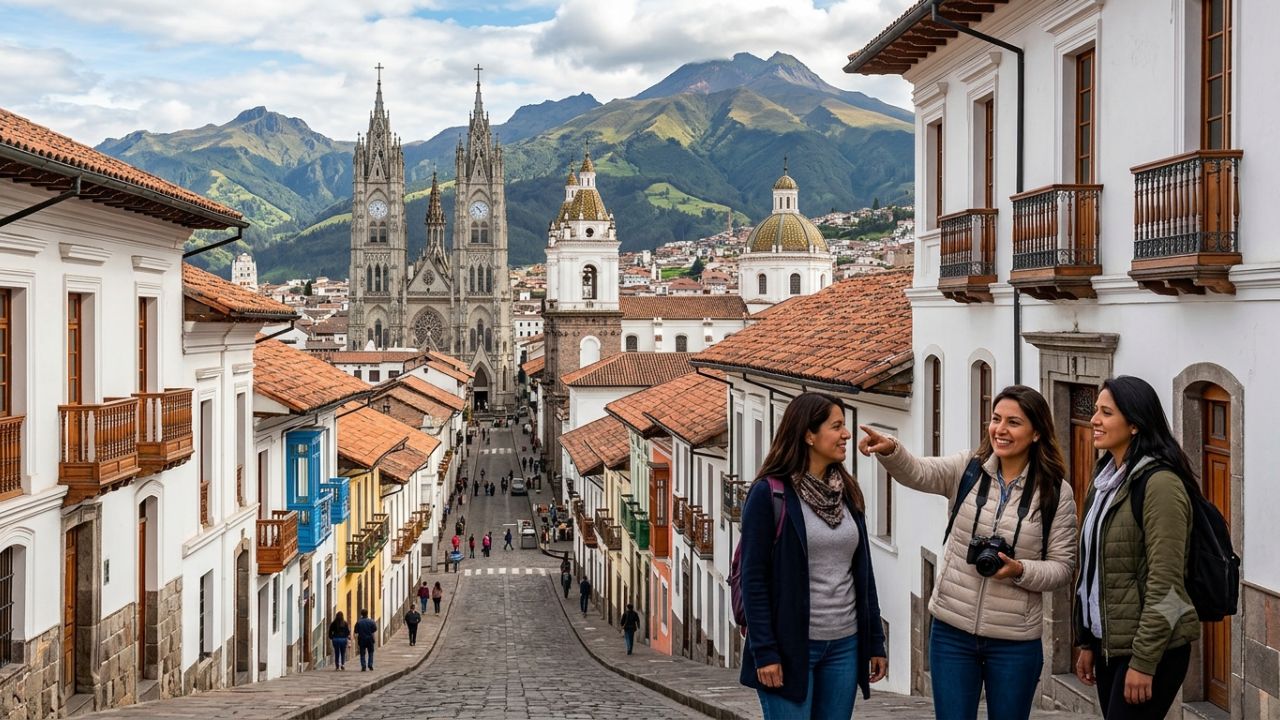
The Government of Ecuador is implementing a comprehensive legislative framework that pairs high-value foreign investment incentives with strict municipal security protocols to safeguard travelers and tourism assets across Quito, Cuenca, and Guayaquil.
By establishing seven-year income tax exemptions for productive tourism developments valued at $100,000 USD or more, waiving currency outflow taxes on capital equipment, and deploying specialized tourist police linked to central emergency networks, Ecuador is actively fortifying its travel sector.
Rather than relying on generic security measures, the national administration is implementing tailored, district-level safety interventions that protect historic colonial centers, secure vital commercial port corridors, and ensure safe ground transit for more than 1.35 million annual foreign visitors.
===================================================================================
        ECUADOR TOURISM SECTOR & INVESTMENT REFORM BENCHMARK 2026
===================================================================================
 [LEGISLATIVE & FISCAL INCENTIVE HIGHLIGHTS]
  * 7-Year Corporate Income Tax Exemption: For new tourism projects >= $100,000 USD.
  * 5% ISD Currency Outflow Tax Waiver: Total exemption on capital goods & financing.
  * Legal Stability Contracts: 15–20 year contracts for investments >= $1,000,000 USD.
  * Anti-Money Laundering Oversight: Mandatory UAFE audits on all major acquisitions.

 [SECTORAL ECONOMIC IMPACT]
  * Tourism GDP Contribution: Direct economic share between 2.5% and 4.4%.
  * Total Annual Tourism Spend: Surpasses $4.2 billion USD across the ecosystem.
  * National Employment: Sustains > 400,000 direct and indirect jobs (~5% of workforce).
  * Long-Term Target Output: Projected to exceed $7.5 billion USD in economic yield.
===================================================================================
Macroeconomic Growth Dynamics: Tourism as an Engine of Dollarisation Stability
The ongoing expansion of Ecuador's visitor economy represents an essential pillar of national fiscal stability. Operating under a fully dollarised monetary system since 2000, the Ecuadorian economy relies on commercial travel and international hospitality to generate direct foreign currency inflows that reinforce central bank reserves.
The tourism value chain contributes between 2.5% and 4.4% to Ecuador's annual gross domestic product (GDP), generating more than $4.2 billion USD in total recorded annual expenditure across domestic and international segments.
Long-range economic models developed by the Ministry of Tourism project sectoral output to surpass $7.5 billion USD as infrastructure modernizations mature.
From a labor standpoint, the travel sector supports more than 400,000 direct and indirect jobs nationwide, representing roughly 5% of the country's active labor force.
During domestic holiday periods and long weekends, internal travel velocity redistributes wealth from metropolitan centers into regional townships, with domestic holidaymakers generating over $40 million USD per long weekend and pushing hotel occupancies in coastal Santa Elena and highland Azuay to between 75% and 93%.
| Economic Indicator | Official Verified Benchmark | Macroeconomic Role in National Economy |
|---|---|---|
| Direct GDP Contribution | 2.5% to 4.4% of National GDP | Foundational driver of non-petroleum economic growth |
| Annual Tourism Expenditure | Exceeds $4.2 Billion USD | Direct source of foreign exchange and consumer velocity |
| National Employment Footprint | Over 400,000 Direct & Indirect Jobs | Represents ~5% of the national active workforce |
| Long-Term Revenue Target | Exceeding $7.5 Billion USD | Strategic target for sustainable foreign capital retention |
| Domestic Holiday Weekend Spend | Over $40 Million USD per Weekend | Redistributes liquidity from capital hubs to rural provinces |
| Provincial Holiday Occupancy | 75% to 93% in Key Tourist Hubs | High seasonal performance across Santa Elena and Azuay |
| Air Entry Concentration | Over 83% of Foreign Arrivals | Underpins the strategic priority of international aviation hubs |
Legislative Architecture: Investment Controls, Tax Exemptions, and UAFE Oversight
Ecuador has enacted a targeted legislative structure designed to lower entry barriers for reputable institutional investors while erecting formidable regulatory barriers against speculative or illicit capital.
ECUADOR TOURISM INVESTMENT INCENTIVE FRAMEWORK
| Entity / Route | Metrics | Operational Status |
|---|---|---|
| INCENTIVE MECHANISM | STATUTORY QUALIFICATION CRITERIA | FINANCIAL BENEFIT |
| Income Tax Exemption | New tourism projects >= $100,000 | 7-year total waiver |
| USD in verified capital assets | on operational taxes | |
| ISD Currency Outflow Tax | Capital machinery imports and | 0% rate (Total 5% |
| Exemption | international loan remittances | statutory waiver) |
| Legal Stability Contracts | Capital commitments exceeding | 15–20 year frozen tax |
| $1,000,000 USD with the state | rates & arbitration | |
| Green Technology Tariff | Solar equipment, wastewater plants | 100% deduction on |
| Deductions | and eco-friendly machinery | import customs duty |
Seven-Year Income Tax Relief for Productive Hospitality
Under the national investment framework, qualifying new tourism ventures—including boutique hotels, eco-lodges, convention facilities, and gastronomic establishments—benefit from a complete seven-year exemption from corporate income tax.
To qualify, projects must demonstrate a minimum capital expenditure of $100,000 USD in productive physical assets.
This threshold deliberately encourages medium-scale entrepreneurs and international boutique developers while filtering out shell companies.
Exemption from the 5% Currency Outflow Tax (ISD)
To facilitate the procurement of specialized international equipment, qualifying tourism developers receive a 100% exemption from the 5% Impuesto a la Salida de Divisas (ISD).
This exemption applies directly to:
- The importation of specialized hotel fixtures, advanced commercial kitchen machinery, and building materials.
- Green technology acquisitions, including commercial solar power arrays, micro-wastewater treatment plants, and low-emission vehicles.
- The repayment of principal and interest on foreign loans secured through recognized international financial institutions.
Long-Term Legal Stability Contracts
For major hospitality and infrastructure investments exceeding $1,000,000 USD, foreign developers can sign binding legal stability contracts with the Ecuadorian state.
These bilateral agreements lock in existing tax rates, guarantee non-discriminatory treatment, and grant access to international arbitration mechanisms for 15 to 20 years.
This legal certainty shields long-term capital from potential administrative or political policy shifts.
Rigorous Anti-Money Laundering Safeguards (UAFE)
To protect the hospitality sector from illicit financial infiltration, Ecuador enforces strict financial intelligence protocols through the Unidad de Análisis Financiero y Económico (UAFE).
Every commercial property transaction, hotel acquisition, and resort equity investment valued at or above $100,000 USD is subject to mandatory source-of-funds verification, background audits, and ultimate beneficial ownership disclosure.
These stringent audits ensure that incoming capital originates from legitimate global financial institutions.
Urban Safety Strategies: Targeted Micro-Zones in Quito, Cuenca, and Guayaquil
Ecuador's security strategy rejects one-size-fits-all policies, deploying tailored security models designed specifically for the unique operational environments of its major cities.
===================================================================================
           ECUADOR REGIONAL URBAN SAFETY & POLICING ARCHITECTURE
===================================================================================
 [QUITO: HISTORIC HERITAGE & DIPLOMATIC HUB]
  * Specialized Tourism Police: Dedicated "Polisec" patrols throughout Old Town.
  * Mandatory LUAE Integration: Annual checks on emergency alarms & CCTV systems.
  * Controlled Airport Transit: Authorized official taxi counters inside Mariscal Sucre.

 [CUENCA: LOW-RISK CULTURAL & RETIREMENT SANCTUARY]
  * Civic Neighborhood Watch: High community engagement with local municipal police.
  * Smart-City CCTV Grid: Continuous video monitoring across colonial plazas.
  * Colonial Renovations: Private capital converting heritage mansions into hotels.

 [GUAYAQUIL: COMMERCIAL PORT SECURITY CORRIDORS]
  * Fortified Waterfront Hubs: Military-police perimeters around Malecón & Santa Ana.
  * Free-Zone Tax Incentives: Targeted benefits for luxury corporate business centers.
  * Airside Border Integrity: Biometric gates and secure corridors at Olmedo Airport.
===================================================================================
Quito: Safeguarding the First UNESCO World Heritage Capital
As the national capital and primary international entry point in Pichincha Province, Quito blends historical preservation with active urban monitoring.
The city relies on its dedicated municipal tourist police unit, Polisec, which conducts continuous foot and bicycle patrols across the historic colonial center, Plaza Grande, San Francisco, and the La Mariscal district.
Key security measures enforced in Quito include:
- Mandatory LUAE Verification: To obtain or renew the annual Licencia Única de Actividades Económicas (LUAE), all lodging and dining venues must maintain verified structural safety standards, functional fire suppression equipment, and closed-circuit surveillance cameras directly integrated with the ECU 911 dispatch network.
- Intelligent Camera Surveillance: Over 800 high-definition municipal cameras monitor high-traffic pedestrian avenues, providing real-time intelligence to emergency response teams.
- Airside Transport Regulation: At Mariscal Sucre International Airport (UIO) in Tababela, municipal authorities enforce strict licensing for airport taxis, ensuring international arrivals can access pre-paid official transport booths inside the arrivals hall without encountering unauthorized operators.
Cuenca: The Model for Cultural, Medical, and Expatriate Tourism
Nestled in the southern Andean highlands of Azuay Province, Cuenca maintains the lowest crime risk profile among Ecuador's major metropolitan areas.
Recognized as a UNESCO World Heritage site for its planned Spanish Renaissance street grid and French republican architecture, Cuenca has become South America's premier haven for international retirees, cultural travelers, and medical tourists.
Cuenca's security success is anchored by:
- Active Civic Neighborhood Networks: Local residents and business owners participate in structured community watch programs (Barrio Seguro), collaborating closely with municipal police (Guardia Ciudadana).
- Smart Municipal Surveillance: The historic core and the modern Tranvía light rail corridor are monitored 24/7 by municipal camera grids, ensuring rapid assistance for transit riders.
- Heritage Asset Conversion: National tax incentives have stimulated extensive private investment in the restoration of 19th-century colonial homes, transforming historic courtyards into boutique hotels, holistic wellness spas, and international culinary venues.
Guayaquil and Durán: Securing Commercial and Maritime Trade Hubs
Guayaquil, the commercial center of Guayas Province, faces complex security requirements as Ecuador's primary container port.
Rather than deploying uniform measures, authorities establish targeted, heavily fortified tourist corridors:
- Protected Waterfront Assets: The premier riverfront developments of Malecón 2000 and Puerto Santa Ana operate under 24-hour joint military and national police oversight, complete with gated perimeter controls and constant surveillance.
- Airport Transit Buffer: José Joaquín de Olmedo International Airport (GYE) enforces strict curbside access controls and biometric processing, ensuring secure transfers for business travelers heading to downtown luxury hotels.
- Durán Industrial Containment: Across the Guayas River, the industrial municipality of Durán operates under state-of-exception directives. While commercial tourism is restricted in Durán, joint military and police task forces safeguard freight routes, distribution centers, and container terminals, ensuring the broader regional economy functions smoothly.
Santo Domingo: Reinforcing the Highland-to-Coast Arterial Corridor
In Santo Domingo de los Tsáchilas Province, security operations focus on maintaining open, secure transit routes along the primary highway network connecting the Andean highlands around Quito to the Pacific port of Guayaquil.
Over 500 kilometers of strategic arterial highways operate under permanent military and police checkpoints to deter cargo theft and secure regional passenger buses, supporting the development of sustainable agro-tourism lodges and ecological waystations.
| Urban / Regional Center | Primary Economic Profile | Security & Policing Framework | Traveler Guidance |
|---|---|---|---|
| Quito (Pichincha) | Capital; UNESCO Heritage Center | Polisec tourist patrols; LUAE smart camera integration | Safe in historic core; use official airport taxis |
| Cuenca (Azuay) | Cultural & Medical Tourism Hub | Community watch; smart Tranvía light rail monitoring | Exceptionally safe; highly walkable city center |
| Guayaquil (Guayas) | Maritime & Business Center | Fortified corridors at Malecón 2000 & Puerto Santa Ana | Stick to guarded waterfronts & business hotels |
| Durán (Guayas) | Industrial & Freight Hub | State-of-exception rules; military perimeter patrols | Industrial zone; not recommended for leisure travel |
| Santo Domingo | Agricultural & Transit Hub | Highway military checkpoints; cargo freight monitoring | Secure overland transit hub; book verified lodges |
International Passenger Inflows and Aviation Infrastructure
Ecuador's international visitor volume reflects steady expansion, with foreign arrivals consistently exceeding 1.35 million annual visitors.
Aviation remains the cornerstone of inbound tourism, with more than 83% of all foreign travelers entering the country through its two primary international airports.
ECUADOR INTERNATIONAL ARRIVALS & SOURCE MARKETS
| Entity / Route | Metrics | Operational Status |
|---|---|---|
| SOURCE MARKET | ANNUAL VOLUME SHARE | PRIMARY ENTRY CORRIDOR |
| United States | Over 500,000 Air Arrivals (37%) | Direct flights to UIO & GYE |
| Colombia | ~180,000 Arrivals (Air & Land) | UIO flights; Tulcán border |
| Peru | ~120,000 Arrivals (Air & Land) | GYE flights; Huaquillas gate |
| Spain & Europe | ~110,000 Arrivals | Direct flights from Madrid |
| Canada | ~50,000 Arrivals | Non-stop seasonal flights |
| Rest of World | ~390,000 Arrivals | Regional transit via Bogota |
The United States represents Ecuador's premier source market, contributing over half a million visitors annually who patronize urban heritage properties in Quito and Cuenca before continuing onward to the Galápagos Islands or Amazonian eco-lodges.
Secondary markets—including Colombia, Peru, Spain, Canada, Chile, and the United Kingdom—provide steady year-round arrivals.
Capital investments in aviation infrastructure have focused on expanding terminal lounges, deploying biometric automated passport control gates, and reinforcing airside perimeter security at Mariscal Sucre Airport (UIO) and José Joaquín de Olmedo Airport (GYE).
Traveler Logistics Guide: Navigating Ecuador Safely (Information Gain)
International visitors can maximize their safety and comfort in Ecuador by following verified arrival protocols, understanding currency rules, and adopting secure transit habits.
===================================================================================
               ECUADOR VISITOR SAFETY & LOGISTICS CHECKLIST
===================================================================================
 [AIRPORT ARRIVAL PROTOCOLS]
  * Quito (UIO): Book official airport taxis at designated counters inside the
    arrivals hall before exiting the secure customs area (~$25–$30 flat fare).
  * Guayaquil (GYE): Use official pre-paid airport cooperatives or app-based
    rideshare services directly from designated terminal pickup bays.
  * Never accept unsolicited transport offers from drivers in terminal concourses.

 [CURRENCY & MONETARY LOGISTICS]
  * Official Currency: US Dollar ($ USD).
  * Denomination Rule: Carry small bills ($1, $5, $10, and $20).
  * High-denomination notes ($50 and $100) are widely rejected in retail shops,
    taxis, and small restaurants due to counterfeiting checks.

 [ALTITUDE & HEALTH ACCLIMATIZATION]
  * Quito Elevation: 2,850 meters (9,350 feet).
  * Cuenca Elevation: 2,560 meters (8,400 feet).
  * Guidance: Rest for the first 24 hours, stay hydrated, and avoid heavy alcohol.
===================================================================================
Arrival and Airport Transportation
Upon landing at Mariscal Sucre Airport (UIO), located approximately 45 minutes northeast of central Quito, travelers should immediately proceed to authorized ground transport kiosks:
- Pre-Paid Airport Taxis: Locate the licensed Aeroservicios shuttle desk or official taxi cooperative booth inside the terminal building. Fares to central Quito are fixed at approximately $25 to $30 USD.
- App-Based Ridesharing: Uber and Cabify operate legally and reliably across Quito, Guayaquil, and Cuenca, offering upfront pricing, GPS tracking, and cashless transactions.
- Cuenca Light Rail Transit: When arriving in Cuenca via Mariscal Lamar International Airport (CUE), visitors can board the modern Tranvía de Cuenca light rail system, which stops outside the terminal and connects directly into the historic city center for less than $1 USD.
Emergency Services and the ECU 911 Network
In any medical, safety, or legal emergency, travelers can dial 911 from any active domestic or roaming mobile phone without charge.
The integrated ECU 911 command platform coordinates national police, fire brigades, transit authorities, and municipal emergency medical services.
Key traveler safety tools include:
- Polisec Tourist Assistance: In Quito's Old Town, multilingual tourist police officers wear high-visibility vests and provide directions, safety escorts, and grievance reporting assistance.
- Emergency panic Buttons: Commercial establishments displaying the official municipal LUAE certificate feature direct, silent panic buttons connected to local police stations.
Sustainable Ecotourism and Environmental Protections
Beyond its historic cities, Ecuador's megadiverse national parks and nature reserves capture more than 35% of all foreign visitor itineraries.
From the glaciated peaks of Cotopaxi National Park to the biodiversity of Yasuní National Park and the Galápagos archipelago, ecotourism development operates under strict statutory conservation standards.
ENVIRONMENTAL STEWARDSHIP & CONSERVATION MEASURES
| Category / Entity | Details / Impact |
|---|---|
| CONSERVATION ZONE | REGULATORY CONTROL & ENVIRONMENTAL STANDARD |
| Galápagos Islands | Strict annual visitor quotas; biosecurity inspections |
| Cotopaxi & Antisana Parks | Registered mountain guide requirements; marked trails |
| Amazonian Biosphere | Mandatory community concession agreements & waste rules |
| Green Energy Initiatives | 100% tariff deduction on commercial solar & water tech |
To stimulate private green investments, the government provides complete customs tariff exemptions on imported renewable energy equipment, including commercial photovoltaic arrays, industrial composting machinery, and closed-loop greywater filtration systems for remote wilderness lodges.
In the Galápagos Islands, stringent biosecurity screening managed by the Agency for the Regulation and Control of Galápagos Biosecurity (ABG) prevents the introduction of invasive species, ensuring that tourism expansion does not degrade the fragile ecosystems that define Ecuador's global appeal.
By integrating financial incentives, strict anti-money laundering compliance, and community-based safety networks, Ecuador is establishing a resilient, sustainable tourism model that protects its cultural heritage, supports foreign investors, and guarantees safety for global travelers.
Frequently Asked Questions
What tax incentives does Ecuador offer for new tourism investments?
Ecuador provides a 7-year corporate income tax exemption for new tourism developments valued at $100,000 USD or more, complete waivers on the 5% currency outflow tax (ISD), and 15-to-20-year legal stability contracts for investments exceeding $1,000,000 USD.
Which cities in Ecuador have the lowest security risk for international tourists?
Cuenca, located in Azuay Province, maintains the lowest crime risk profile among Ecuador's major cities due to strong neighborhood watch networks, smart camera systems, and its modern Tranvía light rail corridor. Quito's historic center is actively secured by specialized Polisec tourist police.
How does Ecuador protect international arrivals at major airports?
Both Mariscal Sucre Airport in Quito and José Joaquín de Olmedo Airport in Guayaquil maintain strict airside transport regulations, eliminating unauthorized drivers and providing licensed, pre-paid official taxi counters inside secure terminal arrivals halls.
What currency is used in Ecuador, and what denominations should travelers carry?
Ecuador uses the US Dollar ($ USD) as its official currency. Travelers are strongly advised to carry small denominations ($1, $5, $10, and $20 bills), as $50 and $100 notes are widely refused by retail shops, taxis, and local restaurants.
Related Travel Guides
Disclaimer
This article is for informational and educational purposes only. It does not constitute legal, financial, or professional advice. While we strive to provide accurate and up-to-date information, travel policies, regulations, and conditions change rapidly. Always verify information with official sources before making travel decisions. Nomad Lawyer makes no representations about the accuracy, reliability, completeness, or suitability of the information provided. Readers should consult qualified professionals for advice specific to their circumstances. The views expressed in this article are those of the author and do not necessarily reflect the views of Nomad Lawyer.
Naina Thakur
Contributor & Travel Specialist
Travel enthusiast and legal writer covering visa regulations, responsible tourism, and cultural journeys across global destinations.
Learn more about our team →