
Balkan Gastronomy Reshapes European Travel: Slovenia and Montenegro Post Record Food Tourism Inflows

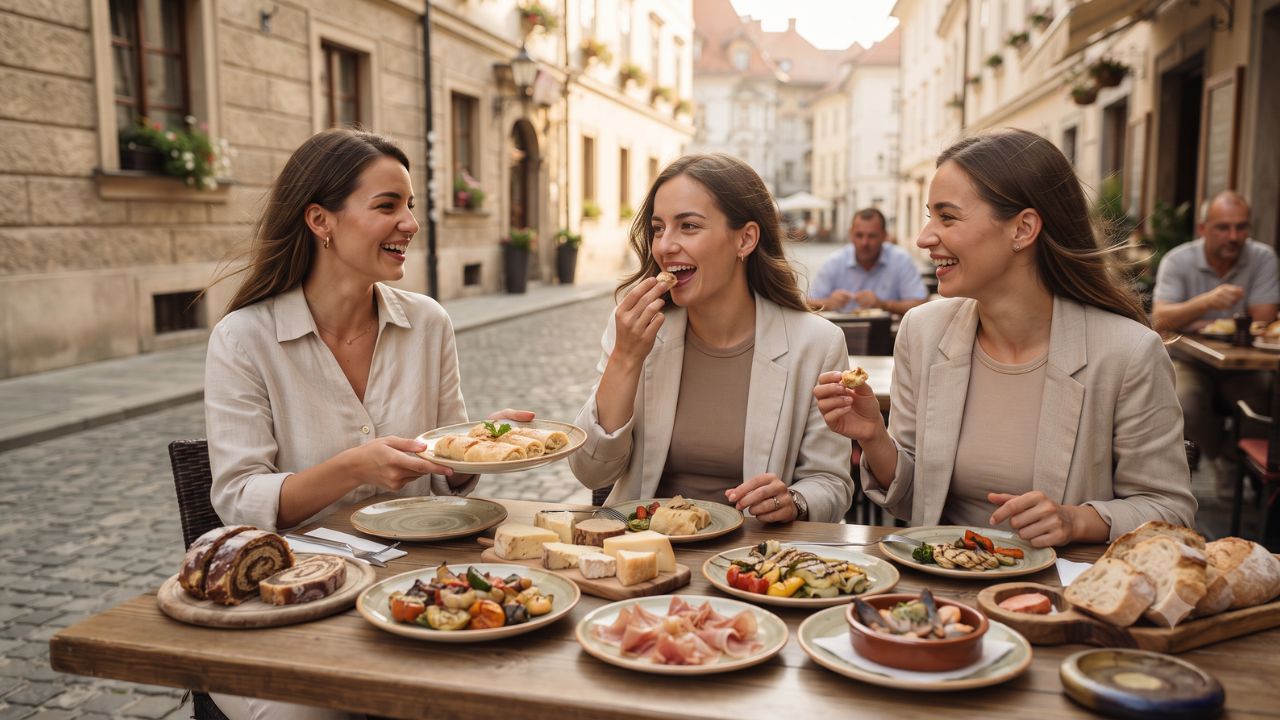
Foreign travelers generated 96.1% of Montenegro’s 15,594,299 accommodation overnight stays in 2024, while Slovenia recorded a 64.4% surge in registered tourist arrivals between 2021 and 2024 to reach 6,583,274 guests, exposing a decisive migration of culinary tourism toward Central and Southeast Europe. Across the European Union, where Eurostat logged more than 3 billion accommodation overnight stays in 2024, independent travelers are systematically pivoting away from overcrowded Western culinary capitals in search of preserved regional food systems. This realignment marks the transition of the Western Balkans and eastern Adriatic from regional transit corridors into primary gastronomic destinations.
For decades, culinary tourism in Europe centered almost exclusively on established appellations across Italy, France, and the Iberian Peninsula. However, escalating hotel rates, restaurant table rationing, and tourism congestion across Western hubs have catalyzed interest in alternative regional food corridors. In Slovenia, Montenegro, Serbia, Albania, and Bulgaria, ancient culinary traditions intersect with micro-climates, artisanal farm production, and protected geographic indications, creating compelling value propositions for food travelers.
Macroeconomic Recovery and Inbound Tourism Dynamics Across the Adriatic
The quantitative expansion of regional tourism demonstrates that travelers are actively seeking authentic, terroir-driven food production outside legacy holiday centers. In Slovenia, official data released by the Statistical Office of the Republic of Slovenia reveals sustained upward momentum. After pandemic curbs restricted arrivals to 4,003,682 guests and 11,251,158 overnight stays in 2021, the market rebounded by 46.6% in 2022 to reach 5,868,138 arrivals and 15,581,856 nights. Growth continued through 2023 with approximately 6.2 million arrivals and over 16.1 million stays, culminating in 2024 with 6,583,274 registered arrivals and 16,853,075 overnight stays—a 6.3% year-on-year expansion.
Significantly for culinary purveyors, foreign visitors accounted for approximately 73% of all Slovenian overnight stays in 2024, representing nearly five million foreign tourist arrivals. This international cohort demonstrates higher per-diem dining outlays and actively supports rural tasting rooms across the Vipava Valley, Goriška Brda, and the podravska wine district surrounding Maribor.
Montenegro presents a complementary pattern of international reliance paired with distinct geographic concentration. According to the Montenegro Statistical Office (MONSTAT), tourist arrivals expanded from roughly 1.66 million in 2021 and 2.18 million in 2022 to approximately 2.60 million in 2023, before settling at 2,606,854 published arrivals in 2024. Over the same timeframe, overnight stays climbed from approximately 9.8 million in 2021 to 12.4 million in 2022 and 16.3 million in 2023, before recording 15,594,299 verified stays in 2024.
Crucially for regional travel analysts, 93.8% of Montenegro’s total overnight stays were concentrated along coastal resorts, leaving mountain interior districts—the primary home of highland pastures, apiaries, and smokehouses—substantially less impacted by mass holiday volumes.
Comparative Statistical Record: Accommodation Trajectories (2021–2024)
The table below contrasts official government tourism metrics across the verified reporting periods for Slovenia and Montenegro against the broader European Union baseline:
| Jurisdiction & Data Source | 2021 Tourist Arrivals | 2022 Tourist Arrivals | 2023 Tourist Arrivals | 2024 Tourist Arrivals | 2024 Overnight Stays | Foreign Share of 2024 Stays |
|---|---|---|---|---|---|---|
| Slovenia (SURS) | 4,003,682 | 5,868,138 (+46.6%) | ~6,200,000 | 6,583,274 (+6.3%) | 16,853,075 | 73.0% |
| Montenegro (MONSTAT) | ~1,660,000 | ~2,180,000 | ~2,600,000 | 2,606,854 | 15,594,299 | 96.1% |
| European Union (Eurostat) | Recovery Baseline | Phased Reopening | Strong Inflow | Peak Aggregate | >3,000,000,000 | Variable by Member State |
Sources: Compiled from the Statistical Office of the Republic of Slovenia (SURS), Montenegro Statistical Office (MONSTAT), and Eurostat official releases. Data reflects registered accommodation reporting and excludes unverified border transit estimations.
Regional Terroirs: Micro-Regions and Indigenous Food Systems
The gastronomic appeal of the Western Balkans and surrounding states rests on distinct culinary traditions shaped by historic trade routes and diverse topography:
- Slovenia: The capital, Ljubljana, functions as an operational dining hub through its riverside promenades and Central Market, connecting visitors to artisan producers. Regional staples include štruklji (rolled dough dumplings prepared with sweet curd cheese, tarragon, or savory fillings), potica (yeast-dough rolled pastry featuring walnut, tarragon, or poppyseed paste), and seasonal forest mushrooms. Lake Bled offers traditional cream cake, while Maribor and the Vipava Valley provide centuries-old viticultural traditions and biodynamic cellars.
- Montenegro: The Bay of Kotor anchors maritime dining with Adriatic fish, mussels, and squid. Ascending into the limestone ranges, Njeguši and the former royal capital of Cetinje produce Njeguški pršut (beech-smoked and air-cured pork ham) and aged brine cheeses. Highland cooking features kačamak, a calorie-dense dish of mashed cornmeal or potatoes blended with aged kaymak and cheese. Around Lake Skadar, freshwater carp and bleak support local fishing communities promoted by the National Tourism Organisation of Montenegro.
- Serbia: Belgrade’s historic Skadarlija district and the Danube riverside quarter of Zemun represent urban culinary poles, pairing grilled meat culture with freshwater fish cookery. Iconic specialties include ćevapi (charcoal-grilled minced meat rolls), pljeskavica (spiced minced patties), gibanica (crinkled filo pastry layered with eggs and fresh cheese), and ajvar (slow-roasted red pepper relish). Rural areas produce distinctive culinary markers, such as Homolje mountain honey, Valjevo duvan čvarci, and Arilje raspberries.
- Albania: From the streets of Tirana to the UNESCO-listed Ottoman stone towns of Berat and Gjirokastër, Albanian food synthesizes Illyrian, Ottoman, and Mediterranean traditions. The dietary foundation centers on byrek (flaky phyllo pastry stuffed with wild greens, curd cheese, or minced meat), slow-roasted mountain lamb, coastal seafood, and fermented goat-milk cheeses.
- Bulgaria: Sofia and Plovdiv provide bases for exploring Thracian and Balkan mountain culinary heritages. Defining dishes include banitsa (baked spiraled pastry filled with sirene cheese and eggs) and shopska salad (chopped tomatoes, cucumbers, peppers, and onions topped with grated white brine cheese), alongside extensive artisanal yoghurt fermentations and open-fire grilled meats.
Expert Analysis: Culinary Tourism Yields, Coastal Congestion, and Seasonality Economics
The divergent distribution of visitors across the Western Balkans creates distinct economic challenges and opportunities for independent travelers. In Montenegro, the concentration of 93.8% of all 2024 overnight stays along the Adriatic shoreline creates severe seasonal congestion between June and September. For travelers booking this route, the direct consequence is intense coastal hotel rate inflation and overwhelmed waterfront dining infrastructure, contrasting with underutilized rural family estates just thirty kilometers inland.
As regional tourism boards attempt to extend visitor seasons beyond summer beach peaks, agricultural and culinary tourism has emerged as the primary mechanism for geographic dispersion. The pricing pressure this creates means that coastal hospitality providers face compressed margins during off-peak shoulder months, prompting them to package collaborative gastro-tours with interior producers, including cheese aging cellars in Njeguši and organic vineyards surrounding Lake Skadar.
In Slovenia, the high proportion of foreign overnight stays (73%) combined with an expansive 64.4% four-year arrival increase demonstrates that culinary infrastructure can sustain year-round international demand. By linking municipal markets in Ljubljana directly with farm-stay networks in the Julian Alps and wine estates in the Vipava Valley, Slovenia has managed to capture high-yield travelers without allowing any single coastal enclave to monopolize visitor spending.
However, cross-border gastro-tourism across the Balkans presents logistical complexities that require careful itinerary planning. Non-EU border crossings between Croatia, Montenegro, Albania, and Serbia remain subject to lengthy administrative queues during summer months. Food travelers seeking to sample regional terroirs across multiple countries achieve higher efficiency by concentrating on clustered bilateral routes—such as pairing Western Slovenia with Northern Italy, or coastal Montenegro with Southern Serbia—rather than attempting rapid multi-country vehicular itineraries that lose entire days to border checkpoints.
Key Takeaways
- Surging Inbound Gastronomic Demand: Slovenia registered 6,583,274 tourist arrivals in 2024, expanding 64.4% over 2021 levels, with foreign travelers contributing 73% of total overnight stays.
- Extreme Coastal Asymmetry in Montenegro: Foreign visitors generated 96.1% of Montenegro's 15.59 million overnight stays in 2024, with 93.8% confined to seaside resorts, leaving inland food corridors uncrowded.
- EU Regional Macro-Context: Over 3 billion accommodation overnight stays recorded across the EU in 2024 underscore the expanding commercial appetite for lesser-known culinary destinations.
- Preserved Food Traditions: Destinations across Slovenia, Montenegro, Serbia, Albania, and Bulgaria maintain ancient agricultural practices, artisanal cheese-making, and specialized viticulture that contrast with commercialized Western dining hubs.
- Cross-Border Logistical Realities: Food itineraries crossing non-EU Balkan borders face intermittent checkpoint delays; clustering travel within coherent geographic zones maximizes operational efficiency.
FAQ: Balkan Culinary Travel 2026
What makes Slovenian cuisine unique compared to neighboring countries?
Slovenia blends Alpine mountain cooking, Mediterranean coastal flavors, and Pannonian Central European traditions. Signature items include rolled štruklji dumplings, traditional potica cakes, pumpkin seed oils, and low-intervention natural wines from the Vipava Valley and Brda.
How does Montenegro's coastal tourism concentration benefit culinary travelers?
With 93.8% of overnight stays clustered along the coast, inland gastronomic hubs like Njeguši, Cetinje, and Lake Skadar remain accessible and unhurried, offering authentic smoked hams, farm-fresh cheeses, and tranquil vineyard tastings away from beach crowds.
Is it easy to cross borders on a multi-country Balkan food trip?
While distances appear short, border crossings between EU members (Slovenia) and non-EU Balkan states (Montenegro, Serbia, Albania) can experience significant seasonal vehicle delays. Planning regional clusters or utilizing rail and regional flights reduces transit downtime.
What are the must-try traditional dishes across Serbia and Bulgaria?
In Serbia, prioritize ćevapi, pljeskavica, layered gibanica cheese pie, and roasted ajvar relish. In Bulgaria, sample fresh banitsa pastry, authentic shopska salad with sirene cheese, and traditional fermented sheep-milk yoghurts in mountain villages.
[Discerning travelers recognize that Europe's richest culinary revelations are increasingly found along the historic crossroads of the Balkans, where agricultural integrity outshines Michelin-chasing pretension.]
Related Travel Guides
- Asia Wedding and Honeymoon Tourism Realigns: Bali and Japan Surge as Thailand Confronts Yield Deficits
- Yemen Level 4 Warning Escalates: US State Department Mandates Hostage and DNA Leave-Behind Protocols
- Middle East Travel Advisory Escalates: US Issues Level 3 Warning for Saudi Arabia Amid Drone and Missile Risks
Disclaimer
This article is for informational and educational purposes only. It does not constitute legal, financial, or professional advice. While we strive to provide accurate and up-to-date information, travel policies, regulations, and conditions change rapidly. Always verify information with official sources before making travel decisions. Nomad Lawyer makes no representations about the accuracy, reliability, completeness, or suitability of the information provided. Readers should consult qualified professionals for advice specific to their circumstances. The views expressed in this article are those of the author and do not necessarily reflect the views of Nomad Lawyer.
Naina Thakur
Contributor & Travel Specialist
Travel enthusiast and legal writer covering visa regulations, responsible tourism, and cultural journeys across global destinations.
Learn more about our team →