
Quito Implements 15% VAT and Transit Tariff Hikes as Ecuador Reshapes Capital Tourism Costs

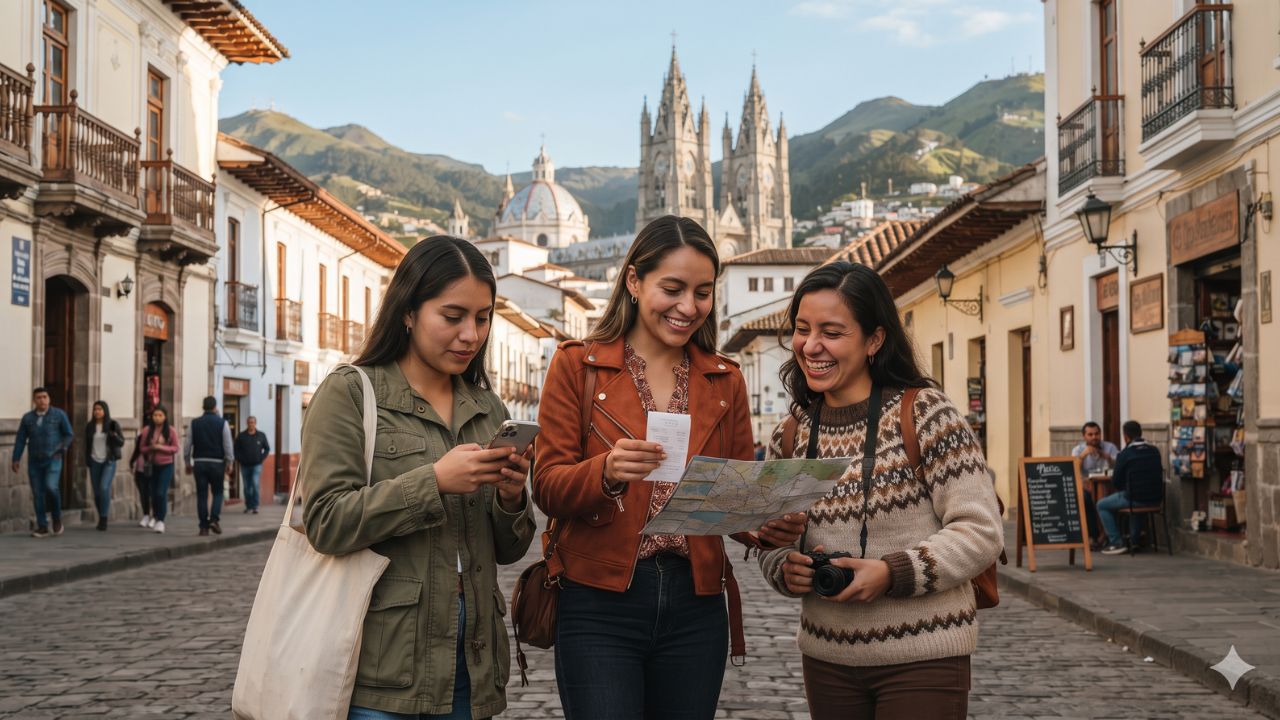
A 29.5% surge in daily visitor spending across Quito and Pichincha province—lifting baseline travel expenditures to $66.22 USD per day—reflects a permanent economic recalibration driven by Ecuador's national Value Added Tax increase to 15% and municipal transit tariff adjustments. Enacted through the Servicio de Rentas Internas (SRI) under a macroeconomic structural agreement with the International Monetary Fund (IMF), the fiscal mandate permanently lifted the Impuesto al Valor Agregado (IVA) from 12% to 15%. This structural adjustment impacts commercial transactions across the Metropolitan District of Quito, elevating final billing across four-star and five-star accommodations, fine dining venues in Centro Histórico and La Mariscal, regulated tour agencies, and digital booking platforms.
Simultaneously, municipal authorities under the Concejo Metropolitano de Quito updated urban transit tariffs across surface bus routes, the Trolebús, Ecovía, and the underground Metro de Quito system. Combined with indexed municipal licensing fees, updated heritage site admissions, and a $200.00 USD entry fee for travelers continuing to the Galápagos Islands, the capital is redefining its cost framework. For international visitors, independent backpackers, and aviation travelers transiting through Mariscal Sucre International Airport (UIO), managing an Ecuadorian itinerary requires understanding how national tax policy and municipal ordinances alter baseline journey budgets.
Macroeconomic Restructuring: The 15% IVA Mandate and Public Transit Adjustments
The shift in Quito's pricing structure stems from national macroeconomic pressures rather than isolated municipal levies. Under the IMF extended fund facility, national authorities expanded domestic revenue collection to stabilize public accounts. The resulting 15% IVA rate applies universally to consumer services, removing historical tax shields previously enjoyed by select hospitality operators.
According to monthly benchmarking reports published by Quito Turismo, the capital's luxury hospitality sector absorbed this fiscal shift while maintaining commercial momentum. The Average Daily Rate (ADR) for upscale and four-star properties climbed 4.86% year-over-year to reach $104.42 USD, while mid-scale and luxury hotel occupancy stabilized at 55%. Because regulated properties must itemize the 15% tax on final checkout folios, foreign guests face tangible increases across extended stays.
On city streets, the Concejo Metropolitano de Quito restructured public transit pricing to fund network upkeep and debt service for the underground heavy-rail system. The standard base fare for urban buses, Trolebús, and Ecovía feeder corridors rose from $0.35 USD to $0.40 USD per boarding. Multi-modal transfers that combine surface feeder routes with the Metro de Quito are now structured between $0.45 USD and $0.60 USD per trip. While public transit remains economical relative to European or North American baselines, the cumulative cost of daily commuting between northern commercial sectors, nightlife zones in La Mariscal, and historical squares near Plaza de la Independencia adds up over a multi-day itinerary.
Concurrently, tour operators across Pichincha province must navigate the municipal Tasa de Turismo and maintain an active Licencia Única de Actividad Económica (LUAE). Managed by Quito Turismo, these administrative certifications are indexed to company gross revenues, employee headcounts, and municipal quality audits. As operating overheads increased, registered excursion agencies raised base pricing for guided excursions to the Pululahua Geobotanical Reserve, Mindo Cloud Forest, and private airport transfers by 12% to 18%.
| Travel Expenditure Category | Prior Baseline Fee | Updated 2026 Rate / Metric | Regulatory Body & Policy Framework | Practical Impact on Foreign Visitors |
|---|---|---|---|---|
| National Value Added Tax (IVA) | 12% standard rate | 15% permanent rate | Servicio de Rentas Internas / IMF Agreement | Applied directly to hotel bills, fine dining, tours, and digital booking tools |
| Luxury Hotel Average Daily Rate | Sub-$100 USD average | $104.42 USD (+4.86% YoY) | Quito Turismo Hotel Benchmark Data | Higher nightly room rates across 4-star and 5-star properties; occupancy steady at 55% |
| Standard Urban Bus Fares | $0.35 USD per ride | $0.40 USD per ride | Concejo Metropolitano de Quito | Elevated per-ride cost across surface feeders, Trolebús, and Ecovía networks |
| Metro de Quito Integrated Transit | Unintegrated fares | $0.45 USD to $0.60 USD | Metro de Quito Multi-Modal Fare Structure | Tiered pricing for passengers transferring between surface routes and subway lines |
| Average Daily Visitor Spend | Sub-$52 USD baseline | $66.22 USD (+29.5% surge) | Ministerio de Turismo del Ecuador | Reflects cumulative impact of 15% IVA, transit hikes, and dining price inflation |
| Galápagos National Park Entry Fee | $100.00 USD legacy tariff | $200.00 USD per adult | Ministerio del Ambiente y Agua / Consejo de Gobierno | Mandatory conservation tax for international travelers departing via UIO or Guayaquil |
| Ciudad Mitad del Mundo Admission | $3.50 USD legacy rate | $5.00 USD standard adult | Gobierno Autónomo Descentralizado de Pichincha | Standard ticket access; discounts preserved for children and senior citizens |
| Basílica del Voto Nacional Towers | $2.00–$3.00 USD | $4.00 to $5.00 USD | Arquidiócesis de Quito / Municipal Heritage Board | Foreign visitor access charge to climb neo-Gothic towers and observation points |
| Teleférico de Quito (Cruz Loma) | $8.50 USD base ticket | $9.00 to $10.00 USD | Operadora Teleférico de Quito | Express tourist ticket for high-altitude gondola ascent up Pichincha volcano |
| Colonial Monastery & Museum Sites | Nominal admission fees | $3.00 to $6.00 USD | Centro Histórico Heritage Trusts | Maintenance admission for Iglesia de San Francisco and Museo de la Ciudad |
These adjustments illustrate that price revisions are not isolated anomalies, but part of an economy-wide restructuring that aligns user fees with real maintenance costs.
Sector Performance: Aviation Inflows and Heritage Site Economics
Despite higher retail expenses, visitor volumes moving through Quito's transit corridors continue to expand. Data compiled by the Ministerio de Turismo del Ecuador reveals that Mariscal Sucre International Airport processed 672,739 international arrivals via direct air routes, representing an 8.3% year-over-year increase. These air arrivals constitute nearly half of Ecuador's total annual inbound volume of 1.357 million international visitors. Concurrently, domestic flight movements at UIO accounted for 705,727 resident passengers.
Commercial aviation generates substantial capital for the national economy. Ecuador's domestic and international airline operations generated $1.313 billion USD in total revenue, marking an 8% financial expansion. Direct incoming air routes contributed over $922.8 million USD in foreign tourism receipts. Within the country's macroeconomic trade framework, non-petroleum travel and transport services support monthly non-oil export earnings that average $2.93 billion USD.
This passenger volume generates direct funding for cultural and ecological preservation. Footfall within Quito's UNESCO-recognized Centro Histórico climbed 42.8% to exceed 900,000 annual visitors. Admissions of $4.00 to $5.00 USD at the Basílica del Voto Nacional and $3.00 to $6.00 USD at the Iglesia de San Francisco and Museo de la Ciudad directly underwrite architectural restoration projects. Nearby, Cotopaxi National Park logged 500,000 visitors—a 56.8% increase in regional eco-tourism activity—prompting provincial authorities to allocate higher gate revenues toward trail preservation and ranger patrols.
Private capital investment mirrors this confidence. International hospitality groups have injected new equity into transit infrastructure, highlighted by the $7.0 million USD Courtyard by Marriott construction project at the airport terminal, generating 55 direct operational jobs. Nationwide, gross travel booking expenditures expanded 7% to reach $2.914 billion USD, demonstrating that international demand remains durable despite higher baseline tariffs.
Expert Analysis: Fiscal Pass-Through, Aviation Yields, and Andean Value Dynamics
For travelers booking an Ecuadorian journey, the direct consequence of these policy updates is an immediate compounding of ancillary expenses that alters overall trip budgeting. What was previously an exceptionally inexpensive Andean gateway has recalibrated into a moderately priced, high-value cultural destination.
The pricing pressure this creates means independent travelers must budget carefully for digital booking transactions. Under SRI regulations, digital payment rules append a mandatory 15% VAT surcharge onto foreign software platforms, digital booking engines, and online travel agencies (OTAs). Because total sales across online platforms expanded by 10% to capture $2.914 billion USD in gross turnover, foreign travelers reserving hotel rooms or day tours through third-party apps absorb this 15% surcharge at checkout.
Dining budgets face similar upward pressure. Average daily food and beverage spending per international visitor jumped 21.3% across the capital, driven by the 15% IVA levy applied to final checks in regulated establishments across La Mariscal and Cumbayá. Across the broader economy, total private consumer expenditure reached $19.476 billion USD, reflecting rising supply-chain procurement costs that restaurateurs pass directly to consumers.
Nevertheless, Quito's updated $66.22 USD daily tourist spend preserves a competitive edge when measured against continental alternatives. While secondary domestic destinations like Cuenca recorded 300,000 visitors and a 48.2% arrival surge on lower daily budgets, Quito remains distinctly more affordable than peer capitals such as Bogota or Lima. With nationwide foreign tourism receipts projected to grow 2.93% annually toward a $1.036 billion USD total valuation, and regional Travel & Tourism GDP in Central and South America projected to expand at 4.1%, Ecuador's capital has successfully elevated its revenue generation per visitor without depressing absolute arrival numbers.
Key Takeaways
- Permanent 15% National VAT: Enacted through the SRI under an IMF fiscal consolidation framework, the permanent VAT increase from 12% to 15% applies to four-star and five-star hotels, fine dining, and digital booking platforms.
- 29.5% Daily Spending Surge: The average daily expenditure per international visitor in Pichincha province rose to $66.22 USD, while overall trip expenditure expanded by 25.7%.
- Public Transit Tariff Restructuring: Standard urban bus fares under the Concejo Metropolitano de Quito increased to $0.40 USD, while integrated transfers combining surface lines with the Metro de Quito range from $0.45 USD to $0.60 USD.
- Robust Aviation and Airport Inflows: Mariscal Sucre International Airport processed 672,739 foreign air arrivals (+8.3%) within Ecuador's 1.357 million total foreign visitor tally, supporting $1.313 billion USD in airline sector revenue.
- Protected Area and Heritage Fees: Key site admissions include $5.00 USD at Ciudad Mitad del Mundo, $4.00 to $5.00 USD at the Basílica del Voto Nacional, $9.00 to $10.00 USD for the Teleférico, and the $200.00 USD Galápagos entry tax for island departures.
FAQ: Quito and Ecuador Travel Costs 2026
Is there an airport entry tax charged specifically to foreign tourists arriving in Quito?
No. Foreign tourists do not pay a standalone entry tax upon arrival at Mariscal Sucre International Airport. Higher trip costs result from the national 15% VAT rate, updated attraction tickets, and municipal transit fares.
What does public transportation cost across Quito in 2026?
Standard urban bus fares sit at $0.40 USD per ride. Integrated journeys combining surface feeder routes with the underground Metro de Quito cost between $0.45 USD and $0.60 USD depending on transfer stations.
Why have hotel and restaurant bills increased across the capital?
Hotel and restaurant bills reflect the permanent national VAT increase to 15%, which four-star and five-star establishments must incorporate into final billing, raising luxury hotel ADRs to $104.42 USD.
What is the current entry fee for travelers flying to the Galápagos Islands from Quito?
Non-resident international adult travelers departing from Quito or Guayaquil to the Galápagos Islands must pay a mandatory park entry fee of $200.00 USD per person.
By budgeting for national sales tax adjustments and automated digital booking surcharges, travelers can explore Quito's Andean heritage with complete financial clarity.
Related Travel Guides
Disclaimer
This article is for informational and educational purposes only. It does not constitute legal, financial, or professional advice. While we strive to provide accurate and up-to-date information, travel policies, regulations, and conditions change rapidly. Always verify information with official sources before making travel decisions. Nomad Lawyer makes no representations about the accuracy, reliability, completeness, or suitability of the information provided. Readers should consult qualified professionals for advice specific to their circumstances. The views expressed in this article are those of the author and do not necessarily reflect the views of Nomad Lawyer.
Naina Thakur
Contributor & Travel Specialist
Travel enthusiast and legal writer covering visa regulations, responsible tourism, and cultural journeys across global destinations.
Learn more about our team →