Beyond Volcano Summits: How a New Northern Andes Lodge-to-Lodge Trek Is Redefining Slow Travel in Ecuador

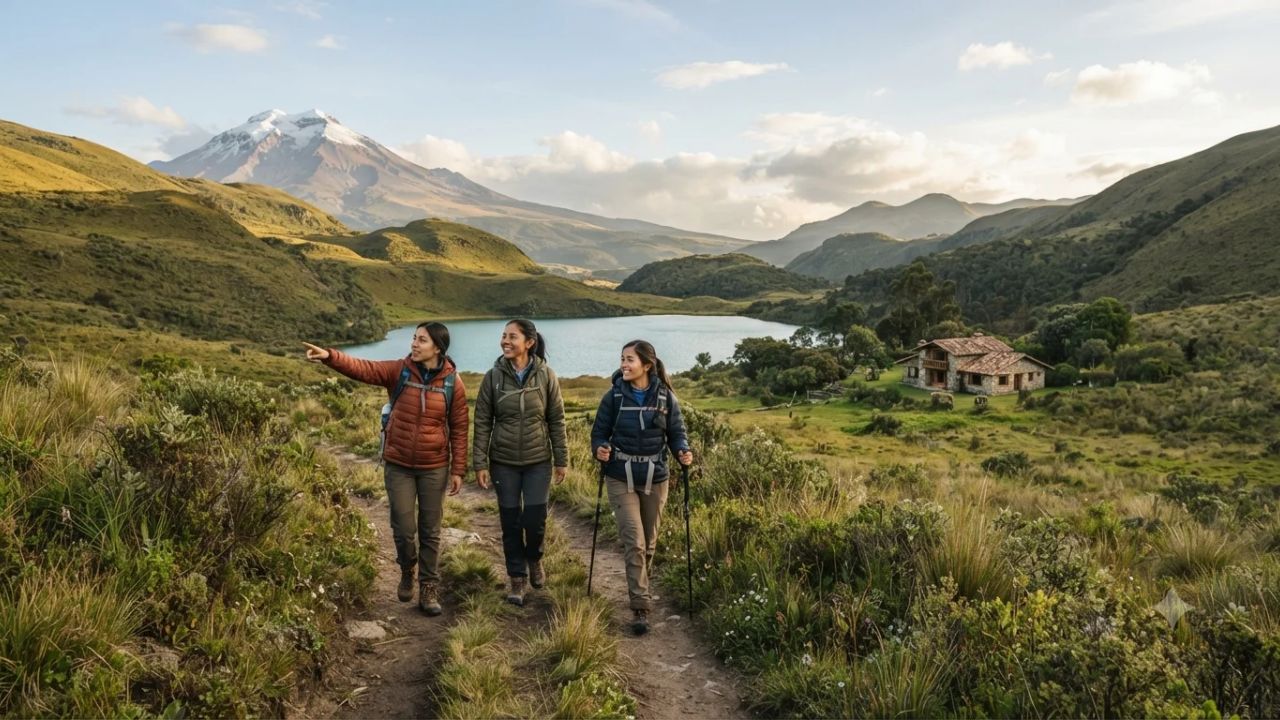
While over 80 per cent of international visitors to Ecuador immediately funnel into the Galápagos Islands or technical mountaineering expeditions up Cotopaxi, pioneering operator Tropic has unveiled a gentle lodge-to-lodge walking route through the overlooked Northern Andes that replaces high-altitude summit ascents with restorative community immersion. Announced in July 2026, this carefully curated journey guides travelers across the windswept grasslands of the high páramo and past mirror-like volcanic crater lakes, connecting small, locally rooted mountain lodges where guests sleep in comfortable beds and dine on heirloom Andean crops each night.
Founded in 1994 and recognized as both DMC of the Year and Workplace of the Year at the 2026 Latin American Travel Association (LATA) Excellence Awards, Quito-based Tropic brings thirty-two years of community-centered adventure expertise to this new route. Rather than treating rural villages as fleeting photo stops, the itinerary weaves together moderate daily walking stages with direct indigenous partnerships, proving that slow, low-impact travel can generate sustainable economic revenue across remote northern provinces like Imbabura and Pichincha.
The Northern Andes Shift: Inside the Community Lodge-to-Lodge Model
High-altitude adventure in the South American Andes has historically been defined by punishing technical climbs, heavy expedition packs, and remote wilderness camping. While iconic circuits like the Quilotoa loop and Cotopaxi trek attract seasoned athletes, they often exclude families, multi-generational travelers, and couples seeking active outdoor exploration without extreme physical strain.
Tropic’s Northern Andes route bridges this divide by delivering an accessible, supported walking format.
| Strategic Travel Dimension | Traditional Peak-Focused Expeditions | Tropic Northern Andes Lodge-to-Lodge Standard |
|---|---|---|
| Pace and Progression | Strenuous 8–10 hour summit pushes | Moderate 3–5 hour daily walking stages with ample rest stops |
| Terrain & Environment | Glacial ice fields and technical volcanic scree | High-altitude páramo grasslands, mossy cloud forests, volcanic lakes |
| Overnight Accommodation | Expedition tents or basic communal bunkhouses | Intimate, community-rooted lodges with private baths and fireplaces |
| Community Integration | Brief transit passes through rural villages | Overnight stays, farm visits, and direct dialogue with local residents |
| Environmental Footprint | Concentrated waste at high base camps | Contained geographic walking routes with certified carbon offsetting |
By capping daily distances and utilizing short local vehicle transfers only when necessary, the itinerary allows travelers to learn about native medicinal flora, observe Andean condors soaring on mountain thermals, and absorb the serene rhythms of rural life.
What Sets the Northern Ecuadorian Highlands Apart
The Northern Andes of Ecuador boast a distinctive geographic personality shaped by ancient volcanic activity and unique equatorial ecology.
Central to this environment is the páramo, a high-altitude neotropical ecosystem found between the upper tree line and permanent snowline (roughly 3,500 to 4,500 meters). Characterized by giant frailejón plants (Espeletia) with thick velvety leaves, golden tussock grasses, and peat bogs, the páramo functions as a giant natural sponge, capturing moisture from passing clouds and feeding the rivers that supply freshwater to millions of people in the valleys below.
The region is also celebrated for its geological heritage, centered around the Imbabura UNESCO Global Geopark—cataloged by UNESCO—where volcanic crater lakes like Cuicocha and San Pablo mirror towering peaks. Culturally, the northern highlands are home to the Otavalo and Kayambi peoples, world-renowned for their mastery of backstrap weaving, traditional embroidery, and vibrant community festivals celebrating Inti Raymi (the Festival of the Sun).
Travelers can research verified ecotourism routes and national reserve rules through the official Ecuador Travel Portal.
Visitor Insider Tips: Timing, Altitude, and Culinary Feasts
Experiencing the Northern Andes comfortably requires packing for variable mountain weather and embracing indigenous culinary traditions:
- Layer for the Equatorial Microclimate: The northern páramo experiences rapid weather shifts. Even on the equator, temperatures at 3,800 meters can drop from 65°F (18°C) in bright midday sun to near-freezing within minutes when mist rolls in. Pack a windproof and waterproof outer shell, fleece mid-layers, and a wide-brim sun hat.
- Acclimatize in Colonial Quito First: Before heading into the high páramo, spend two nights in the historic center of Quito (2,850 meters / 9,350 feet). Explore the colonial plazas and baroque stone basilicas of the Americas' first UNESCO World Heritage city to allow your respiratory system to adapt naturally.
- Savor Locro de Papa and Native Quinoa: Dine on authentic northern highland comfort food at village lodges. Savor steaming bowls of Locro de Papa (a creamy Andean potato soup enriched with native chola potatoes, fresh farmer cheese, and sliced avocado), alongside toasted chulpi corn kernels and warm herbal infusions of horchata lojana.
- Visit the Otavalo Artisan Market at Sunrise: While the Saturday market at Plaza de los Ponchos in Otavalo is famous worldwide, savvy travelers arrive at 07:00 AM on Wednesday or Saturday before tour buses arrive from Quito, securing handwoven alpaca wool blankets and embroidered textiles directly from master artisan families.
- Respect Fragile Peat Bogs on the Trail: When trekking across high-elevation wetland zones, always walk along designated gravel footpaths. Trampling fragile cushion bogs (bofedales) compacts the soil and damages slow-growing alpine plants that take decades to regenerate. Protected area guidance is maintained by the Ministry of Environment of Ecuador.
Cultural and Environmental Context: Regenerative Community Stewardship
The northern lodge-to-lodge model provides a concrete example of how community-based tourism can revitalize rural highland economies. In many Andean farming communities, youth migration to urban centers has threatened the survival of traditional agricultural knowledge and indigenous languages like Kichwa.
By integrating village-owned guesthouses, local horse packers, and community cooks directly into Tropic's supply chain, the itinerary ensures that tourism profits circulate locally. This dependable income enables families to invest in native tree nurseries, maintain organic potato seed banks, and restore historic adobe farmhouses.
Furthermore, Tropic’s certified carbon-neutral operations and sustainability accreditation through Preferred by Nature require strict waste management on every departure. Trekkers use reusable water filtration systems, and all organic food waste is composted for use in village vegetable gardens, ensuring that the wild, mist-shrouded páramo remains pristine for future generations.
FAQ: Trekking the Northern Andes of Ecuador in 2026
What makes Tropic's Northern Andes trek different from volcano climbs like Cotopaxi?
It focuses on moderate, accessible daily walking stages between comfortable community lodges, emphasizing cultural dialogue and páramo nature rather than strenuous technical mountaineering.
Who is this lodge-to-lodge trekking route suitable for?
The program is designed for active couples, families with older children, and independent travelers seeking a balance of daily outdoor hiking and comfortable boutique lodge stays.
What is the best season to trek in the Northern Andes of Ecuador?
The dry Andean months from June to September and December to January offer clear sunny mornings, crisp mountain views, and minimal rainfall across high páramo trails.
How high are the daily trekking elevations?
Trail elevations generally range between 2,800 meters (9,200 feet) in village valleys and 3,800 meters (12,500 feet) across open páramo ridgelines, requiring gradual acclimatization.
[Where golden tussock grasses sway beneath the equatorial sky, Ecuador’s Northern Andes prove that the most profound journeys are measured not in summits conquered, but in connections made.]
Related Travel Guides
This article is for informational purposes. Flight routes, passenger regulations, visa rules, and transit advisories are subject to change by airlines and aviation authorities. Readers are advised to verify schedules and travel documentation with relevant carriers and border agencies before departure.
Related Stories
Ayodhya Deepotsav 2026 Logistics Guide: Attending the 30 Lakh Lamp Festival in India

WTM London 2026: AI Booking Shifts and Global Tourism Growth Forecasts for 1.57 Billion Arrivals