
Travel Alert: UK Airlines Issue Strict Regulations on Power Banks and Vapes
UK carriers, including easyJet, reinforce baggage rules for power banks, lithium batteries, and vapes to prevent in-flight fire hazards.

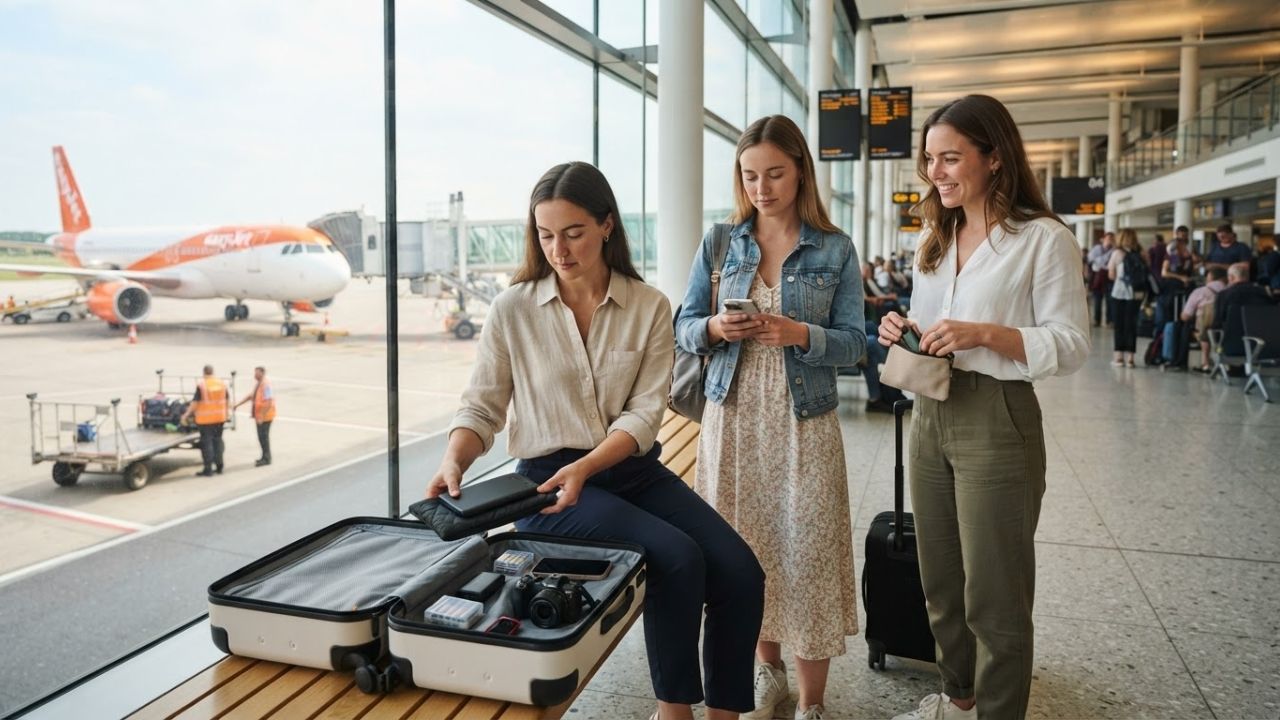
Image generated by AI
UK carriers, including easyJet, reinforce baggage rules for power banks, lithium batteries, and vapes to prevent in-flight fire hazards. The UK Civil Aviation Authority (CAA) indicates that strict carry-on battery limits coordinate passenger safety, supporting flight recovery rates during peak holiday periods.
The Transition of Airport Checkpoints to Active Battery Monitoring Zones
A notable trend in European transit planning is the transition of airport security checkpoints into active battery monitoring zones. Historically, global transportation agencies managed luggage restrictions with a primary focus on liquid limits and sharp objects, treating personal electronic batteries as a minor luggage detail. In 2026, the proliferation of high-capacity portable chargers, heated garments, and rechargeable e-cigarettes encourages airlines to enforce strict wattage-hour caps, requiring passengers to keep lithium-powered devices in the passenger cabin to prevent unmonitored cargo hold fires.
By managing battery limits at check-in desks, operators minimize the risk of emergency diversions. This safety-focused baggage protocol coordinates pressure across security screening agencies, airline gate agents, and international safety boards.
UK Airline Battery and Vape Sourcing Parameters
Airlines have reinforced carry-on guidelines to mitigate thermal runaway risks:
- Baggage Storage Rules: Power banks, spare lithium-ion batteries, and vapes must be packed in cabin baggage. They are prohibited from checked luggage due to fire hazards.
- easyJet Wattage Caps: Restricts power banks to a maximum capacity of 160Wh (160Wh). Units must be individually protected to prevent short circuits.
- Quantity Limits: Passengers are restricted to a maximum of two power banks (some airlines limit capacity to 100Wh without prior approval).
- Cabin Usage Rules: Charging other devices using power banks during flights is prohibited. Recharging power banks via aircraft seat power outlets is also banned.
- Vape Regulations: Electronic cigarettes must be completely switched off, stored in cabin bags, and cannot be used or charged onboard.
- Smart Luggage Requirements: If a suitcase features a built-in lithium-ion battery system, the battery must be fully removable to allow carriage.
Loose batteries must be protected by keeping them in their original packaging or placing tape over the metal contacts.
UK Airline Battery Regulations and Sourcing Coordinates
The table below breaks down the project sectors, specific capacity caps, unit limits, cabin rules, luggage types, and coordinating authorities recorded on August 25, 2026:
| Core Project Sector | Specific Capacity Cap | Unit Limits | Cabin Rules | Luggage Types | Coordinating Authority |
|---|---|---|---|---|---|
| Aviation safety | Up to 160Wh limit | 2 power banks max | No onboard recharging | Smart bags (removable) | UK Civil Aviation (CAA) |
| Luggage screening | 100Wh standard cap | Loose battery wrap | No power bank usage | Cabin baggage only | Department for Transport |
| Travel advisories | Individual airline check | Pack in carry-on bag | Vapes must be off | Checked bag ban | Air Transport Assoc (IATA) |
| Flight recovery | Thermal safety checks | Hand luggage access | No vaping permitted | Passenger seat storage | European Safety (EASA) |
These coordinates outline the sectors, caps, limits, rules, luggage, and authorities established for the battery safety programs.
Resource Stewardship and Eco-Aware Airport Transit
For the traveler, the benefit of choosing durable, certified power banks that meet international safety standards is the reduction in electronic waste from cheap, malfunctioning battery products. Walking through pedestrian terminals rather than using airport electric cart transfers reduces energy demand.
Additionally, keeping travel itineraries on digital applications avoids paper printing waste. Choosing reusable silicon battery covers instead of disposable plastic wraps coordinates support for green travel habits.
For comparison, you can explore the changing dynamics of Widespread Delays and Cancellations Disrupt Middle East Aviation to see how scheduling issues build. For transit updates, comparing travel scheduling matches other networks, such as Severe Weather Triggers Widespread Flight Delays Across United States updates. This trend is similar to the tourism growth seen in other destinations, as detailed in our guide on the Hacienda Heights Bus Fire Transport Safety regulations.
Passenger Protection Tips: Managing Batteries and Vapes at the Airport
If you are planning an upcoming flight from a UK airport, keep these practical tips in mind:
- Locate the Wattage Label: Check the print on your power bank before packing to ensure the capacity (in Wh) is visible; unmarked batteries can be confiscated at security.
- Pack All Chargers in Carry-on Bags: Ensure all backup batteries, phone chargers, and e-cigarettes are in your cabin luggage before check-in.
- Protect Loose Battery Terminals: Place tape over exposed terminals on spare batteries or keep them in individual plastic sleeves to prevent short circuits.
- Remove Smart Bag Batteries: If checking in smart luggage, detach the lithium battery pack and bring it into the passenger cabin.
- Confirm Destination Vape Laws: Verify local vaping laws at your destination, as some countries have strict bans on importing e-cigarettes.
Long-Term Outlook for Airline Passenger Electronics Regulations
The long-term outlook for transit is focused on deploying fire-containment bags at every passenger row, integrating automated battery wattage sensors into security tray scanners, and designing non-flammable battery alternatives for consumer devices. As global travel volumes grow, national civil aviation departments and airline safety committees will cooperate to maintain passenger standards.
By developing sustainable transit options and protecting airline resources, the aviation sector aims to build a sustainable transport network.
FAQ
Can I pack power banks in my checked luggage?
No, power banks are strictly prohibited in checked baggage and must be carried in your cabin baggage to prevent cargo fire risks.
What is easyJet's maximum power bank capacity limit?
easyJet allows passengers to carry up to two power banks with a maximum capacity of 160Wh each, provided they are individually protected.
Am I allowed to charge my phone using a power bank on the plane?
No, airlines prohibit passengers from using power banks to charge devices during the flight, and you cannot recharge the power bank using the aircraft's power outlets.
What are the rules for smart luggage on flights?
The lithium battery pack must be removable. If you check the bag, you must detach the battery and carry it with you in the passenger cabin.
Stay updated on regional travel regulations and safety campaigns shaping UK transit.
Related Travel Guides
Disclaimer
This article is for informational and educational purposes only. It does not constitute legal, financial, or professional advice. While we strive to provide accurate and up-to-date information, travel policies, regulations, and conditions change rapidly. Always verify information with official sources before making travel decisions. Nomad Lawyer makes no representations about the accuracy, reliability, completeness, or suitability of the information provided. Readers should consult qualified professionals for advice specific to their circumstances. The views expressed in this article are those of the author and do not necessarily reflect the views of Nomad Lawyer.
Raushan Kumar
Founder & Lead Developer
Full-stack developer with 11+ years of experience and a passionate traveller. Raushan built Nomad Lawyer from the ground up with a vision to create the best travel and law experience on the web.
Learn more about our team →