EasyJet Balances Record European Passenger Demand Against Fuel Inflation and Capacity Constraints Ahead of Winter 2026

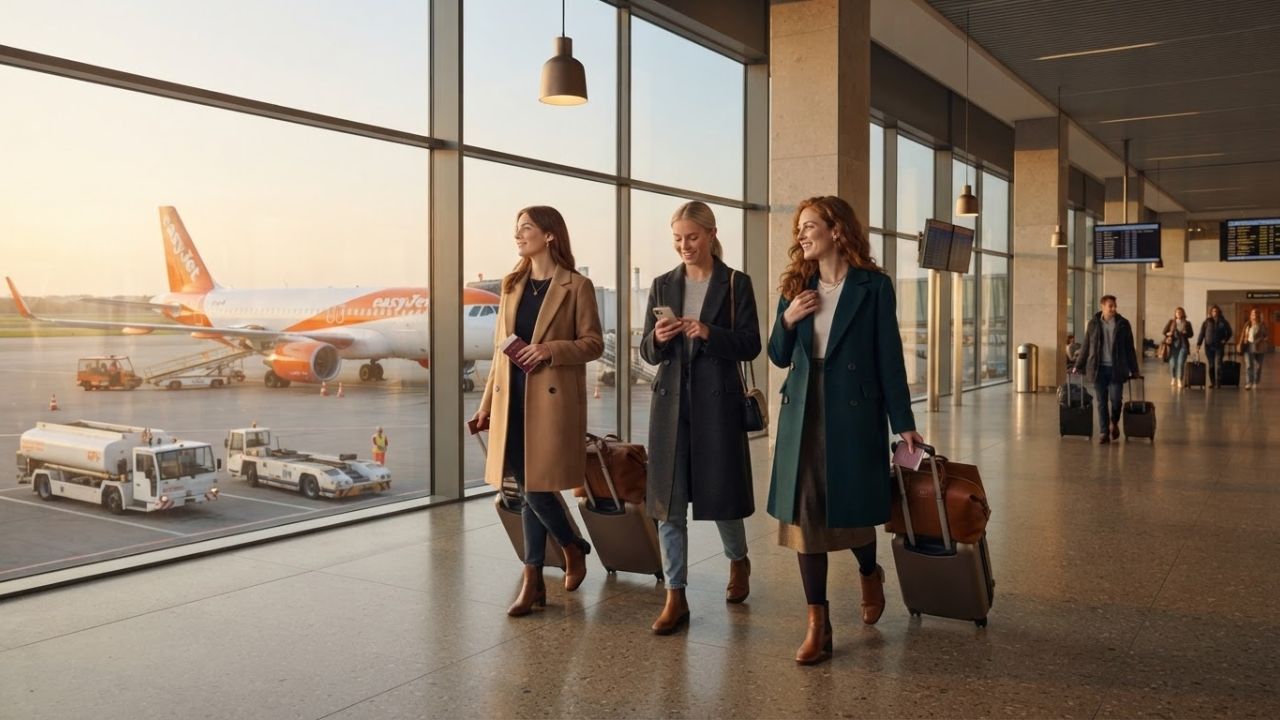
Image generated by AI
EasyJet is managing high passenger load factors across its intra-European network, utilizing capacity discipline and ancillary revenue streams to offset elevated jet fuel prices and rising labor costs.
LONDON, United Kingdom — Low-cost airline operations across Europe have entered a consolidation phase as carriers navigate high passenger travel demand alongside persistent cost headwinds. Official investor updates released via easyJet Corporate show that while passenger numbers and ticket yields remain robust entering September 2026, the Luton-headquartered airline must maintain strict unit-cost discipline to safeguard operating margins against energy market volatility and airport fee increases.
Operating a fleet comprised primarily of Airbus A320 family aircraft, easyJet relies on high load factors and dense point-to-point scheduling across major primary airports—including London Gatwick (LGW), London Luton (LTN), Milan Malpensa (MXP), and Paris Charles de Gaulle (CDG)—to optimize seat productivity.
| Operational & Financial Indicator | Performance Parameter | Strategic Industry Impact |
|---|---|---|
| Airline Operator | easyJet plc (LSE: EZJ) | Second-largest low-cost carrier in Europe by passenger volume |
| Fleet Composition | Airbus A319, A320ceo, A320neo, A321neo | High fuel-efficiency transition via A320neo family deliveries |
| Primary Hub Airports | London Gatwick (LGW), Luton (LTN), Milan (MXP), Geneva (GVA) | Focus on high-yielding primary European airport slots |
| Core Revenue Streams | Passenger seat fares + Ancillary products | Ancillaries cushion base fare competition during off-peak banks |
| Primary Cost Pressures | Aviation fuel hedging, labor agreements, airport charges | Requires strict cost-per-available-seat-kilometer (CASK) control |
| Winter 2026 Outlook | Tactical capacity adjustments to maintain yield | Trimming unviable off-peak frequencies to protect seat revenue |
Market Fundamentals and Operational Performance Across Intra-European Corridors
The commercial airline landscape in Europe has shifted from post-pandemic recovery into a yield-driven competitive environment. According to traffic data monitored by the UK Civil Aviation Authority (CAA), passenger demand for short-haul European leisure, city-break, and regional business travel remains solid.
However, low-cost carriers no longer benefit from ultra-cheap jet fuel or depressed operational overhead. EasyJet’s commercial strategy relies on three operational pillars:
- Primary Airport Slot Dominance: Securing high-density slot portfolios at primary gateways—such as Amsterdam Schiphol (AMS), London Gatwick (LGW), and Berlin Brandenburg (BER)—which attract higher-yielding business and leisure travelers compared to secondary regional fields.
- Ancillary Revenue Integration: Expanding unbundled options, including allocated seating, priority boarding, extra cabin bags, and package holidays through easyJet holidays.
- Fleet Modernization: Replacing older A319 aircraft with 186-seat A320neo and 235-seat A321neo variants, which deliver a 15% reduction in fuel burn and noise footprint per seat.
| Revenue Category | Commercial Product / Service | Financial Contribution Strategy |
|---|---|---|
| Base Passenger Fares | Point-to-point seat access | Dynamic pricing algorithms adjust fares based on booking curves |
| Baggage & Seating Ancillaries | Large cabin bags, checked hold luggage, upfront seating | Generates high-margin revenue per seat independent of base fares |
| In-Flight Retail | Food, beverage & duty-free sales | Onboard catering sales add incremental margin per flight leg |
| easyJet Holidays | Package hotel + flight combinations | High-growth margin contributor capturing full vacation spend |
Core Route Network Specifications and Aircraft Fleet Deployment
EasyJet’s network spans over 1,000 routes connecting 35 countries. High-frequency domestic and cross-border trunk lines form the core of the airline’s schedule, providing high aircraft utilization of up to 11 to 12 block hours per aircraft per day during peak operations.
| Route Corridor | Origin Airport | Destination Airport | Flight Frequency | Target Passenger Segment |
|---|---|---|---|---|
| London – Scotland Trunk | London Gatwick (LGW) / Luton (LTN) | Edinburgh (EDI) / Glasgow (GLA) | Up to 15 flights daily | Business, domestic leisure & connecting visitors |
| UK – Balearics Leisure | London Gatwick (LGW) / Bristol (BRS) | Palma de Mallorca (PMI) | Up to 12 flights daily | Summer beach & family holiday travelers |
| Alpine Gateway Circuit | London Luton (LTN) / Manchester (MAN) | Geneva (GVA) / Zurich (ZRH) | High-frequency seasonal | Ski, mountain eco-tourism & corporate transit |
| Trans-Alpine Business | London Gatwick (LGW) | Milan Malpensa (MXP) | Up to 6 flights daily | High-yield corporate & leisure business travel |
Navigating Low-Cost Airline Transfers: Booking Logistics, Seat Allocations, and Hand Luggage Rules
Travelers flying on easyJet’s European network can avoid unexpected airport fees by adhering to key operational policies:
Cabin Baggage and Allowance Restrictions
- Under-Seat Small Cabin Bag: Every passenger ticket includes one small cabin bag (maximum 45 x 36 x 20 cm, including handles and wheels) that must fit under the seat in front.
- Large Cabin Bag Option: Passengers booking an Up Front / Extra Legroom seat or purchasing a Large Cabin Bag allowance can bring an additional overhead bag (maximum 56 x 45 x 25 cm). Strict gate checks apply; non-compliant bags are placed in the hold for an airport fee.
Check-in Deadlines and Mobile Boarding Passes
- Digital Check-In Window: Online check-in opens 30 days prior to departure and closes 2 hours before scheduled takeoff. Travelers should download digital boarding passes via the official easyJet mobile application.
- Airport Arrival Lead Time: Bag drop desks open 2 hours before departure (3 hours at London Gatwick) and close strictly 40 minutes prior to scheduled departure time.
| Baggage / Service Category | Dimensions & Weight Allowance | Booking Recommendation | Airport Gate Penalty Fee |
|---|---|---|---|
| Small Cabin Bag (Included) | Max 45 x 36 x 20 cm (Under-seat) | Keep within dimensions; no weight limit | Gate fee applies if oversized |
| Large Cabin Bag (Paid/Flexi) | Max 56 x 45 x 25 cm (Overhead locker) | Pre-book online with seat selection | Gate check fee if not pre-booked |
| Hold Luggage (15kg / 23kg) | Total size < 275 cm (Length+Width+Height) | Purchase 23kg allowance online in advance | Excess weight fees per kg at counter |
| Allocated Seating | Standard, Up Front, Extra Legroom | Select during booking for family seating | Random seat assigned free at check-in |
Ancillary Revenue Optimization and Cost Discipline Management
As jet fuel pricing fluctuates and European air traffic control (ATC) congestion causes flight delays, easyJet's ability to maintain unit margins relies on non-ticket income. The expansion of easyJet holidays has proven effective, allowing the group to capture hotel, transfer, and excursion margins alongside air travel.
Concurrently, strict cost management—including fuel hedging programs covering a significant portion of estimated fuel burn 12 months forward—helps buffer the airline against sudden crude oil price spikes.
| Operating Cost Element | Risk Exposure Level | Mitigation & Hedging Strategy |
|---|---|---|
| Jet Fuel Expense | High (30%–35% of total operating costs) | Rolling 12-to-18 month fuel hedging contracts |
| Labor & Flight Crew Wages | Moderate-High (Competitive pilot/crew market) | Multi-year collective bargaining agreements |
| Airport & Navigation Fees | Moderate (Regulated European airport tariffs) | Shift capacity away from high-tariff airports when needed |
| Aircraft Maintenance | Moderate (Engine overhaul schedules) | Fleet transition to new A320neo models with lower maintenance |
Frequently Asked Questions
What cabin bag size is included free on easyJet flights?
All passengers are allowed one small under-seat cabin bag measuring a maximum of 45 x 36 x 20 cm including handles and wheels, with no weight limit.
How far in advance can passengers check in for easyJet flights online?
Online check-in opens 30 days prior to scheduled flight departure via the easyJet website or mobile app and closes 2 hours before takeoff.
What is easyJet's primary strategy for managing rising fuel and labor costs in 2026?
EasyJet uses jet fuel hedging programs, fleet replacement with fuel-efficient Airbus A320neo aircraft, tactical winter capacity management, and expansion of high-margin ancillary products.
Does easyJet operate out of primary or secondary European airports?
Unlike some discount carriers, easyJet focuses primarily on major European airports such as London Gatwick, London Luton, Milan Malpensa, Paris CDG, and Geneva.
Related Travel Guides
This article is for informational purposes. Flight routes, passenger regulations, visa rules, and transit advisories are subject to change by airlines and aviation authorities. Readers are advised to verify schedules and travel documentation with relevant carriers and border agencies before departure.
Related Stories

Singapore Airlines 2026 Route Analysis: Jakarta Dominates as London and Bangkok Capacity Surges

Lufthansa and Ryanair Expand Winter 2026-27 Routes: New Connections to Asia and Lapland