
EasyJet Strands 100+ Belfast Passengers in Tunisia Following Technical Flight Cancellation in 2026
Over 100 Northern Ireland holidaymakers were left stranded in Tunisia for several days after EasyJet flight EZY3072 was cancelled due to a technical fault, sparking concerns over UK261 passenger rights.

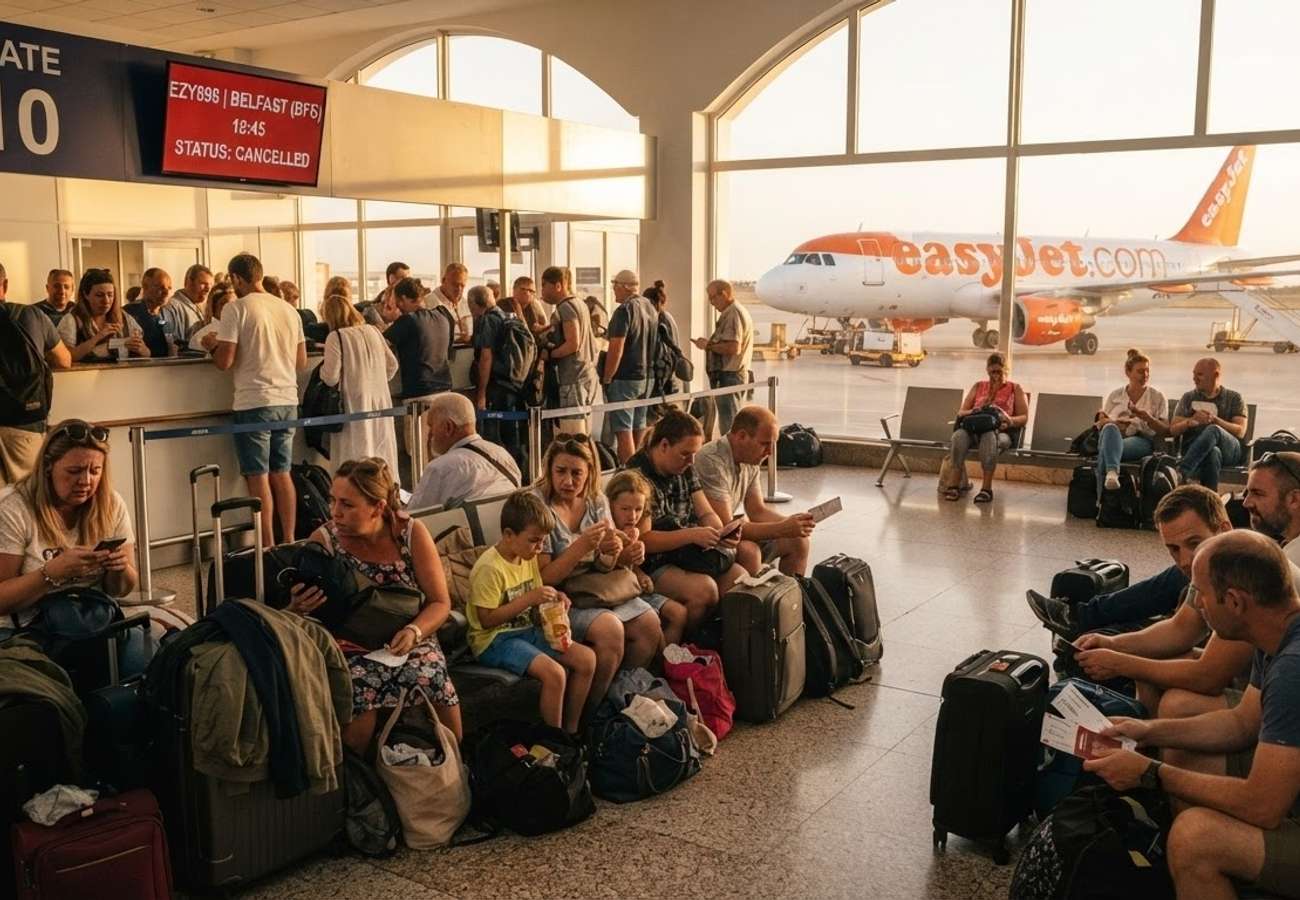
Image generated by AI
Over 100 Northern Ireland holidaymakers were left stranded in Tunisia for several days after EasyJet cancelled a return flight to Belfast, citing a technical aircraft failure.
The disruption occurred on Saturday, 22 August, affecting passengers on flight EZY3072 (also tracked as U23072). The service was scheduled to depart from Enfidha Hammamet International Airport in Tunisia and arrive at Belfast International Airport.
Following the cancellation, EasyJet informed passengers that no direct replacement service was available for up to 10 days. This forced many travelers to either secure their own alternative transport or remain in Tunisia indefinitely.
Operational Breakdown and Passenger Impact
The timing of the failure coincided with the peak late-August travel window, amplifying the logistical strain. While EasyJet provided hotel accommodation for the first two nights, the airline subsequently advised passengers to source and fund their own lodging.
The financial and personal toll on affected families has been significant:
- Financial Loss: One family reported expected costs exceeding £4,000 after booking alternative flights via Brussels to Dublin.
- Medical Risks: Several passengers reported critical concerns regarding the depletion of essential medications due to the extended stay.
- Logistical Failures: Reports indicate poor communication and a lack of on-the-ground support at Enfidha airport during the initial days of the crisis.
Rescue Flight and Airline Response
EasyJet issued a formal apology, stating that customer welfare is a priority and attributing the failure to a technical issue. To clear the backlog of stranded travelers, the airline deployed a rescue flight on Tuesday night. This additional service was designed to carry over 150 passengers directly from Enfidha back to Belfast.
Flight Disruption Summary
| Detail | Specification |
|---|---|
| Flight Number | EZY3072 / U23072 |
| Route | Enfidha Hammamet (TUN) $\rightarrow$ Belfast International (BFS) |
| Cancellation Date | Saturday, 22 August 2026 |
| Passengers Affected | 100+ |
| Primary Cause | Technical Aircraft Issue |
| Rescue Flight Capacity | 150+ Passengers |
| Rescue Flight Date | Tuesday Night |
Why This Matters: The Legal and Logistical Reality
From a logistical perspective, this incident highlights a systemic vulnerability in seasonal "resort" routing. When a carrier operates a tight schedule with limited backup aircraft at outstation airports like Enfidha, a single technical fault can trigger a total collapse of the route's reliability.
For the affected passengers, the real impact extends beyond the delay; it enters the realm of UK261 and EC261 regulatory compliance. Under these laws, airlines are mandated to provide:
- Right to Care: Meals, refreshments, and hotel accommodation during extended delays.
- Rerouting: The earliest possible alternative flight or a full refund.
- Compensation: Financial payouts unless the airline can prove the cancellation was caused by "extraordinary circumstances."
Our analysis suggests that "technical issues" are frequently contested in court. While airlines claim these are unpredictable, regulators often rule that maintenance failures are within the carrier's control. Passengers who paid for their own hotels and alternative flights (such as the Brussels-Dublin route) are likely entitled to full reimbursement of these "duty of care" expenses.
Industry Outlook
This event underscores a growing tension in the European low-cost carrier (LCC) model. The reliance on high aircraft utilization rates leaves zero margin for error. As demand for North African leisure routes grows, the lack of contingency planning for technical failures at secondary airports remains a critical risk factor.
Travelers are advised to maintain comprehensive travel insurance and keep a surplus of essential medication in carry-on luggage to mitigate the risks of such operational failures.
The focus now shifts to the reimbursement phase, where the volume of UK261 claims will test EasyJet's commitment to its public apology.
Related Travel Guides
Disclaimer
This article is for informational and educational purposes only. It does not constitute legal, financial, or professional advice. While we strive to provide accurate and up-to-date information, travel policies, regulations, and conditions change rapidly. Always verify information with official sources before making travel decisions. Nomad Lawyer makes no representations about the accuracy, reliability, completeness, or suitability of the information provided. Readers should consult qualified professionals for advice specific to their circumstances. The views expressed in this article are those of the author and do not necessarily reflect the views of Nomad Lawyer.
Raushan Kumar
Founder & Lead Developer
Full-stack developer with 11+ years of experience and a passionate traveller. Raushan built Nomad Lawyer from the ground up with a vision to create the best travel and law experience on the web.
Learn more about our team →