
Thailand Retains Visa-Free Entry for Indian Travellers in 2026 But Cuts Stay Duration from 60 Days to 30 Days
Thailand confirms visa-free entry for Indian passport holders continues under revised 30-day limit, preserving critical tourism flows between India and Bangkok, Phuket amid expanding air connectivity.

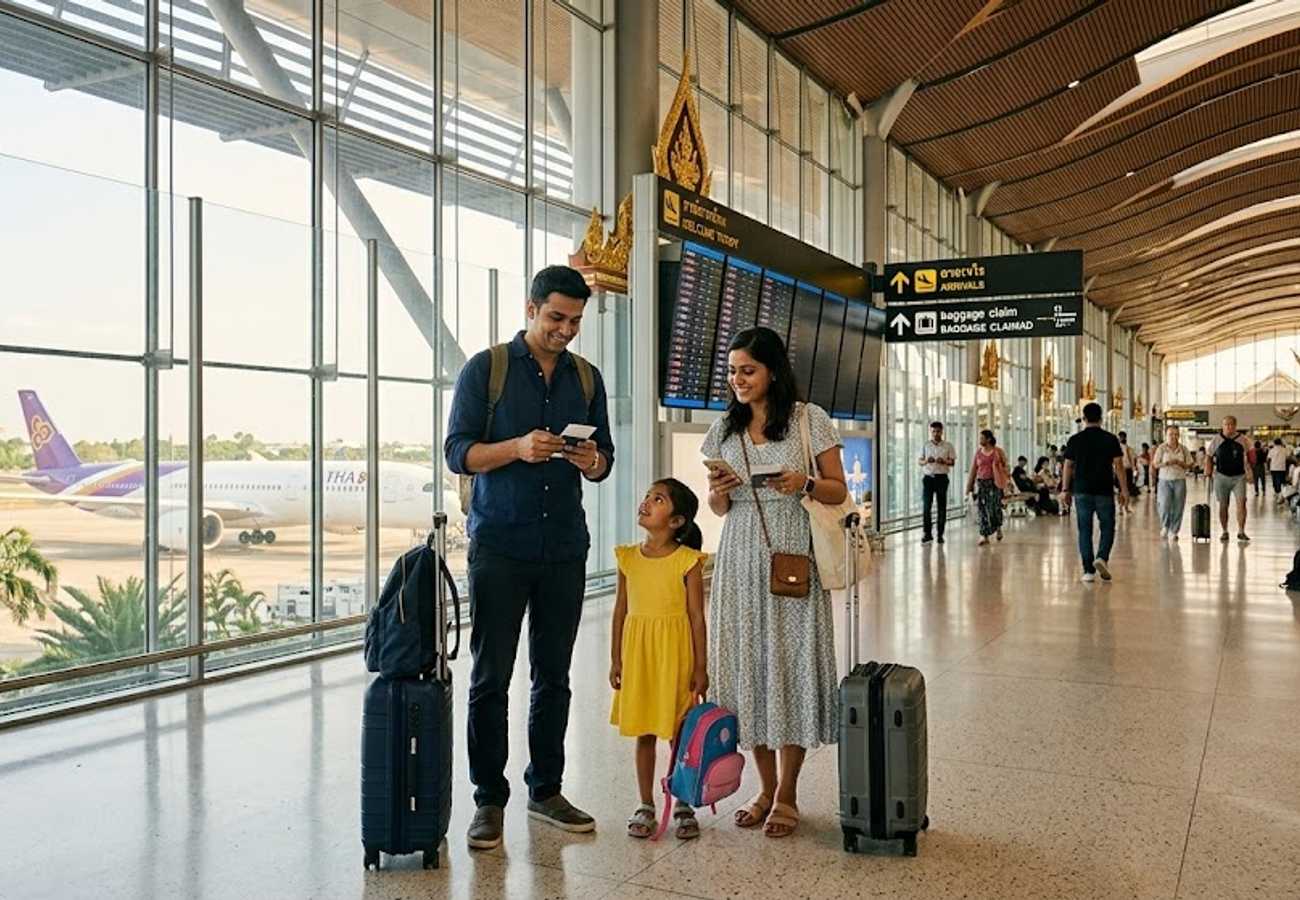
Image generated by AI
Thailand has confirmed that Indian passport holders will continue to enjoy visa-free entry, but the permitted stay drops from 60 days to 30 days once the revised regulations appear in the Royal Gazette—giving travellers a narrower window while preserving frictionless access to Bangkok, Phuket, and beyond.
The Core Transit Update
The Tourism Authority of Thailand (TAT) and Thailand's Cabinet have finalized a revised visa framework that preserves visa-free entry for Indian passport holders while adjusting the maximum permitted stay. The earlier 60-day visa exemption, introduced in 2024 for travellers from 93 countries and territories, faced potential elimination under initial proposals. After inter-ministerial review, Thailand decided that Indian citizens would retain visa-free access, albeit with the stay duration reduced to 30 days.
The revised regulations will take effect 15 days after their formal publication in the Royal Gazette. Until that publication occurs, the existing 60-day visa-free rules remain active. This phased implementation gives airlines, tour operators, and travellers time to adjust booking patterns and itineraries.
The policy shift follows the principle of "one country, one entry category," designed to simplify overlapping visa tracks while strengthening immigration screening. Thailand's government emphasized that the updated framework accounts for economic priorities, bilateral relations, reciprocity, and national security—positioning India as a strategic partner whose tourism contribution justifies continued simplified access.
India ranks among Thailand's largest and fastest-growing tourism source markets. Direct flights connect eight major Indian cities to Bangkok and Phuket, and the revised visa policy aims to sustain that momentum without the disruption that a full visa exemption rollback would have caused.
Transit Schedule & Route Specifications
The India-Thailand air corridor remains one of the most robust in South Asia, with both full-service and low-cost carriers operating direct routes. The table below outlines the primary city pairs driving bilateral visitor flows.
| Indian Departure City | Thai Arrival City | Carrier Type | Key Route Function |
|---|---|---|---|
| Delhi | Bangkok | Full-service & Low-cost | Primary gateway, business & leisure |
| Mumbai | Bangkok | Full-service & Low-cost | Corporate travel, incentive groups |
| Bengaluru | Bangkok | Full-service & Low-cost | Tech-sector business & leisure |
| Chennai | Bangkok | Full-service & Low-cost | Cultural tourism, family travel |
| Hyderabad | Bangkok | Full-service & Low-cost | Medical tourism, corporate |
| Kolkata | Bangkok | Full-service & Low-cost | Short-haul leisure, festivals |
| Ahmedabad | Bangkok | Low-cost | Wedding travel, family vacations |
| Kochi | Bangkok | Low-cost | Leisure, religious tourism |
| Multiple Indian cities | Phuket | Full-service & Low-cost | Beach holidays, destination weddings |
Bangkok functions as the country's busiest international gateway, handling the majority of Indian arrivals. Phuket has emerged as the leading secondary destination, particularly for Indian weddings, luxury celebrations, and premium resort stays. Pattaya, Krabi, Chiang Mai, Hua Hin, and Koh Samui round out the destination portfolio benefiting from Indian demand.
Traveler Logistics Guide
From a ground-level perspective, the best way to navigate this policy transition is to treat the Royal Gazette publication date as your planning trigger. If your trip falls before the revised regulations take effect, you retain the full 60-day visa-free allowance. If your travel dates fall after implementation, plan within the 30-day window.
Booking Connections: For travellers flying from secondary Indian cities like Ahmedabad or Kochi, direct low-cost flights to Bangkok offer the most efficient entry point. If you're heading to Phuket, check whether your carrier offers through-check-in to HKT or whether you'll need to clear immigration at Suvarnabhumi Airport (BKK) before transferring to a domestic connection. A minimum layover of 90 minutes at BKK is advisable for domestic transfers, given immigration queues during peak arrival windows.
Optimal Layover Times: For international-to-domestic connections at Bangkok Suvarnabhumi, allow 2.5 hours during peak season (November to February). For Don Mueang Airport (DMK), which handles most low-cost carrier traffic, a 2-hour layover suffices for domestic transfers but international connections require 3 hours due to terminal separation.
Digital Transit Policies: India's Digi Yatra biometric boarding system is operational at major departure airports including Delhi, Mumbai, and Bengaluru. Enroll before arrival at the airport to reduce check-in friction. Thailand does not currently require ETIAS-style digital authorization for visa-free Indian arrivals, but the immigration arrival card (TM6) remains mandatory at most entry points—fill it out on the aircraft or at the immigration counter.
Stay Duration Planning: With the revised 30-day limit, travellers planning extended stays for medical treatment, business assignments, or multi-destination trips should monitor the Royal Gazette publication date closely. If you need more than 30 days, consider applying for a Tourist Visa (TR) or Non-Immigrant Visa through the Thai Embassy in New Delhi or consulates in Mumbai, Chennai, and Kolkata before departure.
Infrastructure Impact Assessment
The revised visa policy preserves the aviation infrastructure gains achieved over the past two years. Direct connectivity between India and Thailand has expanded across eight Indian departure cities, reducing reliance on hub connections through Singapore or Kuala Lumpur. This has compressed travel times, lowered fares through competition, and made Thailand one of the most accessible international destinations for Indian holidaymakers.
For Bangkok, the policy continuity supports Suvarnabhumi Airport's role as a primary South Asian gateway. The airport's ongoing expansion, including additional immigration counters and automated passport control lanes, aligns with the government's strategy to manage higher arrival volumes while maintaining processing efficiency.
Phuket International Airport stands to benefit significantly from the retained visa-free access. The island has positioned itself as India's preferred overseas wedding destination, and the 30-day window comfortably accommodates wedding parties, pre-wedding shoots, and associated leisure extensions. Tourism operators in Phuket had expressed concern that a full visa exemption rollback would redirect wedding business to competing destinations like Bali and Sri Lanka. The revised policy removes that uncertainty.
Regional connectivity also strengthens. The "one country, one entry category" framework simplifies the immigration experience for travellers who previously navigated overlapping visa exemption tracks. This clarity benefits low-cost carriers that rely on rapid turnaround times and minimal passenger processing delays at arrival gates.
The broader economic impact extends beyond tourism. Medical tourism from India to Thailand, particularly to hospitals in Bangkok, depends on predictable entry procedures. The 30-day visa-free window covers most medical procedures and recovery periods, though patients requiring extended treatment should secure appropriate medical visas in advance.
Internal Connection
For travellers evaluating regional alternatives, understanding how Thailand's visa policy compares to other Southeast Asian destinations provides useful context. Explore our coverage of Oman Air's new nonstop routes for insights into competing Gulf-Asia connectivity options. Our analysis of premium economy recline standards across six leading carriers helps travellers assess comfort on long-haul connections. For those combining Thailand travel with domestic US tourism, our guide to the Santa Fe Beer and Food Festival 2026 offers a contrasting destination experience.
The revised visa framework signals Thailand's intent to maintain India as a strategic tourism partner while tightening immigration controls. For the majority of Indian leisure travellers, a 30-day visa-free stay covers typical holiday durations, family visits, and short business trips. The policy preserves Thailand's competitive position against regional rivals and supports continued growth in airline capacity, hotel occupancy, and tourism revenue through the remainder of 2026.
Visa-free access survives, but the clock now starts at 30 days—plan accordingly.
Related Travel Guides
Disclaimer
This article is for informational and educational purposes only. It does not constitute legal, financial, or professional advice. While we strive to provide accurate and up-to-date information, travel policies, regulations, and conditions change rapidly. Always verify information with official sources before making travel decisions. Nomad Lawyer makes no representations about the accuracy, reliability, completeness, or suitability of the information provided. Readers should consult qualified professionals for advice specific to their circumstances. The views expressed in this article are those of the author and do not necessarily reflect the views of Nomad Lawyer.
Preeti Gunjan
Contributor & Community Manager
A passionate traveller and community builder. Preeti helps grow the Nomad Lawyer community, fostering engagement and bringing the reader experience to life.
Learn more about our team →