
Dublin International Airport Disruption: 192 Flight Delays and 6 Cancellations Impact Global Routes in 2026
Dublin International Airport faced severe operational strain on July 8, 2026, with 192 flight delays and 6 cancellations affecting major carriers including Ryanair, Aer Lingus, and British Airways.

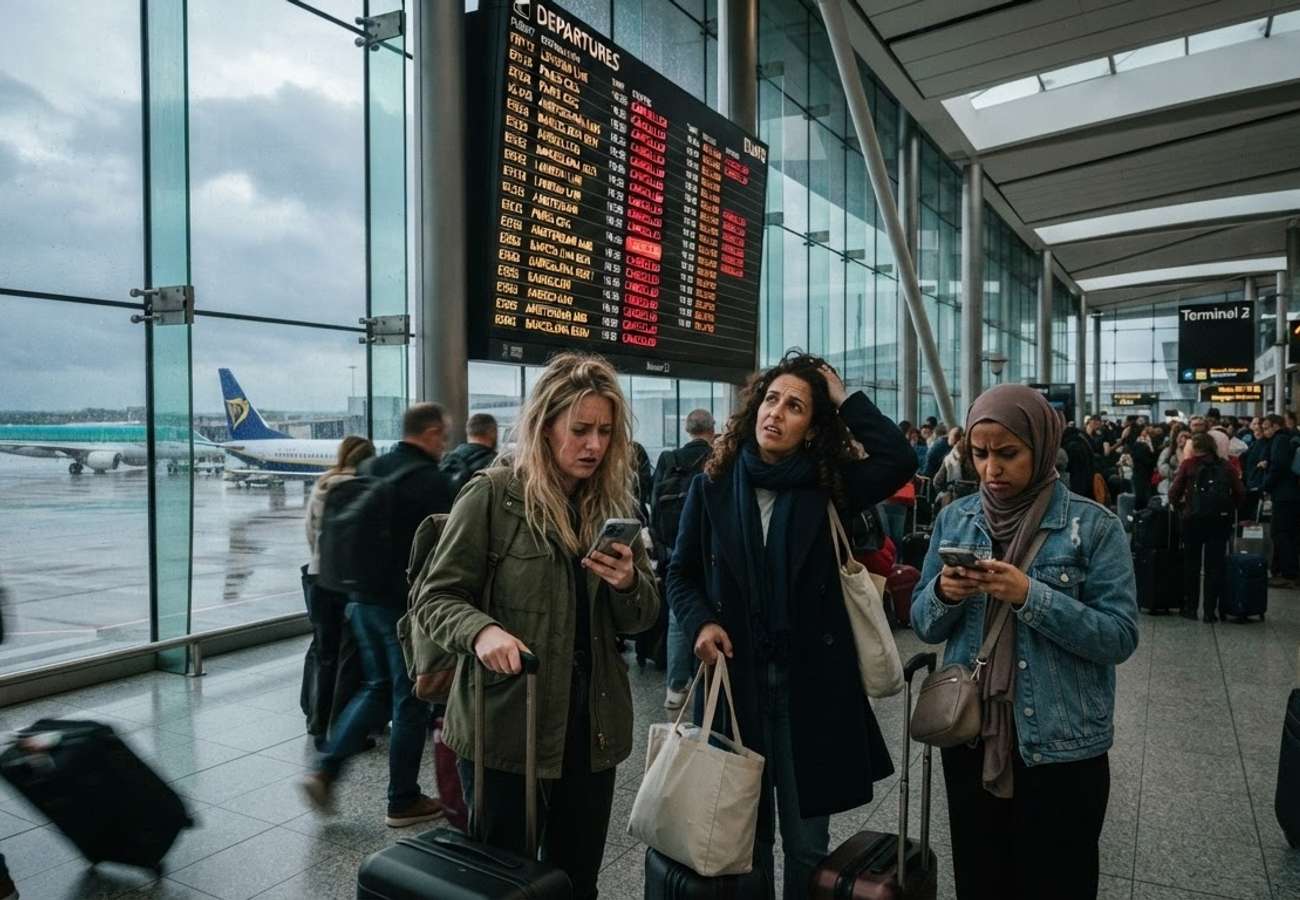
Image generated by AI
Operational instability at Dublin International Airport resulted in 198 disrupted flight movements on July 8, 2026. The surge in delays created a cascading effect across domestic, European, and transatlantic networks.
Massive Schedule Disruption at Ireland's Primary Hub
Dublin International Airport experienced a significant operational breakdown during a peak travel window. Data confirms 192 delayed flights and six total cancellations. The disruption hit a broad spectrum of carriers, including Ryanair, Aer Lingus, British Airways, Lufthansa, KLM, and Air France.
The impact was not limited to regional hops. Long-haul routes to major global hubs—specifically New York, Boston, Chicago, and Dubai—alongside European corridors to London, Paris, Amsterdam, and Frankfurt, faced revised departure times and schedule shifts.
Critical Operational Statistics
- Total Disrupted Movements: 198
- Delayed Flights: 192
- Cancelled Flights: 6
- Primary Impact Zones: Domestic (Ireland), European, and Transatlantic
- Affected Global Hubs: New York, Boston, Chicago, Dubai, London, Paris, Amsterdam, Frankfurt
Root Causes of Aviation Gridlock
Industry observers note that disruptions of this scale are rarely the result of a single failure. Instead, they typically stem from a convergence of operational stressors. Analysis suggests the following factors contributed to the Dublin bottleneck:
- Air Traffic Congestion: High volume during the summer peak exceeding slot capacity.
- Network Cascading: Aircraft arriving late from other European hubs, delaying subsequent departures.
- Crew Constraints: Legal flight-time limitations preventing crews from operating delayed sectors.
- Technical Requirements: Unscheduled maintenance and safety inspections.
- Ground Handling: Bottlenecks in baggage processing and aircraft turnaround.
Passenger Rights and Regulatory Recourse
Under European aviation law, passengers affected by these disruptions are entitled to specific protections. The Irish Aviation Authority maintains that those facing cancellations may claim:
- Full refunds or alternative routing to their final destination.
- Rebooking on the next available service.
- Duty of Care: Provision of meals and hotel accommodation during extended wait times.
Financial compensation eligibility remains contingent on the cause of the delay. If the disruption was caused by "extraordinary circumstances" beyond the airline's control, carriers may be exempt from paying cash compensation.
Operational Recovery Strategy
To mitigate the fallout, airlines implemented several recovery protocols:
- Aircraft Reassignment: Shifting planes between routes to cover high-priority flights.
- Sequence Adjustments: Reordering departures to clear the runway backlog.
- Digital Notifications: Pushing real-time updates via mobile apps to reduce terminal crowding.
Why This Matters: Industry Implications
This event highlights a growing vulnerability in the "hub-and-spoke" model used by major European carriers. When a primary gateway like Dublin experiences a spike in delays, the impact is not localized; it creates a systemic ripple effect.
Because aircraft typically operate 3-4 sectors per day, a two-hour delay in Dublin can trigger a late arrival in New York, which then delays a return flight to Europe the following morning. This "cascading failure" demonstrates that as passenger volumes grow, the margin for operational error shrinks. For the aviation industry, this underscores the urgent need for increased infrastructure resilience and more flexible crew scheduling to absorb shocks during peak seasons.
Forward Outlook
Expect continued volatility as the 2026 summer travel season reaches its zenith. Aviation authorities will likely focus on improving air traffic flow management to prevent similar clusters of delays. Travelers should prioritize real-time digital tracking over static schedules and maintain a record of all essential expenses to facilitate potential compensation claims through the Irish Aviation Authority.
Operational safety remains the priority, but infrastructure capacity is now the primary bottleneck.
Related Travel Guides
Disclaimer
This article is for informational and educational purposes only. It does not constitute legal, financial, or professional advice. While we strive to provide accurate and up-to-date information, travel policies, regulations, and conditions change rapidly. Always verify information with official sources before making travel decisions. Nomad Lawyer makes no representations about the accuracy, reliability, completeness, or suitability of the information provided. Readers should consult qualified professionals for advice specific to their circumstances. The views expressed in this article are those of the author and do not necessarily reflect the views of Nomad Lawyer.
Preeti Gunjan
Contributor & Community Manager
A passionate traveller and community builder. Preeti helps grow the Nomad Lawyer community, fostering engagement and bringing the reader experience to life.
Learn more about our team →