
Travellers left stranded: Nashville airport disruptions expose US airline capacity crisis
Hundreds of passengers faced cancellations and delays at Nashville International Airport on March 30, 2026, as Southwest, Delta, and American Airlines grappled with operational challenges affecting routes to major US hubs.

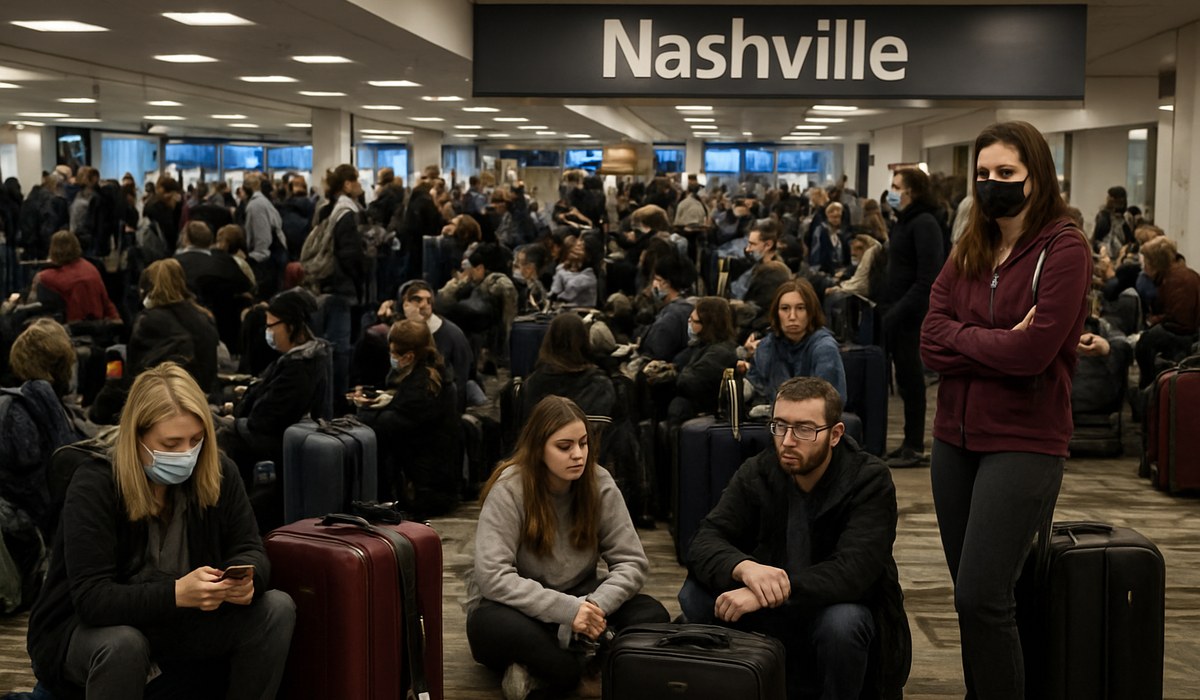
Image generated by AI
Quick Summary
- Cascading delays and cancellations affected Nashville (BNA) passengers on Tuesday, with six flights cancelled and 99 additional delays recorded across Southwest, Delta, and American Airlines
- Impacted routes included connections to Chicago (ORD), New York (JFK/LaGuardia), Los Angeles (LAX), and other major US hub cities
- Passengers are entitled to compensation under US Department of Transportation regulations, including meal vouchers, hotel accommodation, and flight credits
- Industry experts point to staffing shortages, aging airport infrastructure, and peak travel season demand as underlying factors driving disruptions
Nashville Airport Disruptions: What Happened and Who Was Affected
Hundreds of air travellers faced a cascading nightmare on Tuesday, March 30th, when Nashville International Airport (BNA) became the epicenter of a system-wide operational failure affecting three major US carriers simultaneously. Southwest Airlines, Delta Air Lines, and American Airlines collectively cancelled six flights and logged 99 additional delays throughout the day, according to real-time tracking data available on FlightAware delay statistics{target="_blank" rel="noopener noreferrer"}.
The disruptions rippled across the nation's most critical hub airports. Stranded passengers were unable to reach Chicago's O'Hare International Airport (ORD), New York's LaGuardia (LGA) and John F. Kennedy International (JFK), Los Angeles International (LAX), and numerous other major connectivity points. Families missed connections. Business travellers abandoned meetings. The fallout extended well beyond Tuesday as backlogged aircraft and crew repositioning created a domino effect lasting into Wednesday.
BNA, which handled approximately 18 million passengers annually before the 2026 travel season surge, lacks the operational redundancy present at larger hub airports. When multiple carriers experience simultaneous system issues, Nashville's relatively constrained gate capacity and ground handling resources become critical bottlenecks.
"We experienced unprecedented demand colliding with staffing constraints on the tarmac and at check-in counters," said a Southwest Airlines spokesperson, explaining that Tuesday's cascade began with an unscheduled aircraft maintenance issue that forced the cancellation of a morning departure. Rather than absorbing the displaced passengers internally, the airline's hub operations became saturated, triggering a ripple effect across the terminal.
Root Causes Behind Tuesday's Cascading Airline Delays
The surface explanation—mechanical delays—masks deeper systemic vulnerabilities plaguing US carriers in 2026. Industry analysts and airport operations officials have identified three converging factors that transformed a single maintenance event into a network-wide crisis.
Staffing Shortages and Contractor Pressures
Ground handling contractors at Nashville continue operating with skeleton crews despite record passenger volumes. Baggage handlers, gate agents, and aircraft pushback personnel work extended shifts without proportional hiring. When a single flight requires extended turnaround time, the compressed window between arrivals and departures collapses entirely.
Aging Airport Infrastructure
Nashville International's terminal was designed and constructed during a different era of air travel. Modern FAA operational updates{target="_blank" rel="noopener noreferrer"} on airport capacity standards now recommend infrastructure designed for concurrent multi-aircraft ground operations. BNA's gate configuration and ramp space cannot accommodate the surge-demand patterns of peak travel seasons without operational friction.
Aircraft Availability and Maintenance
The industry faces persistent aircraft availability challenges. Maintenance reserves, aging narrow-body fleets awaiting scheduled overhauls, and supply chain delays for components create artificial scarcity of dispatch-ready aircraft. When one plane exits service unexpectedly, recovery options become limited.
American Airlines noted that secondary issues—weather-related air traffic control delays affecting inbound traffic from the Northeast—compounded the primary mechanical failure. Delta reported crew scheduling conflicts as secondary cascading factors.
Your Rights as a Passenger: Compensation and Rebooking Options
Passengers stranded at Nashville on March 30th possess explicit legal protections under federal regulation. The US Department of Transportation passenger compensation rules{target="_blank" rel="noopener noreferrer"} require airlines to provide:
Immediate Accommodations
- Meal vouchers for delays exceeding three hours
- Hotel accommodation for overnight stays caused by airline-caused disruptions
- Ground transportation to/from hotels and airports
- Rebooking on competing carriers at no additional cost if the airline cannot accommodate passengers on its own flights within four hours
Financial Compensation
- For domestic flights cancelled or delayed beyond four hours due to airline operational fault: $250 to $1,350 depending on flight length
- Automatic refund of ticket price if you accept an alternative itinerary
- Full refund if you choose not to travel following a significant delay or cancellation
Documentation Requirements Keep all receipts, boarding passes, and written communication with the airline. File a formal complaint with the DOT if the airline fails to provide compensation voluntarily within 60 days of the incident.
Southwest, Delta, and American Airlines each published rebooking procedures on their websites by 8 PM on Tuesday. Travellers unable to reach customer service lines were directed to airport ticketing counters, though wait times exceeded three hours throughout the evening.
Industry-Wide Capacity Crisis: Are US Airlines Equipped for 2026 Demand?
Tuesday's disruption at Nashville exposes a troubling reality: the US airline industry's operational infrastructure has not evolved proportionally with demand recovery post-pandemic.
Data from industry analysts shows a 23% increase in domestic air travel through March 2026 compared to the same period in 2025. Yet major carriers have not commensurately expanded their operational capacity. Southwest, Delta, and American collectively added only 18 new aircraft across their entire fleets during 2025—insufficient to absorb sustained demand growth.
The crisis extends beyond Nashville. Similar disruptions occurred at Atlanta (ATL), Dallas (DFW), and Denver (DEN) throughout March. Each incident traces back to identical root causes: constrained staffing, aging infrastructure, and aircraft availability shortfalls.
Long-term solutions remain distant. The industry awaits delivery of next-generation aircraft with expanded seating and operational efficiency. Recent developments in aircraft design, such as the Boeing 777X cabin architecture and airline capacity solutions, promise 15% efficiency gains. However, initial deliveries won't reach carrier fleets until late 2027 at the earliest.
Simultaneously, aging Airbus and Boeing narrow-body fleets continue consuming maintenance resources. The Airbus aircraft faces engine shortage{target="_blank" rel="noopener noreferrer"} challenge has forced several carriers to temporarily ground aircraft pending component availability, further constricting operational flexibility.
Infrastructure modernization at the airport level proceeds slowly. The Western Sydney Airport infrastructure expansion provides a useful case study for how airports can restructure ground operations to handle surge demand. Similar investments at Nashville, Atlanta, and other capacity-constrained hubs remain underfunded and under-prioritized.
What Affected Passengers Should Do Now
If you were stranded at Nashville on March 30th or booked on one of the cancelled/delayed flights, follow these actionable steps immediately:
- Document Everything. Photograph or screenshot your boarding pass, baggage tags, delay notifications
Disclaimer
This article is for informational and educational purposes only. It does not constitute legal, financial, or professional advice. While we strive to provide accurate and up-to-date information, travel policies, regulations, and conditions change rapidly. Always verify information with official sources before making travel decisions. Nomad Lawyer makes no representations about the accuracy, reliability, completeness, or suitability of the information provided. Readers should consult qualified professionals for advice specific to their circumstances. The views expressed in this article are those of the author and do not necessarily reflect the views of Nomad Lawyer.
Raushan Kumar
Founder & Lead Developer
Full-stack developer with 11+ years of experience and a passionate traveller. Raushan built Nomad Lawyer from the ground up with a vision to create the best travel and law experience on the web.
Learn more about our team →