
Bradley International Airport Disruptions: JetBlue, Southwest and Aer Lingus Record 29 Flight Issues in 2026
Bradley International Airport experienced significant operational instability on July 8, 2026, with 5 cancellations and 24 delays impacting major US domestic routes and international connections to Ireland.

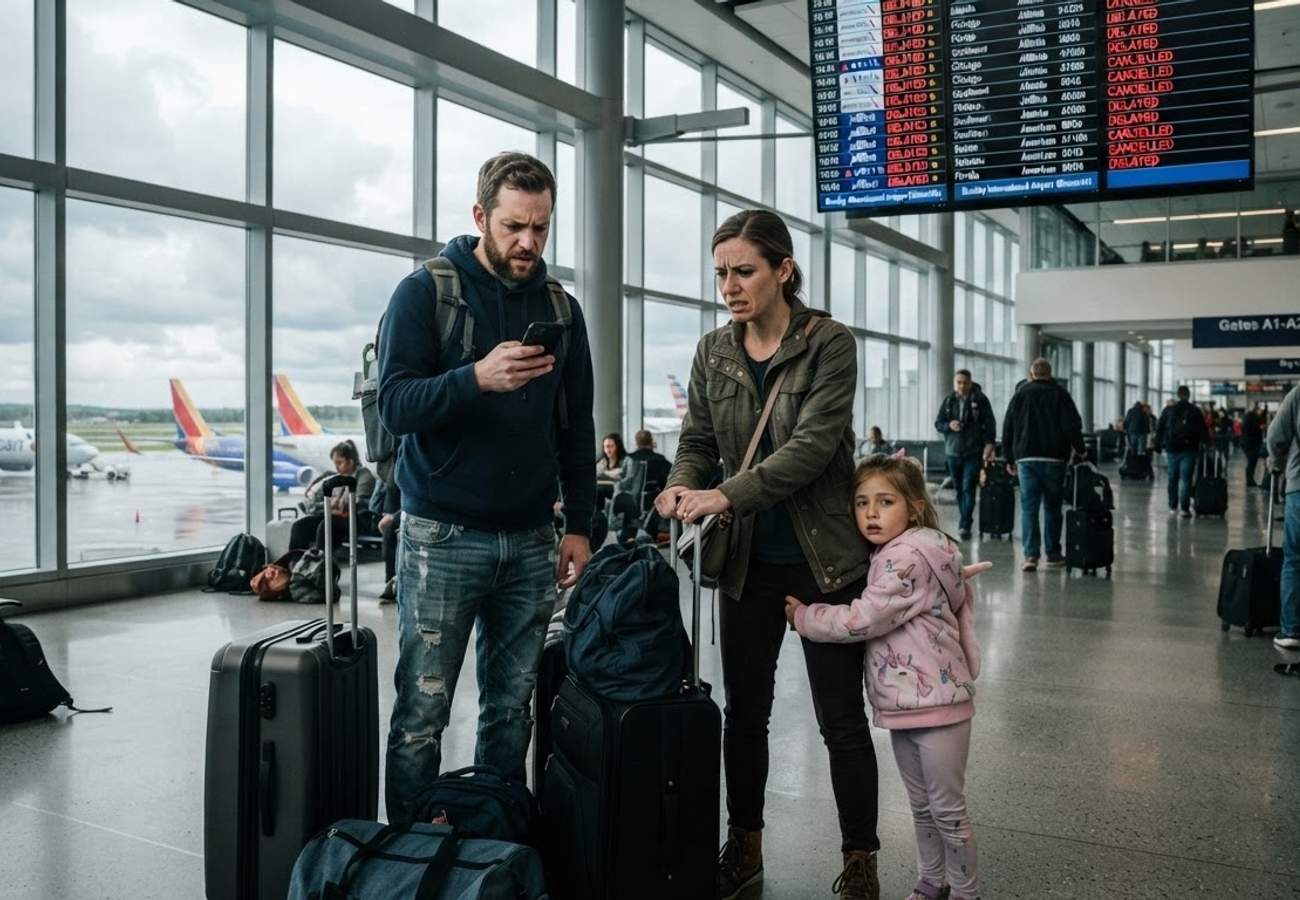
Image generated by AI
Bradley International Airport is currently managing a wave of operational instability, with 5 cancellations and 24 delays impacting both domestic US networks and international corridors to Ireland.
The disruptions are distributed across multiple carriers, indicating a systemic operational challenge rather than a single-airline failure. Market data confirms that aircraft scheduling conflicts and network adjustments have triggered these delays, primarily affecting passengers traveling to major aviation hubs and the Dublin connection.
Operational Breakdown by Carrier
The instability is most pronounced among low-cost and hybrid carriers. JetBlue and Southwest Airlines have emerged as the most affected operators, though regional partners and legacy carriers also report schedule deviations.
- JetBlue: Recorded the highest volume of instability with 7 delays (35% delay rate) and 2 cancellations (10% cancellation rate).
- Southwest Airlines: Reported 2 cancellations (9% rate) and 5 delays (22% rate).
- Delta Air Lines: Logged 1 cancellation (3% rate) with no recorded delays.
- Aer Lingus & Frontier: Both airlines recorded 2 delays each, representing a 100% delay rate for their specific affected services.
- Regional Operators: PSA Airlines (operating for American Airlines) recorded 3 delays (33% rate). United Airlines, Breeze Airways, American Airlines, and Mesa Airlines each reported individual delays.
Route Impact and Hub Connectivity
The disruptions have rippled through key US markets and the transatlantic route to Dublin. The following data outlines the specific origin and destination pressures.
Arrival Disruptions (Inbound to Bradley) The strongest impact was observed from Baltimore/Washington International (BWI), which saw 1 cancellation and 1 delay. Other affected origin airports include:
- 100% Delay Rate: JFK, Southwest Florida (RSW), and Dublin (DUB).
- General Delays: Charlotte (CLT), Reagan National (DCA), Fort Lauderdale (FLL), Washington Dulles (IAD), Orlando (MCO), Chicago Midway (MDW), Tampa (TPA), and San Juan (SJU).
Departure Disruptions (Outbound from Bradley) Outbound traffic faced significant hurdles, particularly toward Florida and New York:
- Orlando (MCO): 1 cancellation and 1 delay.
- Atlanta (ATL): 1 cancellation.
- New York (JFK): 1 cancellation (100% cancellation rate for the affected operation).
- Baltimore (BWI): 1 cancellation and 1 delay.
- Additional Delays: Reagan National (DCA), Fort Lauderdale (FLL), Washington Dulles (IAD), Chicago Midway (MDW), Tampa (TPA), San Juan (SJU), and Dublin (DUB).
Summary of Operational Data
| Airline | Cancellations | Delays | Delay Rate | Cancellation Rate |
|---|---|---|---|---|
| JetBlue | 2 | 7 | 35% | 10% |
| Southwest | 2 | 5 | 22% | 9% |
| PSA Airlines | 0 | 3 | 33% | 0% |
| Delta | 1 | 0 | 0% | 3% |
| Aer Lingus | 0 | 2 | 100%* | 0% |
| Frontier | 0 | 2 | 100%* | 0% |
*Based on affected services only.
Why This Matters: Industry Implication
Industry observers note that the clustering of delays across diverse carriers—ranging from regional PSA flights to international Aer Lingus services—suggests a "bottleneck effect" at Bradley International. When multiple airlines experience simultaneous scheduling failures, it typically points to aircraft rotation issues or ground handling constraints rather than localized weather events.
The 100% delay rate on the Dublin (DUB) and JFK routes is particularly significant. These are high-yield, long-haul, or high-frequency corridors. For passengers, this means the "buffer time" usually built into these schedules has been exhausted, leading to missed connections at secondary hubs. This volatility highlights the fragility of the current hub-and-spoke recovery model in 2026, where a small number of cancellations at a regional airport like Bradley can trigger a domino effect across the transatlantic network.
Forward Outlook
Expect continued volatility for the next 24 to 48 hours as airlines work to reposition aircraft. Passengers should prioritize digital check-ins and monitor real-time flight tracking via airline apps to avoid unnecessary transit to the terminal. Recovery will depend on the speed at which JetBlue and Southwest can reset their rotation schedules.
Operational stability remains the primary objective as Bradley International works to clear the backlog.
Related Travel Guides
Disclaimer
This article is for informational and educational purposes only. It does not constitute legal, financial, or professional advice. While we strive to provide accurate and up-to-date information, travel policies, regulations, and conditions change rapidly. Always verify information with official sources before making travel decisions. Nomad Lawyer makes no representations about the accuracy, reliability, completeness, or suitability of the information provided. Readers should consult qualified professionals for advice specific to their circumstances. The views expressed in this article are those of the author and do not necessarily reflect the views of Nomad Lawyer.
Preeti Gunjan
Contributor & Community Manager
A passionate traveller and community builder. Preeti helps grow the Nomad Lawyer community, fostering engagement and bringing the reader experience to life.
Learn more about our team →