
Dublin-Belfast Cross-Border Corridor Drives 14.6% Surge in Ireland Tourism as H1 Visitor Spend Hits €2.6 Billion
Ireland welcomed 3.24 million international visitors in H1 2026, generating €2.6 billion as Dublin-Belfast rail links and regional corridors drove 14.6% growth.

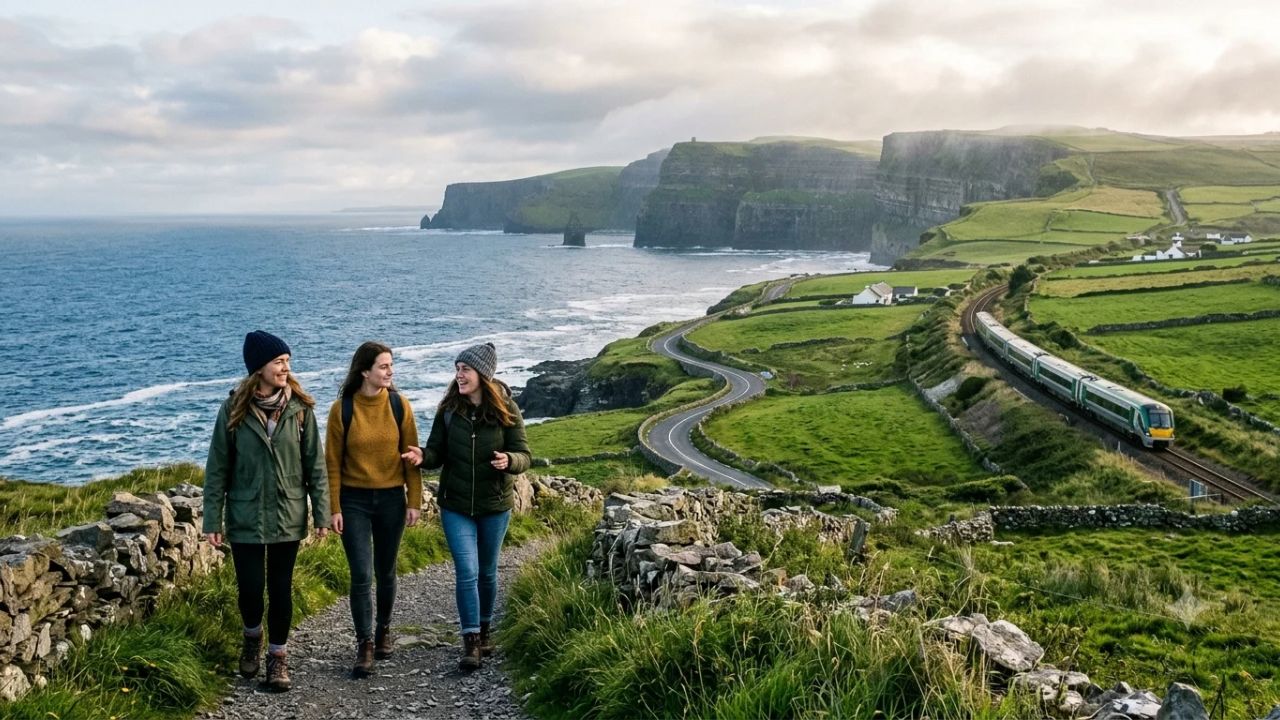
Image generated by AI
Inbound international tourist arrivals to Ireland surged by 14.6% during the first half of 2026, welcoming more than 3.24 million overseas visitors and generating €2.6 billion in direct tourism expenditure—an 18% leap in revenue propelled by shared-island transit corridors connecting Dublin and Belfast. The remarkable mid-year expansion, benchmarked against official data released by UN Tourism, substantially outstripped the modest 0.4% to 2.0% baseline growth recorded globally during the same period. By dismantling cross-border transit friction and transforming dual-capital itineraries into a unified travel experience, the island has decoupled from broader European economic slowdowns to capture unprecedented high-yield transatlantic and European demand.
Rather than relying on isolated capital-city honeypots, Ireland’s tourism architecture pivoted toward regional dispersal, off-peak seasonal travel, and high-spending long-stay visitors. Joint strategic initiatives orchestrated by Tourism Ireland and Fáilte Ireland channeled travelers seamlessly along upgraded rail lines, coastal routes, and greenway networks, converting short city breaks into expansive island-wide journeys.
The Dual-Capital Strategy: Re-engineering Spatial Mobility Across the Border
At the foundation of the 14.6% arrival surge is the strategic transformation of the Dublin-Belfast corridor into an integrated economic and experiential artery. Historically, international travelers visiting the Republic of Ireland frequently treated Northern Ireland as a disconnected excursion, often constrained by separate ticketing and transport uncertainties.
The modernization of the Enterprise cross-border train service has fundamentally altered that dynamic. Operating high-frequency services between Dublin Connolly and Belfast Grand Central in under two hours with unified digital ticketing, the corridor effectively established a "Two Capital Cities in One Vacation" travel model. Overseas independent travelers doubled their intercity rail usage in H1 2026, generating immediate commercial spillover for boundary heritage destinations including the prehistoric burial mounds of Brú na Bóinne in the Boyne Valley, the medieval port of Carlingford, and outdoor activity trails throughout the Mourne Mountains and Cooley Peninsula.
Beyond rail transit, the shared-island framework rested upon four additional operational pillars:
- The Global "Ireland Goes Beyond" Deployment: Targeted multimedia and digital discovery campaigns shifted consumer attention away from congested capital landmarks toward authentic regional artisan immersion, culinary trails, and living heritage.
- The "America 250" Diaspora Engagement: Leveraging the United States Semiquincentennial in 2026, marketing initiatives emphasized multi-generational ancestral links between Ulster, the western counties, and North American diaspora communities.
- Aviation De-Bottlenecking: To mitigate ongoing passenger-cap debates and capacity bottlenecks at Dublin Airport, international air carriers and regional authorities diverted direct transatlantic and continental European frequencies into Shannon and Cork airports.
- Shoulder-Season Maximization: Targeted promotional tariffs, high-profile international corporate conferences, and culinary celebrations drew high-spending travelers during the traditionally quiet January-to-May window, smoothing seasonal volatility.
Macro Performance: Ireland Versus UN Tourism Global Baselines
The following comparative table illustrates how Ireland's cross-border connectivity and high-yield visitor strategy performed relative to prevailing international benchmarks during the first half of 2026:
| Dimension / Performance Indicator | Ireland (H1 2026 Result) | UN Tourism Global Baseline | Primary Strategic Catalyst |
|---|---|---|---|
| Inbound Arrival Growth | +14.6% Year-on-Year | +0.4% to +2.0% | Seamless Dublin-Belfast rail links & off-peak seasonal demand |
| Direct Tourism Expenditure | €2.6 Billion (+18% YoY) | Moderate (Tracking Inflation) | Disproportionate surge in high-spending North American travelers |
| Total Inbound Travelers | 3.24+ Million Visitors | Uneven Global Recovery | Transatlantic air expansion & direct continental European ferries |
| Leading Inbound Volume Market | Great Britain (35% Share) | Domestic / Short-Haul Dominance | Common Travel Area ease, sports fixtures, and musical events |
| Leading Inbound Spend Market | United States & Canada (36% Share) | Constrained Long-Haul Outbound | Heritage ancestry trails, luxury golf resorts, and extended itineraries |
| Average Length of Stay | 6.4 to 7.6 Nights | Shorter City Breaks | Multi-hub touring combining Dublin, Belfast, and coastal routes |
| Cross-Border Rail Utilization | +100% (Foreign FIT Travelers) | Flat Regional Transit Usage | Enterprise digital ticketing & sub-two-hour transit schedules |
Ireland's Regional Engines: Dispersing Wealth Beyond Capital Gateways
The economic vitality of Ireland’s tourism model relies on the distinct operational roles played by individual regional centers and scenic geographic assets:
Dublin: Gateway Hub and Cultural Anchor
Generating the highest absolute concentration of accommodation nights and overseas air arrivals, Dublin repositioned itself from an end-point destination into a dynamic island launchpad. Cultural upgrades—including Trinity College’s enhanced Book of Kells exhibition, the Guinness Storehouse, and high-profile sporting events such as American college football showcases—drove strong weekend occupancies, while integrated transit passes encouraged immediate onward travel north and west.
Belfast: Maritime Heritage and Cultural Revival
Belfast recorded standout arrival gains, magnetic for international travelers drawn by Titanic Belfast and digital interactive exhibitions in the Titanic Quarter. Formally recognized as a UNESCO City of Music, the city’s thriving live music venues, St George’s Market culinary revitalizations, and major conferences at ICC Belfast established Northern Ireland as an indispensable component of the island tour.
Galway and the Western Connemara Hub
Galway acted as the western creative capital, absorbing off-peak travelers seeking immersive cultural authenticity. Street performance culture in the Latin Quarter, seafood tourism along Galway Bay, and gateway access to Connemara National Park and the Aran Islands ensured that international travel revenue bypassed corporate intermediaries to benefit local makers, musicians, and family-owned guesthouses.
Cork and Maritime Southern Links
Cork emerged as a resilient independent arrival gateway, fortified by direct continental vehicle ferries from France into its harbor alongside international air connections at Cork Airport. The county’s culinary status—anchored by the English Market and Kinsale’s gourmet enclaves—paired with deep maritime heritage in Cobh, allowing European visitors to tour southern Ireland without navigating Dublin’s congested motorways.
The Wild Atlantic Way and Interior Greenways
Stretching 2,500 kilometers along the rugged western seaboard, the Wild Atlantic Way remained the crown jewel of Ireland’s touring brands. Iconic sites like the Cliffs of Moher and Slieve League inspired travelers to rent vehicles and stay an average of 3.2 days longer than urban visitors. Concurrently, inland waterways along the Shannon River and traffic-free routes like the Royal Canal Greenway and Waterford Greenway channeled eco-conscious travelers into historic towns across Ireland’s Ancient East and Hidden Heartlands.
Source Market Dynamics: North American Yield and British Volume
Ireland's record €2.6 billion revenue footprint was underpinned by starkly complementary outbound source markets:
- The North American Engine (US and Canada): While representing approximately 25% of overall visitor headcount, North American travelers contributed an astonishing 36% of all foreign tourism spending. Averaging stays of 8.2 nights, these visitors invested heavily in five-star historic castles, premier links golf courses, and private heritage tours.
- The British Volume Base: Great Britain retained its position as Ireland's largest source market by volume, accounting for 35% of all inbound arrivals and 28% of total spending. Buoyed by the Common Travel Area, short flight times, and frequent ferry sailings, British travelers drove sustained year-round occupancy across Dublin and Belfast city breaks.
- Continental Europe (Germany and France): Accounting for a combined 15% of arrivals and 18% of expenditure, German and French vacationers favored independent touring, campervan hires, and active cycling holidays. French arrivals benefited specifically from expanded overnight ferry routes operating directly into Cork and Rosslare.
- Emerging Long-Haul Corridors: Travelers from Australia, the GCC, and Asia contributed high per-trip yields, particularly during spring cultural festivals and academic study visits.
Navigating Capacity Bottlenecks: Airport Caps and Urban Lodging
Despite the stellar 14.6% expansion, sustaining Ireland's tourism momentum across the latter half of the decade will demand disciplined infrastructure management. Urban hotel availability, particularly in central Dublin, remains structurally constrained during peak periods, putting upward pressure on average daily room rates.
In response, national planners and private operators are focusing capital expenditure on regional greenways, digital transit ticketing, and decarbonized rail networks. By proving that cross-border collaboration and frictionless travel links can successfully redistribute visitor traffic away from overcrowded capitals into rural and regional economies, Ireland’s dual-hub model offers an enduring blueprint for sustainable tourism growth in Europe.
Frequently Asked Questions
What was Ireland’s tourist arrival growth rate in the first half of 2026?
Ireland recorded a 14.6% year-on-year increase in inbound international tourist arrivals between January and June 2026, welcoming more than 3.24 million visitors.
How much direct revenue did international tourism generate for Ireland in H1 2026?
Foreign visitors generated approximately €2.6 billion in direct tourism expenditure across Ireland in the first half of 2026, representing an 18% increase compared to H1 2025.
What is the Dublin-Belfast tourism corridor and why is it significant?
The Dublin-Belfast corridor is an integrated transport and marketing network anchored by high-frequency Enterprise rail services connecting both capital cities in under two hours, enabling frictionless two-capital holiday itineraries.
Which country spent the most money visiting Ireland in 2026?
Visitors from the United States and Canada generated 36% of all international tourism spending in Ireland, despite accounting for 25% of total visitor volume, driven by longer average stays of 8.2 nights.
Related Travel Guides
- Tourism Ireland Connects 65 Regional Suppliers with Global Operators in London for 2027 Contracts
- UK and Ireland Face Destination Management Crisis: Shrinking Budgets Threaten £147 Billion Visitor Economy Capacity
- Greece Outpaces Italy in European Tourist Arrivals Growth as EU Overnight Stays Reach Record 1.32 Billion
Disclaimer
This article is for informational and educational purposes only. It does not constitute legal, financial, or professional advice. While we strive to provide accurate and up-to-date information, travel policies, regulations, and conditions change rapidly. Always verify information with official sources before making travel decisions. Nomad Lawyer makes no representations about the accuracy, reliability, completeness, or suitability of the information provided. Readers should consult qualified professionals for advice specific to their circumstances. The views expressed in this article are those of the author and do not necessarily reflect the views of Nomad Lawyer.
Raushan Kumar
Founder & Lead Developer
Full-stack developer with 11+ years of experience and a passionate traveller. Raushan built Nomad Lawyer from the ground up with a vision to create the best travel and law experience on the web.
Learn more about our team →