
Vietnam Partners with China and Regional Powers to Transform Winter into Record Cultural Tourism Success
Vietnam is transforming its northern highland winter shoulder season into an economic powerhouse, linking ethnic heritage festivals in Bac Ha with cross-border Yunnan circuits and global winter models.

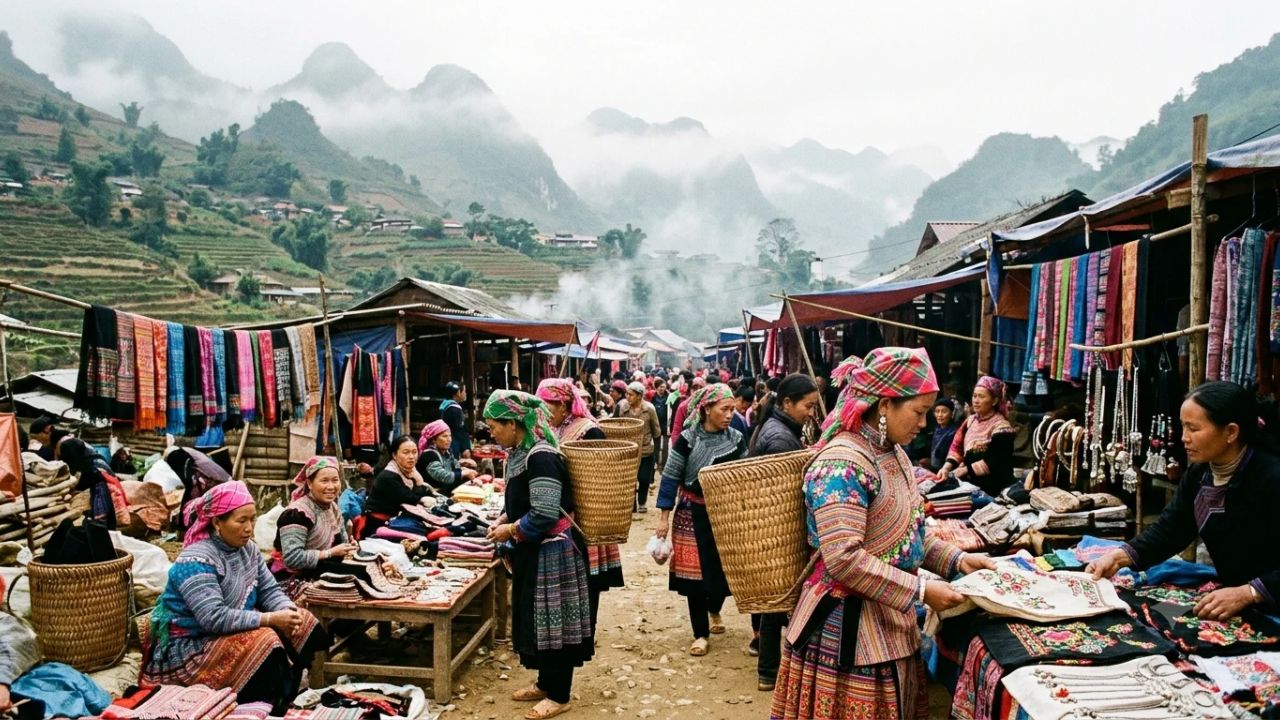
Vietnam has launched an ambitious winter tourism initiative across its northern highlands, partnering with cross-border operators in China’s Yunnan province to convert traditional seasonal downtime into a high-yield cultural tourism corridor headlined by the Bac Ha Winter Festival from November 14 to 24, 2026.
Announced in coordination with the Vietnam National Authority of Tourism (VNAT) and provincial cultural authorities in Lao Cai, the initiative represents a strategic repositioning of cold-weather travel across the Northern Hemisphere. Rather than viewing sub-zero mountain temperatures and persistent highland fog as seasonal barriers, destinations from northern Vietnam and China to Japan, South Korea, Canada, and Europe are harnessing indigenous folklore, cold-weather athletics, and Geographical Indication (GI) agricultural branding to drive sustainable, year-round economic growth.
The Epicenter of the Highland Revival: Bac Ha's Cultural Showcase
The northern border outpost of Bac Ha in Lao Cai province serves as the focal point of Vietnam’s 2026 winter push. Operating under the banner “Colors Converge – Warmth of Great Unity,” the festival is aligned with three national civic observances: National Unity Day (November 18), Vietnamese Teachers’ Day (November 20), and Vietnamese Culture Day (November 24).
                     BAC HA WINTER FESTIVAL 2026 PROGRAMMING SCHEDULE
  ========================================================================================
  Date / Time            Event / Attraction               Cultural & Economic Significance
  ----------------------------------------------------------------------------------------
  Nov 14 (7:30 PM)       "Winter Dance" Opening Gala      Flower H'mong, Tay, Dao & Nung arts
  Nov 14 & 21 (Mornings) Living Livestock Buffalo Market  Centuries-old highland bartering
  Nov 15 & 22 (Mornings) Grand Bac Ha Cultural Market     Brocade textiles, Ban Pho corn wine
  Nov 18                 National Unity Day Observance    Inter-ethnic solidarity programs
  Festival Duration      Bareback Horse Racing            Native mountain ponies without saddles
  Official Ceremony      Agri-Branding Unveiling          "Bac Ha" Cinnamon GI & White Plateau Mark
  Heritage Circuits      Hoang A Tuong Mansion Tours      French-Asian syncretic architecture
  ========================================================================================
The festival opens on November 14 at the Bac Ha Night Market with the live theatrical showcase “Winter Dance – The Rhythm of Great Unity,” featuring indigenous artists from the Flower H’mong, Tay, Dao, and Nung communities.
Visitors can experience the historic living livestock market on the mornings of November 14 and 21, where mountain traders barter water buffalo and highland cattle, followed by the Grand Cultural Market on November 15 and 22. Here, local culinary staples take center stage—including simmering cauldrons of thang co (traditional horse meat stew) paired with freshly distilled Ban Pho corn wine and hand-woven hemp brocades.
A signature athletic event is the traditional bareback horse race held at the central stadium, where ethnic highland horsemen race indigenous mountain ponies without stirrups or saddles, demonstrating historical equestrian skills passed down through generations.
  COMMUNITY-BASED TOURISM (CBT) FINANCIAL CIRCUIT:

  [ Cross-Border Inbound Visitors ] ====> [ Bac Ha Winter Festival Gateways ]
                                                        |
                 +======================================+
                 |                                      |
                 v                                      v
  [ Direct Village Revenue ]                 [ High-Value Agri-Exports ]
  * Ethnic minority homestays                * "Bac Ha" Cinnamon Bark (GI)
  * Local transport cooperatives             * "Bac Ha White Plateau" Specialty
  * Traditional textile artisans             * Artisanal Ban Pho Corn Distilleries
The festival also marks the formal unveiling of the official Geographical Indication (GI) certification for Bac Ha Cinnamon Bark and the regional quality trademark Bac Ha White Plateau, managed by the Ministry of Culture, Sports and Tourism of Vietnam to elevate local agricultural exports into global culinary markets.
Global Benchmark: How Leading Nations Monetize Winter Circuits
Vietnam’s highland strategy mirrors an expanding global trend where nations leverage cold climates into high-margin tourism products rather than competing solely with tropical beach resorts.
| Country | Signature Winter Attraction | Operational Strategy | Primary Economic Driver |
|---|---|---|---|
| Vietnam | Bac Ha Winter Festival (Lao Cai) | Community-Based Tourism & border circuits | Ethnic village homestays, cinnamon GI, handicraft sales |
| China | Harbin Ice & Snow World (Heilongjiang) | Colossal LED ice cities from Songhua River ice | High-speed rail packages linking Beijing to Yabuli ski slopes |
| Japan | Sapporo Snow Festival (Hokkaido) | Sculptural art in Odori Park & onsen links | Regional rail passes dispersing visitors into ski resorts |
| South Korea | Hwacheon Sancheoneo Ice Festival | Trout ice fishing & bare-handed wading | Regional voucher system redeemable exclusively at local shops |
| Canada | Carnaval de Québec & Winterlude | Ice canoe races & Rideau Canal Skateway | Urban winter hotel occupancy & waterfront hospitality |
| Italy | Carnival of Venice (Carnevale) | Historic masked pageantry along Grand Canal | Luxury heritage tourism during quiet shoulder season |
| Scotland | Up Helly Aa (Shetland Islands) | Torchlit Viking galley burning & folk concerts | Full island accommodation booking during sub-Arctic winter |
China’s Mega-Scale Ice and Snow Economy
Just north of the Vietnamese border, the China National Tourism Administration has transformed Heilongjiang’s sub-zero climate into a multi-billion-dollar economic engine. Anchored by the world-famous Harbin International Ice and Snow Festival, millions of metric tons of crystal ice are harvested directly from the frozen Songhua River to construct illuminated skyscrapers and full-scale replicas of global monuments. High-speed rail corridors link Harbin directly with Beijing and the Olympic ski facilities of Yabuli and Chongli, creating an integrated “Ski and Culture” transit loop.
Japan’s Sculptural Artistry and Regional Dispersion
Through the Sapporo Snow Festival in Hokkaido, the Japan National Tourism Organization (JNTO) crafts an open-air museum across Odori Park, Susukino, and Tsudome. Giant snow sculptures depicting world heritage sites and pop-culture icons sit alongside precision ice-carving showcases. JNTO pairs festival promotions with regional JR rail passes, dispersing urban crowds into surrounding hot spring (onsen) towns and world-class powder ski hubs like Niseko, Furano, and Hakuba.
South Korea’s Rural Revitalization Mechanism
Near the Demilitarized Zone (DMZ) in Gangwon Province, the Hwacheon Sancheoneo Ice Festival attracts hundreds of thousands of travelers to fish for mountain trout through drilled ice holes across a frozen river. To ensure direct economic retention, admission tickets include regional gift certificates that can be spent only at local restaurants, grocery markets, and handicraft stalls, preventing capital flight to metropolitan centers.
The Strategic Path Ahead for Cold-Weather Tourism
The alignment of winter cultural festivals demonstrates a fundamental maturation in international tourism management:
- Counteracting Seasonality: Extending active tourism operations across November through February mitigates hospitality cash-flow deficits, stabilizing year-round employment in rural mountain communities.
- Community-Based Retention: Ensuring that ticket fees, homestay lodging, and dining revenue remain within local indigenous cooperatives shields vulnerable highland cultures from commercial exploitation.
- Cross-Border Circuit Packaging: Synchronizing overland entry points between Lao Cai and Yunnan allows regional travelers to experience multi-destination itineraries that combine Chinese high-speed transit with authentic Vietnamese highland hospitality.
From the misty plateaus of Bac Ha to the frozen canals of Ottawa and the glowing ice cities of Harbin, winter travel has established itself as an indispensable driver of cultural preservation and sustainable economic prosperity.
Frequently Asked Questions
When does the Bac Ha Winter Festival take place in 2026?
The Bac Ha Winter Festival takes place from November 14 to November 24, 2026, across Lao Cai province in northern Vietnam.
What are the main attractions of the Bac Ha Winter Festival?
Key highlights include the traditional bareback mountain horse race, the authentic living buffalo market, the Grand Cultural Market with local brocades and Ban Pho corn wine, and tours of the Hoang A Tuong Mansion.
What is the new Geographical Indication introduced at the festival?
The festival marks the official launch of the "Bac Ha" Geographical Indication (GI) for cinnamon bark alongside the regional certification mark "Bac Ha White Plateau."
How do South Korea and China monetize their winter festivals?
China integrates high-speed rail with Harbin's massive ice architecture and ski resorts, while South Korea issues festival tickets containing local vouchers that must be redeemed in rural shops and restaurants.
Related Travel Guides
- Malaysia and Singapore Anchor Thailand’s Inbound Tourism as TAT Targets 6.2% ASEAN Revenue Growth for Fiscal 2027
- Oman’s Musandam and Saudi Arabia’s Aseer Emerge as Premier Hidden Gems for Sustainable 2027 Travel
- France and Spain Outpace Global Tourism with Nearly 200 Million Visitors and All-Season Magnetism
Disclaimer
This article is for informational and educational purposes only. It does not constitute legal, financial, or professional advice. While we strive to provide accurate and up-to-date information, travel policies, regulations, and conditions change rapidly. Always verify information with official sources before making travel decisions. Nomad Lawyer makes no representations about the accuracy, reliability, completeness, or suitability of the information provided. Readers should consult qualified professionals for advice specific to their circumstances. The views expressed in this article are those of the author and do not necessarily reflect the views of Nomad Lawyer.
Naina Thakur
Contributor & Travel Specialist
Travel enthusiast and legal writer covering visa regulations, responsible tourism, and cultural journeys across global destinations.
Learn more about our team →