
Dubai International Airport Passenger Traffic Drops 31.3% in H1 2026 Amid Global Route Disruptions
Dubai International Airport (DXB) saw passenger numbers fall to 31.5 million in H1 2026, a 31.3% decline driven by regional instability and route adjustments.

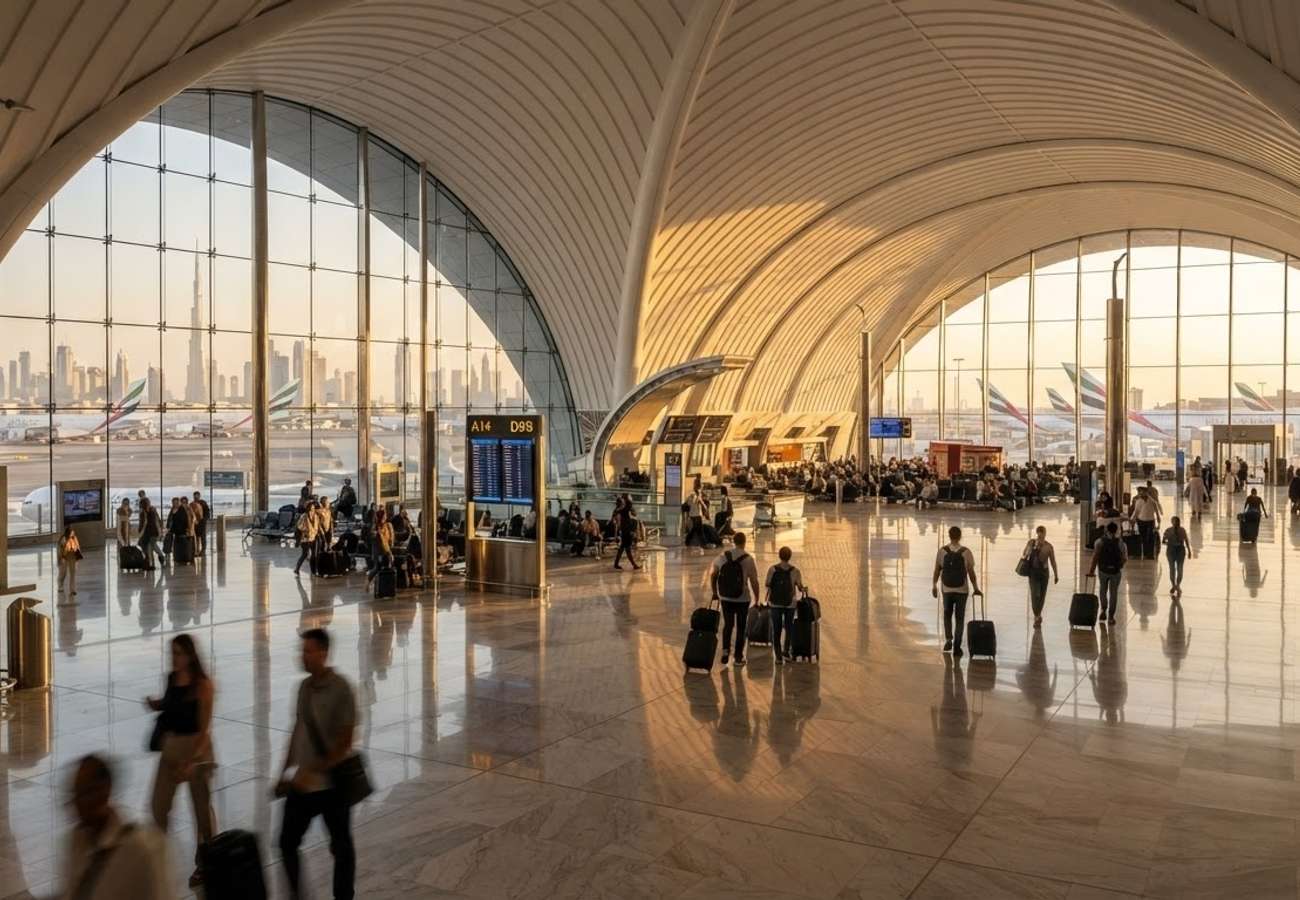
Image generated by AI
Passenger traffic at Dubai International Airport (DXB) plummeted by 31.3% in the first half of 2026, with volumes dropping from 45.8 million to 31.5 million passengers. This sharp decline underscores the fragility of global transit hubs during periods of regional instability.
The Shift in Global Transit Dynamics
Dubai International Airport has long served as the primary bridge between Europe, Asia, Africa, and the Americas. However, the first six months of 2026 revealed a significant vulnerability in this model. Regional disruptions triggered a cascade of flight cancellations, route adjustments, and reduced frequencies, directly impacting the UK and broader European markets.
The data reveals a comprehensive downturn across all airport operations. Beyond the passenger drop, aircraft movements fell by 32.1% to 150,600 during H1 2026. The logistics sector felt similar pressure, with cargo processed dropping by 28.7% to approximately 751,340 tonnes. Baggage volumes followed suit, totaling around 30.3 million bags for the period.
For the traveler, the real impact was a sudden scarcity of seats and a breakdown in the seamless connectivity that defines the DXB experience. As airlines scaled back services to mitigate risk, the ripple effect extended to Dubai’s hospitality and retail sectors, which rely heavily on the steady flow of transit and destination visitors.
Regional Recovery and Operational Resilience
Despite the H1 slump, the second quarter of 2026 signaled a pivot toward recovery. The decline appears to be a temporary reaction to external volatility rather than a loss of interest in the destination. A steady climb in monthly passenger numbers suggests a return of confidence:
| Month (2026) | Passenger Volume |
|---|---|
| April | 3.5 Million |
| May | 4.5 Million |
| June | 5.0 Million |
Dubai continues to leverage its massive network—serving 217 destinations across 99 countries via nearly 50 international airlines—to stabilize its position. To ensure long-term viability, Dubai Airports is accelerating an infrastructure overhaul. The focus has shifted toward biometric solutions, expanded self-service technology, and smarter passenger flow management to reduce friction during peak recovery surges.
Cultural & Environmental Value
The current volatility is pushing Dubai toward a more sustainable tourism model. By integrating advanced biometric processing and efficient flow management, the airport is reducing the carbon footprint associated with idling aircraft and inefficient terminal congestion. For the visitor, this means a shift from "mass transit" to "precision transit," where technology reduces wait times and enhances the quality of the layover.
The regional tourism boards and aviation authorities are now emphasizing the diversification of arrival points to ensure that the city's economy is not solely dependent on a single hub's stability. This strategic pivot supports a more resilient local economy by encouraging longer stays and deeper engagement with Dubai's cultural heritage sites rather than short-term transit stops.
Visitor Insider Tips
For those planning a trip through DXB in the latter half of 2026, consider these local insights:
- Optimal Transit Windows: While June showed a strong recovery, the "shoulder season" between September and November offers the best balance of restored flight capacity and manageable terminal crowds.
- Biometric Fast-Tracking: Utilize the new biometric gates. Registering your details via the official airport app before arrival can shave 30-60 minutes off your passport control time.
- Off-Peak Dining: Avoid the main terminal food courts during the 4:00 PM to 8:00 PM rush. Head to the quieter lounges or the hidden cafes in the newer concourses for a more authentic experience.
- Eco-Transport: Use the Dubai Metro directly from the airport to the city center to avoid traffic and support the city's push for lower urban emissions.
Tourism Outlook
The long-term trajectory for Dubai remains positive. The H1 2026 decline serves as a stress test that has accelerated the adoption of smarter, more flexible aviation technologies. As airline capacity returns to pre-disruption levels, the combination of upgraded facilities and a diversified tourism strategy is expected to drive a strong performance in H2 2026. The destination is evolving from a mere transit point into a high-tech gateway that prioritizes operational efficiency over sheer volume.
Dubai's ability to pivot from a 31% decline to a steady Q2 climb proves the enduring magnetism of the Emirates.
Related Travel Guides
Disclaimer
This article is for informational and educational purposes only. It does not constitute legal, financial, or professional advice. While we strive to provide accurate and up-to-date information, travel policies, regulations, and conditions change rapidly. Always verify information with official sources before making travel decisions. Nomad Lawyer makes no representations about the accuracy, reliability, completeness, or suitability of the information provided. Readers should consult qualified professionals for advice specific to their circumstances. The views expressed in this article are those of the author and do not necessarily reflect the views of Nomad Lawyer.
Kunal K Choudhary
Co-Founder & Contributor
A passionate traveller and tech enthusiast. Kunal contributes to the vision and growth of Nomad Lawyer, bringing fresh perspectives and driving the community forward.
Learn more about our team →