
Emirates Issues Summer 2026 Travel Advisory for Dubai International Airport DXB Operations
Emirates mandates a three-hour airport arrival window and the adoption of biometric processing to mitigate summer passenger surges at Dubai International Airport (DXB).

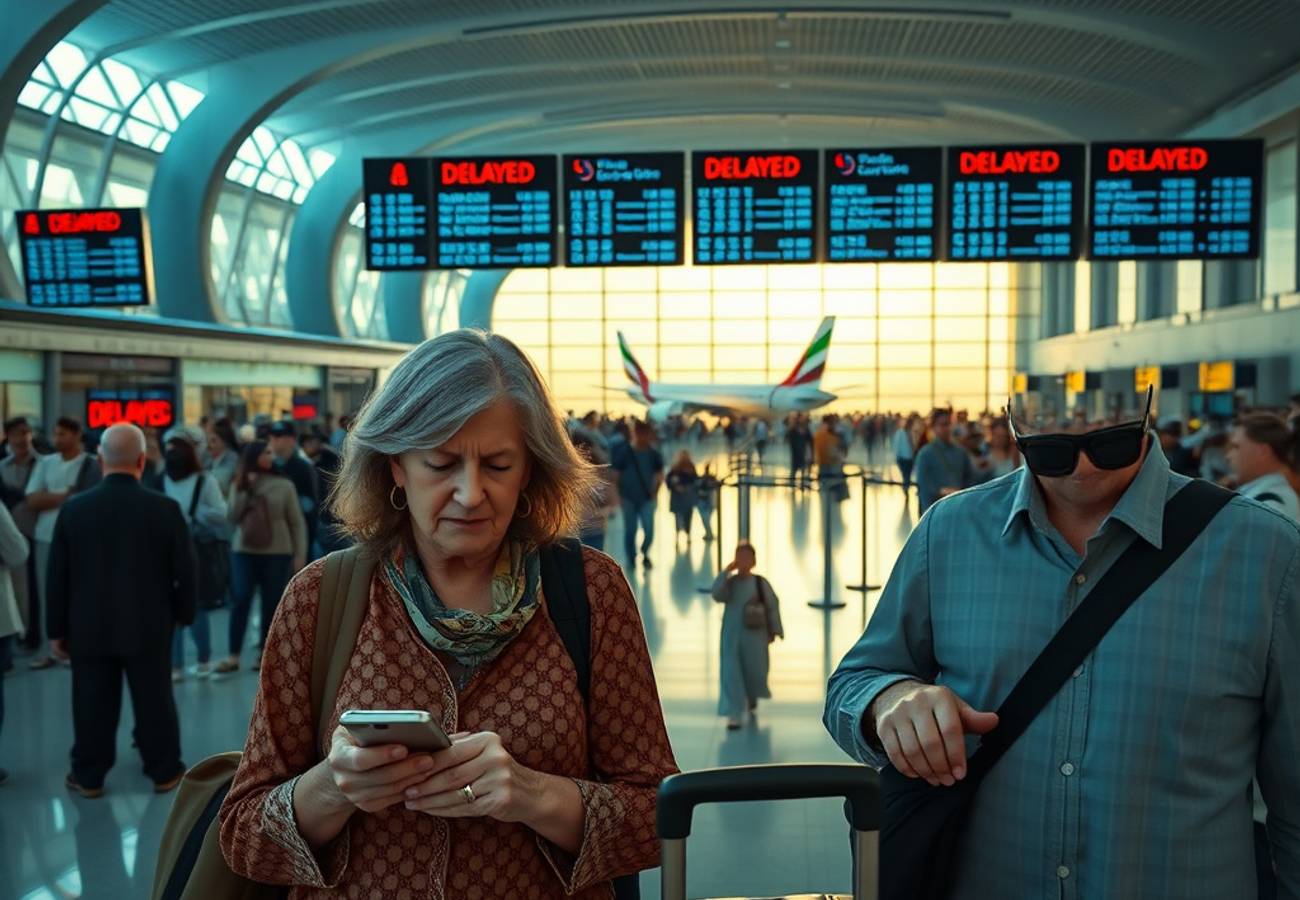
Image generated by AI
Emirates has issued a formal travel advisory for passengers utilizing Dubai International Airport (DXB) to combat the systemic congestion typical of the summer peak season.
The surge in passenger volume, driven by the end of school terms and rising global temperatures, has prompted the airline to implement strict arrival windows and promote digitized processing to maintain safety and operational efficiency.
The Operational Challenge at DXB
Industry observers note that summer travel remains the most volatile period for global aviation hubs. At DXB, this manifests as acute congestion at security checkpoints and immigration halls. To prevent systemic failure and maintain service standards, Emirates now requires all passengers to arrive at the terminal at least three hours before their scheduled departure.
This time buffer is designed to absorb delays caused by two primary factors:
- Internal Bottlenecks: High-density queues at security and immigration screening.
- External Logistics: Intensified road traffic on approach routes to the airport, which often compounds delays for those relying on private transport.
Transition to Digitized Passenger Processing
Market trends suggest a decisive shift away from manual, face-to-face counter interactions toward decentralized, automated services. Emirates has integrated several technological layers to distribute the workload away from the terminal core.
The airline is now prioritizing the use of self-service check-in and bag-drop kiosks. Furthermore, the deployment of biometric verification is a critical evolution in DXB’s operational strategy, allowing eligible travelers to bypass traditional queues via smart gates.
Passenger Execution Framework
To ensure a seamless transit, Emirates has outlined a specific set of operational guidelines for passengers:
- Digital Formalities: Mandatory use of the Emirates mobile app for online check-in and advance document verification.
- Baggage Decentralization: Utilization of self-service kiosks or the "Home Check-In" service, where luggage is collected from residences, hotels, or offices.
- Off-Airport Processing: Use of city check-in desks at Ajman or ICD Brookfield Place (DIFC) to offload luggage before arriving at the airport.
- Biometric Enrollment: Registration for the biometric travel pathway via the mobile app to access expedited smart gates.
- Transit Optimization: A strong recommendation to use the Dubai Metro for direct, reliable access to Emirates Terminal 3, bypassing road congestion.
- Real-Time Monitoring: Updating contact details in the "Manage Your Booking" section to receive immediate flight notifications.
DXB Operational Requirements Summary
| Requirement | Protocol | Purpose |
|---|---|---|
| Arrival Window | 3 Hours Pre-Departure | Mitigation of security/immigration delays |
| Primary Transport | Dubai Metro | Avoidance of peak-hour road traffic |
| Check-in Method | Mobile App / City Desks | Distribution of terminal workload |
| Identity Verification | Biometric Smart Gates | Acceleration of passenger flow |
| Luggage Handling | Self-Service / Home Check-in | Reduction of counter queues |
Why This Matters: Industry Implication
Our analysis of these measures indicates that Emirates is moving toward a "borderless terminal" model. By shifting check-in and baggage drop to city centers and homes, the airline is effectively moving the airport boundary outside the physical terminal.
This is not merely a convenience feature but a necessity for scalability. As DXB handles higher volumes, the physical footprint of the terminal becomes a liability. By leveraging biometrics and off-site processing, Emirates reduces the "dwell time" in high-stress areas, which directly correlates to higher security efficacy and lower passenger frustration.
Forward Outlook
Passengers should expect an increasing mandate for biometric registration as a prerequisite for "fast-track" movement. Those who fail to adopt these digital tools will likely face significantly longer wait times as the airline continues to phase out manual counter support in favor of automated infrastructure.
Strict adherence to the three-hour arrival window is the only guaranteed hedge against summer operational volatility at DXB.
Related Travel Guides
Disclaimer
This article is for informational and educational purposes only. It does not constitute legal, financial, or professional advice. While we strive to provide accurate and up-to-date information, travel policies, regulations, and conditions change rapidly. Always verify information with official sources before making travel decisions. Nomad Lawyer makes no representations about the accuracy, reliability, completeness, or suitability of the information provided. Readers should consult qualified professionals for advice specific to their circumstances. The views expressed in this article are those of the author and do not necessarily reflect the views of Nomad Lawyer.
Raushan Kumar
Founder & Lead Developer
Full-stack developer with 11+ years of experience and a passionate traveller. Raushan built Nomad Lawyer from the ground up with a vision to create the best travel and law experience on the web.
Learn more about our team →