
Dubai Leads the Global Aviation Comeback: Emirates Route Restorations and Insider Stopover Guide 2026
Operating at 93% capacity and carrying 8.6 million summer passengers, Emirates propels Dubai toward 70 million annual travelers with new routes to Helsinki, Accra, and Hanoi.

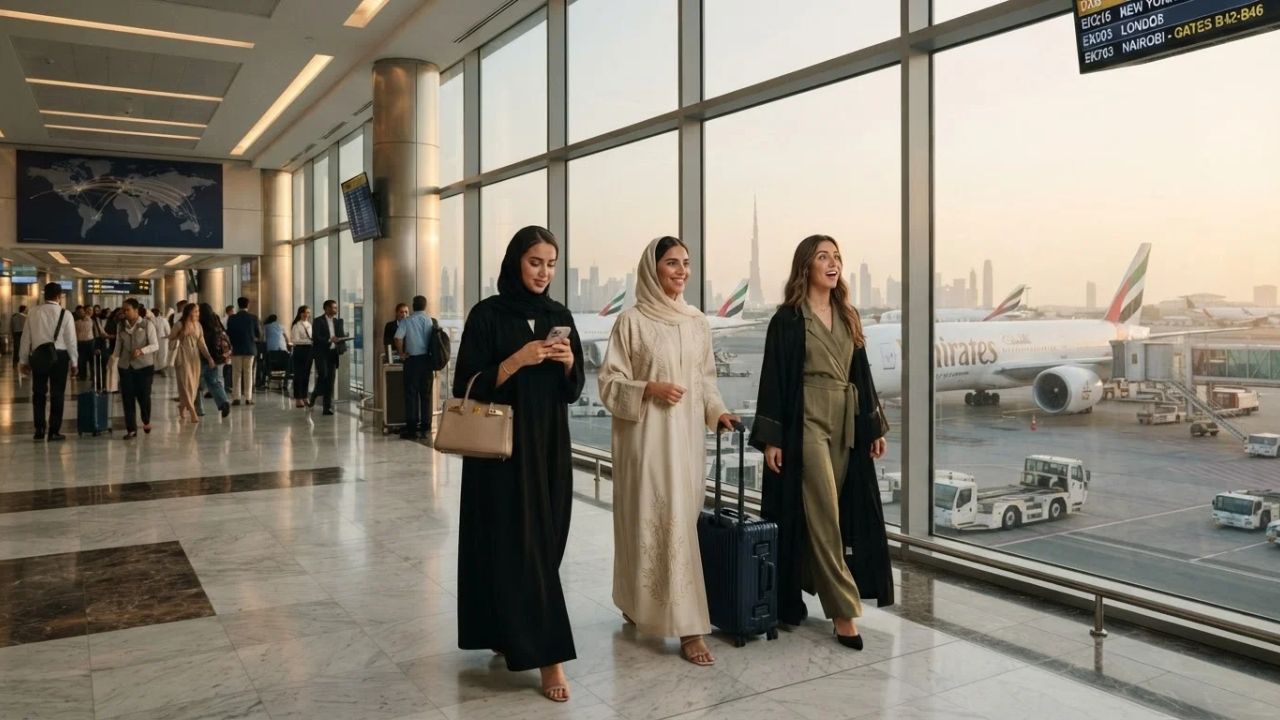
Image generated by AI
Operating at an impressive 93 percent of its pre-disruption capacity, Emirates carried more than 8.6 million passengers between July and August 2026 alone, driving Dubai International Airport toward a projected annual throughput of roughly 70 million travelers. While earlier regional airspace volatility and operational adjustments created temporary turbulence for long-haul networks, Dubai’s flagship carrier has responded with a decisive global comeback. By restoring high-frequency service across West Asia, Europe, the Middle East, the Americas, Africa, and Australia—alongside new service to Helsinki and increased frequencies to Accra and Hanoi—the emirate is leveraging unprecedented passenger flows to transform routine airport transfers into culturally rich stopover experiences.
The 2026 Aviation Rebound: Restoring the Global Crossroads
The resurgence of Emirates in 2026 underscores the enduring strategic value of Dubai International Airport (DXB) as the preeminent global transfer crossroads. During the peak summer travel window, the airline maintained exceptional seat occupancy across its intercontinental network, supported by surging passenger bookings from key origin markets including India, South Africa, Brazil, and Egypt. Furthermore, deep codeshare coordination with regional partner flydubai provided critical onward links into emerging travel corridors, including Nepal.
This recovery reflects a distinct shift in international consumer behavior. While global travelers are increasingly making flight reservations closer to their departure dates, baseline demand for long-distance international travel remains robust. Dubai Airports has aligned its operational capacity with this trend, anticipating total annual passenger traffic to reach approximately 70 million by the end of 2026.
For the emirate's broader visitor economy, this restored seat capacity serves as a direct catalyst for tourism growth. Inbound international travelers fuel hotel occupancy, luxury retail, culinary tourism, and major MICE conferences. Official destination initiatives highlighted by Visit Dubai emphasize that the goal is no longer merely moving passengers between gates, but inspiring travelers to exit the terminal and engage with the multifaceted heritage of the United Arab Emirates.
What Makes Dubai Different: The Interplay of Hyper-Transit and Old-World Creek Heritage
While casual observers perceive Dubai primarily through its record-breaking architecture, luxury beach clubs, and climate-controlled megamalls, travelers who pause during an extended layover encounter a historic maritime port with deep cultural roots. Just a fifteen-minute metro ride from the modern terminals of DXB lies Khor Dubai (Dubai Creek), a natural saltwater inlet submitted to the UNESCO World Heritage Centre Tentative List. For centuries, this waterway served as the economic heart of the Persian Gulf pearl-diving fleet and regional maritime trading routes.
Along the creek’s shores, wooden dhows built by hand continue to moor four-deep, loading spices, textiles, and consumer goods bound for coastal ports across East Africa, India, and Iran. Crossing the water aboard an open-air motorized wooden abra costs just 1 AED, offering travelers a sensory immersion into daily merchant life.
On the southern bank, the Al Fahidi Historical Neighbourhood preserves nineteenth-century coral-stone residences crowned with traditional barjeel wind towers—an ingenious vernacular cooling system that captures coastal breezes and channels them downward into family courtyards. In sharp contrast to the neon glow of Downtown Dubai, these quiet alleys house contemporary calligraphy galleries, heritage coffee museums, and fragrant spice shops scented with dried frankincense and damask rosebuds.
Beyond the urban center, the emirate transitions into the red dunes of the Dubai Desert Conservation Reserve, where indigenous Arabian oryx and mountain gazelles roam across protected wilderness corridors, illustrating how proximity to untamed nature exists alongside a premier global metropolis.
Visitor Insider Tips: Transforming a DXB Layover Into a Cultural Discovery
To make the most of an extended layover or holiday in Dubai while avoiding unnecessary expenses, adopt these local travel strategies:
- Fast Metro Transit Direct From Terminals: If your connection at DXB is six hours or longer, avoid waiting in crowded concourses. The Dubai Metro Red Line operates directly from Terminal 1 and Terminal 3. Boarding the train takes you to the historic Bur Dubai and Deira creek precincts in under twenty minutes, or straight to the base of the Burj Khalifa in twenty-five minutes.
- Pick Up a Silver Nol Card: Bypass expensive taxi queues by purchasing a rechargeable Silver Nol Card from the airport metro ticket office, managed by the Dubai Roads and Transport Authority. This contactless pass provides discounted, seamless access to the automated Metro system, urban public buses, the Dubai Tram, and marine public water buses.
- Time Your Souk and Creek Explorations: The historic Deira Spice Souk and Gold Souk become hot and crowded during midday hours. Visit between 08:30 and 10:30, or after 19:30 when temperatures drop and the labyrinthine lanes come alive with local shoppers. Take a 1 AED abra crossing from Deira Old Souk Station to Bur Dubai during the sunset call to prayer for spectacular waterfront views.
- Observe Local Etiquette and Dress Codes: Dubai is hospitable and globally minded, but cultural respect remains essential. When visiting government buildings, traditional souks, and cultural sites, wear clothing that covers shoulders and knees. Public displays of intense affection are socially unacceptable. Keep in mind that alcohol consumption is strictly confined to licensed hotel restaurants, private lounges, and entertainment venues.
- Savor Authentic Khaleeji Flavors: Skip generic international food courts and seek out traditional Emirati cuisine. In Al Fahidi or Al Seef, order machboos, a savory dish of basmati rice slowly simmered with local spices, dried black limes (loomi), cardamom, and tender roasted lamb or fresh hamour. Follow your meal with freshly prepared luqaimat—crisp, golden dough dumplings drenched in sticky date syrup and sprinkled with toasted sesame seeds.
Cultural and Environmental Context: Aviation Decarbonization and Desert Preservation
Operating an intercontinental aviation hub processing 70 million passengers brings substantial ecological obligations to an arid desert environment. In response, local aviation authorities and Emirates are integrating sustainability measures, deploying newer widebody aircraft with advanced aerodynamic efficiency and actively testing sustainable aviation fuel (SAF) on commercial routes to reduce overall carbon intensity.
On the ground, environmental conservation focuses heavily on safeguarding vulnerable desert and marine ecosystems. The Dubai Desert Conservation Reserve (DDCR), encompassing roughly five percent of the emirate's total land area, operates under strict environmental regulations. Here, motorized safari traffic is carefully monitored to prevent damage to fragile desert crusts, while solar-powered irrigation wells sustain native ghaf trees (Prosopis cineraria) and provide water for breeding herds of endangered Arabian oryx.
Simultaneously, municipal heritage initiatives in the historic districts around Dubai Creek focus on adaptive reuse rather than demolition. Historic coral and gypsum buildings are restored using traditional lime mortars, housing artisan studios, community cafes, and cultural foundations. By combining global air connectivity with conscientious local preservation, Dubai ensures that its role as a bridge between continents continues to support both environmental stewardship and living cultural traditions.
FAQ: Visiting and Transiting Dubai in 2026
How long of a layover is needed to exit Dubai Airport and explore the city?
A layover of at least six hours provides sufficient time to pass through immigration, take the Dubai Metro to historic Dubai Creek or Downtown, explore for two hours, and return through security.
Do international transit passengers need a visa to enter Dubai?
Citizens of over 70 nationalities, including the US, Canada, the EU, the UK, and Australia, receive a free 30-day visa on arrival at DXB immigration counters.
What is the most cost-effective way to get around Dubai from the airport?
The Dubai Metro Red Line connects directly to Terminals 1 and 3. Using a rechargeable Silver Nol Card provides affordable, air-conditioned transit across the city without traffic delays.
Is Dubai safe for solo travelers and independent women?
Dubai consistently ranks among the safest cities in the world, featuring low crime rates, dedicated women-only metro carriages, and well-lit, secure public areas operating around the clock.
Beyond the gleaming departure gates and soaring glass towers, Dubai’s true marvel is how effortlessly an ancient trading crossroad welcomes the modern world.
Related Travel Guides
- Algeria Airspace Closure to UAE Carriers: Emirates, Etihad Rerouting, and Algiers Travel Guide
- UAE Leisure Tourism Rebounds as Saudi Arabia, India, and Domestic Staycations Drive Experience Travel
- Gulf Airspace Flight Suspensions: How KLM, Cathay Pacific, and Global Carriers Are Navigating Middle East Travel in 2026
Disclaimer
This article is for informational and educational purposes only. It does not constitute legal, financial, or professional advice. While we strive to provide accurate and up-to-date information, travel policies, regulations, and conditions change rapidly. Always verify information with official sources before making travel decisions. Nomad Lawyer makes no representations about the accuracy, reliability, completeness, or suitability of the information provided. Readers should consult qualified professionals for advice specific to their circumstances. The views expressed in this article are those of the author and do not necessarily reflect the views of Nomad Lawyer.
Raushan Kumar
Founder & Lead Developer
Full-stack developer with 11+ years of experience and a passionate traveller. Raushan built Nomad Lawyer from the ground up with a vision to create the best travel and law experience on the web.
Learn more about our team →