
Dubai Selects L&T and Mitsubishi Consortium for Automated People Mover System Amid Massive $35 Billion Al Maktoum International Airport Expansion: New Travel Alert
Dubai awards Al Maktoum International Airport expansion transit contract to L&T and Mitsubishi for an underground automated people mover.

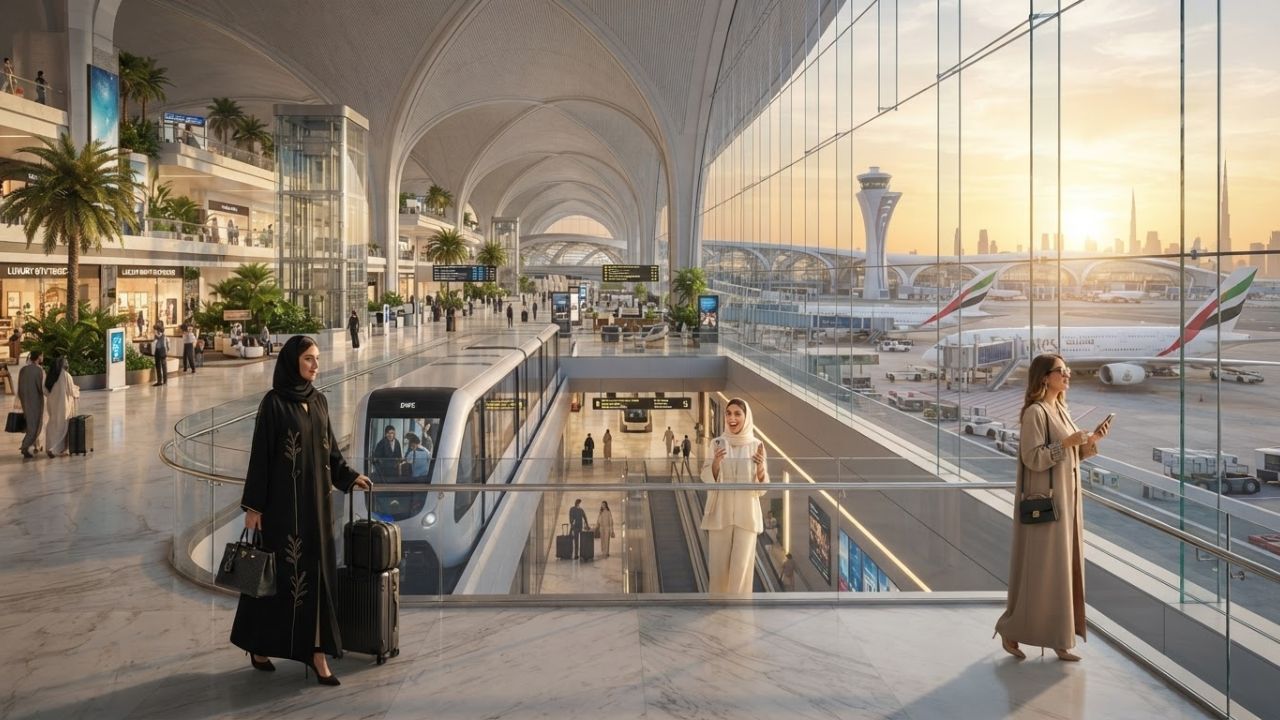
Image generated by AI
Published on July 19, 2026
A consortium of Indian and Japanese engineering giants has been selected to construct the new underground automated people mover system at Dubai's Al Maktoum International Airport, marking a significant milestone in the site’s massive development. The internal transit project, which represents a critical element of the multi-billion-dollar Al Maktoum International Airport expansion, will link future passengers across terminal buildings and aircraft concourses starting in 2032. Travelers and industry professionals are advised to monitor these infrastructure updates as the United Arab Emirates continues to establish itself as the premier global aviation hub.
Quick Summary
- Major Project Award: Engineering powerhouses Larsen & Toubro (India) and Mitsubishi (Japan) have been awarded the contract for the underground passenger transport system.
- Enormous Investment Scale: The project is part of a larger $35 billion expansion programme designed to establish a next-generation aviation ecosystem.
- Underground Transit Infrastructure: The automated people mover system will operate beneath the airport apron, connecting passenger terminals and concourses.
- Staged Development Plan: The first phase is scheduled to launch operations in 2032 with four underground stations, expanding eventually to 14 stations.
- Future Airport Capacity: The master plan aims to accommodate over 250 million passengers annually, strengthening the UAE's role as a major transit hub.
Context and Background: Inside the $35 Billion Al Maktoum International Airport Expansion
The expansion of the second major hub in the UAE represents a core pillar of Dubai's future economic and transport strategy. Under the oversight of Dubai Airports and regional aviation authorities, the project aims to address long-term capacity demands in the Middle East. By shifting the primary focus of long-haul travel to a larger, integrated facility, the development ensures that the UAE can sustain its high volume of international flight connections.
The installation of an automated people mover system serves as a key logistical solution to keep passenger transit times between terminals as low as possible. In modern airport design, integrating seamless passenger movement is critical to operational efficiency. For travelers, this means easier connections, reduced gate-to-gate transit times, and improved overall accessibility.
Event and Incident Details: Larsen & Toubro and Mitsubishi Selected for Transit System
The contract for the underground automated people mover system has been awarded to a joint consortium of the Indian infrastructure conglomerate Larsen & Toubro and Japan's Mitsubishi. The system will run beneath the airport apron and terminal areas to connect travelers seamlessly. The contract details highlight the scale of the ongoing Al Maktoum International Airport expansion and represent the first stage of the project’s multi-phase transit layout.
The technical specifications of the project highlight the following milestones:
- Consortium Partners: Larsen & Toubro (India) and Mitsubishi (Japan).
- System Type: Underground Automated People Mover (APM).
- First Phase Stations: 4 underground stations to be built during the initial phase.
- Completed Master Plan: 14 underground stations in total across the entire facility.
- Operations Start Date: Scheduled for 2032.
- Overall Expansion Value: Estimated at $35 billion.
Risk and Impact: Challenges Facing the Al Maktoum International Airport Expansion
Managing a mega-infrastructure project of this magnitude introduces several industrial, logistical, and operational risks:
- Huge Financial Scope: Developing such a massive transport system requires substantial financial commitments, with strategic contracts exceeding AED 55 billion expected to be awarded soon.
- Construction Coordination Challenges: Aligning substructure and superstructure works for the Western Passenger Terminal and the first three aircraft concourses requires precise timing to avoid delays.
- Logistical Complexity: Installing power-generation and district-cooling plants to support ongoing construction and future operations requires extensive coordination.
- Timeline Pressures: Delivering the project by the operational launch target of 2032 demands continuous work over a multi-year period.
- Extreme Construction Scale: Long-span structural frameworks extending across approximately 1.5 million square metres must be built, requiring substantial material resources.
What Authorities Are Saying: Dubai’s Vision for Next-Generation Transit
Aviation project updates indicate that contracts valued at AED 13 billion are already under execution, showing the significant momentum behind the development. Over the past 15 months, workers have completed more than 10 million work hours safely. Dubai authorities emphasize that the automated people mover system is a critical operational component, designed to ensure passenger circulation works smoothly within the massive future airport environment.
To support the progress, the next phases will introduce major packages including:
- Substructure works for the Western Passenger Terminal.
- Development of the fourth aircraft concourse building.
- Installation of the baggage-handling system.
- Superstructure development for the Western Passenger Terminal and the first three concourses.
Practical Traveler Advice: Planning for Future Flights and Transit Hubs
While the operational launch is scheduled for 2032, travelers planning long-term itineraries through the UAE should keep the following tips in mind:
- Track Airport Transition Timelines: Monitor which airlines plan to transition their operations to the expanded facility as the launch date approaches.
- Review Terminal Connectivity Guides: Keep updated on terminal maps and transit systems to understand connection times between flight arrivals and departures.
- Allow Extra Time for Transit: When booking connections at newly opened terminals, allow extra buffer time as ground operations settle.
- Monitor Future Flight Schedules: Watch for new regional and international routes launching from the expanded airport.
- Stay Alert to Infrastructure Updates: Check official aviation notices for updates on baggage handling systems and terminal relocations.
Broader Context: Scaling Infrastructure to Serve 250 Million Passengers
The development of Al Maktoum International Airport is designed to eventually accommodate more than 250 million passengers annually. This expansion will significantly strengthen Dubai’s long-term economic growth by dramatically enhancing the region’s aviation capacity. By investing in massive passenger mobility infrastructure, the UAE aims to secure its position as the primary logistics and travel gateway connecting East and West.
The scale of the project highlights the importance of coordinated engineering solutions in developing a next-generation aviation facility. The automated people mover system, along with other planned airport infrastructure, will contribute to the creation of a comprehensive passenger and operational network within the airport ecosystem.
What to Expect Next: Upcoming Contracts and Construction Milestones
In the coming months, project managers expect to award strategic contracts exceeding AED 55 billion for key packages, including façade and roofing works. Engineering teams will focus on developing the southern airfield area and building the power-generation and district-cooling plants.
As construction moves forward, the consortium of Larsen & Toubro and Mitsubishi will begin detailed engineering for the underground tracks and the initial four stations. The coordination of these engineering efforts remains central to maintaining the approved timeline for the first phase launch.
Conclusion: A Landmark in UAE Aviation Infrastructure
The underground automated people mover system represents a major step forward in the development of Dubai’s aviation infrastructure. By combining advanced engineering with robust project timelines, the project will ensure that the future hub can safely and efficiently handle millions of travelers. Emphasizing preparedness and tracking these milestones remains essential for travelers looking to navigate the next era of global aviation.
FAQ: Al Maktoum International Airport Expansion and Transit System
What is the new automated people mover system at Al Maktoum International Airport?
It is an underground passenger transport network designed to connect terminal buildings and aircraft concourses, moving passengers efficiently across the expanded airport facility.
Who is building the underground transport system?
The project has been awarded to a joint consortium consisting of the Indian engineering conglomerate Larsen & Toubro and Japan's Mitsubishi.
When will the first phase of the airport transit system begin operations?
The first phase of the system, including four underground stations, is scheduled to launch operations in 2032.
What is the total passenger capacity planned for the expanded airport?
The Al Maktoum International Airport master plan is designed to eventually handle more than 250 million passengers annually.
Related Travel Guides
Dubai Flight Suspensions Airline Cancellations 2026
10 Smart Tips for Navigating Dubai Airport Transfers, According to Reddit
Suggested SEO Metadata & Assets
- Meta Title: Al Maktoum Airport expansion: Dubai Transit Contract
- Meta Description: Dubai awards Al Maktoum International Airport expansion transit contract to L&T and Mitsubishi for an underground automated people mover.
- URL Slug: dubai-al-maktoum-airport-expansion-people-mover-2026
- Tags:
Al Maktoum International Airport,automated people mover system,Dubai airport expansion,Larsen & Toubro,Mitsubishi - Featured Image Alt Text: A sleek, modern automated people mover train traveling through a brightly lit underground tunnel system beneath a futuristic airport terminal.
Disclaimer
This article is for informational and educational purposes only. It does not constitute legal, financial, or professional advice. While we strive to provide accurate and up-to-date information, travel policies, regulations, and conditions change rapidly. Always verify information with official sources before making travel decisions. Nomad Lawyer makes no representations about the accuracy, reliability, completeness, or suitability of the information provided. Readers should consult qualified professionals for advice specific to their circumstances. The views expressed in this article are those of the author and do not necessarily reflect the views of Nomad Lawyer.
Kunal K Choudhary
Co-Founder & Contributor
A passionate traveller and tech enthusiast. Kunal contributes to the vision and growth of Nomad Lawyer, bringing fresh perspectives and driving the community forward.
Learn more about our team →