
Thailand, Singapore, and Maldives Pivot to High-Yield Luxury Tourism and Mega-Airport Expansions to Secure National GDP Goals: What Every Traveller Must Know
Thailand, Singapore, and the Maldives deploy mega-airport expansions and luxury resort strategies to drive GDP growth and maximize spend-per-tourist.

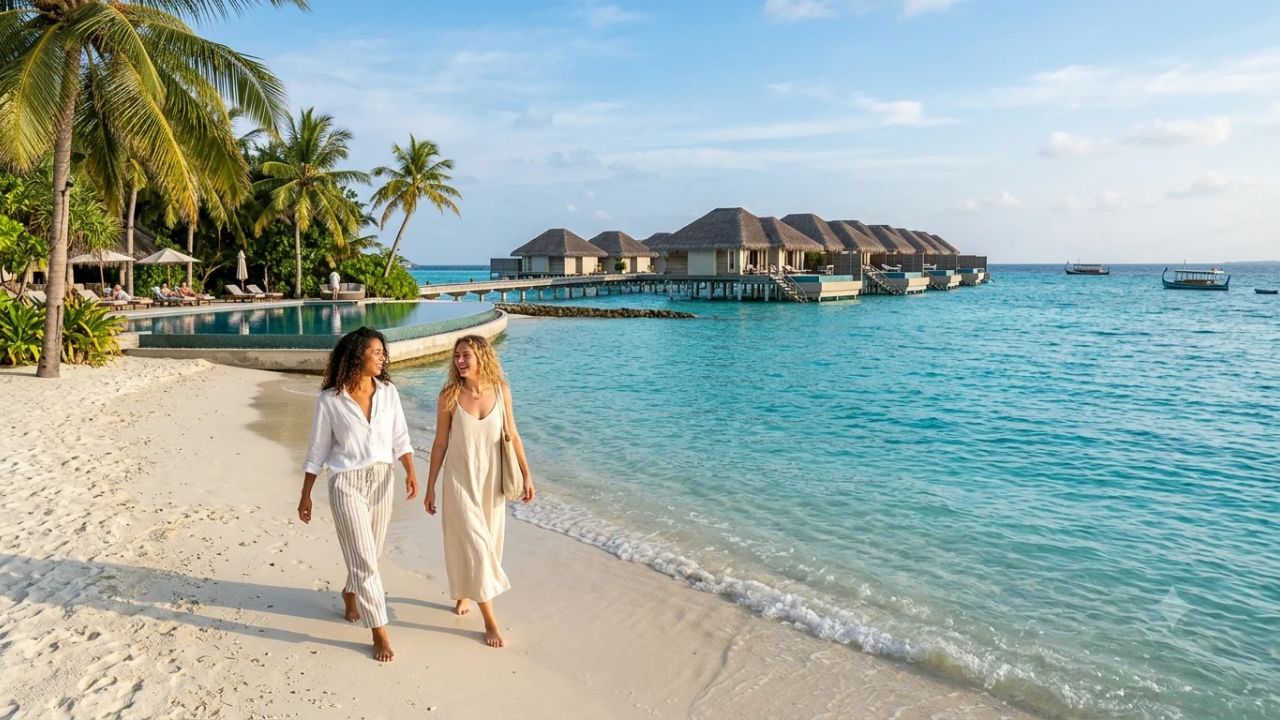
Image generated by AI
A decisive economic restructuring is sweeping across South and Southeast Asia, as Thailand, Singapore, and the Maldives pivot toward high-yield luxury tourism in Asia to safeguard national balance sheets and achieve ambitious GDP expansion targets. Backed by multi-billion-dollar civil aviation megaprojects—including the rollout of 122 Automated Border Control gates at Bangkok's Suvarnabhumi Airport, the Terminal 5 development at Singapore Changi, and the inauguration of a Code-F runway at Malé's Velana International Airport—these destination economies are deliberately moving away from low-margin mass arrivals. International travelers navigating these corridors must adapt to biometric automated border processing, updated visa-exemption rules, and an evolving hospitality market where premium wellness retreats and elevated daily expenditures redefine regional travel.
[!NOTE] Quick Summary: Key Developments at a Glance
- National GDP Targets: Thailand targets 3.0% GDP growth anchored by international tourism, while the Maldives Monetary Authority reports that travel drives 60% of total economic output and over $5.4 billion in essential foreign currency receipts.
- Aviation Gateways Scaled: Bangkok Suvarnabhumi handled 59.6 million passengers over an 11-month fiscal cycle utilizing 122 Automated Border Control gates, while Malé’s Velana International Airport expanded capacity beyond 7 million passengers.
- Spend-Per-Tourist Prioritization: Average inbound visitor spend in Thailand reached $1,368 per traveler (totaling $47 billion), while daily tourist expenditures in the Maldives surged between $450 and $850 per guest.
- Strategic Capital Injections: Singapore injected SGD 300 million into its Tourism Development Fund alongside multi-billion-dollar integrated resort investments, while Thailand allocates $4.6 billion annually in tourism infrastructure capex (accounting for 4% of national capital formation).
- Visa Liberalization: Thailand enacted mutual permanent visa exemptions with China and unilateral 60-day visa-free stays for over 90 jurisdictions, while Singapore expanded automated clearance to over 30 tier-one economic partner nations.
State planners across Bangkok, Singapore, and Malé are explicitly leveraging tourism as an invisible export engine to insulate their economies against global manufacturing slowdowns and trade volatility. By channeling capital into advanced runway systems, terminal expansions, and specialized workforce training, these sovereign administrations are elevating average daily rates (ADR) and revenue per available room (RevPAR) while decentralizing tourist arrivals into regional island atolls and secondary mainland cities.
Civil Aviation Expansion: Breaking Tarmac Bottlenecks Across Asian Gateways
Accommodating affluent international long-haul travelers requires resolving historical tarmac constraints and processing bottlenecks at key gateway terminals. Over the past fiscal cycle, civil aviation authorities have accelerated capital works across primary hubs to unlock direct flight banks from Europe, North America, and the Middle East.
In Thailand, Airports of Thailand (AOT) and the Ministry of Transport deployed 122 Automated Border Control (ABC) gates at Suvarnabhumi Airport, enabling the terminal to process 59.6 million passengers across an 11-month tracking period with significantly shortened immigration wait times. Concurrently, comprehensive capacity expansions are underway at Phuket International Airport and Chiang Mai International Airport, spreading arrivals across northern and southern travel corridors.
In Singapore, the Ministry of Trade and Industry is steering long-term expansion through the landmark Terminal 5 megaproject and an operational three-runway system at Changi Airport. These infrastructural upgrades support the global expansion of the premier national carrier, Singapore Airlines, and bolster the city-state's appeal as an elite corporate and leisure hub that attracts 16.9 million international visitor arrivals annually.
In the Maldives, the commissioning of a new passenger terminal and an advanced Code-F runway at Velana International Airport (VIA) in Malé expanded the facility’s passenger handling threshold beyond 7 million passengers annually. To prevent over-concentration in Malé, the government is upgrading regional airstrips at Gan International Airport in Addu Atoll and Hanimaadhoo in Haa Dhaalu Atoll, allowing long-haul charter flights to land directly in outer archipelagos.
| Sovereign Destination | Primary Aviation Hub | Key Infrastructure Investment | Passenger Capacity / Throughput | Inbound Spend & Economic Impact |
|---|---|---|---|---|
| Thailand | Bangkok Suvarnabhumi (BKK) | 122 Automated Border Control gates, Phuket & Chiang Mai upgrades | 59.6M passengers in 11 months | $1,368 avg spend/visitor; $47B total foreign receipts |
| Singapore | Singapore Changi (SIN) | Terminal 5 construction, 3-runway operational framework | Scaled for high-yield long-haul connectivity | 16.9M international arrivals; SGD 300M state fund |
| Maldives | Malé Velana International (VIA) | Code-F runway, new passenger terminal, Gan & Hanimaadhoo hubs | >7M annual passenger capacity | $450–$850 daily spend/guest; $5.4B annual receipts |
These civil aviation investments directly enhance route profitability for global airlines, facilitating new direct frequencies while alleviating peak-hour gate congestion.
Yield-Per-Visitor Economics: How Spending Power Outweighs Mass Tourism Volumes
A fundamental policy shift across South and Southeast Asia is the deliberate departure from volume-based tourism metrics in favor of high-yield value creation. Recognizing that unmanaged mass arrivals strain municipal utilities, degrade marine ecosystems, and generate modest net tax yields, destination authorities are restructuring their tourism offerings around high-spending demographics:
- Thailand's Eco-Luxury Transformation: Moving away from low-cost group packages, Thailand has prioritized eco-luxury resorts and holistic wellness sanctuaries across Phuket, Koh Samui, and Krabi. Average inbound visitor spending has climbed to roughly $1,368 per visitor, generating over $47 billion in direct foreign-currency receipts.
- High-Yield Maldivian Atoll Stays: In the Maldives, where international leisure accounts for roughly 60% of national GDP, exclusive resort developments across Kaafu Atoll and outer atolls have elevated daily guest spending to between $450 and $850. This yield-focused model generates more than $5.4 billion in annual receipts while preserving delicate coral reef environments.
- Singapore's MICE and Entertainment Dominance: By pairing Changi's aviation efficiency with multi-billion-dollar expansions at Marina Bay Sands and Resorts World Sentosa, Singapore captures high-margin corporate delegates, luxury leisure travelers, and international event attendees who spend significantly above conventional holidaymakers.
- Environmental Asset Protection: Capping visitor density through premium pricing structures protects vulnerable coastlines and marine biodiversity, ensuring that fragile ecosystems remain pristine assets for long-term economic returns.
By optimizing yield per guest, destinations achieve national GDP targets while mitigating the acute infrastructure stresses associated with mass overtourism.
Sovereign Policy and Economic Stabilization Measures
Central banking institutions and economic ministries are actively integrating tourism receipts into macroeconomic stabilization programs. The Thai Government, guided by the Ministry of Finance and the Bank of Thailand, structured its national economic projections around achieving a 3.0% GDP growth target, explicitly relying on inbound traveler expenditures to stimulate domestic household consumption and the broader service sector.
In Singapore, the government injected SGD 300 million directly into the national Tourism Development Fund, accelerating next-generation tourism attractions, business event facilities, and digital infrastructure. These targeted subsidies ensure that Singapore maintains its position as the premier business and transit gateway in the Asia-Pacific region.
For the Maldives, foreign exchange receipts exceeding $5.4 billion serve as the cornerstone of fiscal stability. The Maldives Monetary Authority depends on these direct foreign-currency inflows to maintain international monetary reserves, stabilize the domestic exchange rate, and service sovereign external debt obligations during periods of global financial volatility.
Practical Travel Advice for High-Yield Luxury Tourism in Asia and Automated Gateways
Travelers heading to Thailand, Singapore, or the Maldives can optimize their journeys by taking advantage of recent policy and operational modernizations:
- Utilize Automated Border Clearance Gates: Eligible travelers arriving at Bangkok Suvarnabhumi Airport should proceed directly to the 122 Automated Border Control gates for facial biometric processing, bypassing legacy manual immigration queues.
- Review Relaxed Visa Exemption Timelines: Citizens of over 90 jurisdictions traveling to Thailand can take advantage of unilateral 60-day visa-free entry, while Chinese and Thai nationals benefit from permanent bilateral visa exemptions. Ensure passports possess at least six months of remaining validity.
- Check Singapore Biometric Entry Eligibility: Travelers from more than 30 partner nations can clear automated border gates at Changi Airport without prior paper landing cards, provided they submit the electronic SG Arrival Card within three days prior to arrival.
- Consider Direct Outer-Atoll Transfers in the Maldives: When booking Maldivian itineraries, explore domestic flight connections via Gan International Airport in Addu Atoll or Hanimaadhoo in Haa Dhaalu Atoll to bypass transfer bottlenecks in Malé and reach remote dive sites directly.
- Anticipate Premium Booking Windows: As high-end wellness resorts in Phuket, Koh Samui, and exclusive Maldivian lagoon properties cap total guest capacity to sustain high service standards, book accommodations and private seaplane transfers at least three to four months in advance of the high season.
Labor Market Multipliers and Regional Economic Diversification
The travel and hospitality ecosystem functions as an indispensable employment multiplier across all three destination economies. In Thailand, the travel sector sustains 8 million jobs, representing more than 20% of total national employment. To broaden economic participation, the Thai Ministry of Transport and regional tourism boards have deployed low-cost carrier networks to redirect traveler flows from Bangkok into secondary provinces, including Chiang Mai, Isan, and emerging coastal enclaves.
In the Maldives, the hospitality industry underpins 65,795 registered resort beds distributed across 175 operational island properties. The government has partnered with vocational training centers to elevate local workforce capabilities, ensuring that island communities secure managerial and executive positions within luxury resort networks.
In Singapore, specialized vocational training and high-end hospitality certification frameworks ensure that human capital keeps pace with multi-billion-dollar investments at world-class integrated resorts, setting global service benchmarks that reinforce brand loyalty among corporate and luxury leisure travelers.
Looking Ahead: Long-Term Infrastructure Pipelines and Market Outlook
The forward-looking pipeline across South and Southeast Asia emphasizes continued capital mobilization. Thailand allocates approximately $4.6 billion annually in tourism-related capital expenditure—representing nearly 4% of total national capital formation—to continuously upgrade interprovincial rail networks, regional airports, and marine cruise ports.
In Singapore, the phased construction of Changi Terminal 5 will dramatically expand long-haul connectivity through the 2030s, cementing the city-state's role as the definitive aviation anchor for the Asia-Pacific basin. Meanwhile, the Maldives is finalizing second-phase terminal upgrades across regional archipelagos, ensuring that tourism-generated wealth flows directly into outer-atoll communities.
By combining massive aviation infrastructure expansions with disciplined high-yield tourism policies, Thailand, Singapore, and the Maldives are demonstrating how sustainable travel exports can build economic resilience and secure multi-year GDP growth.
Frequently Asked Questions: Southeast and South Asia Luxury Tourism Growth
What national GDP growth targets are supported by tourism in Thailand and the Maldives?
Thailand is targeting a 3.0% GDP growth rate, heavily supported by inbound international travel receipts. In the Maldives, international tourism directly and indirectly accounts for approximately 60% of total national gross domestic product.
How have airport upgrades improved traveler processing at Bangkok Suvarnabhumi Airport?
Airports of Thailand deployed 122 Automated Border Control (ABC) gates, allowing Suvarnabhumi Airport to process 59.6 million passengers over an 11-month fiscal cycle while significantly reducing border clearance times for international flyers.
What are the primary capacity upgrades completed at Velana International Airport in Malé?
Velana International Airport inaugurated a new passenger terminal and an advanced Code-F runway, expanding passenger handling capacity beyond 7 million travelers annually and accommodating the world’s largest commercial wide-body aircraft.
What is the average spending per tourist in Thailand and the Maldives?
Inbound visitors to Thailand spend an average of roughly $1,368 per trip, generating over $47 billion in total foreign receipts. In the Maldives, average daily spending per guest ranges between $450 and $850, yielding annual tourism revenues of more than $5.4 billion.
What visa reforms have Thailand and Singapore introduced to ease international travel?
Thailand established mutual permanent visa exemptions with China and unilateral 60-day visa-free stays for over 90 jurisdictions. Singapore deployed automated immigration clearance for travelers originating from more than 30 tier-one economic partner nations.
Related Travel Guides
Disclaimer
This article is for informational and educational purposes only. It does not constitute legal, financial, or professional advice. While we strive to provide accurate and up-to-date information, travel policies, regulations, and conditions change rapidly. Always verify information with official sources before making travel decisions. Nomad Lawyer makes no representations about the accuracy, reliability, completeness, or suitability of the information provided. Readers should consult qualified professionals for advice specific to their circumstances. The views expressed in this article are those of the author and do not necessarily reflect the views of Nomad Lawyer.
Raushan Kumar
Founder & Lead Developer
Full-stack developer with 11+ years of experience and a passionate traveller. Raushan built Nomad Lawyer from the ground up with a vision to create the best travel and law experience on the web.
Learn more about our team →