Destin-Fort Walton Beach Artificial Reefs 2026: Florida's 3-Million-Pound Gulf Diving Guide

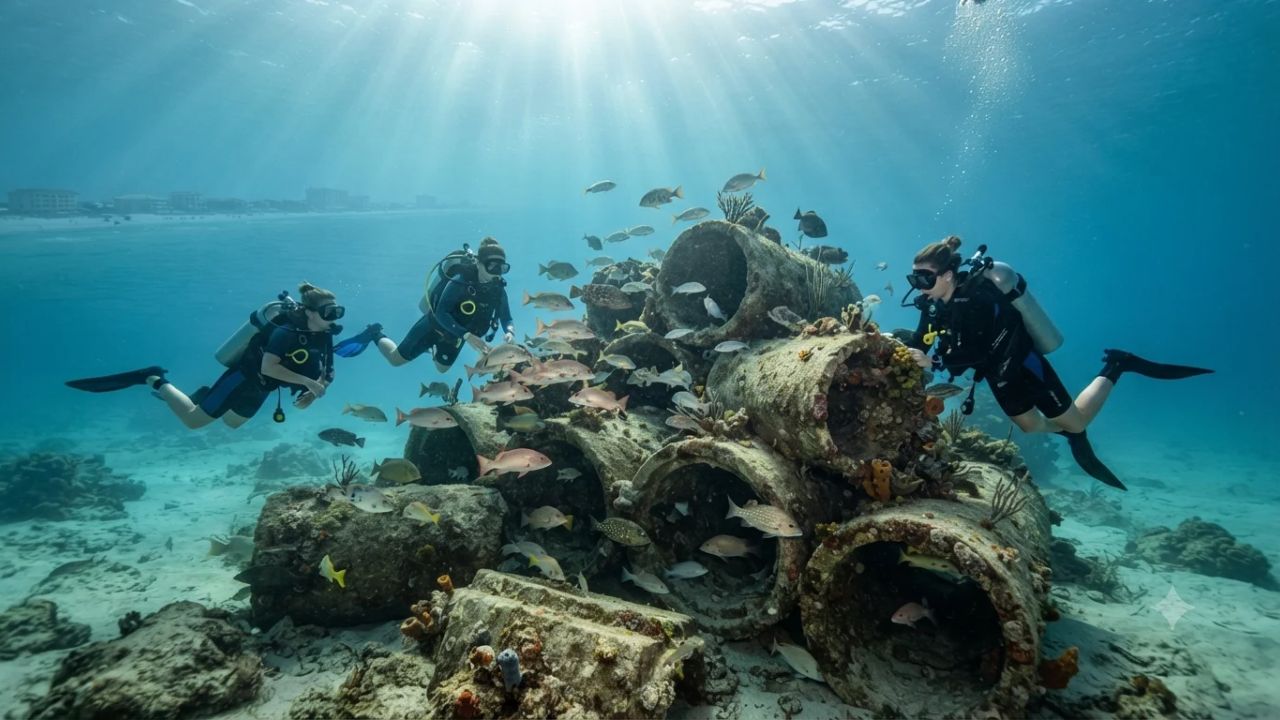
Beneath the emerald waters of Florida’s Panhandle, three million pounds of heavy recycled concrete pipes are sinking to the sandy seafloor to build one of the Gulf of Mexico's largest connected artificial reef networks. Deployed between September and November 2026 offshore from Destin's East Pass, this massive habitat restoration project drops 500 tonnes of engineered concrete at each designated site, creating thriving marine sanctuaries at depths between 68 and 74 feet.
While the Gulf Coast is renowned for sugar-white quartz sand dunes and coastal seafood shacks, the natural seafloor offshore consists predominantly of flat, featureless sand plains with limited hard surfaces for coral and marine life attachment. By converting industrial concrete materials into permanent underwater sanctuaries four to eight nautical miles offshore, Destin-Fort Walton Beach is pioneering an eco-tourism blueprint that expands diving, charter fishing, and marine conservation across the Florida coastline.
The 3-Million-Pound Drop: Expanding Florida's Coastal Corridor
The offshore deployment taking place near East Pass forms a cornerstone of Florida's statewide Coastal Corridor program. Managed in coordination with the Florida Fish and Wildlife Conservation Commission, the initiative connects disparate marine habitat zones across both the Gulf and Atlantic coasts, linking new reef clusters in the Panhandle with established offshore arrays near Naples.
Each reef module is constructed from heavy-duty, hollow concrete culverts arranged in towering pyramids and labyrinthine formations rising off the seabed. Within weeks of submersion, ocean currents deposit microscopic nutrients across the concrete surfaces, enabling marine algae, barnacles, tube worms, sponges, and soft corals to colonize the structures.
As benthic organisms establish a living skin over the concrete, the sites attract schools of baitfish, blue crabs, and juvenile reef dwellers, quickly drawing apex species such as red snapper, gag grouper, amberjack, and cobia. The staggered deployment schedule running from September to November 2026 ensures that multiple distinct coordinates become active dive and angling locations ahead of the 2027 spring season. Regional coastal travel resources can be explored through Visit Florida.
What Makes Destin-Fort Walton Beach Reefs Different
Natural hard-bottom coral reefs in the northern Gulf of Mexico are situated dozens of miles offshore in deep, inaccessible waters. The Destin-Fort Walton Beach artificial reef system bridges this geographic gap by placing vibrant marine biomes within a short 20-to-30-minute boat ride from the harbor docks.
Positioned between 68 and 74 feet below the surface, these reefs sit at the ideal depth for intermediate open-water scuba divers. Divers encounter excellent horizontal visibility, minimal surface current during slack tides, and multi-level swim-throughs formed by the interconnected concrete pipes. The hollow interior chambers provide sheltered nursery habitats for juvenile reef fish while giving underwater photographers dramatic structural framing.
For recreational anglers, the proximity of these reefs reduces fuel consumption and travel times compared to traditional deep-sea runs. Anglers operating out of Destin—often called the "World's Luckiest Fishing Village"—can target trophy-class grouper and king mackerel on half-day charters, relieving fishing pressure on vulnerable nearshore natural ledges. Scientific conservation standards and federal reef monitoring guidelines are overseen by NOAA Fisheries.
Visitor Insider Tips
To make the most of diving and fishing excursions across Destin-Fort Walton Beach's newest reef sites, keep these local recommendations in mind:
- Optimal Diving Windows: Plan dive trips during early morning slack tides between May and October, when surface water temperatures reach 80°F to 84°F (27°C to 29°C) and underwater visibility exceeds 50 feet.
- Select Certified Eco-Charter Operators: Book your dive or fishing charters with local operators who use GPS-anchored trolling motors rather than traditional drop anchors. This prevents anchor chain damage to the newly colonized concrete pipe formations.
- Combine Reef Dives with Nearshore Snorkeling: If traveling with non-divers, explore the shallow nearshore snorkel reefs located just 200 feet off the beach at Henderson Beach State Park or Okaloosa Island, where sea turtles and stingrays frequent depths under 15 feet.
- Obtain Florida Saltwater Fishing Licenses: If chartering a private vessel for bottom fishing, ensure all adult anglers possess valid Florida recreational saltwater fishing permits and comply with strict seasonal bag limits for Gulf red snapper and grouper.
- Base in Historic Fort Walton Beach: Stay in the downtown Fort Walton Beach heritage district near the sound for convenient marina access, waterfront seafood dining, and a quieter alternative to high-density resort strips.
Cultural and Environmental Context
The transformation of recycled industrial concrete into thriving marine ecosystems represents a major step forward in circular economy practices along the Gulf Coast. Instead of occupying landfill space, decommissioned infrastructure is given a multi-decade ecological purpose that actively rebuilds marine biodiversity.
The Coastal Corridor program is also designed to build environmental resilience against Gulf storms and climate shifts. Dense artificial reef structures help dissipate intense wave energy during tropical weather systems, buffering delicate barrier islands from shoreline erosion. In tandem with offshore reefing, local authorities are expanding coastal mangrove restoration and seagrass planting across Choctawhatchee Bay to protect juvenile fish nurseries.
Economically, the project generates sustainable livelihoods across the Panhandle. Charter captains, dive shop instructors, marine biologists, and waterfront hospitality staff benefit directly from an extended, year-round ecotourism season that balances conservation stewardship with thriving ocean recreation.
FAQ: Diving and Fishing Destin-Fort Walton Beach 2026
Where are the new artificial reefs located?
The reefs are situated offshore from East Pass near Destin-Fort Walton Beach, between 4 and 8 nautical miles from the coast at depths of 68 to 74 feet.
How much concrete is being deployed in the project?
Approximately 3 million pounds of recycled concrete pipes are being placed, with roughly 500 tonnes of material allocated to each individual reef cluster.
What fish species can divers and anglers expect to see?
The reefs attract large populations of red snapper, gag grouper, amberjack, triggerfish, baitfish schools, and migrating pelagic species like cobia.
What is the best time of year for scuba diving in Destin?
Late spring through autumn (May to October) offers the warmest Gulf waters, optimal underwater visibility, and calm seas.
Beneath the sparkling emerald surf, thousands of tons of sunken stone are quietly blooming into a vibrant underwater empire that will nurture Gulf life for generations to come.
Related Travel Guides
This article is for informational purposes. Flight routes, passenger regulations, visa rules, and transit advisories are subject to change by airlines and aviation authorities. Readers are advised to verify schedules and travel documentation with relevant carriers and border agencies before departure.
Related Stories
Breeze Airways Expands 2026–2027 Routes: Myrtle Beach and Caribbean Travel Guide
Cape Town Table View Beachfront Upgrades 2026: Infrastructure Shifts and Visitor Rights