
Delta Air Lines Flight DL1571 Diverted to Birmingham International Airport from St. Louis to Atlanta in 2026
Delta Air Lines flight DL1571 from St. Louis to Atlanta was diverted to Birmingham-Shuttlesworth International Airport on August 4, 2026, due to weather and congestion.

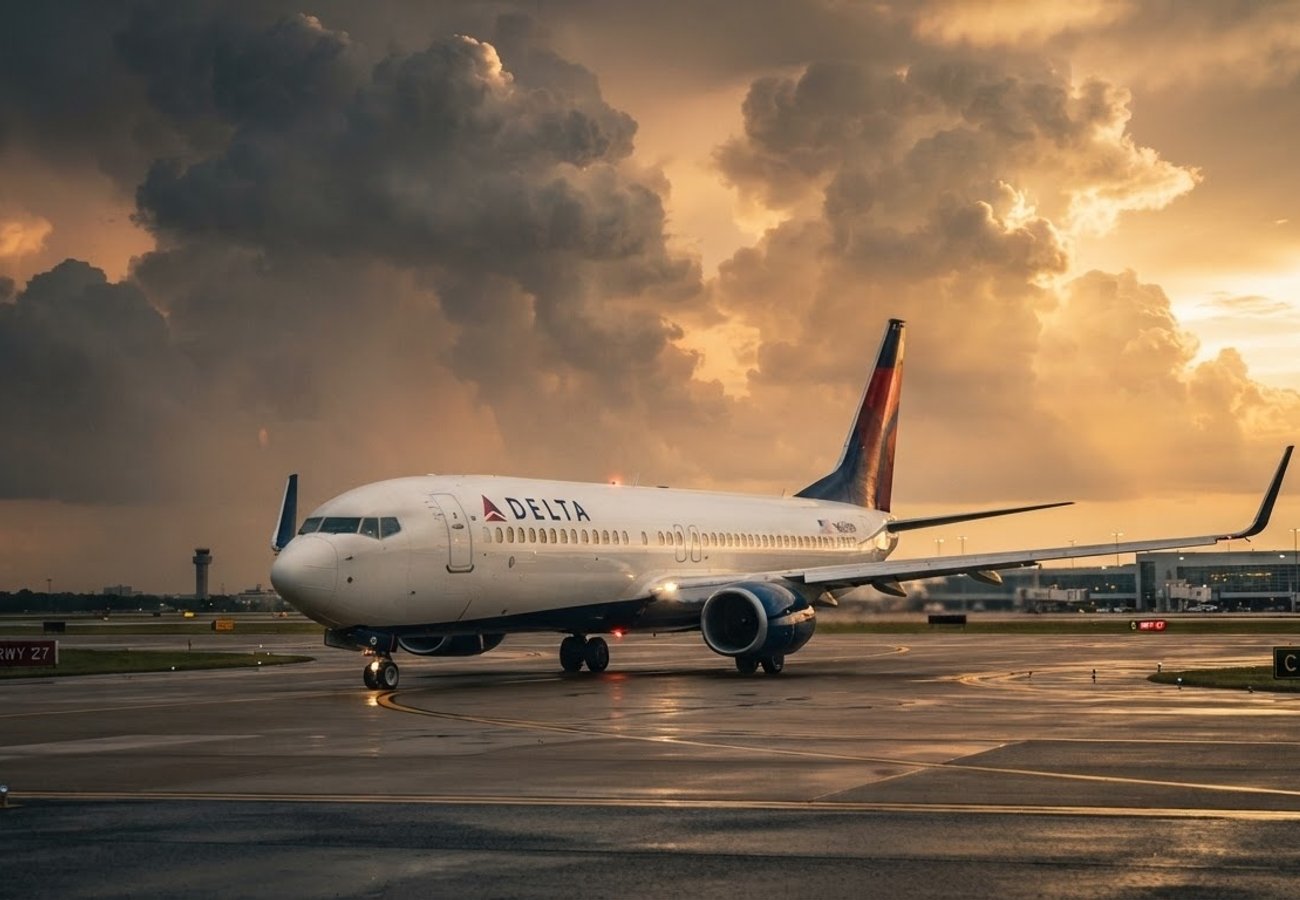
Image generated by AI
A routine domestic hop from Missouri to Georgia turned into an unexpected detour when Delta Air Lines flight DL1571 was forced to land in Alabama to maintain critical fuel reserves.
On August 4, 2026, Delta Air Lines flight DL1571, traveling from St. Louis Lambert International Airport (STL) to Hartsfield-Jackson Atlanta International Airport (ATL), executed an unscheduled diversion to Birmingham-Shuttlesworth International Airport (BHM). The aircraft, a Boeing 737-900ER with registration N885DN, landed safely in Birmingham after the flight crew determined that continuing to the primary destination posed unacceptable operational risks.
The decision to divert was driven by a combination of severe atmospheric instability and localized air traffic congestion surrounding the Atlanta hub. These factors led to extended airborne holding patterns, which threatened the aircraft's minimum reserve fuel requirements.
Operational Drivers Behind the Diversion
Flight diversions are rarely the result of a single factor but rather a calculated response to evolving risks. In the case of DL1571, the flight crew had to balance three primary variables:
- Weather Constraints: Localized instability near Georgia created volatile conditions for arrival.
- Airspace Saturation: Ground delay programs at Hartsfield-Jackson (ATL) increased the time aircraft spent in holding patterns.
- Fuel Management: The combination of delays and holding patterns pushed fuel levels toward critical thresholds, necessitating an immediate landing at a viable alternate.
Birmingham-Shuttlesworth International Airport (BHM) was selected as the diversion point because it offered a clear runway capable of handling the Boeing 737-900ER, minimal traffic interference, and rapid refueling capabilities.
Flight Detail Summary
| Detail | Information |
|---|---|
| Flight Number | DL1571 |
| Date | August 4, 2026 |
| Departure Airport | St. Louis Lambert International Airport (STL) |
| Intended Destination | Hartsfield-Jackson Atlanta International Airport (ATL) |
| Diversion Airport | Birmingham-Shuttlesworth International Airport (BHM) |
| Aircraft Model | Boeing 737-900ER |
| Aircraft Registration | N885DN |
Passenger Impact and Logistics
When a flight is diverted, the priority shifts from transit to passenger welfare and logistics. For the passengers of DL1571, the transition to Birmingham involved immediate coordination between Delta's ground staff and flight operations.
Depending on the severity of the weather at the final destination, passengers typically either remain on the aircraft during a brief refueling stop or are processed through the terminal gates. Under standard aviation consumer protection frameworks, carriers are responsible for providing refreshments and updated itineraries when delays exceed specific operational limits.
Delta's operations team utilized mobile travel applications to provide real-time updates and rebook connecting journeys, aiming to prevent the diversion from triggering a wider collapse of the passengers' travel schedules.
Fleet Management and Network Recovery
A diversion creates a "ripple effect" in an airline's network. Because the Boeing 737-900ER (N885DN) was not where it was scheduled to be, Delta's centralized operations had to adjust crew schedules and maintenance logs.
To restore network balance, airlines often employ "equipment swaps," where a standby aircraft is used to cover the original flight's subsequent legs, or reposition crews to ensure that downstream departures are not cancelled. Once the aircraft cleared safety inspections in Birmingham and secured a new air traffic slot, it was able to resume its service corridor.
Safety protocols in aviation dictate that fuel reserves are non-negotiable; the diversion of DL1571 underscores the industry's commitment to safety over schedule adherence.
Key Takeaways
- Safety First: The diversion was a proactive measure to avoid low-fuel scenarios caused by Atlanta's airspace congestion.
- Strategic Selection: Birmingham (BHM) served as a high-efficiency alternate due to its runway capacity and refueling speed.
- Regulatory Compliance: The move followed strict aviation safety parameters regarding minimum fuel reserves and holding patterns.
- Network Resilience: Delta utilized fleet management protocols to ensure the diversion did not cause cascading cancellations across its broader network.
FAQ
Why do planes divert if the destination airport is still open? Airports may be "open," but ground delay programs or weather can force planes into holding patterns. If the time spent circling exceeds the safe fuel reserve, the pilot must divert to the nearest suitable airport.
What rights do passengers have during a diversion? Passengers are generally entitled to communication, refreshments, and rebooking assistance. If the delay is significant, airlines may provide ground accommodations depending on the cause of the diversion.
How is an alternate airport chosen? Pilots and dispatchers pre-plan alternates based on runway length, emergency services, and current weather. Real-time telemetry allows them to switch to these alternates if the primary route becomes unsafe.
Related Travel Guides
Disclaimer
This article is for informational and educational purposes only. It does not constitute legal, financial, or professional advice. While we strive to provide accurate and up-to-date information, travel policies, regulations, and conditions change rapidly. Always verify information with official sources before making travel decisions. Nomad Lawyer makes no representations about the accuracy, reliability, completeness, or suitability of the information provided. Readers should consult qualified professionals for advice specific to their circumstances. The views expressed in this article are those of the author and do not necessarily reflect the views of Nomad Lawyer.
Preeti Gunjan
Contributor & Community Manager
A passionate traveller and community builder. Preeti helps grow the Nomad Lawyer community, fostering engagement and bringing the reader experience to life.
Learn more about our team →