
Delta Air Lines Flight DL1349 Airbus A321 Diverts to Columbia South Carolina in August 2026
Delta flight DL1349 from Fort Myers to Atlanta diverted to Columbia Metropolitan Airport on August 6, 2026, highlighting the volatility of hub-and-spoke travel.

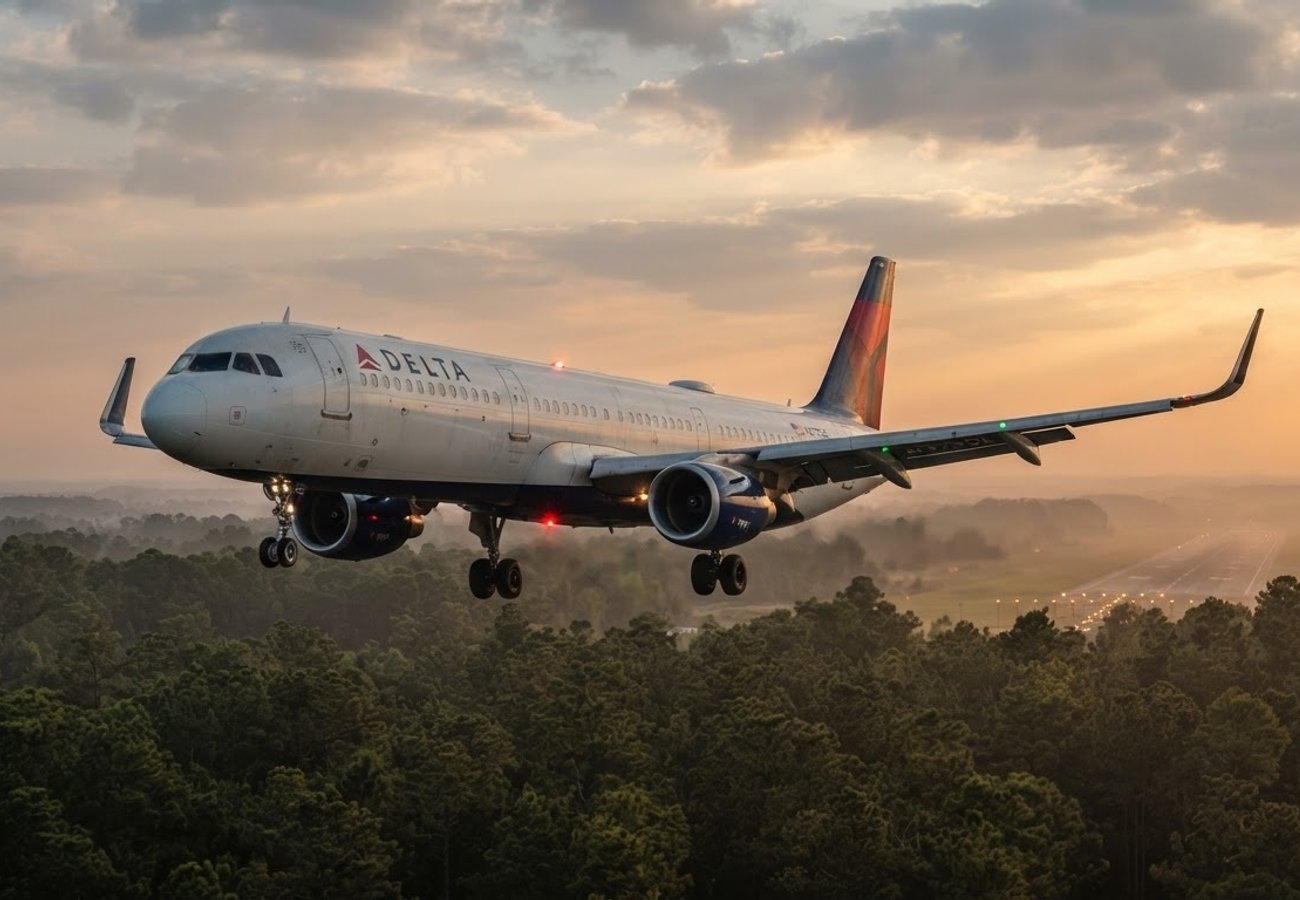
Image generated by AI
A routine domestic journey turned into a significant disruption on August 6, 2026, when Delta Air Lines flight DL1349 diverted to Columbia, South Carolina. The incident underscores the fragility of tight connection windows at major aviation hubs like Atlanta.
The flight, operating from Fort Myers, Florida, to Atlanta, Georgia, was carried out by an Airbus A321-211, registered as N128DN. While the flight was originally scheduled to depart at 18:29, tracking data indicates an updated departure time of 19:35. The aircraft was slated to arrive in Atlanta at 20:24, but instead redirected to Columbia Metropolitan Airport (CAE).
The Operational Shift: From Georgia to South Carolina
For the passengers on DL1349, the diversion to Columbia (CAE) transformed a short hop into an unplanned stop. In the complex architecture of US domestic aviation, Atlanta serves as the primary nerve center for Delta Air Lines. When a flight fails to reach Hartsfield-Jackson Atlanta International Airport, the ripple effect extends far beyond the immediate passengers.
Many travelers on this route utilize Atlanta as a gateway for onward connections to other domestic cities or international destinations. A diversion of this nature often results in missed connections, requiring the airline to re-route passengers or provide overnight accommodations, depending on the duration of the delay.
Analyzing the Diversion Logic
While the specific trigger for the diversion—whether medical, technical, or weather-related—has not been officially confirmed by Delta Air Lines or regional aviation authorities, the choice of Columbia Metropolitan Airport (CAE) is a strategic operational decision.
Flight crews select diversion airports based on a strict set of variables:
- Current fuel reserves and endurance.
- Real-time runway availability and airport facilities.
- Immediate weather patterns and visibility.
- The aircraft's exact coordinates at the moment the decision to divert was made.
It is important to note that a diversion does not inherently signal a mechanical failure or an emergency; it is often a precautionary measure to ensure the highest safety margins.
Cultural and Environmental Value: The Impact of Hub Dependency
For the modern traveler, the real impact of this incident is the realization of "hub dependency." When a primary node like Atlanta experiences a disruption, it reveals the vulnerability of the hub-and-spoke model. From a regional perspective, diversions bring unexpected traffic to smaller airports like CAE, which must then manage the sudden influx of passengers and aircraft.
Supporting local economies during these unplanned stops often involves the use of local ground transportation and hospitality services, though for the stranded passenger, the priority remains the restoration of their original itinerary.
Visitor Insider Tips: Navigating Unexpected Diversions
When a flight diverts to an unfamiliar city like Columbia, South Carolina, travelers can make the most of the disruption by following these local guidelines:
- Local Transit: Use verified ride-share apps or official airport taxis to reach downtown Columbia. Avoid unlicensed solicitors within the terminal.
- Dining Specialty: If stranded near the city center, seek out classic Lowcountry cuisine—specifically shrimp and grits—which is a regional staple of the South Carolina coast and interior.
- Cultural Etiquette: South Carolina is known for "Southern Hospitality." A polite, patient approach with ground staff and local vendors typically yields better assistance during stressful travel delays.
- Off-Peak Movement: If you have a several-hour layover, avoid moving toward the city center during the 4:00 PM to 6:00 PM rush hour to avoid heavy congestion on I-26.
Tourism and Aviation Outlook
The diversion of DL1349 serves as a case study in the necessity of resilient travel planning. As air traffic density increases in 2026, the reliance on alternative airports like Columbia will likely grow. For the aviation industry, the focus remains on improving real-time communication between the cockpit, the hub, and the passenger to minimize the psychological and financial stress of these redirects.
The journey from Fort Myers to Atlanta may have been interrupted, but the efficiency of the diversion to Columbia highlights the safety-first protocols of modern aviation.
Related Travel Guides
Disclaimer
This article is for informational and educational purposes only. It does not constitute legal, financial, or professional advice. While we strive to provide accurate and up-to-date information, travel policies, regulations, and conditions change rapidly. Always verify information with official sources before making travel decisions. Nomad Lawyer makes no representations about the accuracy, reliability, completeness, or suitability of the information provided. Readers should consult qualified professionals for advice specific to their circumstances. The views expressed in this article are those of the author and do not necessarily reflect the views of Nomad Lawyer.
Kunal K Choudhary
Co-Founder & Contributor
A passionate traveller and tech enthusiast. Kunal contributes to the vision and growth of Nomad Lawyer, bringing fresh perspectives and driving the community forward.
Learn more about our team →