
Curaçao’s Luxury Transformation: Marriott’s Adults-Only Debut and Willemstad’s Heritage Renaissance

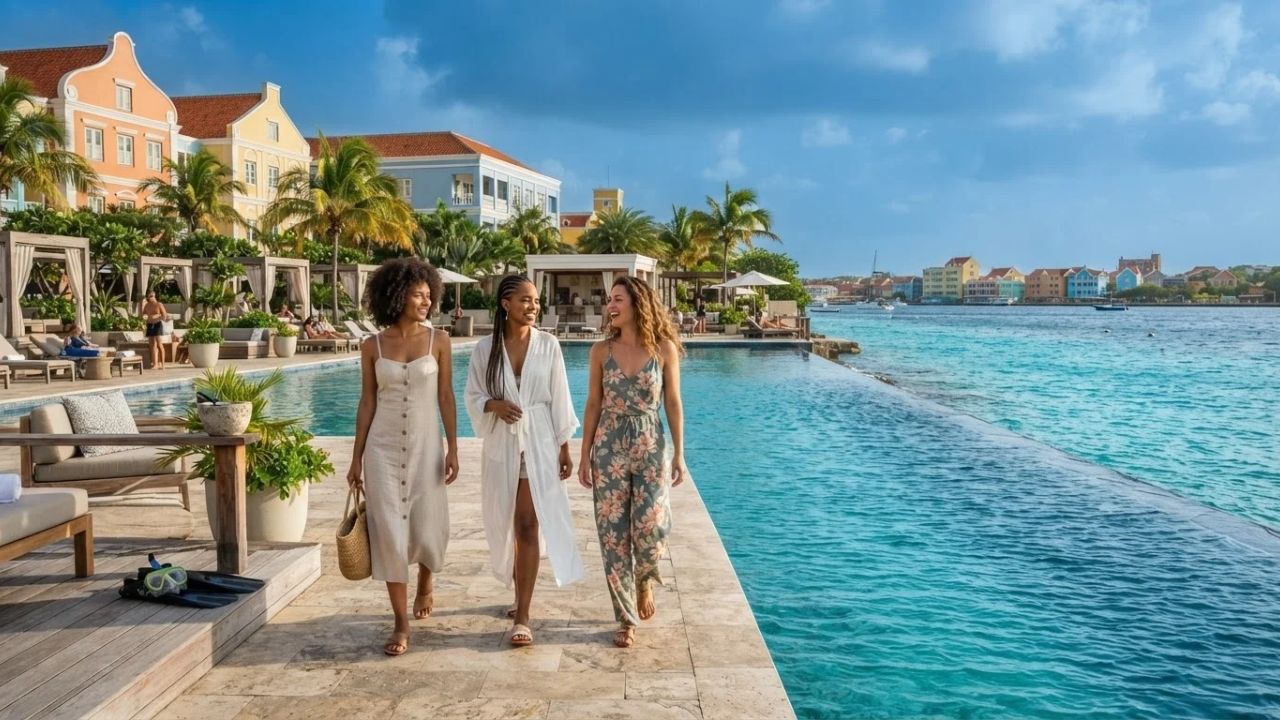
While most Caribbean resort enclaves seal guests behind gated compounds miles away from local civic life, Curaçao is anchoring its high-end tourism expansion directly within the urban fabric of Willemstad by integrating restored 19th-century architecture into The Pyrmont Curaçao, Autograph Collection All-Inclusive. After registering a record-breaking influx of more than 780,000 stayover visitors in 2025, the Dutch Caribbean island is demonstrating that sophisticated, adults-only hospitality can elevate authentic colonial heritage instead of paving over it.
Unlike neighboring destinations shaped purely around fly-in package vacations, Curaçao has long cultivated an independent, bohemian identity anchored in maritime trading traditions, polyglot conversations, and world-class shore diving. The arrival of Marriott International’s boutique-centric Autograph Collection marks a defining turning point. By pairing all-inclusive ease with direct access to Willemstad's historic neighborhoods, this property shifts the Caribbean luxury paradigm from isolated sunbathing to rich cultural immersion.
The Pyrmont Curaçao: Marriott's Historic Pietermaai All-Inclusive Debut
The development of The Pyrmont Curaçao introduces roughly 300 guest rooms and suites to the island's premier hospitality corridor, situated on the coastal edge of Willemstad adjacent to the vibrant Pietermaai district. Operating under Marriott's Autograph Collection, the adults-only all-inclusive resort moves away from cookie-cutter resort layouts in favor of an architectural philosophy deeply rooted in Curaçao's historic streetscapes.
The resort’s defining design achievement is the careful restoration and functional incorporation of original 19th-century merchant mansions and residential buildings into the contemporary complex. Rather than razing the area's storied past, architects preserved these historic structures to house signature dining concepts, lounges, and guest social spaces. Alongside these heritage structures, modern waterfront wings open onto private cabanas, an oceanfront infinity pool, diverse culinary venues, and an open waterfront promenade that hugs the rocky southern coastline.
This opening represents an intentional evolution for Marriott International. Travelers who previously avoided all-inclusive packages due to concerns over generic buffets and isolated locations now find an elevated sanctuary that connects directly to the surrounding community. Furthermore, integrating the resort into the Marriott Bonvoy loyalty network opens Curaçao to millions of points-earning international travelers, particularly across North America and Europe, who actively seek out unique upscale properties with distinct regional personalities.
The economic momentum behind this investment is substantial. Recording over 780,000 stayover visitors in 2025 set an all-time benchmark for the territory, demonstrating that global interest in the island is expanding far beyond its traditional Dutch and European traveler base. By attracting travelers who stay longer and spend more within local culinary and retail ecosystems, the resort supports the island's objective to elevate tourism value alongside overall arrival counts.
What Makes Willemstad and Curaçao Unique in the Caribbean
Curaçao stands apart from the broader West Indies through its striking blend of northern European urban planning, African maritime culture, and Latin American vitality. Nowhere is this more vivid than in Willemstad, inscribed as a UNESCO World Heritage Site for its exceptionally preserved Dutch colonial urban architecture. The capital is split into two historical districts flanking the natural deepwater harbor of St. Anna Bay: Punda, established in the 17th century by the Dutch West India Company, and Otrobanda, which expanded across the western shore during the 18th century.
Connecting these two historic halves is the Queen Emma Bridge, affectionately known by islanders as the "Swinging Old Lady." Built in 1888, this floating pontoon bridge swings sideways multiple times a day to allow ocean-going tankers, cruise ships, and sailing yachts to enter the inner harbor. When the bridge opens, pedestrians gather along the Handelskade waterfront—famous for its pastel gabled merchant houses painted in vivid shades of papaya yellow, cobalt blue, and ochre—or hop aboard the free public ferries that scurry across the channel until the bridge swings back into place.
Outside the capital, Curaçao’s natural geography sets it apart from typical volcanic or low-lying coral islands. Sheltered outside the hurricane belt, the island's arid, cactus-studded terrain gives way to steep limestone bluffs framing intimate coastal coves known locally as bokas. While destinations like Antigua or the Bahamas feature broad, continuous sandbars, Curaçao’s coast is defined by dramatic geological pocket beaches such as Playa Kenepa (Grote Knip) and Cas Abao Beach, where white coral sands drop immediately into deep, calm turquoise bays teeming with sea turtles, trumpetfish, and brain coral gardens.
For active travelers, this unique topography creates one of the world's most accessible scuba diving settings. Known among dive masters as a shore-diving haven, Curaçao features fringing coral barrier systems situated merely 20 to 50 meters from the shoreline. Divers and snorkelers can step off the sand at sites like Playa Kalki, Director's Bay, or Tugboat Beach to explore vertical underwater drop-offs without requiring long, expensive boat charters.
Visitor Insider Tips: Navigating Willemstad, Reefs, and Island Rhythms
Experiencing Curaçao with the depth of a seasoned traveler requires understanding its local customs, transport dynamics, and regional flavors. As highlighted by the Curaçao Tourist Board, island life moves with relaxed warmth, but practical forethought ensures seamless exploration.
- Master the Pietermaai and Punda Rhythm on Foot: While staying near Pietermaai, skip taxis for city exploration. Pietermaai is an architectural gallery of painted colonial ruins, trendy jazz clubs, courtyard cocktail lounges, and seaside dining spots. Stroll through the neighborhood at dusk when the tropical breeze cools the stone alleys, then cross through Punda toward the Queen Emma Bridge. If the bridge's warning bells chime and the orange signal flags rise, stay on the deck to experience the bridge swinging open beneath your feet.
- Dine at Old Market (Marshe Bieuw) for Lunch: For genuine local cuisine, bypass hotel dining rooms at lunchtime and head directly to Marshe Bieuw in downtown Punda. Here, local cooks prepare hearty Antillean staples over large cast-iron pots. Order keshi yena—a savory baked dish of spiced pulled chicken, olives, capers, and prunes encased in melted Gouda cheese—or savor goat stew (stobá di kabritu) paired with funchi (polenta) and fried plantains.
- Rent a Vehicle for Westpunt Expeditions: Willemstad is walkable, but discovering Curaçao's finest coastal sanctuaries requires renting a car. Drive northwest along the scenic coastal highway to Playa Kenepa Grandi for morning swims before beachgoers arrive, followed by an afternoon at Cas Abao Beach, renowned for its soft white sand and clear swimming conditions. Avoid leaving valuables inside rental vehicles at unattended coastal trailheads.
- Balance Private Beach Enclaves and Free Public Coves: Popular hubs like Mambo Beach offer lively beach clubs, curated shops, and boardwalk amenities, but carry entrance and beach lounger fees. To experience the island's authentic coastal soul, balance visits to commercial beach clubs with quiet afternoons at public sands like Daaibooi Bay or Playa Lagun, where local fishermen clean their catch beside sunbasking green iguanas.
Cultural and Environmental Context: Balancing Surging Arrivals with Heritage Stewardship
As Curaçao crosses the threshold of 780,000 annual stayover visitors, the island faces the delicate task of managing tourism growth while preserving its cultural identity and fragile marine ecosystems. Unlike many Caribbean islands where English or French patois dominates, Curaçao's linguistic soul is rooted in Papiamento—a melodic creole language blending Portuguese, Spanish, Dutch, African dialects, and Arawak vocabulary that has survived for over three centuries as a symbol of unity and cultural resilience.
The preservation of historic buildings in Willemstad represents an inspiring model for urban architectural conservation. During the late 20th century, hundreds of 18th- and 19th-century colonial structures fell into severe disrepair due to changing trade routes and suburban migration. The grassroots rejuvenation of Pietermaai and Otrobanda, now reinforced by projects like The Pyrmont, proves that historic districts can be revitalized as residential, artistic, and hospitality centers without turning into sterile museum exhibits.
Environmentally, Curaçao's marine ecosystems face pressure from coastal development, warming seas, and increased visitor density along sensitive reefs. In response, local conservation foundations and dive operators maintain coral nurseries across the southern coastline, propagating elkhorn and staghorn corals to restore reef structures damaged by storms and human contact. Marine authorities actively encourage travelers to use mineral-based, reef-safe sunscreens devoid of oxybenzone and octinoxate to safeguard coral larvae.
By encouraging travelers to step outside the resort perimeter, support independent neighborhood restaurants, hire local boat captains, and respect marine sanctuaries, Curaçao is charting a forward-looking hospitality model. Luxury in this corner of the Dutch Caribbean is measured not by isolation from the island, but by the richness of connection to its living, breathing heritage.
FAQ: Visiting Curaçao 2026
What makes The Pyrmont Curaçao different from standard Caribbean all-inclusives? The Pyrmont Curaçao is an adults-only Autograph Collection resort that restores and incorporates authentic 19th-century colonial buildings directly into its oceanfront grounds in Willemstad, offering luxury convenience alongside immediate access to the historic Pietermaai neighborhood.
What is the best time of year to visit Curaçao? December through May offers ideal dry, sunny conditions with gentle trade winds. Because Curaçao sits safely outside the southern Caribbean hurricane belt, it remains an exceptional year-round destination with warm waters and stable weather even during late summer and autumn.
Do I need to speak Dutch to travel around Curaçao? No. While Dutch and Papiamento are the official languages, nearly all islanders speak fluent English and Spanish. Learning a few polite Papiamento phrases like bon bini (welcome) and danki (thank you) is warmly appreciated by locals.
Can I explore Curaçao's reefs without booking boat tours? Yes. Curaçao is widely celebrated as one of the Caribbean's premier shore-diving destinations. Healthy coral drop-offs and reefs sit only 20 to 50 meters off beaches like Playa Kalki, Playa Kenepa, and Cas Abao.
In an era of walled-off luxury, Curaçao opens its vibrant colonial heart to prove that true island refinement begins where the resort gates end.
Related Travel Guides
Disclaimer
This article is for informational and educational purposes only. It does not constitute legal, financial, or professional advice. While we strive to provide accurate and up-to-date information, travel policies, regulations, and conditions change rapidly. Always verify information with official sources before making travel decisions. Nomad Lawyer makes no representations about the accuracy, reliability, completeness, or suitability of the information provided. Readers should consult qualified professionals for advice specific to their circumstances. The views expressed in this article are those of the author and do not necessarily reflect the views of Nomad Lawyer.
Raushan Kumar
Founder & Lead Developer
Full-stack developer with 11+ years of experience and a passionate traveller. Raushan built Nomad Lawyer from the ground up with a vision to create the best travel and law experience on the web.
Learn more about our team →