Côte d’Ivoire Targets Brazilian Tourists With New Abidjan Campaign Following TAAG Air Link

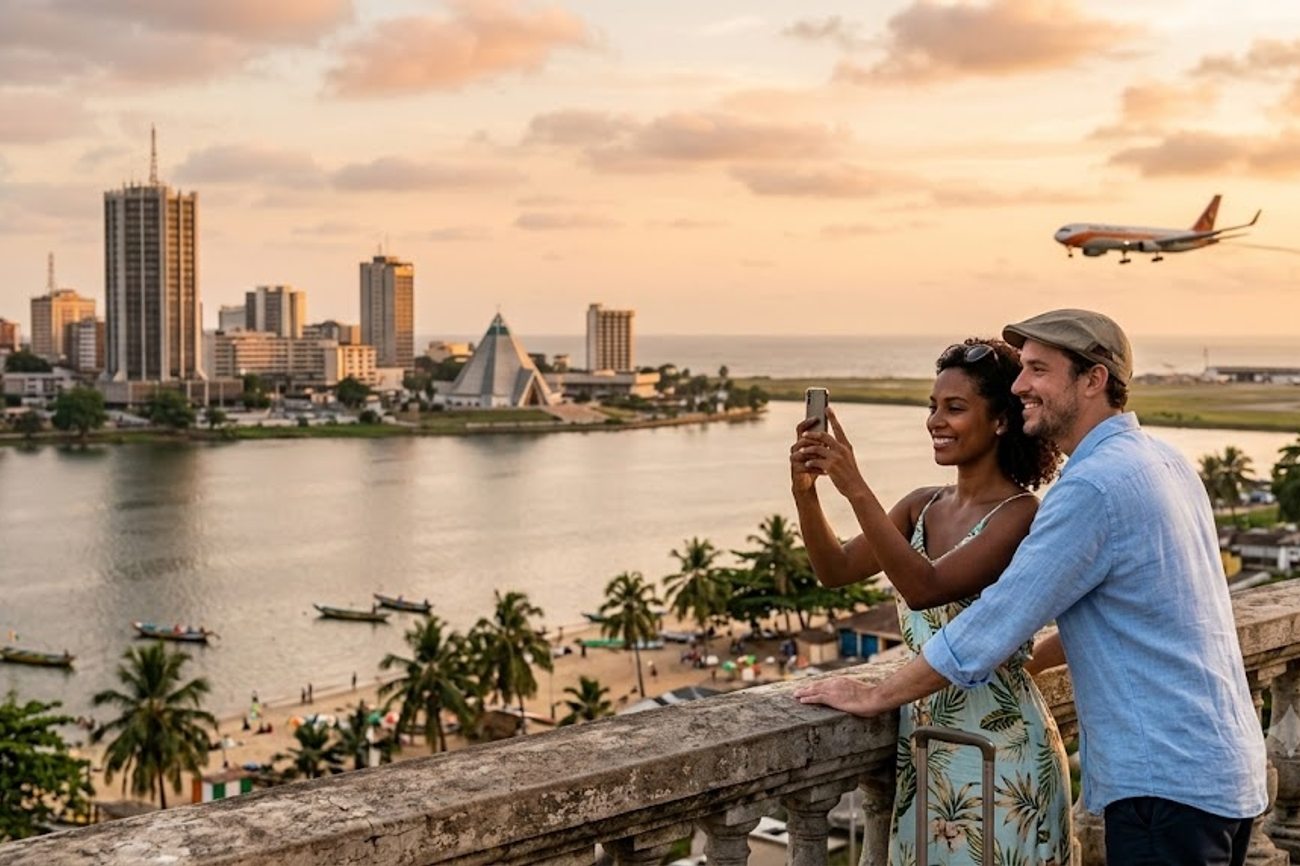
Image generated by AI
title: "Analyzing the Côte d’Ivoire-Brazil Tourism Corridor: A Strategic Pivot Toward South-South Investment" date: 2026-05-15 While Côte d’Ivoire has historically relied on European markets for its tourism arrivals, the 2026 strategic pivot toward Brazil represents a fundamental shift in market diversification, moving from a passive reliance on traditional North-South flows to an active South-South investment model. This transition is not merely about increasing passenger counts but about integrating foreign direct investment (FDI) with air connectivity to build a sustainable leisure ecosystem.
The Brazil-Côte d’Ivoire Corridor in Numbers
The current expansion is anchored by the "Sublime Côte d’Ivoire" strategy, which has evolved from a domestic branding exercise into a comprehensive investment framework. The most significant data point emerges from the Ministry of Tourism and Leisure's 2026 activity log, which identifies over 3,500 leisure-sector operators. This figure is a critical baseline for the government; it reveals the scale of the fragmentation within the Ivorian tourism market and the magnitude of the formalization effort required to meet international standards.
The strategic objective is to transform existing airlinks between Sao Paulo, Abidjan, and Luanda into dedicated tourism routes. By leveraging these corridors, Côte d’Ivoire is attempting to capture a high-spending, long-haul demographic. The shift is further evidenced by the timeline of official initiatives in early 2026:
- March 10, 2026: A comprehensive review of the public tourism investment portfolio was launched to align infrastructure with policy.
- March 27, 2026: A new industry agreement under the Sublime Côte d’Ivoire banner was established to standardize service quality.
- April 2, 2026: The rollout of a digital modernization program began, aimed at streamlining tourism administration.
- April 30, 2026: A formal agreement with Brazil was listed to reshape coastal tourism through Brazilian investment.
- May 5, 2026: The identification of 3,500+ leisure operators was completed to map the sector's capacity.
- May 7, 2026: A domestic tourism campaign was initiated to ensure the market does not become overly dependent on foreign arrivals.
Comparative Context: Market Diversification vs. Traditional Reliance
Historically, West African tourism has been dominated by business travel and expatriate movements from Europe. Côte d’Ivoire is now attempting to break this pattern by treating Brazil as a "triple-threat" market: a source of visitors, a source of knowledge, and a source of capital. According to data patterns often tracked by UNWTO, South-South tourism is one of the fastest-growing segments globally as emerging economies increase their disposable income and seek cultural connections.
The following table compares the traditional European-centric model with the emerging Brazilian-integrated model being implemented in 2026.
| Metric | Traditional European Model | Emerging Brazilian Model (2026) |
|---|---|---|
| Primary Driver | Business/Diplomatic/Historical | Leisure/Investment/Cultural |
| Investment Flow | Government Grants/EU Aid | Private FDI/Joint Ventures |
| Geographic Focus | Abidjan (Commercial Hub) | Coastal Regions & National Parks |
| Infrastructure Goal | Airport/Hotel Capacity | Integrated Beach Resorts & Local Guides |
| Market Entry | Established Travel Agencies | New South-South Partnerships |
| Language Focus | French/English | French/Portuguese Integration |
This shift indicates a move toward a more resilient tourism economy. By diversifying its source markets, Côte d’Ivoire reduces its vulnerability to economic downturns in any single region. The integration of Brazilian investment into coastal development suggests a move toward "vertical integration," where the investor also becomes the primary promoter of the destination in their home market.
Practical Traveler Advisory and Strategic Insights
For the individual traveler, particularly those from the Americas, the development of this corridor will likely result in a phased improvement of the visitor experience. However, the data suggests a gap between connectivity and "bookability."
1. Booking Windows and Itineraries: Because the government is currently in the "mapping" phase (identifying those 3,500 operators), standardized packages are not yet ubiquitous. Travelers planning a visit in late 2026 or 2027 should avoid generic "city-break" bookings in Abidjan and instead seek out operators who are part of the new Sublime Côte d’Ivoire certified network. Booking 12-16 weeks in advance is recommended as the new coastal resorts begin to come online and capacity remains tight.
2. Language and Accessibility: The push for Portuguese-language materials is a direct response to the Brazilian market. Travelers who do not speak French will find an increasing number of services tailored to Portuguese speakers, but ground transport and rural guides will still largely operate in French.
Côte d’Ivoire has launched a new campaign to attract Brazilian tourists to Abidjan, following the establishment of a direct air link by TAAG Angola Airlines. The campaign aims to promote the country's rich cultural heritage and natural beauty, with visitors able to explore the vibrant city of Abidjan and its surroundings. For more information on travel requirements and regulations, visitors can check the official website of the Ivorian Ministry of Tourism for the latest updates.
3. Destination Sequencing: The data shows a clear intent to push visitors beyond the commercial center of Abidjan. Travelers should plan multi-city itineraries that combine the urban hub with the newly developed coastal zones to take advantage of the emerging infrastructure.
Forward Projection: The 2027-2030 Trajectory
Based on the current trajectory of the Ministry of Tourism and Leisure, Côte d’Ivoire is positioning itself as the primary gateway for South American travelers entering West Africa. If the digital modernization program launched on April 2, 2026, successfully integrates with the identified 3,500 operators, we can expect a surge in "DIY" (Do-It-Yourself) travel.
The next logical step in this trend will be the introduction of direct, non-stop flights from Brazil to Abidjan, bypassing the Luanda connection. Industry benchmarks from IATA suggest that once a route reaches a specific load factor—typically driven by a combination of business and leisure—carriers move to eliminate stopovers.
Furthermore, the "investment dimension" mentioned in the April 30 agreement suggests that we will see the emergence of Brazilian-managed hotel chains and tour operators within Côte d’Ivoire. This will create a "cultural bridge" effect, where the familiarity of the management style and language reduces the perceived risk for Brazilian leisure travelers, leading to an exponential increase in arrivals over the next 36 months.
FAQ: Côte d’Ivoire-Brazil Tourism 2026
Will flight prices between Sao Paulo and Abidjan decrease? Initially, prices may remain stable or rise as demand increases. However, as the "tourism route" strategy matures and more capacity is added to the Sao Paulo-Abidjan-Luanda corridors, competitive pricing is expected to emerge.
Is now a good time to book a trip to Côte d’Ivoire? Yes, for those seeking an authentic experience before the mass-market coastal resorts are fully operational. However, ensure you use certified operators, as the government is still in the process of formalizing the 3,500 identified leisure providers.
Which airlines are expanding on these routes? While specific carrier names were not in the immediate 2026 ministry list, the focus is on the corridors linking Sao Paulo, Luanda, and Abidjan. Monitor regional carriers specializing in Atlantic crossings for new schedules.
Are there new visa requirements for Brazilian citizens? The Ministry emphasizes that Brazilian passport holders must verify current entry rules before booking. Requirements can shift rapidly as part of the new bilateral agreements to encourage tourism.
The shift from European dependency to Brazilian partnership signals the dawn of a new, diversified era for West African tourism.
Related Travel Guides
- Launceston Lead Other Cities in Oceania’s Shift to Transform Regional Year-Round Live-Work-Visit Tourism
- South Korea Follows Laos and More Source Markets Giving Cambodia Tourism a Shocking Decline Amid Border Crisis and Safety Concerns
- Zaragoza Launches Fiestas del Pilar 2026 Autumn Festival Featuring Free Cultural Events, Floral Offering, and Low-Cost Transit Options
This article is for informational purposes. Flight routes, passenger regulations, visa rules, and transit advisories are subject to change by airlines and aviation authorities. Readers are advised to verify schedules and travel documentation with relevant carriers and border agencies before departure.
Related Stories

European Mass Protests Disrupt Travel Across France, Italy, Belgium, and Turkey in 2026

Israel Tourism Recovery 2026: North American Flight Restorations and New ETA-IL Entry Rules