
Cruise Travel Warning: One Shore Excursion Mistake Can Leave Passengers Stranded Overseas
Cruise Travel Warning: One Shore Excursion Mistake Can Leave Passengers Stranded Overseas

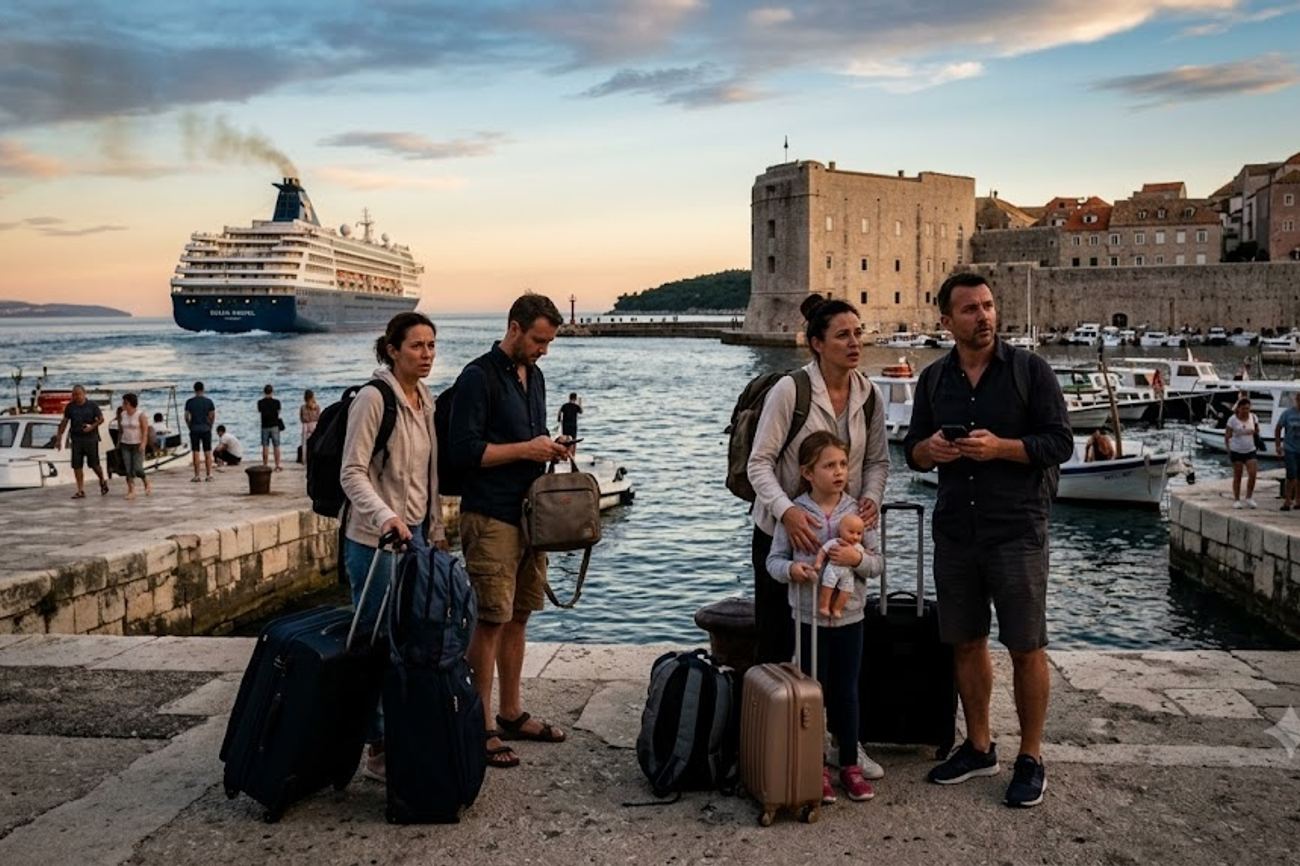
Image generated by AI
0 passengers are guaranteed a ship's wait if they miss the all-aboard deadline, a reality that transforms a luxury vacation into a high-stakes international logistics crisis. While social media platforms are currently saturated with "pier runner" videos—clips of travelers sprinting toward a departing vessel in a desperate race against the clock—these viral moments mask a severe financial and legal burden. For the traveler who fails to make the cut, the result is not a funny anecdote but a sudden requirement to navigate foreign transit systems, secure emergency visas, and fund unplanned flights and hotels, often in a country where they have no local support network.
The Mechanics of the Port Departure Crisis
The tension between cruise passengers and ship schedules stems from a fundamental misalignment of expectations. Travelers often view their port visits as flexible excursions, whereas the vessel operates on a rigid, non-negotiable maritime schedule. These ships are not merely hotels that move; they are complex logistical entities governed by strict port regulations, fuel efficiency mandates, and precise arrival commitments at subsequent destinations.
When a ship departs, it does so based on a calculated window. Factors such as shifting weather patterns, navigation schedules, and the requirements of the next port of call mean that a delay of even thirty minutes for a handful of missing passengers can ripple through an entire itinerary, affecting thousands of other guests and crew members. Consequently, the "all-aboard" time is a hard deadline. If a passenger is not on deck, the ship sails.
To facilitate the stranded passenger's eventual recovery, cruise lines typically implement a standard protocol: essential travel documents, including passports, are removed from the passenger's cabin and handed over to local port agents. This ensures the traveler has the legal documentation necessary to move through borders or check into hotels, but it also underscores the finality of the departure.
The Independent Excursion Risk Matrix
The primary catalyst for missed departures is the rise of independent shore excursions. While passengers are drawn to third-party operators by the promise of lower costs, smaller group sizes, and more authentic local experiences, these benefits come with a significant transfer of risk.
The following table delineates the operational differences between cruise-sponsored and independent tours:
| Feature | Cruise-Sponsored Excursions | Independent/Third-Party Tours |
|---|---|---|
| Schedule Alignment | Synchronized with ship's departure | Independent of ship's clock |
| Delay Mitigation | Ship often waits or adjusts for official tours | Ship departs regardless of tour status |
| Accountability | Cruise line assumes logistical responsibility | Passenger assumes all risk |
| Communication | Direct line between tour lead and bridge | Passenger must contact ship independently |
| Common Risks | Rigid itineraries, higher pricing | Traffic, mechanical failure, local crowds |
The danger is amplified in regions with unpredictable infrastructure. For instance, a traveler utilizing a third-party operator in the Philippines may find themselves trapped by sudden traffic congestion or mechanical failures at a distant attraction. In such scenarios, the distance from the port becomes a liability. Unlike official tours, where the cruise line is aware of the delay and may exercise discretion, a third-party operator has no formal link to the ship's command, leaving the passenger invisible to the crew until the gangway is raised.
Expert Analysis: The Hidden Costs of "Pier Running"
For the modern nomad, the direct consequence of missing a ship is a sudden shift from a prepaid all-inclusive environment to an expensive, a la carte survival scenario. The pricing pressure is immediate. A stranded passenger must suddenly source last-minute international airfare, which is notoriously expensive when booked on the day of travel.
Furthermore, the legal complexities of being stranded in a foreign port cannot be overstated. Depending on the destination, a traveler may find their visa status compromised if they remain in the country longer than their original entry permit allowed. This necessitates urgent coordination with embassies or consulates, adding a layer of bureaucratic stress to an already volatile situation.
From a financial perspective, there is a dangerous misconception regarding travel insurance. Many passengers assume that "trip interruption" or "missed connection" coverage is a blanket safety net. However, most policies are designed to cover systemic failures—such as a commercial flight delay that prevents a passenger from reaching the embarkation port—rather than personal logistical failures. If a passenger chooses an independent tour and that tour runs late, insurance providers often categorize this as a voluntary risk. Unless the policy specifically includes "excursion delay protection," the traveler is paying for a safety net that does not exist for the specific scenario of being left behind.
For those navigating these waters, the most critical variable is "Ship Time." The International Air Transport Association (IATA) manages global aviation standards, but maritime time is more fragmented. Ships often maintain their own internal clock to ensure consistency across multiple time zones. A passenger relying on their smartphone's automatic local time update may find themselves an hour behind the ship's actual departure window, a mistake that is irreversible once the lines are cast off.
Key Takeaways
- Document Seizure: If you miss the ship, your passport and travel documents will likely be moved to a local port agent for your collection.
- Insurance Gaps: Standard travel insurance often excludes delays caused by independent, non-cruise-approved tour operators.
- The Time Trap: Always adhere to "Ship Time" rather than local port time, as these frequently diverge during multi-country itineraries.
- Financial Liability: Stranded passengers are solely responsible for the costs of hotels, emergency flights, and potential visa extensions.
- Risk Mitigation: Booking cruise-approved excursions provides a logistical safety net that independent tours cannot offer.
FAQ: Cruise Departures 2026
What happens to my luggage if I miss the ship? Your luggage remains on the vessel. You will need to coordinate with the cruise line to have your belongings delivered to your home or a designated location, often at your own expense.
Will the cruise ship wait for me if I call them? Rarely. While captains have discretion, port regulations and tight schedules usually make waiting impossible. Do not rely on the ship waiting; treat the all-aboard time as absolute.
How do I find my passport if the ship has already left? Contact the port agent listed in your cruise documents. The cruise line typically leaves your passport and essential documents with this agent for secure pickup.
Is it safer to book tours through the cruise line? Yes, from a logistical standpoint. Cruise-sponsored tours are timed to the ship's departure, and the vessel is more likely to delay departure if an official tour is running late.
The difference between a dream voyage and a logistical nightmare is often measured in a few minutes of misplaced confidence.
Tags: Norwegian Cruise Line, Shore Excursion Safety, Maritime Logistics 2026, Cruise Port Regulations, Pier Running Risks
Related Travel Guides
Disclaimer
This article is for informational and educational purposes only. It does not constitute legal, financial, or professional advice. While we strive to provide accurate and up-to-date information, travel policies, regulations, and conditions change rapidly. Always verify information with official sources before making travel decisions. Nomad Lawyer makes no representations about the accuracy, reliability, completeness, or suitability of the information provided. Readers should consult qualified professionals for advice specific to their circumstances. The views expressed in this article are those of the author and do not necessarily reflect the views of Nomad Lawyer.
Naina Thakur
Contributor & Travel Specialist
Travel enthusiast and legal writer covering visa regulations, responsible tourism, and cultural journeys across global destinations.
Learn more about our team →