
Costa Rica International Arrivals Surge 7% in First Half of 2026
Costa Rica saw 1,733,596 international arrivals in H1 2026, with air travel accounting for 92.6%. Explore the latest transit data and sustainable travel guides.

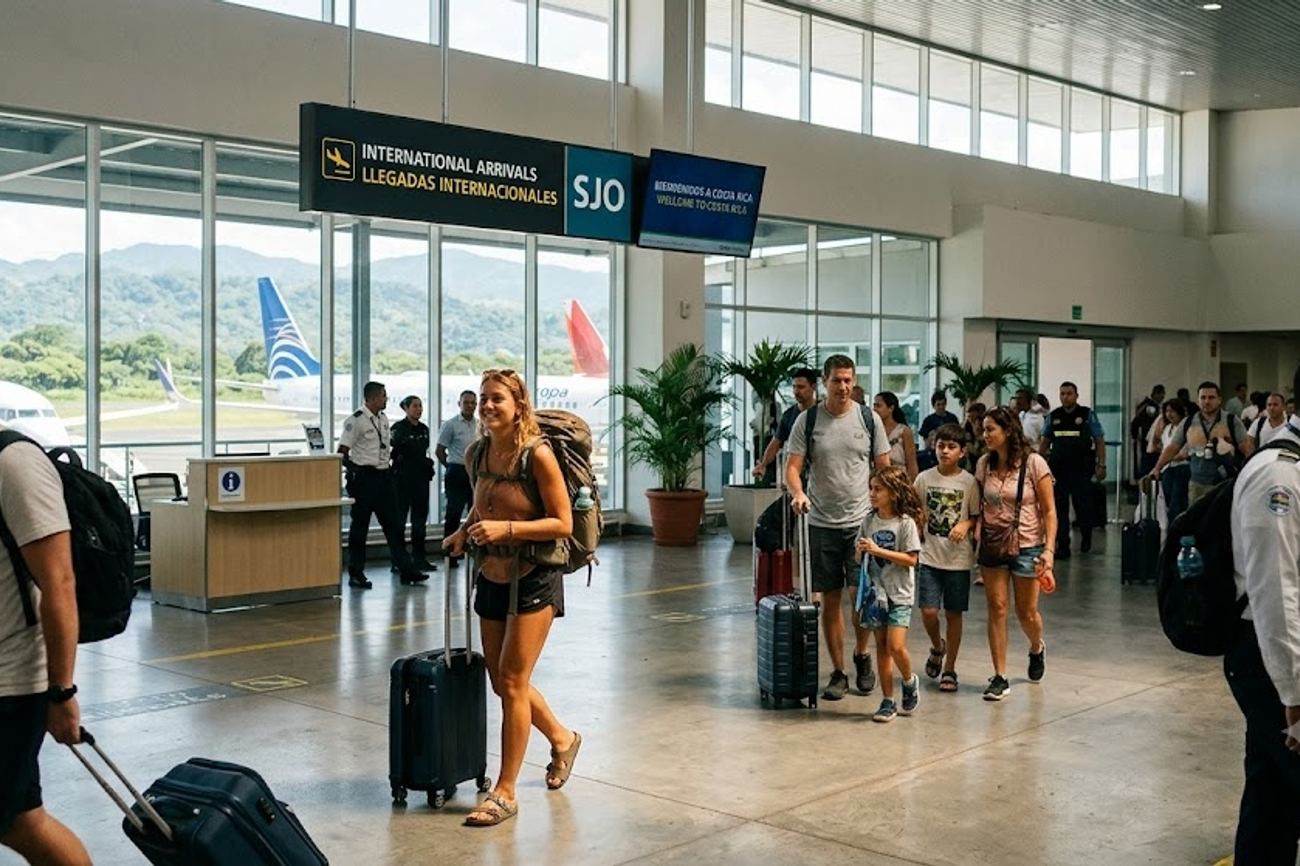
Image generated by AI
Costa Rica is currently balancing a significant uptick in international tourism with the necessity for stringent destination management. Official data for the period of January to June 2026 confirms that the country received 1,733,596 international tourists, marking an increase of 113,620 visitors (approximately 7%) over the 1,619,976 recorded during the same period in 2025.
The growth is heavily concentrated in air travel, which now accounts for 92.6% of all entries. Air arrivals reached 1,605,360, representing a 7.8% increase from the 1,489,008 arrivals seen in H1 2025. This trend reverses a 2.8% decline observed in the first half of 2025, signaling a robust recovery in aviation demand.
Transit Distribution and Market Concentration
The flow of passengers is split between two primary gateways. San José airport handled 996,656 tourists (62.1% of air arrivals), serving as the hub for the Central Valley, Caribbean coast, and northern regions. Guanacaste airport managed 608,132 arrivals (37.9%), providing direct access to northwestern resorts and national parks.
Market data reveals a heavy reliance on North American travelers, who comprise 71.5% of all arrivals (1,240,043 visitors). The United States remains the primary source market with 984,939 visitors, followed by Canada with 207,110.
Transit Schedule & Route Specifications (H1 2026)
| Tourism Indicator | January–June 2026 Result | Share / Change |
|---|---|---|
| Total International Arrivals | 1,733,596 | $\approx$ 7% increase vs 2025 |
| Air Arrivals | 1,605,360 | 92.6% of total |
| Non-Air Arrivals | 128,236 | 7.4% of total |
| San José Airport (SJO) | 996,656 | 62.1% of air arrivals |
| Guanacaste Airport (LIR) | 608,132 | 37.9% of air arrivals |
| US Market Arrivals | 984,939 | 56.8% of total arrivals |
| Canada Market Arrivals | 207,110 | 11.9% of total arrivals |
Traveler Logistics Guide
From a ground-level perspective, the best way to navigate Costa Rica's current growth is to strategically choose your entry point based on your itinerary to avoid the congestion of the Central Valley.
- Airport Selection: If your destination is the Nicoya Peninsula or northwestern beaches, fly directly into Guanacaste to bypass the 4-5 hour drive from San José. For those visiting the Caribbean side or Arenal, San José remains the only viable hub.
- Connection Timing: With March being the peak month (379,818 arrivals), avoid scheduling tight connections in San José. Allow at least 3-4 hours for customs and immigration during peak season.
- Customs & Entry: There have been no changes to border visa or passport processes; however, travelers should ensure all documentation is digitized for faster processing.
- Sustainable Transit: To mitigate the environmental pressure on protected areas, utilize certified sustainable transport providers. Avoid unmanaged rentals in high-density zones like Manuel Antonio or Tortuguero.
Infrastructure Impact Assessment
The surge in arrivals is placing significant strain on Costa Rica's 145 wild areas, which cover 25% of the national territory. While the tourism economy benefits—with average air traveler spending reaching US$1,848 and an average stay of 10.3 nights—the ecological cost is rising.
High visitor volumes are leading to increased trail erosion and water scarcity in rural communities. The heavy concentration of 71.5% of visitors from North America creates a systemic risk; any economic downturn or flight capacity reduction in the US or Canada would disproportionately impact the local economy. Future stability depends on diversifying source markets and enforcing strict visitor limits within the 11 conservation regions.
Related Travel Guides
Disclaimer
This article is for informational and educational purposes only. It does not constitute legal, financial, or professional advice. While we strive to provide accurate and up-to-date information, travel policies, regulations, and conditions change rapidly. Always verify information with official sources before making travel decisions. Nomad Lawyer makes no representations about the accuracy, reliability, completeness, or suitability of the information provided. Readers should consult qualified professionals for advice specific to their circumstances. The views expressed in this article are those of the author and do not necessarily reflect the views of Nomad Lawyer.
Preeti Gunjan
Contributor & Community Manager
A passionate traveller and community builder. Preeti helps grow the Nomad Lawyer community, fostering engagement and bringing the reader experience to life.
Learn more about our team →