
Costa Rica Elevates Barra del Colorado Wildlife Refuge as Caribbean Ecotourism Frontier
Costa Rica spotlights Barra del Colorado Wildlife Refuge, an 81,177-hectare roadless Caribbean sanctuary offering manatee habitats, wild river canals, and sport fishing.
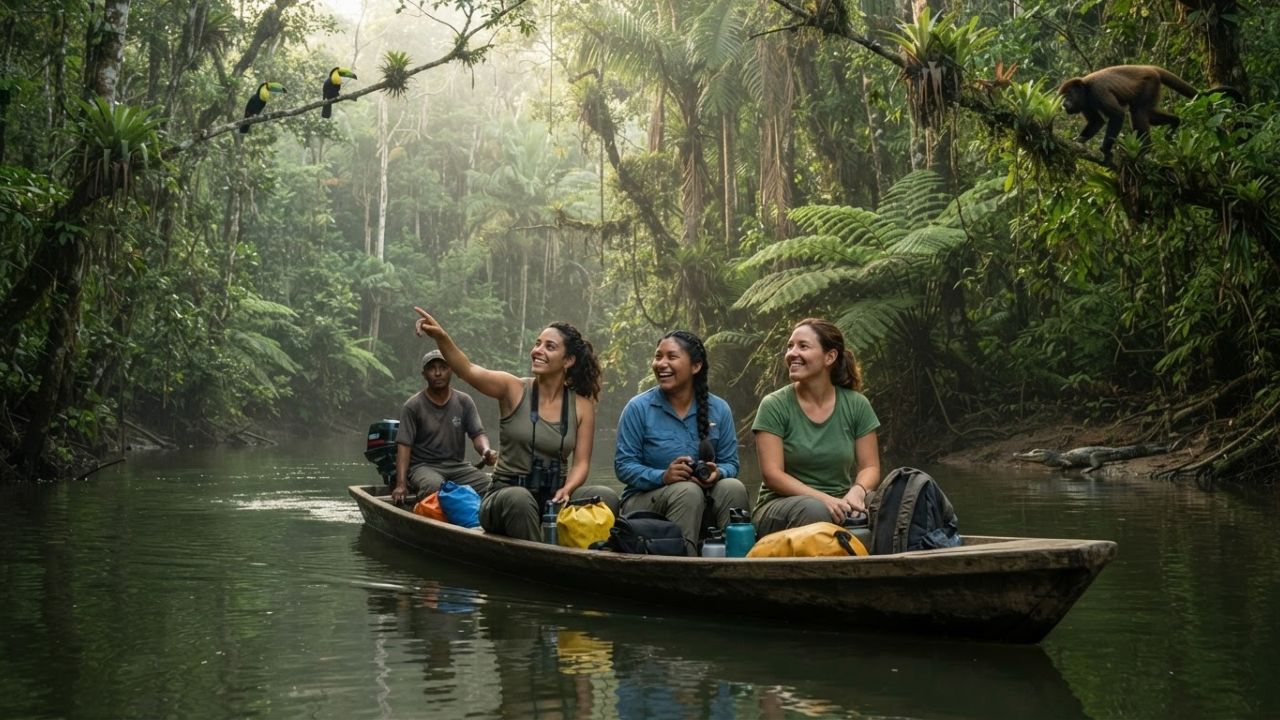
Image generated by AI
Protecting 81,177 hectares of roadless rainforest, coastal lagoons, and freshwater canals in northeastern Limón Province, Costa Rica's Barra del Colorado Wildlife Refuge is emerging as Central America's premier wild sanctuary for manatee observation, sport fishing, and low-impact boat safaris.
Established in 1985 as part of the broader Tortuguero Conservation Area (Área de Conservación Tortuguero - ACTo), this remote reserve borders Nicaragua along the San Juan River. Because vehicular roadways do not penetrate the interior waterways, the sanctuary preserves intact biological corridors away from high-density tourist circuits, providing a pure rainforest encounter for travelers seeking genuine immersion in nature.
The Local Trend Revealed: Beyond Mass Tourism in Costa Rica's Wild Northeast
While travelers historically focused on the Pacific beaches of Guanacaste or the active rim of Arenal Volcano, international demand for conservation-first travel is redirecting adventurous explorers to Costa Rica's Caribbean frontier.
Barra del Colorado functions as the country’s largest national wildlife refuge. Its 81,177 hectares encompass an intricate hydrological maze of flooded river valleys, coastal lagoons, marshlands, and primary lowland wet forests. Regulated under the National System of Conservation Areas (SINAC), the sanctuary restricts commercial infrastructure, mandating that all transit through the reserve takes place aboard electric skiffs, wooden canoes, or registered local charter boats.
The reserve forms a contiguous transboundary wildlife bridge with Nicaragua's Indio Maíz Biological Reserve to the north and Tortuguero National Park to the south. This extensive green corridor allows apex predators, including jaguars and pumas, to maintain natural migration corridors unhindered by fences or commercial development.
Biological Significance: Sanctuaries for Manatees, Tapirs, and River Wildlife
Barra del Colorado’s dense canal system provides critical refuge for endangered aquatic and terrestrial species that have vanished from less isolated parts of Central America:
- The West Indian Manatee: The tranquil, brackish lagoons of Barra del Colorado host one of Costa Rica's most vital breeding populations of the endangered West Indian manatee (Trichechus manatus), thriving on lush submerged river grasses.
- Mammalian Diversity: Deep primary forests provide sanctuary for Baird's tapirs, giant anteaters, ocelots, and three distinct primate species: mantled howler monkeys, white-faced capuchins, and agile Central American spider monkeys.
- Reptilian Ecosystems: Riverbanks support healthy populations of spectacled caimans, American crocodiles, river turtles, and the emerald basilisk lizard.
- Birdwatching Eden: More than 400 avian species nest in the reserve, ranging from the endangered great green macaw and keel-billed toucan to solitary sunbitterns, green herons, and snowy egrets.
For sport fishing travelers, the estuary where the Colorado River empties into the Caribbean Sea is celebrated globally as one of the world's most productive catch-and-release fisheries for Atlantic tarpon (Megalops atlanticus) and Pacific-Atlantic snook.
Essential Visitor Facts: Barra del Colorado Wildlife Refuge
| Operational Category | Verified Official Specification | Practical Visitor Value |
|---|---|---|
| Location & Region | Northeastern Limón Province, Caribbean Coast | Bordered by the San Juan River and Caribbean Sea |
| Protected Surface Area | 81,177 hectares (approx. 200,593 acres) | Costa Rica's largest national wildlife refuge |
| Year Established | 1985 | Governed under the Tortuguero Conservation Area (ACTo) |
| Primary Transit Modes | Small passenger aircraft or boat launches | Zero automobile roads into the central refuge |
| Signature Activities | Guided canal safaris, birding, tarpon sport fishing | Strictly managed low-impact wilderness exploration |
Community & Environmental Value: Supporting Caribbean Livelihoods
Tourism in Barra del Colorado operates on a community-based economic model. Without major international resort chains, the local economy relies on family-run eco-lodges, licensed boat captains, and certified indigenous nature guides who grew up navigating the winding canals.
Local conservation groups collaborate with SINAC park rangers to monitor turtle nesting beaches along the Caribbean shore and track manatee movements through acoustic sensors. By booking local guides, visitors directly fund alternative economic livelihoods that deter illegal poaching, commercial timber extraction, and unpermitted commercial fishing.
Furthermore, solar microgrids power several riverside eco-lodges, while rainwater catchment basins and bio-digestive septic systems ensure zero untreated wastewater enters the fragile river basin.
Visitor Insider Tips: Navigating Barra del Colorado
Planning an expedition to this isolated corner of Costa Rica requires precise preparation:
- How to Arrive: There are two primary routes into the reserve. The fastest option is booking a 35-minute domestic scheduled flight from San José's Juan Santamaría International Airport (SJO) to the Barra del Colorado Airstrip (BCL) via domestic regional carriers. Alternatively, take an adventure boat transfer starting from the inland river docks at Pavona or Moín, cruising north through the Tortuguero canal network.
- Microclimate Advantage in September and October: While Costa Rica's Pacific slope experiences heavy rainfall during September and October, the Caribbean coast experiences its driest, sunniest weather window during these exact months. The calm seas and sunny skies make September and October the best season for smooth boat safaris, bird photography, and tarpon fishing.
- Regional Gastronomy: Taste authentic Afro-Caribbean dishes in the local riverside community. Savor rondon (a slow-simmered soup of fresh red snapper, coconut milk, green plantains, and sweet yuca), paired with rice and beans prepared in freshly grated coconut oil, followed by sweet spiced pan bon bread.
- Equipment Essentials: Pack high-protection waterproof dry bags for all electronic equipment, binoculars with high light transmission for forest canopies, knee-high rubber boots for muddy landing banks, and DEET-free picaridin insect protection.
- Canal Etiquette: Keep voice volumes low when boats approach river bends to avoid frightening basking caimans or foraging river otters. Always maintain a minimum distance of 15 meters from wildlife.
Tourism Outlook: Setting the Benchmark for Wild Conservation
As international travelers increasingly reject overcrowded tourist circuits in favor of authentic biodiversity, Barra del Colorado Wildlife Refuge proves that preservation and sustainable tourism can thrive hand in hand.
With its roadless wetlands, protected manatee nurseries, and deep community roots, Barra del Colorado represents the future of responsible ecotourism: a wild, living sanctuary where the rainforest remains wild and untamed.
Related Travel Guides
Disclaimer
This article is for informational and educational purposes only. It does not constitute legal, financial, or professional advice. While we strive to provide accurate and up-to-date information, travel policies, regulations, and conditions change rapidly. Always verify information with official sources before making travel decisions. Nomad Lawyer makes no representations about the accuracy, reliability, completeness, or suitability of the information provided. Readers should consult qualified professionals for advice specific to their circumstances. The views expressed in this article are those of the author and do not necessarily reflect the views of Nomad Lawyer.