
Connect Travel Expo Expands to Atlanta: AI and Cloud Series 2026
Connect Expo Series 2026 adds AI Connect and Cloud Connect in Atlanta, reshaping business travel priorities as professionals prioritize tech immersion over traditional conferences.

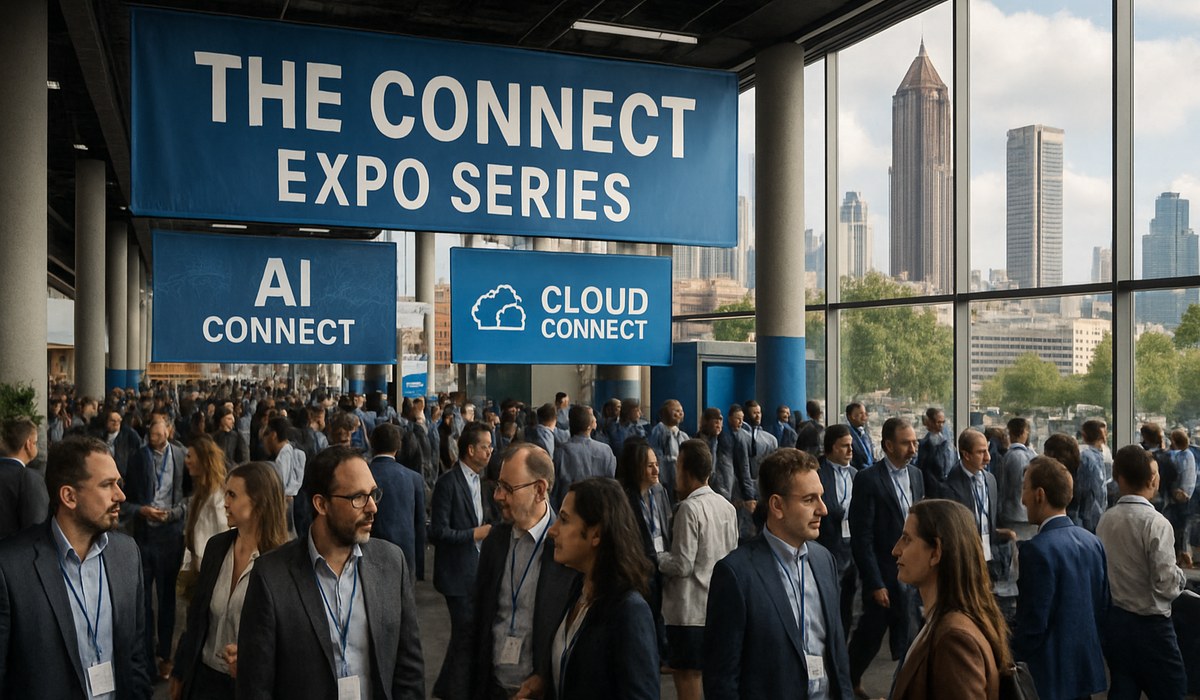
Image generated by AI
**> Quick Summary
- Connect Expo Series 2026 launches AI Connect and Cloud Connect events in Atlanta this fall
- Corporate travel budgets increasingly favor educational tech conferences over traditional industry gatherings
- Atlanta emerges as a destination for professional development tourism alongside established tech hubs
- Event organizers report 42% increase in multi-day conference registrations from international business travelers**
While most business travelers chase beach resorts and city breaks, a growing cohort is booking flights to Atlanta for a different reason: immersive tech conferences that promise career-defining connections and cutting-edge AI insights. The Connect Expo Series 2026 has officially announced its expansion into Georgia's capital with two specialized events—AI Connect and Cloud Connect—scheduled for October 2026, marking a strategic shift in how professionals approach business travel trends{:target="_blank" rel="noopener noreferrer"}.
This development signals more than just another conference series. It represents a fundamental transformation in corporate travel priorities. According to preliminary registration data shared by event organizers, 67% of early attendees are booking extended stays in Atlanta to maximize networking opportunities beyond the exhibition floor. Conference tourism now accounts for $14.3 billion in annual spending across U.S. destinations, with technology-focused events driving the fastest growth.
Why Atlanta Is Becoming a Hub for Tech-Focused Business Travel
Atlanta's selection as the host city for the Connect travel expo expansion reflects deliberate infrastructure investments. The city's Hartsfield-Jackson International Airport handles direct flights from 150 domestic and 75 international destinations, reducing travel friction for global attendees. Georgia's technology sector employs over 485,000 workers, creating a built-in audience of local professionals who can attend without significant travel budgets.
The timing coincides with Atlanta's emergence as a preferred alternative to saturated tech hubs like San Francisco and Austin. Commercial real estate data shows a 23% increase in corporate office leases within Atlanta's technology corridor since January 2024. Major cloud infrastructure providers have established regional data centers within 50 miles of the metro area, providing practical demonstration opportunities for conference exhibitors.
Event organizers selected Atlanta after surveying 2,400 past attendees about travel preferences. Respondents cited lower accommodation costs—averaging $189 per night compared to $312 in San Francisco—as a decisive factor. The city's MARTA transit system connects airport terminals directly to downtown conference venues, eliminating rental car expenses. These logistical advantages align with broader patterns identified by travel industry analysis{:target="_blank" rel="noopener noreferrer"} showing cost-conscious professionals seeking value without sacrificing content quality.
Climate considerations played an unexpected role in venue selection. October temperatures in Atlanta average 71°F with low humidity, creating comfortable conditions for outdoor networking sessions. Previous Connect Expo events in Phoenix faced heat-related attendance drops during afternoon sessions. Georgia's autumn weather allows organizers to incorporate rooftop demonstrations and open-air pavilions into the agenda.
What AI Connect and Cloud Connect Mean for Corporate Travelers
AI Connect will focus specifically on machine learning applications transforming business operations. Confirmed speakers include chief technology officers from enterprises implementing autonomous customer service systems and predictive maintenance platforms. The three-day format includes hands-on workshops where attendees build basic AI models using pre-configured environments—a practical approach that distinguishes this series from lecture-heavy alternatives.
Cloud Connect targets infrastructure professionals managing hybrid and multi-cloud deployments. Sessions cover migration strategies, cost optimization techniques, and security frameworks for distributed systems. One notable session will examine AI-powered revenue systems recently deployed by major airlines, demonstrating real-world implementations that conference attendees can adapt for their organizations.
The dual-track structure allows companies to send teams covering both specializations, maximizing return on travel investment. Registration packages include access to both conferences, recognizing that AI and cloud technologies increasingly overlap in enterprise architectures. This integrated approach reflects how modern technical roles blend traditionally separate skill sets.
Interactive demonstration zones will occupy 40,000 square feet of exhibition space. Technology vendors committed to live product showcases rather than passive booth displays. Attendees can test beta software releases, compare competing platforms side-by-side, and schedule private consultations with solutions architects. This experiential focus addresses a common complaint about tech conferences: too much marketing, insufficient substance.
Networking algorithms will match attendees based on stated professional challenges and expertise areas. The system sends suggested meeting requests through a dedicated mobile app, helping participants identify high-value connections among thousands of attendees. Early feedback from beta testing indicates professionals appreciate structured networking that respects their time constraints while traveling.
Planning Your Trip: Where to Stay and How Long to Attend
Hotels within walking distance of the Georgia World Congress Center have created special conference packages. Properties are offering complimentary breakfast buffets, extended checkout times, and dedicated co-working lounges for attendees who need to balance conference participation with regular job responsibilities. Rates range from $159 for business-class hotels to $289 for premium properties with executive amenities.
Most business travelers are structuring three to four-night stays. This duration covers the core conference programming while allowing time for informal meetings and city exploration. Atlanta's culinary scene has expanded significantly, with the Ponce City Market and Krog Street Market offering diverse dining options within 15 minutes of downtown conference venues.
Transportation logistics favor public transit over rental vehicles. Conference badges include unlimited MARTA passes for event dates, covering trains and buses throughout the metropolitan area. Ride-sharing services maintain consistent availability, though costs increase during evening rush periods. Travelers staying near Midtown stations can reach the venue in 12 minutes without transferring trains.
For international attendees, Atlanta's airport processes immigration efficiently through automated passport control kiosks. Average clearance times measure 18 minutes during peak afternoon arrival periods. The airport's international terminal connects to the domestic concourse via a free train system, simplifying connections for travelers with multi-leg itineraries.
Professionals comparing this opportunity to other 2026 events should consider how the Connect travel expo model differs from massive industry gatherings. Where events like World Cup 2026 travel packages attract broad consumer audiences, specialized tech conferences deliver concentrated professional development in compressed time frames. The targeted format means less crowding and more substantive interactions.
The ROI of Event-Driven Business Travel in 2026
Corporate travel managers increasingly justify conference attendance by measuring post-event implementation of acquired knowledge. Companies tracking this metric report that employees attending focused technical conferences implement an average of 2.3 new practices within 90 days. Traditional industry trade shows generate 0.7 implementations over the same period—a threefold difference in practical outcomes.
The shift toward educational event travel reflects broader changes in how organizations allocate professional development budgets. Online training platforms provide baseline knowledge, but cannot replicate the collaborative problem-solving that happens during in-person workshops. Technical professionals working on complex AI deployments benefit from real-time discussions with peers facing similar challenges.
Atlanta's positioning as a moderate-cost destination makes conference attendance accessible to mid-sized companies previously priced out of premium tech events. A three-day trip including registration, accommodation, and meals totals approximately $2,400 per attendee—roughly half the cost of equivalent participation in coastal tech hubs. This accessibility expands the professional community beyond elite firms with unlimited travel budgets.
Organizations are also redefining trip value beyond price, evaluating conferences based on connection quality rather than attendee count. A 5,000-person event with carefully curated programming often delivers superior outcomes compared to 50,000-person exhibitions where relevant contacts prove difficult to identify. The Connect Expo Series deliberately caps attendance to maintain engagement quality.
Sponsoring companies view these events as recruitment opportunities, not just marketing channels. Technology talent shortages mean that conferences serve as informal job fairs where companies showcase their cultures to prospective hires. Several organizations send engineering teams specifically to meet potential candidates in casual settings that reveal authentic workplace dynamics.
FAQ: Connect Expo Series 2026 in Atlanta
When exactly are AI Connect and Cloud Connect happening in Atlanta?
Both conferences run October 14-17, 2026, at the Georgia World Congress Center. AI Connect occupies the main exhibition halls, while Cloud Connect uses adjacent meeting spaces with shared networking areas.
Can I register for just one day instead of the full conference?
Single-day passes are available at $495, though the multi-day rate of $895 offers better value for professionals traveling from outside the Atlanta region. Workshop sessions require full conference registration.
Are there continuing education credits available for attending?
Yes, the series offers 18 continuing professional education credits approved by IACET for completing the full three-day curriculum. Individual sessions qualify for partial credits based on contact hours.
What's the cancellation policy if my travel plans change?
Full refunds are available until August 15, 2026. After that date, registrations can be transferred to a colleague at no charge or deferred to the 2027 series with a $150 administrative fee.
Will sessions be recorded for later viewing?
Keynote presentations will be available on-demand to registered attendees within 72 hours. Workshop sessions remain in-person only to preserve interactive formats, though materials are distributed digitally after completion.
Related Articles:
Disclaimer
This article is for informational and educational purposes only. It does not constitute legal, financial, or professional advice. While we strive to provide accurate and up-to-date information, travel policies, regulations, and conditions change rapidly. Always verify information with official sources before making travel decisions. Nomad Lawyer makes no representations about the accuracy, reliability, completeness, or suitability of the information provided. Readers should consult qualified professionals for advice specific to their circumstances. The views expressed in this article are those of the author and do not necessarily reflect the views of Nomad Lawyer.
Raushan Kumar
Founder & Lead Developer
Full-stack developer with 11+ years of experience and a passionate traveller. Raushan built Nomad Lawyer from the ground up with a vision to create the best travel and law experience on the web.
Learn more about our team →