
Colombia Opens Guaviare Prehistoric Rock Art to Slow Hikers Through Community Biocultural Corridors
Colombia opens controlled biocultural hiking corridors in Guaviare, linking prehistoric rock art at Cerro Azul with community-run eco-lodges and forest conservation.

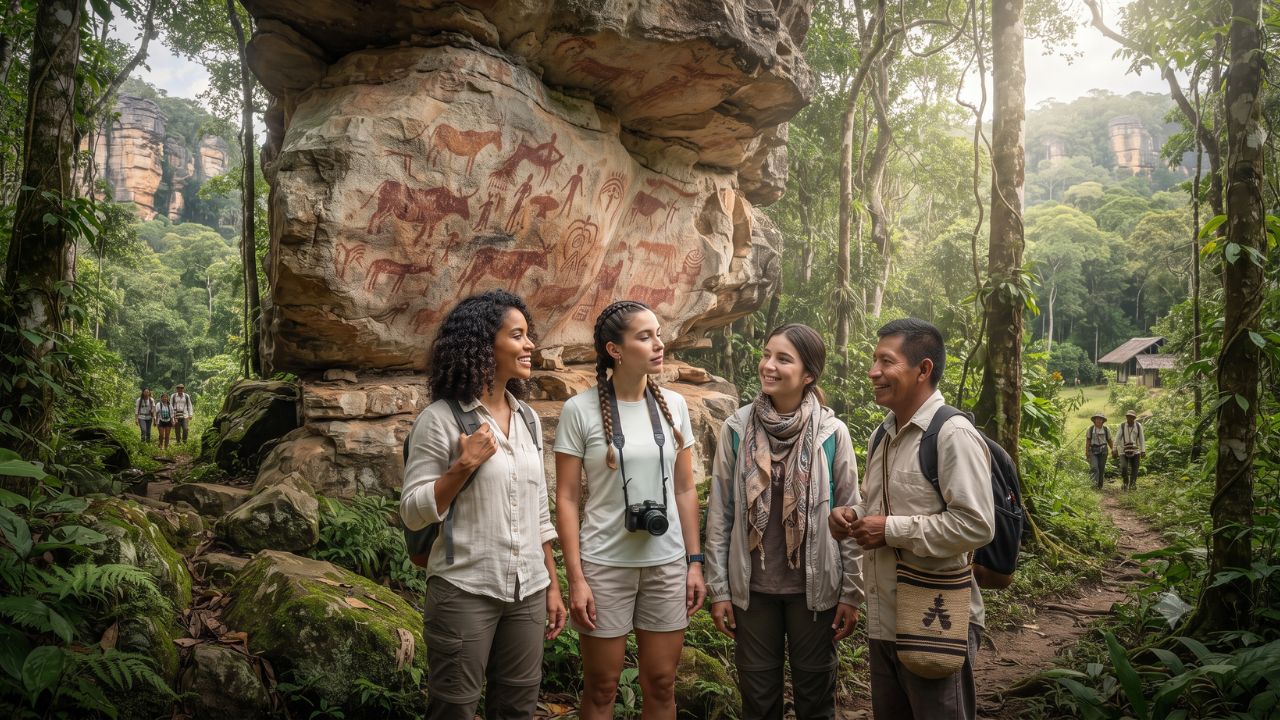
Image generated by AI
Colombia has formally integrated the prehistoric rock art sanctuaries of Guaviare into regulated biocultural hiking corridors under its 2026 regional tourism planning strategy, empowering local peasant and Indigenous cooperatives to safeguard ancient archaeological cliff galleries through controlled visitor access and community-run eco-lodges.
Announced on September 5, 2026, the sustainable tourism framework establishes a progressive model of low-impact exploration where the Amazon basin converges with the vast Orinoco savannahs. Rather than encouraging unmanaged mass tourism into vulnerable archaeological zones, the Department of Guaviare is channeling slow hikers along defined heritage routes centered on Serranía La Lindosa and the monumental cliff art of Cerro Azul. Led by certified local campesino and Indigenous guides, the initiative connects prehistoric cultural preservation directly with community homestays in Playa Güio, forest reforestation patrols, and wildfire prevention monitoring across the Amazonian buffer zone.
The Local Trend Revealed: Biocultural Corridors Replace Unregulated Tourism
The department of Guaviare was long inaccessible to mainstream travelers due to decades of internal armed conflict. Today, the region is pioneering one of Latin America's most inspiring peace-dividend transformations, shifting from a former conflict zone into an international beacon for community-managed conservation.
At the core of the 2026 tourism framework is the establishment of structured biocultural corridors across Serranía La Lindosa. The sandstone plateau and tepui formations contain tens of thousands of prehistoric pictographs painted in vibrant mineral red ochre, dating back more than 12,000 years to the late Pleistocene epoch. These rock shelters depict extinct ice-age megafauna, geometric cosmology symbols, ritual dances, and hunting scenes painted by the earliest human inhabitants of the northwest Amazon basin.
Under the new regulatory structure, independent unescorted hiking is strictly prohibited. Travelers must enter archaeological sectors as part of small, guided parties led by local campesino cooperatives and Indigenous hosts who have trained extensively in heritage interpretation and Leave No Trace principles. Daily visitor quotas are enforced at fragile cliff galleries to prevent microclimate alterations, rock degradation, and accidental physical contact with the ancient pigments.
| Heritage & Tourism Dimension | Verified Regional Framework |
|---|---|
| Department & Gateway | Guaviare Department (San José del Guaviare gateway), Colombia |
| Primary Rock Art Hub | Serranía La Lindosa archaeological protection area |
| Key Pictograph Site | Cerro Azul (monumental ochre rock shelters and cliff galleries) |
| Ecosystem Ecotone | Transition zone between the Amazon rainforest and Orinoco plains |
| Visitor Access Model | Mandatory certified local guides, strict daily caps, controlled corridors |
| Community Hospitality Hub | Playa Güio (community-operated homestay eco-lodges along river lagoons) |
| Direct Ecological Benefit | Tourism fees fund local reforestation patrols and buffer-zone fire monitoring |
Cultural & Environmental Value: Archaeology, Indigenous Knowledge, and Forest Defense
The biocultural corridor model bridges cultural anthropology with active environmental stewardship in an ecologically sensitive transition territory.
The artwork across Cerro Azul and surrounding rock shelters provides unprecedented insight into early indigenous relationships with the Amazonian wilderness. Archaeologists from the Colombian Institute of Anthropology and History (ICANH) have documented detailed depictions of giant ground sloths, palaeolama camels, and mastodons, demonstrating intimate human coexistence with prehistoric fauna. By involving Indigenous communities—including members of the nomadic Nukak and riparian Jiw peoples—the guiding narrative moves beyond academic archaeology to honor living ancestral knowledge of medicinal flora, sacred territorial boundaries, and oral histories.
Environmentally, visitor revenues provide a viable economic alternative to cattle ranching and illicit land clearing. A portion of every guided entrance fee is routed directly into community conservation funds that finance volunteer wildfire monitoring teams and native tree reforestation patrols along forest margins. By establishing community-owned eco-lodges at Playa Güio, travelers stay in rustic, solar-lit cabins along freshwater lagoons, generating sustainable income for local families through boat transport, culinary services, and guided birdwatching for hoatzins, toucans, and pink river dolphins.
Visitor Insider Tips: Navigating Guaviare and Ancient Cliff Art
Travelers planning an expedition to explore Guaviare’s rock art can optimize their journey with these local insights:
- Gateway Access and Logistics: Fly from Bogotá's El Dorado Airport (BOG) to San José del Guaviare (SJE) aboard domestic carrier Satena (approx. 50 minutes), or take an overland bus route from Villavicencio across the Meta plains (approx. 6 hours). Always pre-arrange tours through licensed community tour operators based in San José del Guaviare.
- Cerro Azul Hiking Preparation: The excursion to Cerro Azul involves a two-hour 4x4 drive from San José del Guaviare followed by a moderately challenging jungle hike through humid tropical forest. Wear lightweight breathable long pants, high-traction hiking boots, and carry a reliable headlamp to navigate dark natural tunnels through the sandstone rock formation before emerging at the painted cliff faces.
- Strict Pictograph Conservation Protocol: Never touch the rock art surfaces under any circumstances. Human skin oils accelerate pigment flaking, and spraying water to make colors appear brighter—a destructive habit of unauthorized visitors in past decades—is strictly prohibited and punishable by Colombian heritage preservation laws.
- Savoring Regional Amazonian Gastronomy: In San José del Guaviare and rural hamlets, sample locally farmed cachama or sustainably harvested pirarucú (giant Amazonian arapaima) grilled over open wood fires. Accompany your meal with crispy casabe (traditional artisanal yucca flatbread) and freshly squeezed juices made from native wild fruits like arazá, copoazú, and camu camu.
- Optimal Weather Windows: The primary dry season runs from December through March, offering drier jungle trails and ideal lighting for photographing rock faces. The shoulder months of June through November, while wetter, reveal the aquatic wonder of Tranquilandia (Caño Sabalo), where endemic pink and red riverweeds (Macarenia clavigera) transform riverbeds into vibrant liquid rainbows.
Tourism Outlook: Sustainable Cultural Travel as a Peace Dividend
The structured opening of Guaviare’s rock art to slow hikers represents a milestone in Colombia’s evolving tourism narrative. By rejecting mass-market commercialization in favor of community-led stewardship, the department proves that cultural heritage preservation and grassroots rural development can reinforce one another.
As global travelers increasingly seek transformative, off-the-beaten-path journeys that contribute directly to post-conflict reconciliation and environmental protection, Guaviare emerges as an essential destination. Through respectful foot travel, authentic local partnerships, and deep reverence for millennia-old art, visitors to Serranía La Lindosa help ensure that these ancient Amazonian treasures remain vibrant and protected for generations to come.
Related Travel Guides
Disclaimer
This article is for informational and educational purposes only. It does not constitute legal, financial, or professional advice. While we strive to provide accurate and up-to-date information, travel policies, regulations, and conditions change rapidly. Always verify information with official sources before making travel decisions. Nomad Lawyer makes no representations about the accuracy, reliability, completeness, or suitability of the information provided. Readers should consult qualified professionals for advice specific to their circumstances. The views expressed in this article are those of the author and do not necessarily reflect the views of Nomad Lawyer.
Kunal K Choudhary
Co-Founder & Contributor
A passionate traveller and tech enthusiast. Kunal contributes to the vision and growth of Nomad Lawyer, bringing fresh perspectives and driving the community forward.
Learn more about our team →