
Aviation Updates: Massive Cleveland-Hopkins Airport Meltdown Triggers Terrifying Travel Chaos as 37 Delays and Flight Cancellations Paralyze the US East Coast
As a massive airspace collapse completely suffocates Cleveland-Hopkins International Airport, desperate global travelers face terrifying flight cancellations and agonizing domestic airport disruptions.
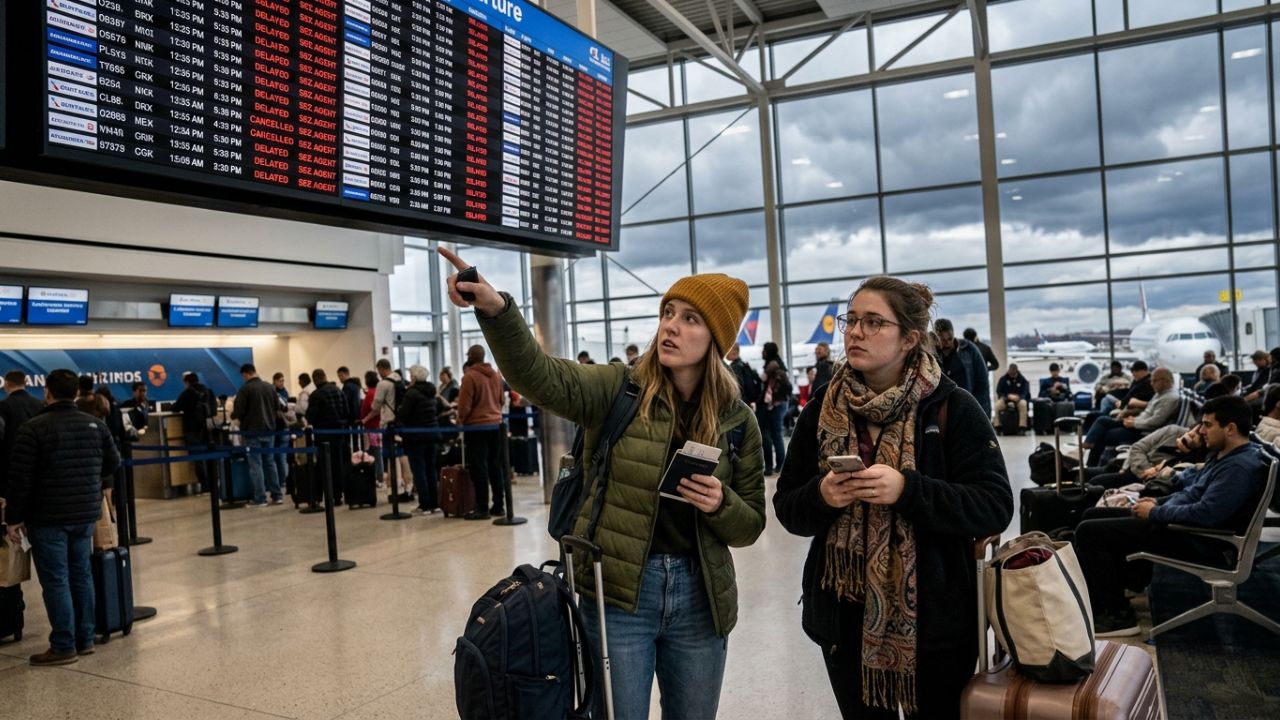
Image generated by AI
Aviation Updates: Massive Cleveland-Hopkins Airport Meltdown Triggers Terrifying Travel Chaos as 37 Delays and Flight Cancellations Paralyze the US East Coast
As incredibly severe terminal gridlock and massive regional airspace bottlenecks completely suffocate the primary aviation gateway of Ohio, tens of thousands of global passengers are trapped in terrifying travel chaos as 37 flight delays and crippling flight cancellations aggressively paralyze operations across Cleveland-Hopkins, rippling violently into Canada and Ireland.
While incredibly exhausted global passengers desperately navigate an incredibly brutal peak travel season, a massive, highly destructive operational meltdown is actively shattering the absolute highest levels of American commercial aviation. According to the absolute latest breaking airline news, Cleveland-Hopkins International Airport (CLE) has officially collapsed under the crushing weight of systemic congestion and severe operational airspace rationing. Desperate to ensure that severe, localized regional hub gridlock does not completely destroy the entire continental network, airlines are violently battling a massive logistical backlog in Ohio. At the time of reporting, real-time operational tracking systems confirmed an agonizing total of 37 severe delays and 16 outright flight cancellations, stranding massive volumes of domestic and international travelers indefinitely.
This highly critical operational collapse explicitly exposes Cleveland-Hopkins not as an efficient global gateway, but as a heavily congested, deeply fragile capacity zone prone to sudden, catastrophic failure. By violently overwhelming ground handling crews, air traffic management protocols, and regional contract aircraft rotation schedules, this systemic breakdown is directly driving massive travel chaos that routinely plagues travelers attempting to transit through under-resourced hubs. Because volatile East Coast weather systems have heavily congested major commercial transit corridors, air traffic controllers must strictly ration standard airspace capacity. This massive infrastructure restriction serves as an absolute warning, forcing major carriers—including American Airlines, Delta Air Lines, Aer Lingus, Frontier Airlines, and Jazz Aviation—into a brutal, high-stakes battle of schedule revisions, stranding frustrated passengers traveling between the United States, Canada, and Ireland.
Aviation Updates: The Collapse of the Northeast Corridor
This massive, highly structural shift in regional network stability perfectly illustrates the intense, incredibly fragile nature of modern domestic mobility.
According to highly detailed, official aviation updates, this strategic capacity failure was explicitly triggered by a toxic combination of severe airspace constraints and regional airline vulnerability. The operational data collected from the tarmac today reveals a highly concentrated crisis. While major mainline brands appear stable on paper, their regional wings are absorbing devastating blows. Because primary connecting hubs on the East Coast are increasingly crippled by rolling travel chaos stemming from systemic infrastructure bottlenecks, funneling passenger flows out of Cleveland is currently a massive logistical gamble. This massive breakdown prevents a unified, highly reliable transit model, instead generating severe, cascading delays that ripple violently across the entire global air traffic system, directly breaking vital flight paths to New York, Washington D.C., Texas, and Florida.
Section-Wise Breakdown: Navigating the Paralyzed Hub
The sudden, massive evolution of these critical transit failures actively impacts several incredibly distinct, highly sensitive operational dynamics at Cleveland's central airport.
The New York Metro and Mid-Atlantic Chokepoint
At the absolute core of this massive operational pivot is the total logistical failure affecting the Northeast corridor. Air traffic into the state of New York and Washington D.C. has effectively fractured. LaGuardia Airport (LGA) is aggressively dropping 3 departures (33%) and 3 arrivals (33%), while tying up remaining traffic with 2 destination delays (22%). The situation is even more terrifying at Reagan National Airport (DCA) in Washington D.C., which has proved to be a total dead zone for Cleveland travelers, completely axing 2 origin flights (40%) and 2 destination flights (40%) with zero on-time performance. Furthermore, Philadelphia (PHL) is suffering 1 origin cancellation (16%) and 1 destination cancellation (16%), subjecting Mid-Atlantic passengers to severe airport disruptions.
The Southern Hub Gridlock: Texas, North Carolina, and Florida
The ultimate execution of this highly destructive failure heavily targets massive southern operations. While Dallas-Fort Worth (DFW) avoided outright cancellations, it is completely swimming in delays, with 3 inbound (60%) and 3 outbound flights (60%) running severely behind schedule. Charlotte (CLT) is mimicking this agonizing trend with 1 inbound delay (20%) and 2 outbound delays (40%). In Florida, Fort Lauderdale (FLL) is facing localized pains with 1 origin cancellation (25%) and 1 destination cancellation (25%), while Fort Myers (RSW) noted 1 destination delay. This completely severs vital north-south connectivity, triggering rolling travel chaos for sun-seeking leisure passengers.
The Midwest Escapes and International Pain
While the East Coast burns, structurally stable midwestern hubs like Detroit (DTW) and Chicago Midway (MDW) are serving as operational anchors, reporting only minor, manageable delays. However, international cross-border travel has felt the violent pinch. Toronto Pearson (YYZ) in Canada dropped 1 destination flight, resulting in a steep 50% cancellation rate for that lane. Across the Atlantic, Dublin (DUB) reported a 100% delay rate impacting an isolated Aer Lingus flight, proving that Cleveland's airport disruptions easily cross oceans.
Flight Details and Verified Disruption Impact Matrix
To fully understand the exact structural parameters of this massive performance collapse and how regional airlines are desperately attempting to navigate complex congestion, the following matrix explicitly details the operational failures at the hub.
Confirmed Cleveland Disruption Impact Matrix
| Regional Carrier / Operator | Confirmed Cancellations | Confirmed Delays |
|---|---|---|
| PSA Airlines (American Eagle) | 4 (33% failure rate) | 0 |
| Piedmont Airlines (American Eagle) | 2 (33% failure rate) | 1 (16%) |
| Endeavor Air (Delta Connection) | 4 (20% failure rate) | 5 (25%) |
| Republic Airways | 3 (11% failure rate) | 5 (18%) |
| Frontier Airlines | 2 (4% failure rate) | 6 (13%) |
| Jazz Aviation (Air Canada) | 1 (16% failure rate) | 0 |
Data explicitly reflects the massive, highly structural operational collapse currently paralyzing the Ohio gateway, directly forcing regional contract carriers to violently abandon their daily flight schedules.
Passenger Impact: The Financial and Emotional Toll
For the highly demanding passengers actively engaged in this massive domestic mobility crisis, traditional, highly anticipated peak travel is currently viewed as completely terrifying and incredibly unpredictable.
The immediate enforcement of these rolling delays significantly degrades travel convenience for tens of thousands of incredibly exhausted families and corporate transit passengers. Instead of relying absolutely solely on a highly competitive global network, travelers are now trapped in a collapsed capacity-managed terminal. Passengers facing these massive airport disruptions are forced to seek alternative arrangements, suffering intense anxiety as they miss onward connections in Dallas or Charlotte. With 16 flights completely wiped off the board, physical customer service lines at CLE will quickly swell. Passengers are explicitly urged to bypass the terminal desks entirely, download their airline’s mobile app to execute instant rebookings, or pivot their routing away from the congested East Coast hubs entirely toward structurally stable midwestern airports like Detroit.
Industry Analysis: The Economics of Systemic Congestion
Aviation structural analysts strictly point out that this massive, multi-national operational collapse perfectly illustrates the extreme, highly vital importance of heavily optimized, continuous airspace operations.
Aviation data explicitly indicates that massive global carriers are absolutely desperate to secure rapid tarmac turnarounds to actively combat the terrifying reality of capacity saturation. Industry observers strongly view this 37-delay meltdown as the absolute ultimate catalyst for broader US domestic aviation instability. When airspace operations are tightly constrained by volatile East Coast weather systems, the FAA must strictly ration capacity. The massive disparity in failure rates between mainline carriers and their regional contract operators (like PSA, Piedmont, and Endeavor) proves that regional airlines function as the absolute sacrificial lambs during severe airspace rationing. By aggressively failing to maintain flow rates, the Northeast corridor absolutely ensures that it maintains a highly unpredictable grip on national transit.
Conclusion: A Highly Congested Domestic Future
The massively evolving infrastructure dynamics directly defining the integration of massive passenger volume into the Cleveland network violently reflect a much broader, highly critical structural transformation currently dominating how American commercial aviation is physically managed in 2026.
Rather than violently forcing massive domestic traffic through deeply congested, highly restricted, delay-prone legacy networks like LaGuardia and Reagan National, global travelers must actively reconsider their routings. As airlines aggressively struggle to clear the backlog and permanently alter their immediate flight paths, travelers actively navigating the incredibly busy sector must absolutely remain highly vigilant. To actively survive potential travel chaos this evening, passengers must aggressively monitor all breaking aviation updates, actively audit their operating carrier (checking if they are flying a high-risk regional partner), and perfectly understand that escaping modern airport disruptions fundamentally requires aggressive, digital self-rebooking.
Key Takeaways
- Massive System Failure: Cleveland-Hopkins International Airport suffers 37 severe delays and 16 flight cancellations due to overwhelming East Coast airspace rationing.
- Regional Airlines Crushed: Contract operators like PSA Airlines, Piedmont Airlines, Endeavor Air, and Republic Airways absorbed the most devastating operational blows.
- East Coast Gridlock: The gridlock triggers cascading travel chaos impacting vital hubs like LaGuardia (LGA), Reagan National (DCA), and Philadelphia (PHL).
- Southern Hub Delays: Major southern connections at Dallas-Fort Worth (DFW) and Charlotte (CLT) are swimming in severe delays.
- International Ripple Effect: Flights to Toronto Pearson (YYZ) and Dublin (DUB) suffered cancellations and significant delays.
- Passenger Survival Strategy: Stranded travelers are urged to bypass massive physical queues, use airline mobile apps for rebooking, and demand rerouting through stable Midwest hubs like Detroit or Chicago.
Related Travel Guides
Massive UAE Visa Bombshell: Strict New 30-Day Escape Window Announced
Travel Chaos Cripples Spain as Iberia and Ryanair Suffer 1,079 Delays
Global Flight Cancellation and Compensation Guide 2026
Disclaimer: This article is strictly for informational purposes only. Massive airport ground failures, highly localized terminal transit protocols, and complex airline rebooking procedures change rapidly based on operational demand and real-time airspace rationing. Always carefully verify your specific itinerary and aggressively monitor real-time flight statuses directly via your airline's application before attempting to travel through Cleveland.