
China Expands 240-Hour Visa-Free Transit and Hainan Entry to Boost 2026 Global Tourism
China is aggressively expanding visa-free access, including the 240-hour transit program and 30-day Hainan entry, to regain international travel market share and strengthen global connectivity.

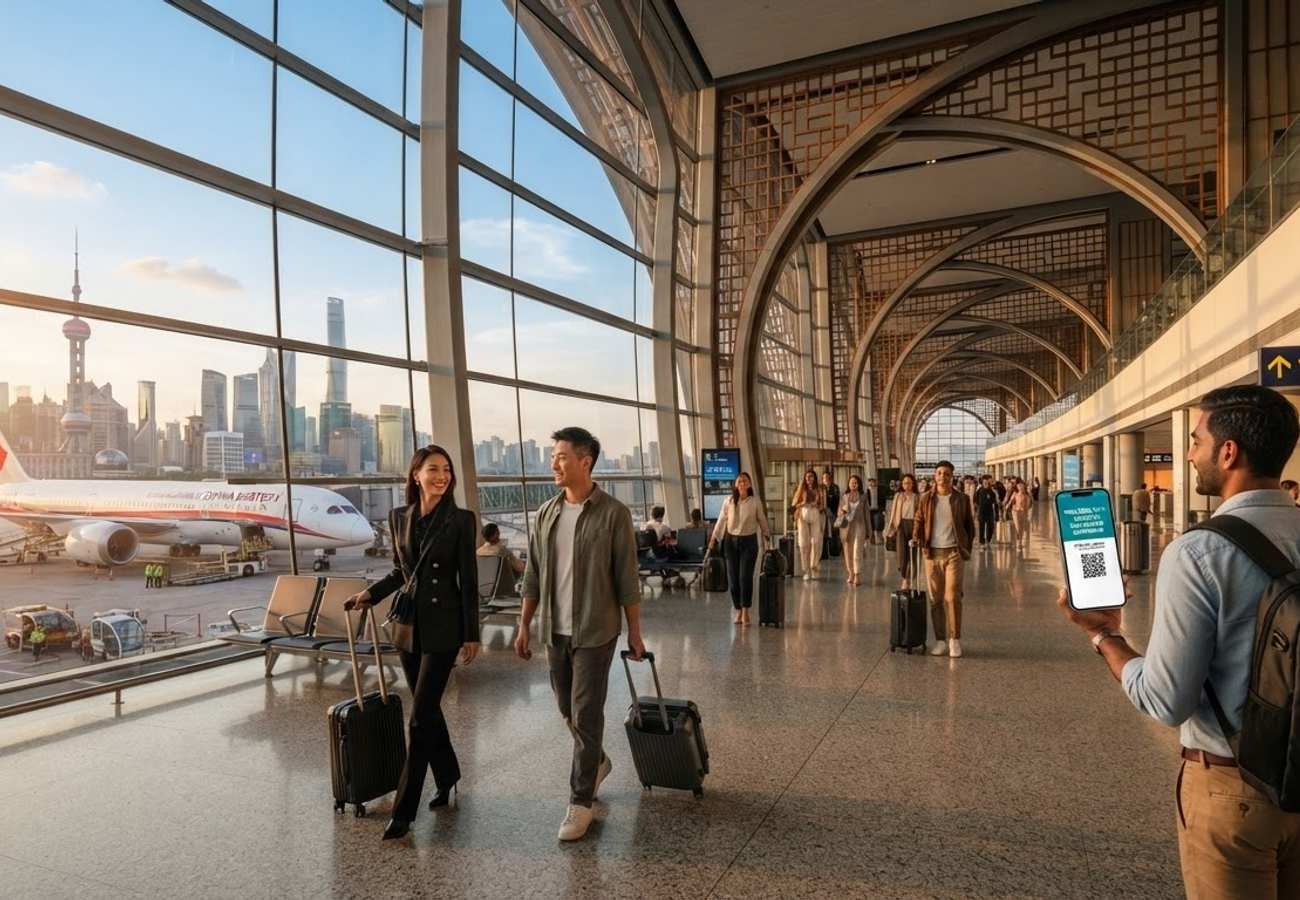
Image generated by AI
China is aggressively dismantling administrative barriers to international entry, expanding its visa-free frameworks to recapture its position as a primary global travel hub. By scaling the 240-hour visa-free transit program and maintaining specialized access for Hainan, Beijing is targeting a rapid revival of inbound tourism and international business connectivity.
The strategy focuses on reducing the friction associated with traditional visa applications, which have historically deterred short-term visitors and transit passengers. This policy shift is designed to stimulate economic activity across aviation hubs and commercial centers, positioning China to compete more effectively against other Asian destinations currently vying for global visitor flows.
Expansion of the 240-Hour Transit Framework
The 240-hour visa-free transit program serves as the cornerstone of China's short-term entry strategy. This scheme permits eligible travelers from selected nations to remain in designated areas for up to 10 days without a standard visa, provided they are transiting to a third country or region.
Recent updates to the program have significantly broadened its reach:
- New Eligibility: Citizens of Vietnam and Kyrgyzstan are now included in the program.
- Scale: The number of countries benefiting from these expanded transit arrangements now exceeds 50.
- Utility: The policy transforms standard airport stopovers into viable short-term tourism opportunities in major gateway cities.
Hainan as a Strategic Tourism Gateway
While the transit program targets the mainland's major hubs, Hainan continues to operate as a specialized international entry point. The province utilizes a dedicated 30-day visa-free entry arrangement to attract a mix of leisure tourists, foreign investors, and business travelers.
The focus on Hainan leverages the region's tropical climate, high-end coastal resorts, and extensive duty-free shopping infrastructure. By bypassing lengthy visa procedures, Beijing is attempting to establish the island as a globally recognized destination independent of the more rigid mainland entry requirements.
Strategic Visa Facilitation Overview
| Policy Area | Latest Development | Travel Impact |
|---|---|---|
| 240-hour visa-free transit | Expanded eligibility for additional countries | Longer short-term stays without a standard visa |
| New Nationalities | Vietnam and Kyrgyzstan now included | Easier access for regional travelers |
| Hainan Entry | 30-day visa-free access continues | Supports island tourism and investment |
| Entry Procedures | Focus on simplified requirements | Reduced barriers for business and leisure |
| Strategic Goal | Increase global connectivity | Economic recovery for transport and tourism |
Economic Drivers and Regional Competition
This liberalisation is not merely a tourism initiative but a targeted economic lever. Increased international passenger movement directly impacts the operational viability of major transport hubs in Beijing, Shanghai, and Guangzhou. The surge in visitors is expected to drive demand across several sectors:
- Hospitality: Increased occupancy for luxury and business hotels.
- Aviation: Higher load factors for international routes and supporting the creation of new connections.
- MICE Tourism: Growth in conference and cross-border business activity.
Market trends suggest this shift is a response to aggressive visa-free policies adopted by regional competitors, including Japan, Thailand, Malaysia, and Singapore. By simplifying entry, China aims to ensure its cities remain integrated into multi-destination Asian itineraries.
Why This Matters: Industry Analysis
From a logistical perspective, the expansion of the 240-hour transit window is a game-changer for the "stopover economy." Most transit visas offer 72 or 144 hours; extending this to 10 days effectively turns a transit stop into a full vacation. For travelers, this removes the financial and temporal cost of a traditional visa, making China a low-friction addition to a global trip.
Our analysis of the route map suggests that by adding countries like Vietnam and Kyrgyzstan, China is specifically targeting regional integration. This strengthens the "feeder" network into major hubs, ensuring that airlines can maintain high capacity on long-haul flights by filling seats with regional transit passengers who are now incentivized to stop in China.
Forward Outlook
China's trajectory indicates a permanent shift toward flexible travel policies. We expect further adjustments to the visa framework as Beijing monitors the recovery of inbound numbers. The long-term goal is a seamless integration of international mobility that restores China's status as one of the world's most influential travel markets. Travelers should anticipate more nationalities being added to the transit list throughout the remainder of 2026.
The shift toward visa-free access marks a decisive move to reintegrate China into the global tourism circuit.
Related Travel Guides
Disclaimer
This article is for informational and educational purposes only. It does not constitute legal, financial, or professional advice. While we strive to provide accurate and up-to-date information, travel policies, regulations, and conditions change rapidly. Always verify information with official sources before making travel decisions. Nomad Lawyer makes no representations about the accuracy, reliability, completeness, or suitability of the information provided. Readers should consult qualified professionals for advice specific to their circumstances. The views expressed in this article are those of the author and do not necessarily reflect the views of Nomad Lawyer.
Preeti Gunjan
Contributor & Community Manager
A passionate traveller and community builder. Preeti helps grow the Nomad Lawyer community, fostering engagement and bringing the reader experience to life.
Learn more about our team →