
Echoes of Runway 13: How Kai Tak’s Rebirth and Cathay’s 80-Year Milestone Reveal Hong Kong’s Living Neighborhood Soul
Marking 80 years since its 1946 founding, Cathay assembled volunteers from over 250 civic groups at the new Kai Tak Sports Park, linking historic aviation lore with grassroots neighborhood preservation across Kowloon.

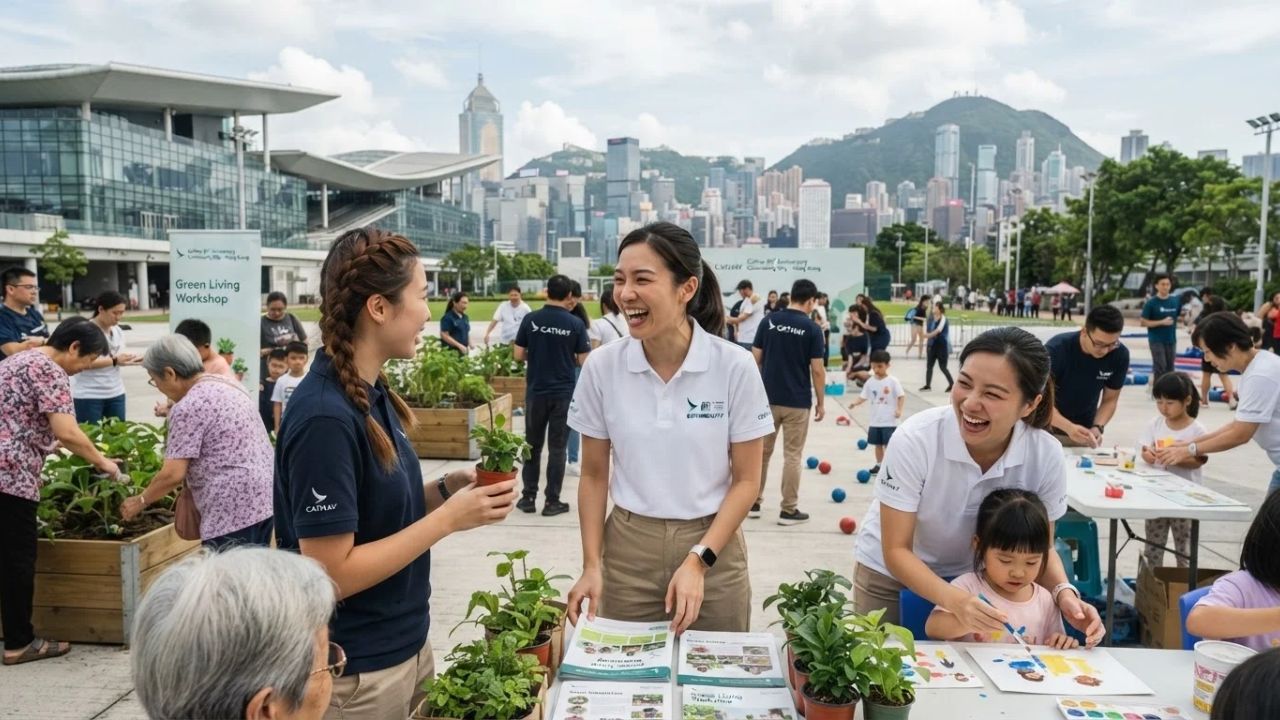
Where jumbo jets once made legendary banked turns into Runway 13, the new Kai Tak Sports Park now anchors cultural and civic life along Victoria Harbour
Where Boeing 747s once skimmed mere feet above laundry poles and neon signs during the legendary banked approach into Runway 13, thousands of citizens now gather to cultivate rooftop herb plots and bake sesame mooncakes. On September 12, 2026, volunteers representing more than 250 distinct community organizations assembled at the newly inaugurated Kai Tak Sports Park to commemorate the 80th anniversary of Cathay. Established in 1946 with a single propeller aircraft, the home carrier used this eight-decade milestone not for self-congratulatory aviation galas, but to anchor an ambitious social pledge: deploying six targeted civic programs to directly uplift 80,000 lives across the territory before the year concludes.
Standing alongside civic partners including HandsOn Hong Kong and senior officials from the Hong Kong SAR Government, the gathering symbolized an evolving dialogue between global transport infrastructure and the human fabric of the city. While international tourists commonly perceive the metropolis through the gleaming steel of Central or the shopping malls of Tsim Sha Tsui, Hong Kong's authentic heart beats in the public housing estates, shaded mahjong corners, and volunteer-tended allotments that sustain its elderly and working-class families.
From Aviation Crucible to Civic Anchor: The Transformation of Kai Tak
The choice of Kai Tak Sports Park as the epicenter for this 80-year milestone resonates deeply with anyone who understands the modern history of southern China. Until flight operations transitioned offshore to Chek Lap Kok and Hong Kong International Airport in 1998, Kai Tak was world-renowned as one of the most demanding urban airfields in commercial aviation. Pilots executed a sharp 47-degree right turn over Checkerboard Hill in Kowloon City, lining up on a narrow strip jutting into Kowloon Bay while passengers looked straight into high-rise living rooms. Today, that historic aviation strip has transformed into one of the territory’s most versatile sporting and entertainment venues, reclaiming concrete runway space for waterfront promenades, community recreation pitches, and open green expanses.
Rather than isolating the venue behind commercial barriers, the 80th-anniversary initiative mobilized six focused outreach programs across the surrounding districts. In one sector, employee volunteers directed pickleball clinics designed to cultivate athletic confidence and team camaraderie among children from lower-income households. Across town, inclusive bowling tournaments paired volunteers with residents living with physical and intellectual disabilities, providing accessible recreational avenues rarely highlighted in standard leisure guides.
Equally poignant was the direct connection to senior residents who witnessed the territory’s post-war industrial rise firsthand. Volunteers accompanied elderly citizens through neighborhood wet markets on assisted grocery excursions, ensuring older residents had reliable access to fresh produce without having to negotiate steep staircases and footbridges alone. Coinciding with autumn celebrations, volunteers also rolled pastry dough beside community elders to craft traditional Mid-Autumn Festival mooncakes, passing down ancestral culinary techniques while addressing the quiet isolation that frequently affects aging urban populations. Finally, teams tended urban community gardens, safeguarding precious micro-allotments where sweet potato leaves and winter melons flourish amid concrete residential towers.
What Makes These Historic Neighborhoods Different
To truly comprehend Hong Kong beyond the tourist brochure, travelers must explore the low-rise grid of Kowloon City and San Po Kong, the two historic working districts that directly border the former airfield. Because aviation height restrictions strictly prohibited tall buildings here until the late 1990s, Kowloon City retained a human scale that vanished from the rest of the city decades ago. The streets remain lined with pre-war tong lau tenements, characterized by open-air balconies, ground-floor herbal tea dispensaries, and hand-lettered calligraphy signage.
This geographic preservation fostered distinct cultural micro-communities. In the mid-twentieth century, Chiu Chow immigrants settled heavily around South Wall Road and Nga Tsin Wai Road, bringing with them rich culinary traditions: master-stock braised goose, chilled flower crab, and hand-pounded beef ball soups served in tiny tiled eateries that have operated continuously for generations. Later, a vibrant Thai diaspora established roots here, earning Kowloon City its beloved local moniker as the city’s Little Thailand, where outdoor sidewalk kitchens simmer fragrant lemongrass broths alongside traditional Buddhist shrines.
Just blocks away lies the site of the former Kowloon Walled City, once an ungoverned, hyper-dense enclave of 33,000 residents living within a single city block. Today, it stands peaceful as a classical Jiangnan-style garden, preserved under the oversight of heritage authorities like the Antiquities and Monuments Office. Here, authentic Qing dynasty yamen relics and bronze cannons rest beside tranquil lotus ponds and winding stone bridges, providing a stark contrast to the modern athletic arenas taking shape along the nearby harbor.
Visitor Insider Tips
Experiencing this living cross-section of aviation history and grassroots neighborhood culture requires practical local know-how:
- Navigating the Kai Tak Corridor: Avoid taking taxis into Kowloon City during peak afternoon hours. Instead, ride the MTR Tuen Ma Line directly to Kai Tak Station or Sung Wong Toi Station. Exit B3 at Sung Wong Toi leads straight into the heart of historic Kowloon City, where you can view archaeological stone displays from the Song dynasty discovered during subway excavation.
- Timing the Wet Market Atmosphere: For a genuine glimpse into daily life, visit the Kowloon City Market on Nga Tsin Wai Road between 7:30 AM and 9:30 AM. This is when local grandmothers inspect live seafood and fresh morning greens, and when the market’s famous upper-floor cooked food center serves piping-hot milk tea and satay beef noodles to neighborhood porters.
- Seasonal Festival Etiquette: If your visit coincides with the Mid-Autumn Festival season, seek out traditional bakeries rather than commercial chain gift boxes. Respect the sacred customs surrounding moon worship; during neighborhood lantern evenings and fire-dragon displays recognized by UNESCO Intangible Cultural Heritage, keep your distance from incense-bearing performers and never touch ceremonial dragon ropes.
- Kowloon City Dining Strategy: Skip formal Western restaurants and seek out legacy family establishments. Order the braised goose with tofu at a heritage Chiu Chow specialist, or sample coconut-milk mango sticky rice from family-run Thai shops along Tak Ku Ling Road. Carry physical cash or an Octopus card, as many cherished neighborhood eateries do not accept international credit cards.
- Urban Green Spaces Walk: From Kai Tak Sports Park, stroll along the new Kai Tak River green corridor. The formerly polluted industrial nullah has been re-engineered into an ecological urban waterway where egrets and kingfishers fish beside pedestrian boardwalks, offering a quiet pedestrian trail directly into San Po Kong.
Cultural and Environmental Context
Hong Kong’s rapid evolution into a global financial capital has often placed immense pressure on its social safety net and historical heritage. With one of the world’s longest life expectancies, the territory faces a rapidly graying population, making grassroots initiatives that assist older residents with basic nutrition, mobility, and community companionship vital to urban health. When corporate and community organizations like HandsOn Hong Kong unite over 250 local groups, they reinforce the neighborhood bonds that state services cannot always reach.
Simultaneously, the revitalization of the former Kai Tak airfield reflects a major ecological rethink in urban planning. Historically dominated by heavy transport noise and industrial runoff, the district is now being woven into the city’s green infrastructure. Urban community gardens, permeable drainage walkways, and protected green wedges allow sea breezes to penetrate inland Kowloon, moderating the intense urban heat island effect.
For conscientious travelers, supporting this local fabric means moving beyond passive sightseeing. By eating at multi-generational family stalls, respecting public spaces, and patronizing neighborhood markets, visitors help ensure that the human stories of Kowloon City survive alongside Hong Kong's gleaming architectural future.
FAQ: Visiting Hong Kong 2026
How do I reach the new Kai Tak Sports Park from Central or Tsim Sha Tsui? Board the MTR network and connect via the Tuen Ma Line to Kai Tak Station or Sung Wong Toi Station. The sports complex is a comfortable ten-minute walk through paved pedestrian tunnels and waterfront pathways.
What is the best way to experience Kowloon City’s aviation history? Visit the former Kowloon Walled City Park to see preserved aviation artifacts and historic photographs. You can also walk up the southern slope of Carpenter Road Park to spot the famous orange-and-white Checkerboard Hill markers.
Do I need cash to explore neighborhood street stalls and wet markets? Yes. While the MTR and major retailers accept digital payments, historic Chiu Chow stalls, herbal tea dispensaries, and wet market produce vendors rely heavily on physical Hong Kong dollars or local Octopus cards.
When is the best season to explore outdoor heritage districts in Kowloon? October through December offers pleasant, dry weather with daytime temperatures around 22°C to 26°C and minimal humidity, ideal for walking heritage trails and exploring outdoor night markets.
When a city honors the hands that built its neighborhoods, even an eight-decade aviation legacy finds its true altitude on the ground.
Related Travel Guides
- Wings Over Continents: How Emirates’ Eleven ATM 2026 Partnerships Are Reshaping Global Cultural Corridors
- Dawn Touchdown in Paradise: How TransNusa’s Daily Melbourne–Bali Route Reinvents Australia–Indonesia Travel
- From Savoy Arcades to Sunlit Turia: How Wizz Air’s New Turin Base Unlocks Valencia and Beyond
Disclaimer
This article is for informational and educational purposes only. It does not constitute legal, financial, or professional advice. While we strive to provide accurate and up-to-date information, travel policies, regulations, and conditions change rapidly. Always verify information with official sources before making travel decisions. Nomad Lawyer makes no representations about the accuracy, reliability, completeness, or suitability of the information provided. Readers should consult qualified professionals for advice specific to their circumstances. The views expressed in this article are those of the author and do not necessarily reflect the views of Nomad Lawyer.
Raushan Kumar
Founder & Lead Developer
Full-stack developer with 11+ years of experience and a passionate traveller. Raushan built Nomad Lawyer from the ground up with a vision to create the best travel and law experience on the web.
Learn more about our team →